Share on Facebook
 Share on X
 Share by Email
 Share on Google Classroom
Aurora, Ontario, incorporated as a town in 1888, population 62,057 (2021 census), 55,445 (2016 census). It is surrounded by Newmarket to the north, Whitchurch-Stouffville to the east, Richmond Hill to the south and the Township of King to the west.
Indigenous Peoples
Indigenous peoples have lived in the Aurora area for thousands of years. From the mid-15th century to the mid-17th century, the area was home to the Wendat (Huron) and Tionontati (Petun). During the Iroquois Wars of the mid-1600s, the Haudenosaunee, who at the time lived in what is now northern New York State, dispersed the Wendat and Tionontati. In the late 1600s, the Anishinaabeg moved from land north of Lake Huron and Lake Superior into Southern Ontario, pushing most of the Haudenosaunee back to New York State. Ancestors of the Chippewas of Georgina Island, an Anishinaabe nation, began living in the Lake Simcoe region. Today, two of this First Nation’s three reserves are located in York Region, on the shore of Lake Simcoe and on Georgina Island (see Reserves in Ontario).
Treaties
The western section of Aurora is within the boundaries of Treaty 13, and its eastern section is in the Williams Treaties area, roughly half-and-half.
Initially, the Upper Canada government acquired the land within Aurora via the Johnson-Butler Purchase. The first negotiations for this treaty took place in 1787 between the government and the Mississaugas (see Toronto Purchase (Treaty 13)).
The terms of the Johnson-Butler Purchase were poorly documented and unclear. As a result, the government brokered two new treaties, known as the Williams Treaties, with the Chippewa and the Mississaugas in 1923. The Chippewas of Georgina Island signed the first of the two treaties, along with the Chippewas of Rama and Christian Island.
Settlement and Development
Many elements of Aurora’s early colonial settlement and growth are echoed by the life of Charles Doan (1808–1895).
Lieutenant-Governor John Graves Simcoe commissioned three major roads to defend Upper Canada from the French and the Americans. Finished in 1796, Yonge Street connected Lake Ontario and Lake Simcoe. Lots along the route were immediately made available for settlement (see Township).
Many of the new immigrants were from the Religious Society of Friends, better known as the Quakers, from Pennsylvania. Charles Doan was born on his Quaker family’s Yonge Street farm.
Tired of public affairs being decided only by a privileged class (see Family Compact), many residents of Upper Canada looked for democratic reform. Charles Doan participated in the Upper Canada Rebellion of 1837, spending five months in prison.
The community, then known as Machell’s Corners for an early merchant, received the “Whitchurch” post office in 1846. Charles Doan was the first postmaster. The settlement’s importance grew in 1853, when Canada West’s first railroad was built from Toronto to Machell’s Corners. This created a boom in local hotels and industry. Doan changed the post office name to Aurora in 1854. In Roman mythology, Aurora is the goddess of sunrises. It was chosen to symbolize the dawning of a new age for the community. Aurora became a police village in 1855, providing limited independence from the township.
Early industry included the Aurora Agricultural Works, whose farm implement business included the nationally famous Fleury plow. At its peak, the business had over 200 employees.
Aurora was incorporated as a village in 1863, which allowed it to tax and spend on its own priorities, different from those of the rural areas around it. Residents elected Doan as their first reeve, their representative to York County Council.
Aurora was incorporated as a town in 1888. The town’s 1874 drill shed is Ontario’s oldest purpose-built armoury still in use.
The town’s population grew with the baby boom after the Second World War. Gradually, the town expanded to add additional agricultural land from King and Whitchurch townships. York Region was created in 1971, replacing the historic county.
Population
Aurora grew 11.9 per cent between the 2016 and 2021 censuses, faster than the overall growth in York Region of 5.7 per cent. The town’s Official Plan, a document that guides local development, estimates a population of 85,800 by 2051.
According to the 2021 census, prominent ethnic groups within the town include Chinese (16.7 per cent), English (16 per cent), Irish (12.9 per cent), Scottish (12.3 per cent), Italian (10.3 per cent) and Canadian (8.9 per cent).
The census found 0.7 per cent of residents have an Indigenous identity.
Economy and Labour Force
On the 2021 census, the average household income in Aurora was $161,800, compared to the provincial household average of $116,000. While 45 per cent of Ontario households make over $100,000, 60 per cent of Aurora residences reach this level.
Auto parts manufacturer Magna International has its headquarters and a factory in the town. A growing number of food-related companies are located in Aurora, including the headquarters of Bulk Barn.
Government and Politics
Aurora has a mayor and six ward councillors. Many councillors hold full-time jobs in addition to their part-time elected role. Only the mayor is on York Region council, one of 22 votes.
Upper- and lower-tier municipalities split the responsibility for services. For instance, the Region supplies and treats water, while the Town is responsible for getting it to homes and businesses. The Town also provides a library, parks and recreation, and economic development.
Provincially and federally, the town is part of the Newmarket—Aurora riding.
Cultural Life
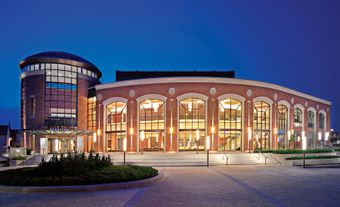
Aurora Town Square was opened in 2024 as a new event venue connected to the town library. Both the Aurora Museum & Archives and Aurora Cultural Centre are located at a former school at the hub.
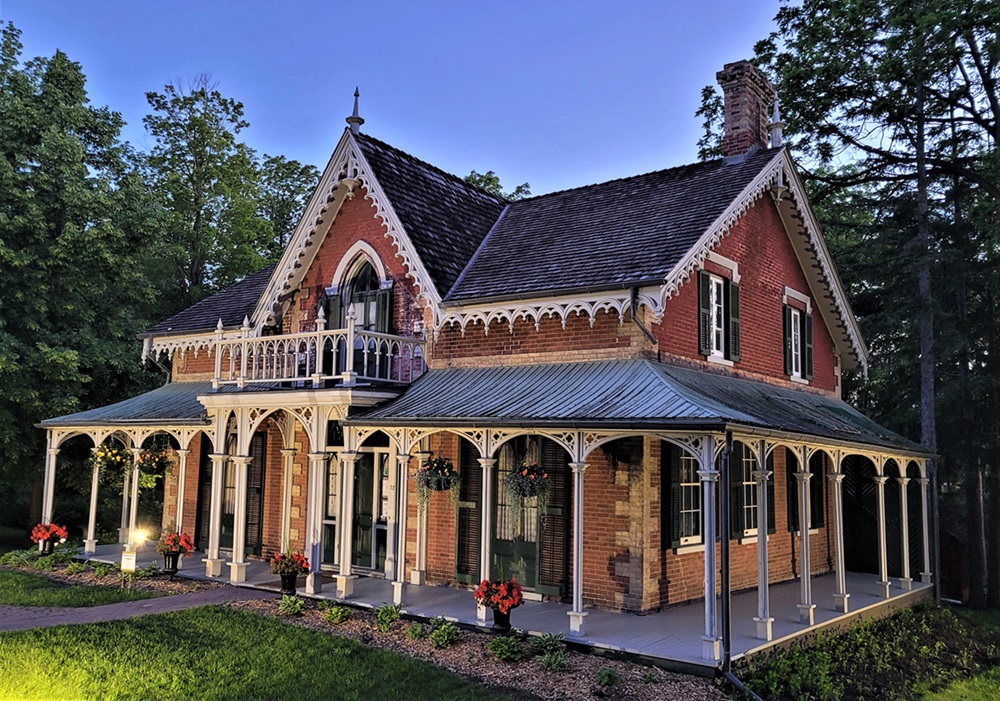
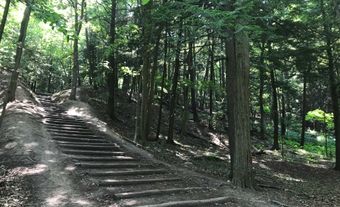
Designated as a National Historic Site, Hillary House is used as a museum by the Aurora Historical Society. The central Aurora Community Arboretum is around 40.5 ha in size and has a variety of tree and plant species.
Aurora kindergartener Lester B. Pearson went on to become a Nobel Peace Prize winner and prime minister. Molecular spectroscopy physicist Harry Lambert Welsh and meteorologist Sir Robert Frederic Stupart, both born in Aurora, were considered pioneers in their fields. Aurora-born Dr. Bette Stephenson was the first woman to serve as president of the Ontario Medical Association and Canadian Medical Association. She was Ontario’s first female deputy premier, under Frank Miller.