Share on Facebook
 Share on X
 Share by Email
 Share on Google Classroom
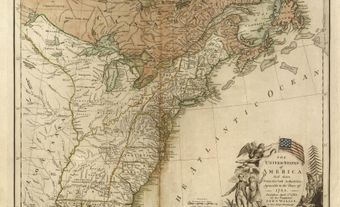
The American Revolution (1775–83) was a rebellion of 13 British colonies along the eastern seaboard of North America. The revolutionaries attempted to gain support from colonists in Quebec and Nova Scotia but were unsuccessful. In 1775, rebel armies invaded Canada, occupying Montreal and attacking Quebec City, but they withdrew the following year. American privateers also raided Atlantic ports, and revolutionary sympathizers in Nova Scotia attempted a rebellion in that colony. The American Revolution greatly influenced the future of Canada. Tens of thousands of Loyalists, including Black Loyalists, fled the United States and settled in British North America. This led to the creation of Upper Canada and New Brunswick. Britain’s Haudenosaunee (Iroquois) allies also lost territory when their lands were ceded to the United States at the end of the war. Many resettled along the Grand River or the Bay of Quinte.
This article is a full-length entry about the American Revolution. For a plain-language summary, please see Canada and the American Revolution (Plain-Language Summary).

End of the Seven Years’ War
The end of the Seven Years' War was one of the causes leading to the American Revolution. With the Treaty of Paris of 1763, France formally ceded New France to the British, and largely withdrew from the continent. The removal of France as a North American power gave Anglo-American colonists greater confidence, as they no longer needed the protection of the British military. In addition, the costs of the war led the British government to impose new taxes on its American colonists, which was met with great dissatisfaction.
Quebec Act and American Frustrations
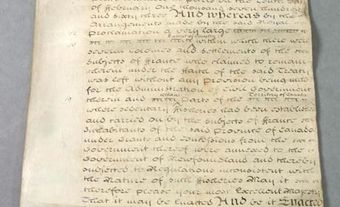
The passing by the British Parliament of the Quebec Act in 1774 led to further anger in the 13 American colonies. The Act guaranteed religious freedom for Roman Catholics and restored French civil law in the conquered colony of Quebec – raising the ire of anti-Catholic American Protestants. The Act also greatly enlarged Quebec's territory to include, among other areas, the unsettled lands of the Ohio valley. This constrained the desires of Americans such as future rebel leader George Washington, to expand the American colonies westward. These frustrations broke into open war between United States rebels and British forces at Lexington, Massachusetts on 19 April 1775.
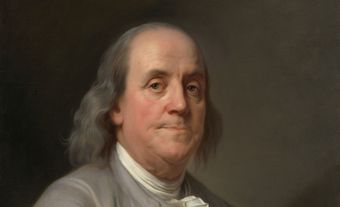
The American rebels mounted a propaganda campaign for support in what is now Canada. (See also Benjamin Franklin and American Attempts to Annex Canada.) They attracted some sympathy inside Quebec particularly in Montreal, where there was some pro-American activity. Officially, however, the French Canadian clergy, land owners and leading citizens adopted a policy of support for the British, and otherwise most of the common people in the Canadian and Maritime colonies remained neutral and reluctant to become involved in the Revolution to the south. Canadian Governor Sir Guy Carleton (Lord Dorchester) also had little success in raising a militia to help counter the American rebels.
Invasion of Quebec
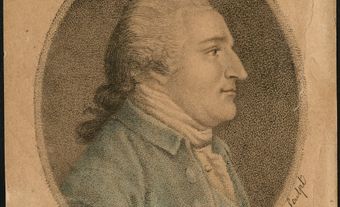
In May 1775, rebel forces under Ethan Allen and Benedict Arnold captured the forts at Ticonderoga and Crown Point in northern New York. The success emboldened the Continental Congress, which voted on 27 June 1775 to invade Canada. It would be a two-pronged invasion: a column under Richard Montgomery would mount an invasion up the Richelieu River, capture the forts of Ile-aux-Noix, Saint-Jean and Chambly, and then attack Montreal. The second column, led by Arnold, would travel across country toward Quebec City.
Montgomery’s force established a base at Ile-aux-Noix in September and captured Fort Chambly in October. The rebels then captured Fort Saint-Jean outside Montreal in November – prompting Carleton to abandon Montreal and flee to Quebec. The Americans occupied Montreal without a fight on 28 November.
Meanwhile, the second invasion force under Arnold managed, despite hardships, faulty maps, near starvation and desertions, to bring about 700 men through the Maine wilderness to the St. Lawrence River and to the fortress of Quebec. Arnold waited outside Quebec until December, when Montgomery joined him with 300 additional men.
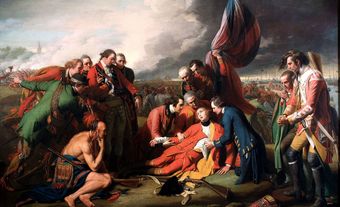
During a snowstorm on 31 December, the Americans assaulted Quebec, which was defended by a garrison of 1,800 British soldiers and militiamen under Carleton. The Americans attacked from two directions. Arnold and his men penetrated some distance into Lower Town, but Arnold himself was wounded in the ankle and carried away from the fighting. His forces later surrendered under counterattack.
Montgomery's force was repulsed after the general and his leading officers were killed by rifle fire in their initial assault on the other side of Lower Town. In total, 60 Americans were killed and 426 taken prisoner at Quebec. On the British side six were killed and 19 wounded.

Siege and Retreat
Under Arnold's command, the remaining uncaptured Americans tried to maintain a siege of the town through the winter, but it was ineffective. The group was easily routed when the spring thaw brought 4,000 British troop reinforcements led by British General John Burgoyne. The Americans abandoned Montreal on 9 May 1776, and the remains of the force was defeated at Trois Rivieres in June. The survivors then retreated to New York, ending their invasion.
The American invasion left bitter memories among Canadians, and drove many American sympathizers into exile from Quebec. However, there had been little active support for the American rebels: clergy and land owners remained staunchly loyal to the Crown and, after some delay in choosing sides, so did the merchant class – many of whom had shared the American resentment at having to pay taxes to Britain.
The American invaders had expected French Canadians to pick up arms against the British and fight alongside them, but they badly misjudged Canadian sentiment. Most ordinary habitants remained determinedly neutral – refusing to take up arms against either their British rulers, or the American rebels.
Burgoyne and his British soldiers pursued the retreating Americans out of Canada, leading a counter-invasion southward via Lake Champlain in New York. Burgoyne, however, overextended himself. In the first great American victory of the Revolutionary war, Burgoyne's force was defeated and surrendered at Saratoga on 17 October 1777.
Rebel Actions in Nova Scotia
As in previous conflicts such as the Seven Years War, Nova Scotia remained an uncertain battleground during the Revolution, thanks in part to its French Acadian population. The provincial Assembly in Halifax voted in favour of loyalty to the Crown, but illegal town meetings gave secret support to the rebels in New England.
Nearly every important coastal outpost outside Halifax suffered from American privateering. In 1776, a force of New England rebels and disaffected Nova Scotians – hoping to launch a rebellion and seize the entire colony – made a futile attack on Fort Cumberland (Fort Beauséjour). The Fort's garrison held out until British troops arrived from Halifax, defeating the attackers and crushing the rebellion.

Loyalist Legacy
Despite the American rebels' failed efforts to bring their revolution to Nova Scotia and Canada, they did win their war against Britain in the 13 colonies. Prominent American colonists signed the Declaration of Independence on 4 July 1776. After a protracted struggle, British forces surrendered in October 1781. Two years later the Treaty of Paris formally recognized the United States of America.
The main consequence for the British colonies to the north was the emergence of a republican state – a powerful, continental neighbour of whom Canadians, Maritimers and their colonial rulers would remain suspicious for decades to come.
The Revolution also triggered the exodus of more than 80,000 Loyalist refugees out of the United States, about half of whom migrated into Quebec and the Maritimes. Loyalist settlement greatly influenced the politics and culture of what would eventually become the nation of Canada, and determined that its development would differ profoundly from the United States (see Canada and the United States).
Indigenous Allies
The Seven Nations of Canada and Haudenosaunee (Six Nations or Iroquois) supported Great Britain, although factions of both confederacies supported the revolutionary cause. Indigenous warriors such as Joseph Brant (Thayendanegea) were important allies during the revolutionary war. The Treaty of Paris 1783 ignored their contributions, however, and Haudenosaunee territory was ceded to the new republic. In return for their loyalty, they were offered financial compensation and land; many settled along the Grand River and the Bay of Quinte.