Share on Facebook
 Share on X
 Share by Email
 Share on Google Classroom
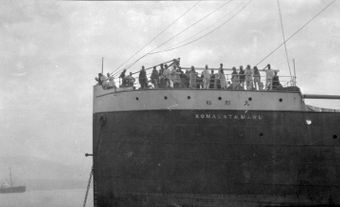
On 7 September 1907, a mob of white Canadians rioted in Vancouver’s Chinatown and Japantown. The rioters were angry over Asian immigration from China, Japan and South Asia. (See Anti-Asian Racism in Canada.) They inflicted substantial damage to the homes and businesses of Chinese and Japanese immigrants. The riots led the Canadian government to restrict immigration from Japan and India. The 1907 riots left a long legacy in the form of immigration restrictions. (See Komagata Maru (Guru Nanak Jahaz).) The psychological and emotional impacts of the violent riots had an enduring impact on Canada’s Asian communities.
Origins
The riot occurred after decades of rising anti-Asian sentiment in North America, especially on the West Coast. White politicians claimed that Asian immigrants would never culturally assimilate; were stealing the jobs of white workers; and were racially and biologically inferior.

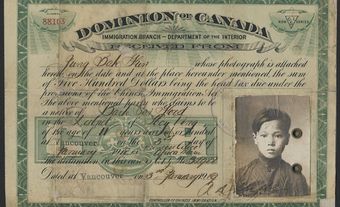
In the late 1800s, Canada took its first steps to limit Asian immigration. Beginning in 1885, Canada required every new Chinese immigrant to pay a head tax upon entry. In 1903, the amount was raised to further dissuade immigrants from coming. (See Anti-Chinese Immigration Policies in Canada.) British Columbia’s provincial government wanted similar restrictions on Japanese and South Asian immigrants.
In the early 1900s, Japan was a growing imperial power. Western empires like Britain feared that Japan’s developing ambitions would compete for land and resources. Japanese immigration to Canada also began increasing. As a result, white Canadians came to see Japanese immigrants as an economic threat and as an extension of Japan’s overseas reach.
In early 1907, British Columbia passed a law requiring new immigrants to take a literacy test in a European language. It was the fourth time the province had passed a similar law. Each previous time, the federal government had disallowed the law. Knowing that the federal government would disallow the new law, Lieutenant Governor James Dunsmuir refused to sign the literacy test into law. His refusal greatly angered many in the province.
By then, an organized anti-Asian movement was growing rapidly on the West Coast. In summer 1907, white trade union leaders formed a Vancouver chapter of the Asiatic Exclusion League, which originated in the United States. White workers were frequently at the centre of anti-Asian organizing. They were often motivated by the idea that Asian workers were pushing white workers out of jobs by accepting lower wages and worse working conditions.
The Riot
The Asiatic Exclusion League organized a parade to protest for restrictions on Asian immigration. It was to be held on 7 September 1907. Three days before the parade, on 4 September, white workers across the United States-Canada border in Bellingham, Washington, rioted against South Asian lumber mill workers. News of the riot spread to Vancouver, inflaming the atmosphere ahead of the parade.
On the evening of 7 September, a crowd of at least 2,000 white Vancouverites took part in the parade. They marched toward City Hall at the intersection of Main Street and Hastings Street. Some held signs in favour of Canada remaining a white society, bearing banners with slogans such as “A White Canada For Us” and “Stand for a White Canada.” Speakers representing the League gave speeches calling for the government to restrict Asian immigration while the crowd cheered. The League also burned an effigy of Lieutenant Governor James Dunsmuir in front of City Hall for his refusal to enact restrictions on Asian immigration.
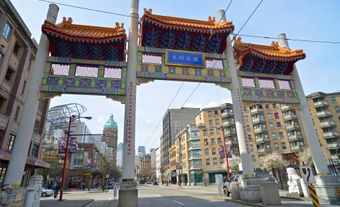
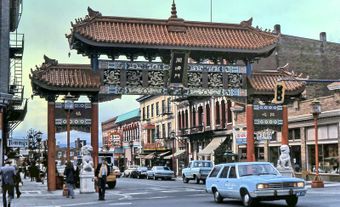
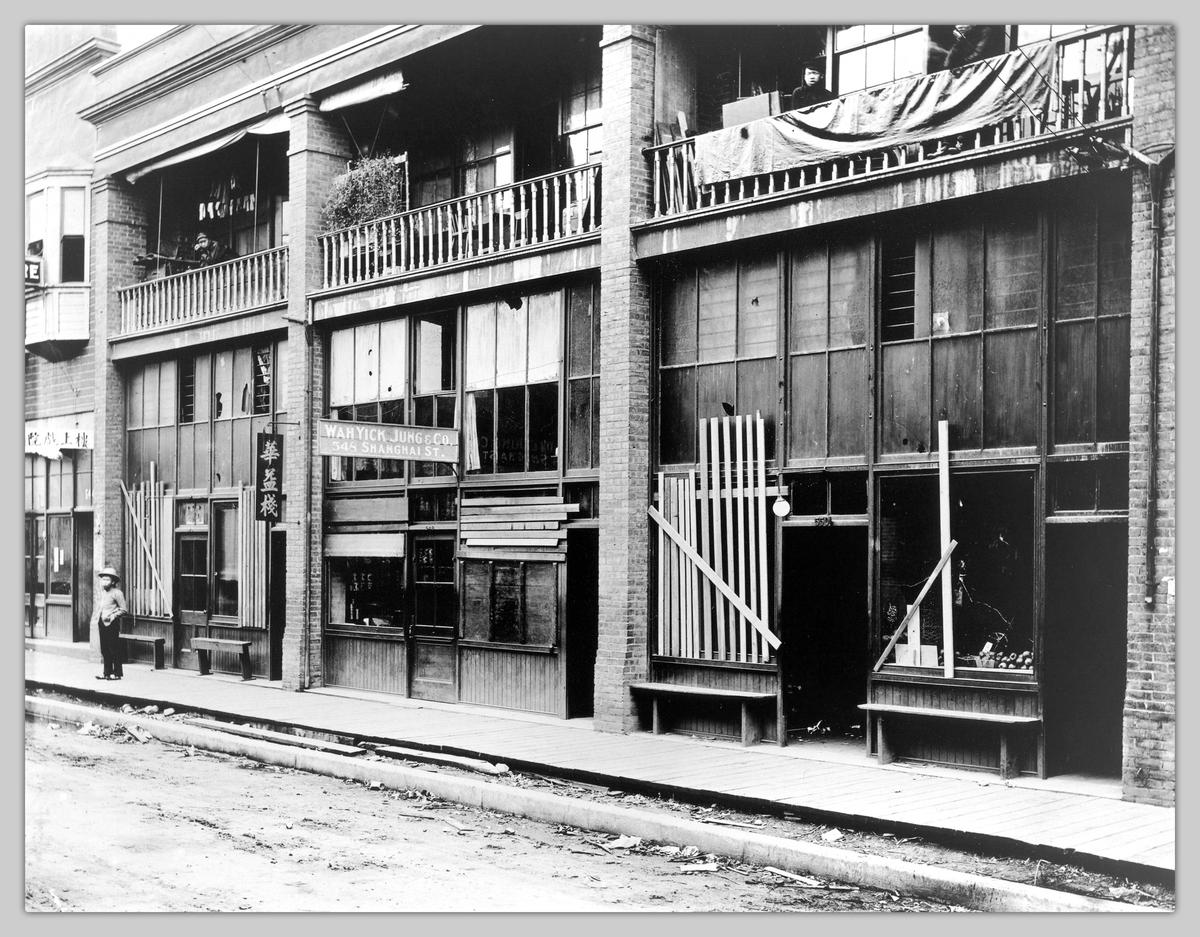
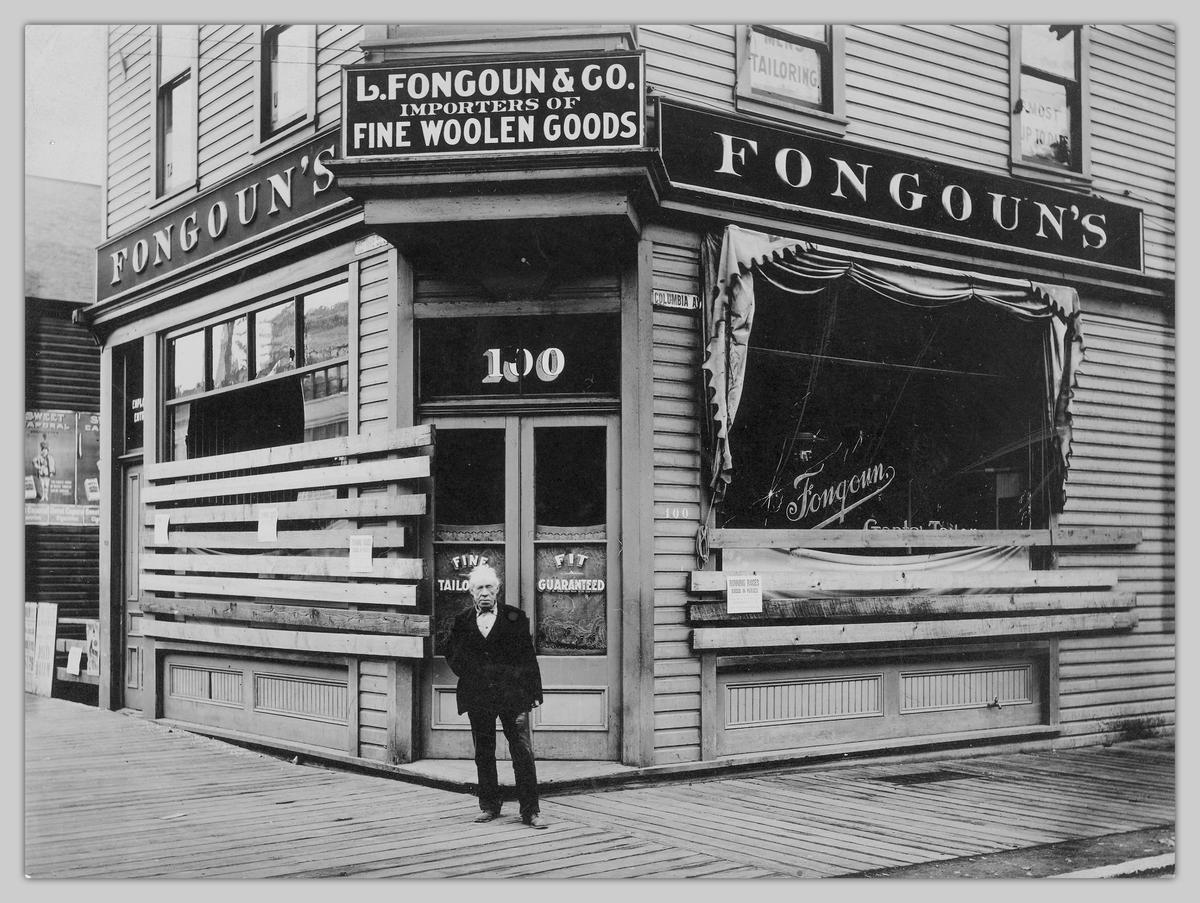
Fired up by the speeches, the angry crowd turned their ire towards neighbouring Chinatown and Japantown. They marched from City Hall to Chinatown. The mob hurled rocks and other objects through the windows of Chinese homes and businesses. They also smashed windows and storefronts as they stormed through Chinatown. The Chinese community had little advance warning of the mob. Chinatown’s residents barricaded themselves deep inside their businesses to protect themselves from the rioters. The mob damaged nearly every building in the neighbourhood.
After Chinatown, the mob marched towards Japantown on Powell Street, east of Chinatown. Japantown had a little more time to prepare for the rioters. When the mob reached Japantown, they met fierce resistance. The Japanese residents had armed themselves with whatever they could find — knives, clubs, bricks and bottles. They also stationed themselves strategically to protect their homes. A group positioned themselves at the entrance to Japantown while others stood guard in front of their businesses. Some hurled bricks and rocks from the rooftops at the approaching invaders. Despite this, the rioters still damaged many buildings. The mob broke windows and damaged many buildings. They also set the Japanese language school on fire.
Eventually, Japanese defenders were able to repel the rioters, and the mob turned back towards Chinatown. The riot ended when police descended on Chinatown and began arresting the rioters. Heavy rain also contributed to dispersing the crowd.
Aftermath
The police arrested or fined a small number of rioters for the riots. The damage to Chinatown and Japantown was immense. Though no injuries were reported, the riot caused a considerable amount of property damage. Around 2,000 Chinese residents were temporarily driven out of their homes by the extensive damage.
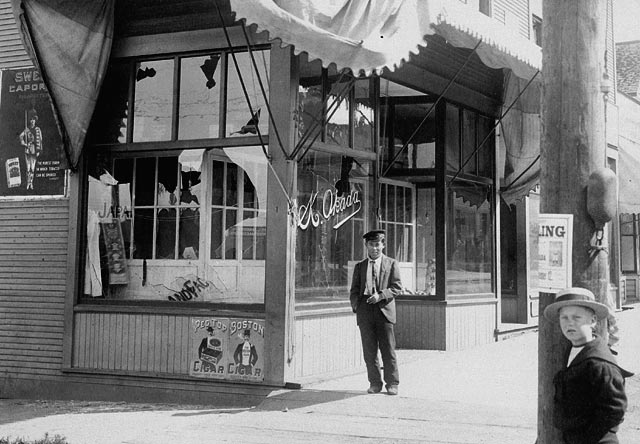
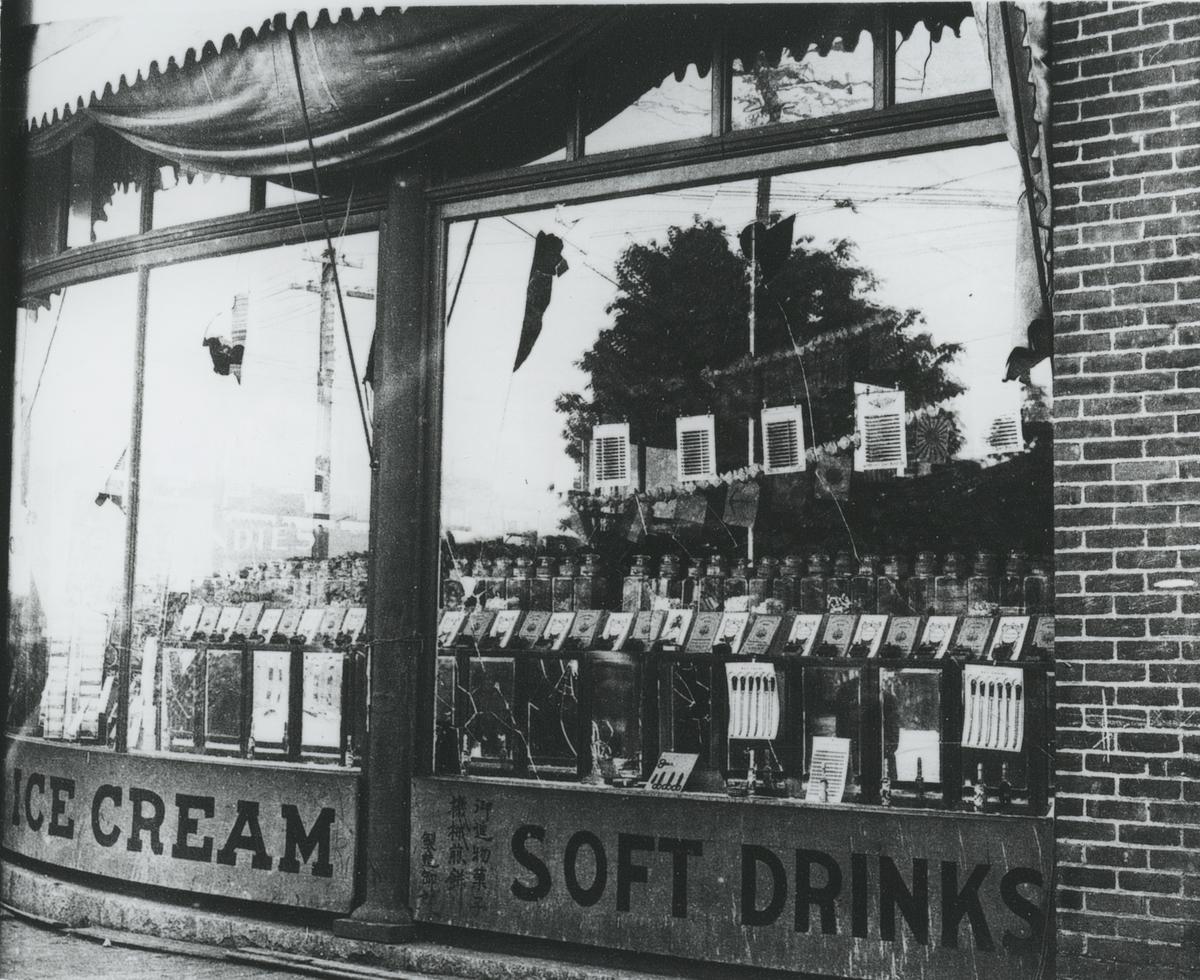
In response to the riot, Vancouver’s Chinese and Japanese communities organized labour strikes. They wanted to show how valuable their labour was to the city. The day after the riot, Japanese workers went on a half-day work strike. Chinese domestic workers, laundry workers, hotel workers and waiters went on strike for the next few days.
Consequences
The riot was an international embarrassment for Canada. The widespread property damage and disorder made it appear as though Canada was unable to keep control and manage its immigration policy. It led the Canadian government to seriously reconsider its approach towards Asian immigration.
Over the next few months, Canada negotiated with the Japanese government to limit Japanese emigration to Canada. (See Japanese Canadians.) In January 1908, Canada and Japan signed the Gentleman’s Agreement or the Hayashi-Lemieux Agreement. As a result, Japan agreed to restrict the number of male Japanese immigrants working in agriculture and domestic work to a maximum of 400 per year.
In April 1908, the Canadian government implemented an order-in-council known as the Continuous Journey Regulation. The resolution required immigrants to sail from their country of origin to Canada without stopping in another port. The policy was mainly intended to severely limit immigration from South Asia. After the order-in-council, the Canadian government ordered the Canadian Pacific Railway to stop selling steamship tickets going directly from India to Canada. This cut off the main route that migrants from India used to reach Canada. (See Komagata Maru (Guru Nanak Jahaz).) It also added an additional barrier to Japanese immigration, as many Japanese immigrants used Hawaii as a stopover point before travelling in Canada.