Share on Facebook
 Share on X
 Share by Email
 Share on Google Classroom
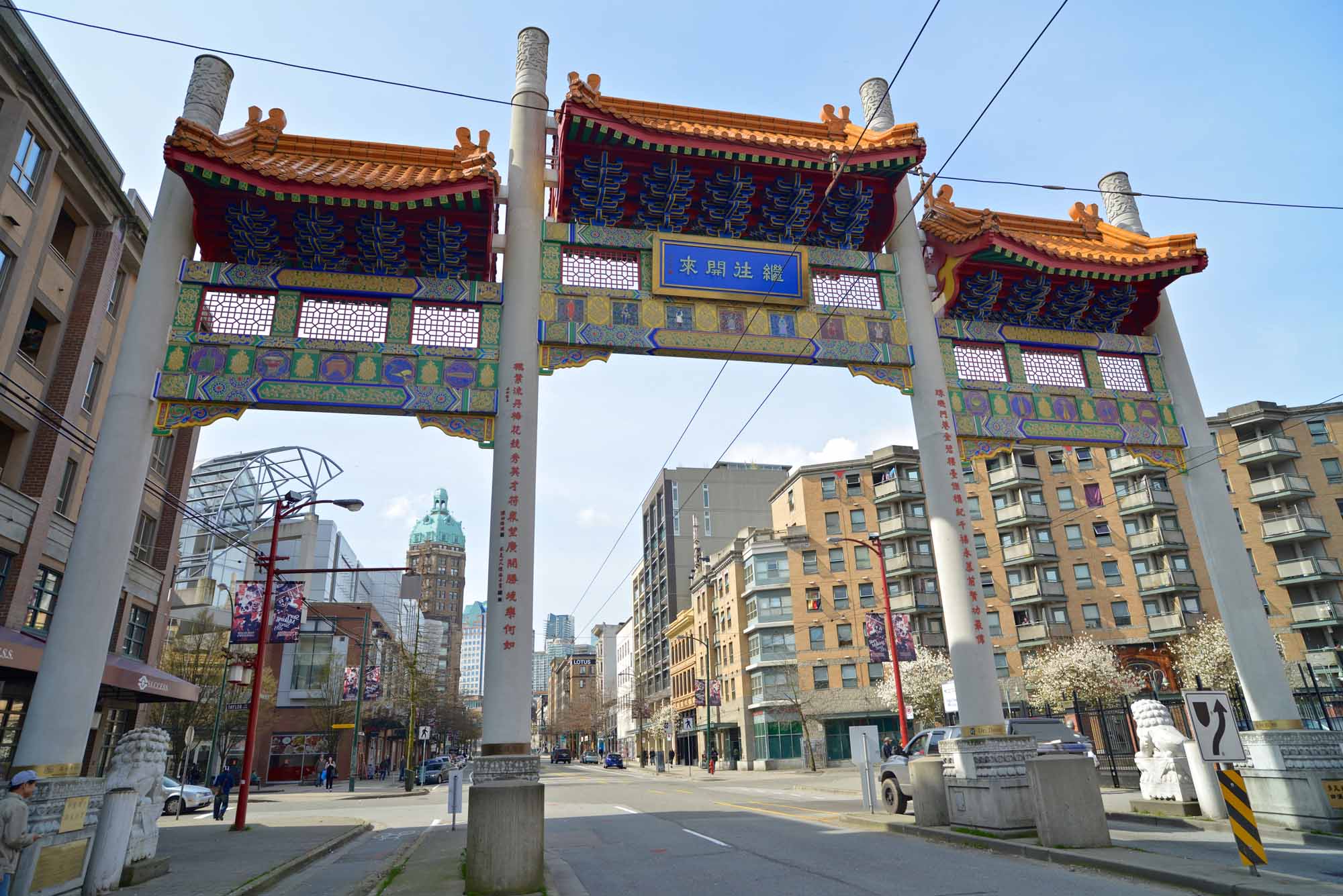
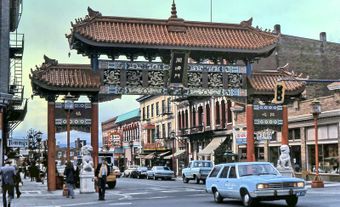
Vancouver’s Chinatown is home to one of the largest and oldest communities of Chinese Canadians in Canada. It was one of the few historic Chinatowns in Canada to escape large demolitions of its oldest buildings. Vancouver’s Chinatown features distinctive architecture incorporating both Western and Chinese styles. Chinatown and the “New Chinatown” in Richmond are some of the most important centres of Chinese culture in Vancouver.
Origins
For thousands of years, the Tsleil-Waututh and Squamish peoples (see Central Coast Salish) lived in the area that became known as Chinatown. From 1858 onward, early Chinese settlers started arriving in the area. They were drawn to British Columbia by a series of gold rushes. Afterwards, many Chinese migrants settled on the shores of Burrard Inlet in the new town of Granville, a new settlement focused on the lumber industry. Chinese labourers notably found work in Granville’s sawmills and laundries. In 1884, Canada extended the terminus of the Canadian Pacific Railway (CPR) to Coal Harbour. This greatly increased settlement of the area. In 1886, it also led to Granville being incorporated into the City of Vancouver.

The Chinese community around Coal Harbour grew rapidly. After the CPR’s completion in 1885, former railway workers settled in a shanty camp near the CPR terminus. City officials and many of the white inhabitants of Vancouver considered Chinese people and the camp in Coal Harbour to be racially undesirable. (See Anti-Asian Racism in Canada.) In 1887, a mob of around 300 white men attacked the Chinese camp in Coal Harbour. They damaged Chinese homes and businesses to force Chinese settlers out of the city.
Pushed out of the city’s centre, many Chinese immigrants moved to the swampy land around False Creek on Vancouver’s eastern edge. The homes and businesses they built there became the foundation for Vancouver’s Chinatown. Most came from Cantonese-speaking Southern China, and their cultural influences had an enormous impact on the development of Chinatown.
Early History
In the late 1800s, Vancouver’s Chinatown grew rapidly. After 1901, it became the largest Chinatown in British Columbia, home to the largest Chinese population in the province. Many new Chinese immigrants entered through the port of Vancouver and chose to settle in Chinatown. To these new immigrants, Chinatown was a place of security, community and shared culture where they could speak their own language. (See also Chinese Languages in Canada.) Chinese entrepreneurs opened their own businesses. They imported and sold familiar Chinese foods and goods. Meanwhile, the community formed clan associations based on family name and village of origin in China. These functioned as mutual aid societies to support their kin through tough times.

At the time, the community was mostly made up of male Chinese labourers. Most of these men lived in communal rooming houses with other men. They slept in rooms with bunk beds to save money. Few could afford to buy property or rent a room of their own.
Chinatown’s population was clustered in cramped buildings in part because Vancouver made it difficult to move elsewhere. White residents of other neighbourhoods would often protest when anyone of Chinese descent attempted to move into their areas. These residents also negotiated racially restrictive housing covenants in some areas of the city. Their actions limited home ownership to white owners. (See Racial Segregation of Asian Canadians.)
Fuelled by white workers’ belief that Asian labourers were taking their jobs, another riot broke out in Vancouver in 1907. Angry mobs stormed through Chinatown and nearby Japantown, smashing windows. The Chinese community protested in the days after the riot. Chinese domestic workers, laundrymen, waiters and hotel workers went on strike for a few days.
Vancouver’s white population and city officials often stereotyped Chinatown as unclean, overly crowded and full of drug abuse and sexual immorality. The police raided gambling and opium houses to “clean up” Chinatown. In 1919, the city banned Chinese restaurants from employing white waitresses. They claimed that the law was necessary to protect white women from the sexual immorality of Chinese men.
In 1923, Canada passed the Chinese Immigration Act. The law stopped virtually all new Chinese immigrants from coming to Canada. (See Anti-Chinese Immigration Policies in Canada.) In the difficult years after 1923, many Chinese moved to Vancouver’s Chinatown. Chinatown’s population grew throughout the 1920s. However, the Great Depression hit Vancouver’s Chinese community hard. Many labourers lost their jobs. Moreover, unemployed Chinese workers received little assistance compared to white workers. In response, Chinatown’s residents organized protests and petitions against the city, pressing for equal treatment. Chinatown’s population peaked in the early 1930s and then began to decline.
Post-War Changes and Activism
After the Second World War, Vancouver became less outwardly hostile to its Chinese population. The wartime alliance between Canada and China improved China’s image in the eyes of many Canadians. (See also Chinese Canadians of Force 136.) In 1947, Canada repealed the Chinese Immigration Act.
In 1956, the Vancouver Real Estate Board abolished racially restrictive housing covenants. (See Racial Segregation of Asian Canadians.) Many Chinese residents were able to move out of Chinatown in the 1950s and 1960s. The community’s younger generations were also less dependent on Chinatown clan associations for mutual aid. As a result, a good number of them took advantage of the changing times to move to the suburbs.
At around the same time, Vancouver also embarked on a project of urban renewal in Chinatown that sparked protests. In 1949, under a program of slum clearance, the city tore down the buildings surrounding Canton Alley. City officials set their sights on Strathcona, the residential neighbourhood east of Chinatown that was home to many Chinese families. In 1958, the city froze new developments in Strathcona. It proposed to demolish existing homes and relocate residents in the following years. These plans became an ongoing source of tension. In 1968, Strathcona residents formed the Strathcona Property Owners and Tenants Association to lobby against the redevelopment and demolition of existing buildings. Their advocacy helped Strathcona avoid destruction. Eventually, Vancouver made funds available to rehabilitate existing buildings, rather than demolish them.
In 1967, city council voted to build a freeway above Carrall Street that would link to the Georgia Viaduct. The freeway would have required the destruction of Chinese businesses along Carrall Street. It would also have split Chinatown off from Vancouver’s downtown commercial centre. In protest, a group of University of British Columbia architecture students marched through Chinatown. Meanwhile, Chinatown’s businesses hung black banners in their windows to symbolize the impending death of Chinatown if the freeway were built. In the face of opposition, city council withdrew the plans in 1968. (See also Quebec City’s Chinatown.)
In the 1970s, Chinatown’s residents banded together again — this time over the issue of barbecued meat. (See also Chinese Food in Canada.) City health authorities alleged that the barbecued meats hanging in Chinatown’s windows posed a health risk. In 1975, they shut down barbecue shops. Shop owners formed the Committee to Save Chinese Barbecued Products. They asked health authorities to prove that the meats were causing food poisoning. The committee hired a microbiologist to attest to the media that the shops’ method of barbecuing would kill any pathogenic bacteria present in the meat. The health authorities were unable to come up with a single documented case of food poisoning caused by eating Chinese barbecued meats and backed down.
New Chinese Immigration
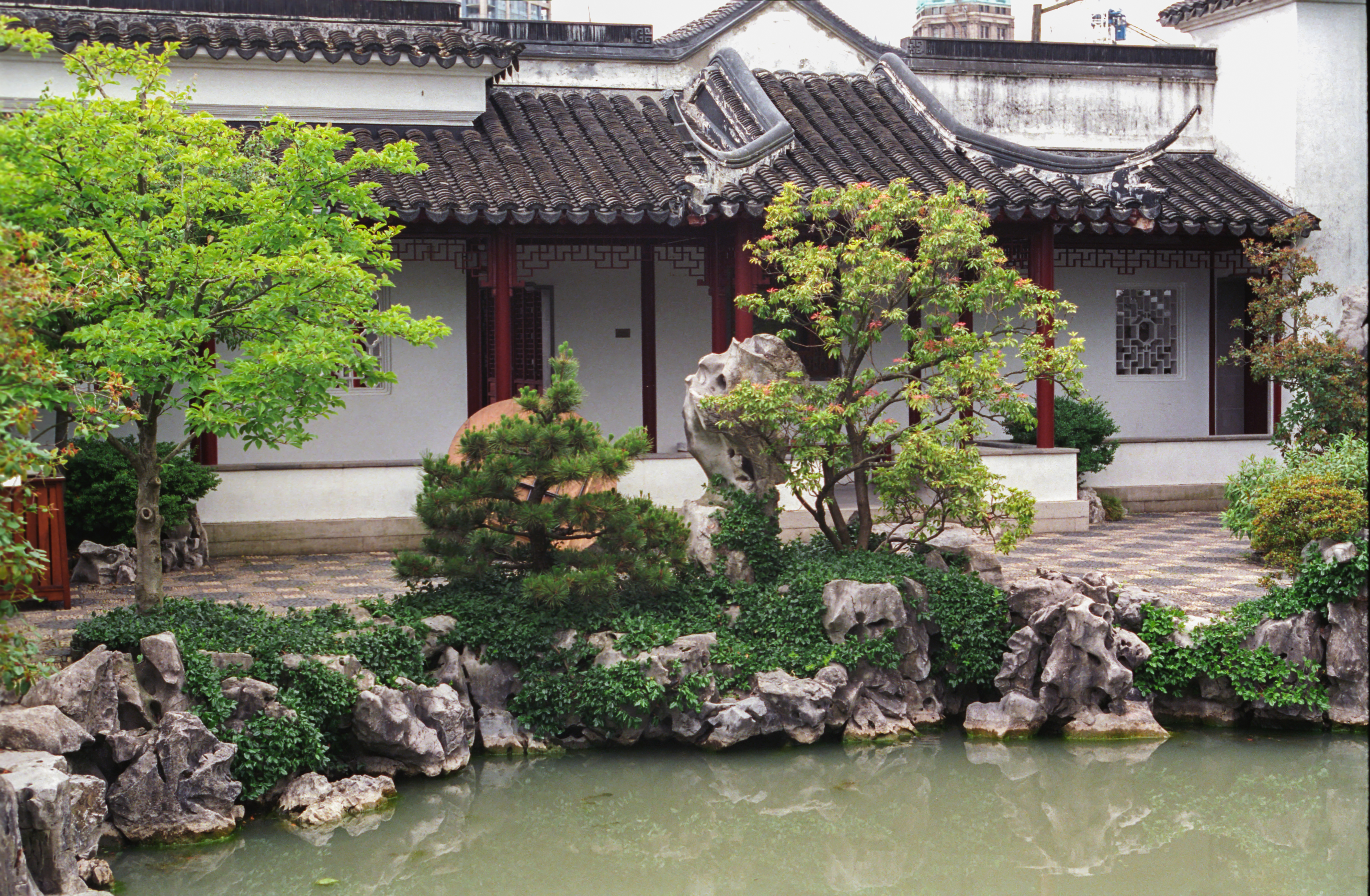
The 1970s and 1980s were a period of growth for Chinatown. In 1967, Canada had previously changed its immigration laws to remove race- and nationality-based restrictions. This allowed many new Chinese immigrants to come to Canada. Many immigrants from Cantonese-speaking (see Chinese Languages in Canada) Hong Kong were drawn to Chinatown, and some settled in the area. Investment from Hong Kong Chinese and revitalization efforts supported by the Canadian government helped fund new buildings, such as the Chinese Cultural Centre and the Dr. Sun Yat-Sen Classical Chinese Garden.
In the 1980s, the population of Chinatown declined. Residents move out to the suburbs. New Chinese immigrants also began to increasingly form new communities elsewhere in the city. In the 1990s and early 2000s, many new immigrants from Mainland China came to Canada. Predominantly Mandarin-speaking, they differed culturally and linguistically from the older Cantonese-speaking community of Chinatown. As a result, most chose to settle in the suburb of Richmond. Their contributions to Richmond have turned the city into a “new Chinatown” deeply influenced by the culture and traditions of northern and Mainland China.
Chinatown in the 21st Century
Chinatown experienced a difficult period during the COVID-19 pandemic. The pandemic caused economic strain and anti-Asian rhetoric blaming the virus’s spread on Chinese people. ( See Anti-Asian Racism in Canada.) These factors led to the closure of some Chinatown businesses.
Chinatown is also under pressure from gentrification, which is making the area less affordable. Chinatown is located in-between increasingly expensive neighbourhoods to the west and the Downtown Eastside in the northeast ― one of Canada’s most impoverished neighbourhoods. These dynamics have increased rents and have contributed to longtime residents and businesses leaving the area.
Despite recent pressures, community efforts have helped maintain a vibrant cultural life in Chinatown. Community festivals and parades occur throughout the year to celebrate Chinese culture and heritage. Notable holidays and festivals include the Lunar New Year and Mid-Autumn Festival. Historic clan societies, like the Wongs’ Benevolent Association, and cultural centres are active in language and heritage preservation. New museums and exhibition spaces, such as the Chinese Canadian Museum and Chinatown Storytelling Centre, retell Chinatown’s history to new generations. The Millennium Gate and Dr. Sun Yat-Sen Classical Chinese Garden are also popular tourist destinations.