
Browse "Things"
-
Article
Youth Criminal Justice Act
The Youth Criminal Justice Act, which was proclaimed in force on 1 April 2003, replaces the Young Offenders Act. It applies to a young person, or youth, who is or who appears to be 12 years old or older, but who is less than 18 years old and who is alleged to have committed an offence as a youth.
"https://thecanadianencyclopedia.ca/images/tce_placeholder.jpg?v=e9dca980c9bdb3aa11e832e7ea94f5d9" // resources/views/front/categories/view.blade.php
https://thecanadianencyclopedia.ca/images/tce_placeholder.jpg?v=e9dca980c9bdb3aa11e832e7ea94f5d9
-
Article
Youth Orchestras
Canadian youth orchestras fall into three main categories: those attached to public and private schools (including universities, colleges, conservatories, and camps); those connected to and supported by adult community or professional orchestras; and those which represent a city or region and are a young counterpart of the community orchestras. Among the earliest youth orchestras in Canada were the Manitoba Schools' Orchestra (Greater Winnipeg Schools' Orchestra), founded in 1923, the Mount Royal College (Calgary) Junior Orchestra...
"https://thecanadianencyclopedia.ca/images/tce_placeholder.jpg?v=e9dca980c9bdb3aa11e832e7ea94f5d9" // resources/views/front/categories/view.blade.php
https://thecanadianencyclopedia.ca/images/tce_placeholder.jpg?v=e9dca980c9bdb3aa11e832e7ea94f5d9
-
Article
Ypres: Inexperienced Canadians Hold the Line
"Here was the world's worst wound." — Siegfried Sassoon, "On Passing the New Menin Gate" (1928) In early October 1914 the British Expeditionary Force left its positions on the Aisne River in France, moved to the left of the Allied line, and joined the Race to the Sea. While advancing northeastward, into the Belgian province of West Flanders, they collided with strong German forces advancing westward toward the Channel coast. The British and their French...
"https://d3d0lqu00lnqvz.cloudfront.net/media/media/72721b66-3911-4a78-8cec-26a091efe0f2.jpg" // resources/views/front/categories/view.blade.php
https://d3d0lqu00lnqvz.cloudfront.net/media/media/72721b66-3911-4a78-8cec-26a091efe0f2.jpg
-
Article
Music of the Former Yugoslavia in Canada
Patterns of immigration to Canada from this south-central European country are considered in EMC entries for Croatia, Macedonia, Serbia, and Slovenia - four of the republics and cultures which constitute the political and geographic entity of Yugoslavia.
"https://thecanadianencyclopedia.ca/images/tce_placeholder.jpg?v=e9dca980c9bdb3aa11e832e7ea94f5d9" // resources/views/front/categories/view.blade.php
https://thecanadianencyclopedia.ca/images/tce_placeholder.jpg?v=e9dca980c9bdb3aa11e832e7ea94f5d9
-
Article
Yukon and Confederation
Yukon entered Confederation in 1898, after a gold rush boom led Canada to create a second northern territory out of the Northwest Territories (NWT).
"https://d3d0lqu00lnqvz.cloudfront.net/media/media/97973dc5-8c97-445f-8401-694689164bae.jpg" // resources/views/front/categories/view.blade.php
https://d3d0lqu00lnqvz.cloudfront.net/media/media/97973dc5-8c97-445f-8401-694689164bae.jpg
-
Article
Yukon Arts Council
Yukon Arts Council. Organization founded as an independent society under the Yukon Societies Ordinance in October 1971. Prior to that time, some of its musical responsibilities were carried out by the Whitehorse Concert Association, active from the late 1950s to 1970.
"https://thecanadianencyclopedia.ca/images/tce_placeholder.jpg?v=e9dca980c9bdb3aa11e832e7ea94f5d9" // resources/views/front/categories/view.blade.php
https://thecanadianencyclopedia.ca/images/tce_placeholder.jpg?v=e9dca980c9bdb3aa11e832e7ea94f5d9
-
Article
Yukon Beringia Interpretive Centre
The Yukon Beringia Interpretive Centre in Whitehorse, Yukon, aims to provide visitors with a window into the Yukon’s past. With dioramas, skeletons and replicas, the centre immerses visitors into the natural history of the subcontinent of Beringia. The centre also aims to highlight the history and knowledge of the First Nations in the region and provides programs for local community-building.
"https://d3d0lqu00lnqvz.cloudfront.net/yukonberingiainterpretivecentre/Whitehorse_entrance_Yukon_Beringia.jpg" // resources/views/front/categories/view.blade.php
https://d3d0lqu00lnqvz.cloudfront.net/yukonberingiainterpretivecentre/Whitehorse_entrance_Yukon_Beringia.jpg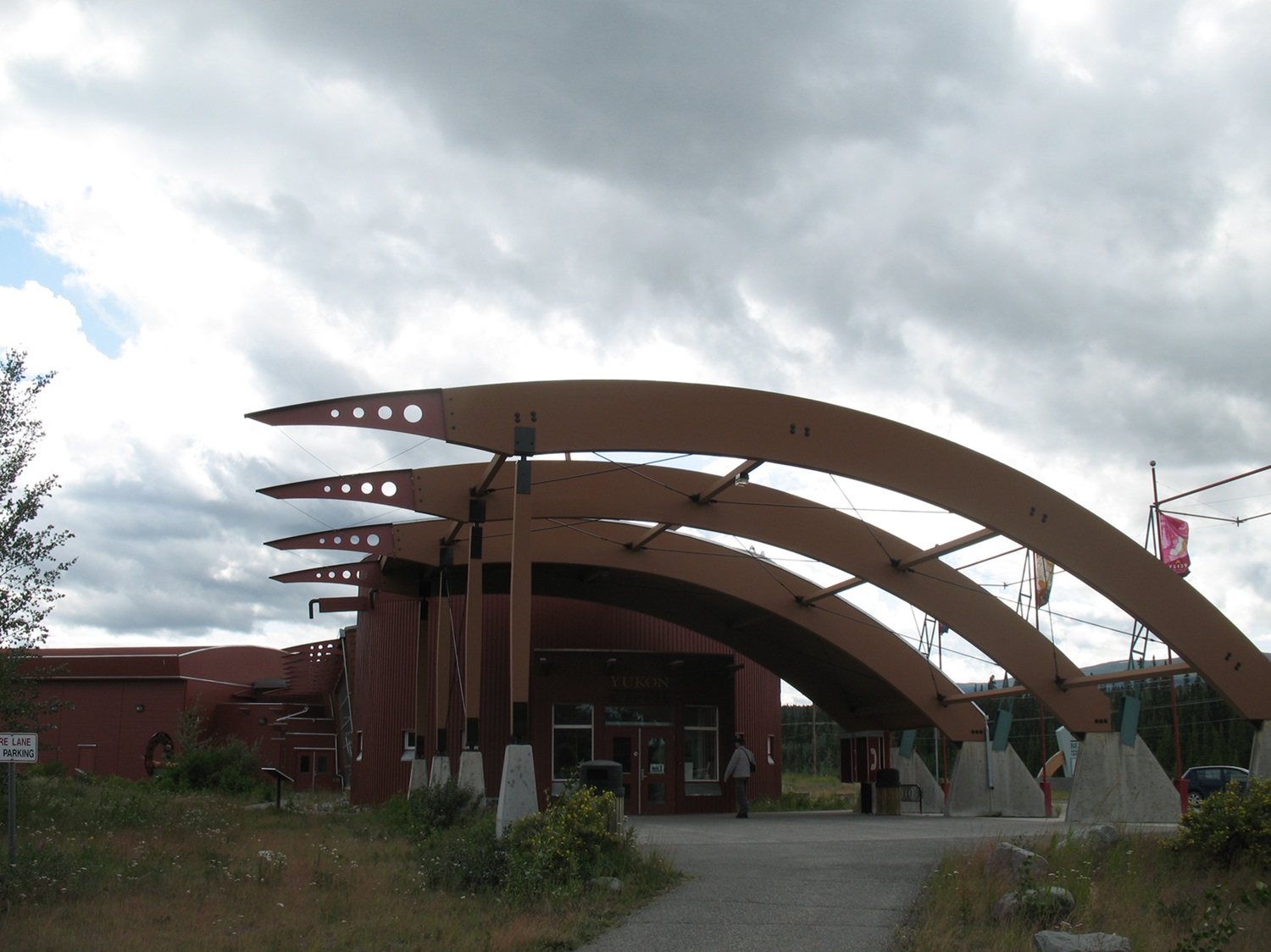
-
Macleans
Yukon Celebrates Gold Rush Centenary
Madeleine Gould can often be seen on the streets of Dawson sporting a T-shirt that reads: "The Yukon: where men are men and women are pioneers."This article was originally published in Maclean's Magazine on August 19, 1996
"https://thecanadianencyclopedia.ca/images/tce_placeholder.jpg?v=e9dca980c9bdb3aa11e832e7ea94f5d9" // resources/views/front/categories/view.blade.php
https://thecanadianencyclopedia.ca/images/tce_placeholder.jpg?v=e9dca980c9bdb3aa11e832e7ea94f5d9
-
Article
Yukon Field Force
Yukon Field Force (1898-1900), composed of 203 officers and men drawn from all 3 branches (cavalry, artillery and infantry) of the Permanent Force of the Canadian Militia.
"https://thecanadianencyclopedia.ca/images/tce_placeholder.jpg?v=e9dca980c9bdb3aa11e832e7ea94f5d9" // resources/views/front/categories/view.blade.php
https://thecanadianencyclopedia.ca/images/tce_placeholder.jpg?v=e9dca980c9bdb3aa11e832e7ea94f5d9
-
Article
Yukon River
At 3,185 km (1,149 km of which lie in Canada), the Yukon River is among the longest rivers in the country (see also Longest Rivers in Canada). Its headwaters are in the northwest corner of British Columbia, at the province’s border with the Yukon. It flows north and northwest across the Yukon into Alaska, then west to Norton Sound on the Bering Sea. Within the large central plateau of the Yukon, ringed by the Mackenzie Mountains to the east and the St. Elias range to the southwest, the Yukon River and its tributaries form the region’s dominant drainage basin.
"https://d3d0lqu00lnqvz.cloudfront.net/scenicplaces/yukon-river-whitehorse.jpg" // resources/views/front/categories/view.blade.php
https://d3d0lqu00lnqvz.cloudfront.net/scenicplaces/yukon-river-whitehorse.jpg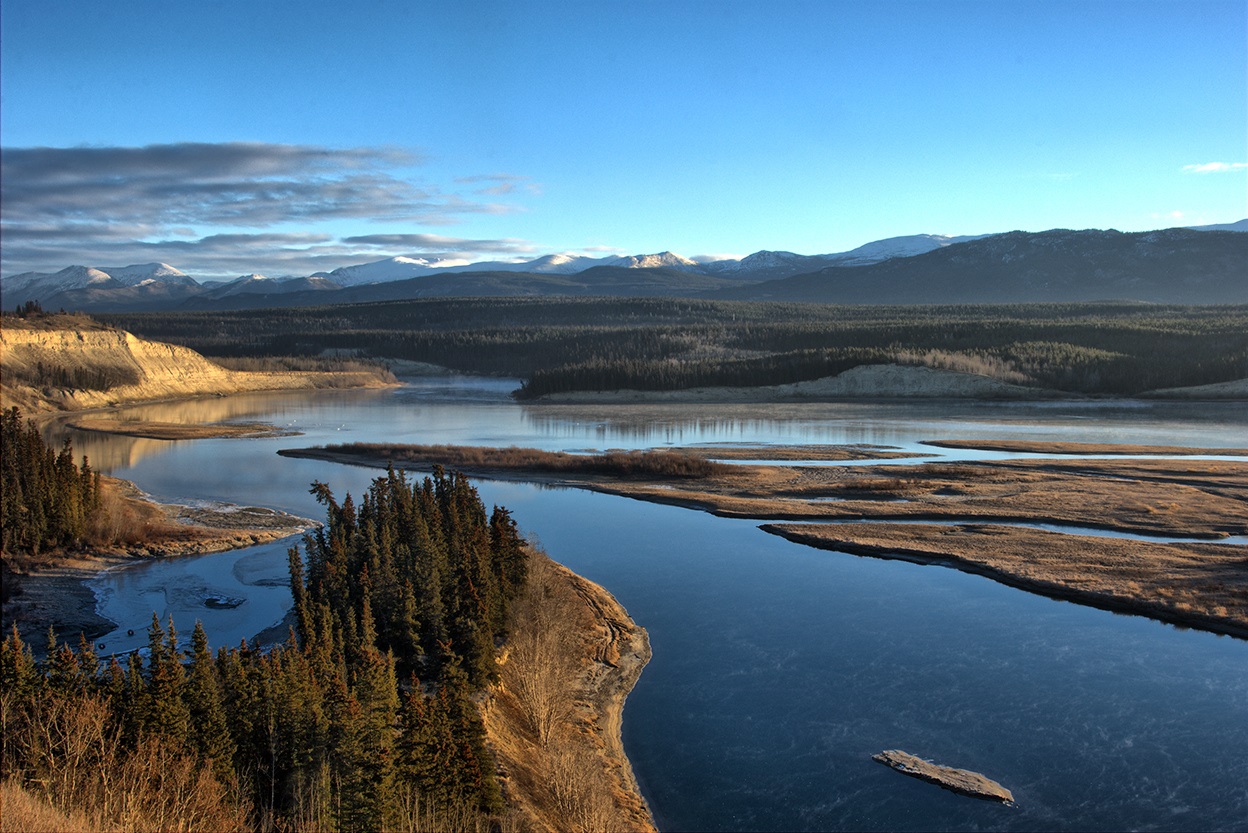
-
Article
Ice Resurfacers (Including Zamboni Machines)
Zamboni ice resurfacers are used in arenas across Canada and around the world. Although Zamboni is a registered trademark, many Canadians use the term to refer to all ice resurfacers, including those produced by other companies. American Frank J. Zamboni invented the original Zamboni ice resurfacer in 1949. His namesake company is based in Paramount, California, but also has a large manufacturing facility in Brantford, Ontario. The Zamboni Company’s major competitor, Resurfice Corporation (based in Elmira, Ontario), produces the Olympia line of ice resurfacers that are used in arenas across Canada and around the world. In 2016, ICETECH Machines began producing the Okay Elektra, an electronic ice resurfacer, in Terrebonne, Québec.
"https://d3d0lqu00lnqvz.cloudfront.net/media/media/9795a451-4630-4232-a937-41572288eabc.jpg" // resources/views/front/categories/view.blade.php
https://d3d0lqu00lnqvz.cloudfront.net/media/media/9795a451-4630-4232-a937-41572288eabc.jpg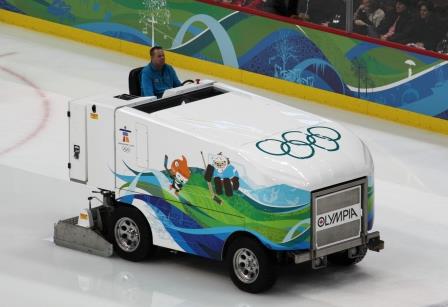
-
Article
Zed
Zed is the name of the letter Z. The pronunciation zed is more commonly used in Canadian English than zee. English speakers in other Commonwealth countries also prefer the pronunciation zed. As zed is the British pronunciation and zee is chiefly American, zed represents one of the rare occasions in which most Canadians prefer the British to the American pronunciation. Use of zee is often stigmatized among Canadian English speakers, which is likely the reason why zee has not taken root as quickly as other influences from American English.
"https://d3d0lqu00lnqvz.cloudfront.net/media/media/bba69356-805d-4743-9183-fb7af3195266.png" // resources/views/front/categories/view.blade.php
https://d3d0lqu00lnqvz.cloudfront.net/media/media/bba69356-805d-4743-9183-fb7af3195266.png
-
Article
Zellers
Zellers was a Canadian department store chain, operating under both Canadian and American ownership. The company began in 1928 as Zellers Limited and was acquired by an American company before being repurchased by its founder in 1931. Hudson’s Bay Company (HBC) purchased the stores in 1978. After closure of the Zellers chain in 2013, the name was used for Hudson’s Bay liquidation stores (2013–20), and a discount section of Hudson’s Bay stores (2021–25). With HBC’s bankruptcy in 2025, Quebec retailer Les Ailes de la Mode purchased the brand, opening their first Zellers store that year.
"https://d3d0lqu00lnqvz.cloudfront.net/zellers/zellersstoreinmoncton.jpg" // resources/views/front/categories/view.blade.php
https://d3d0lqu00lnqvz.cloudfront.net/zellers/zellersstoreinmoncton.jpg
-
Article
Zero Patience
Zero Patience (1993), director/writer/video artist John GREYSON's first theatrical release, is one of his most scathing and strangely hilarious indictments of systematic homophobia.
"https://thecanadianencyclopedia.ca/images/tce_placeholder.jpg?v=e9dca980c9bdb3aa11e832e7ea94f5d9" // resources/views/front/categories/view.blade.php
https://thecanadianencyclopedia.ca/images/tce_placeholder.jpg?v=e9dca980c9bdb3aa11e832e7ea94f5d9
-
Article
Zinc
Zinc (Zn) is a bluish-white metal of low to intermediate hardness that melts at 419°C and is estimated to comprise about 0.013% of the earth's crust. Zinc is an essential element for human health; over 200 enzymes in the body require zinc for proper functioning.
"https://thecanadianencyclopedia.ca/images/tce_placeholder.jpg?v=e9dca980c9bdb3aa11e832e7ea94f5d9" // resources/views/front/categories/view.blade.php
https://thecanadianencyclopedia.ca/images/tce_placeholder.jpg?v=e9dca980c9bdb3aa11e832e7ea94f5d9