
Browse "Things"
-
Article
Beaver in Canadian Music
As an emblem of Canada the beaver goes back at least as far as the 17th century.
"https://thecanadianencyclopedia.ca/images/tce_placeholder.jpg?v=e9dca980c9bdb3aa11e832e7ea94f5d9" // resources/views/front/categories/view.blade.php
https://thecanadianencyclopedia.ca/images/tce_placeholder.jpg?v=e9dca980c9bdb3aa11e832e7ea94f5d9
-
Article
Beaver Pelts
Beaver pelts were an integral part of the early Canadian fur trade economy. Indigenous and European hunters supplied trade networks that capitalized on the popularity of beaver pelts in European markets. As beaver grew scarce in certain regions, hunters moved farther north and west, establishing a network of forts and supply routes that laid the groundwork for the development of Canada. (See also Fur Trade Route Networks.)
"https://d3d0lqu00lnqvz.cloudfront.net/media/media/aba6df04-519f-411d-a59b-39f712ac1359.jpg" // resources/views/front/categories/view.blade.php
https://d3d0lqu00lnqvz.cloudfront.net/media/media/aba6df04-519f-411d-a59b-39f712ac1359.jpg
-
Article
Beaver Records Ltd.
Beaver Records Ltd. Company established in 1950 by the Toronto lawyer, musical patron, and supporter of the Toronto Mendelssohn Choir F.R. MacKelcan (1882-1962), with the purpose of recording the choir.
"https://thecanadianencyclopedia.ca/images/tce_placeholder.jpg?v=e9dca980c9bdb3aa11e832e7ea94f5d9" // resources/views/front/categories/view.blade.php
https://thecanadianencyclopedia.ca/images/tce_placeholder.jpg?v=e9dca980c9bdb3aa11e832e7ea94f5d9
-
Article
Beaver (Steamer)
From 1862 to 1874 the HBC trader became Her Majesty's Hired Survey Ship Beaver. After the HBC sold the ship in 1874, it was used as a workhorse and tow until 1888, when it was wrecked in the First Narrows in Vancouver harbour. Only a few relics remain.
"https://d3d0lqu00lnqvz.cloudfront.net/media/media/0fe63fc6-63d8-4891-b455-e5b8d41feabe.jpg" // resources/views/front/categories/view.blade.php
https://d3d0lqu00lnqvz.cloudfront.net/media/media/0fe63fc6-63d8-4891-b455-e5b8d41feabe.jpg
-
Article
Beaverbrook Art Gallery
Major Atlantic Canadian artists represented in the permanent collection include Mary Pratt and Christopher Pratt, Molly Lamb Bobak and Bruno Bobak, Tom Forrestall, Alex Colville, Avery Shaw, Fred Ross, Jack Humphrey and Miller Brittain.
"https://d3d0lqu00lnqvz.cloudfront.net/media/media/1f6accbd-d9b9-4f12-b64c-1245e52213b8.jpg" // resources/views/front/categories/view.blade.php
https://d3d0lqu00lnqvz.cloudfront.net/media/media/1f6accbd-d9b9-4f12-b64c-1245e52213b8.jpg
-
Article
Bedard Case
R v. Bedard (1971) challenged section 12(1)(b) of the Indian Act, which concerns the rights of Status Indian women in Canada. The appellant in the case, Yvonne Bedard, took the federal government to court after losing her rights as a Status Indian because of her marriage to a Non-Status man. In 1973, before the Supreme Court of Canada, the Bedard case merged with AG v. Lavell, another case concerning gender discrimination (see Status of Women) in the Indian Act. Although Bedard ultimately lost her reinstatement claims, her case inspired future legal battles regarding women’s rights and the Indian Act, including Lovelace v. Canada (1981) (see Sandra Lovelace Nicholas) and the Descheneaux case (2015).
"https://thecanadianencyclopedia.ca/images/tce_placeholder.jpg?v=e9dca980c9bdb3aa11e832e7ea94f5d9" // resources/views/front/categories/view.blade.php
https://thecanadianencyclopedia.ca/images/tce_placeholder.jpg?v=e9dca980c9bdb3aa11e832e7ea94f5d9
-
Article
Bedbug
Bedbugs (Cimex spp.) are small insects that feed on the blood of vertebrates. They cannot fly, jump or travel very far independently, so they primarily spread between locations by being carried on objects and clothing. Bedbugs are hemipterans, or “true bugs,” in the family Cimicidae. There are hundreds of bedbug species, with two species that are common pests of humans: Cimex hemipterus and, more commonly, C. lectularius. They have been a pest-control issue in Canada and the rest of the world since at least the early 2000s. Bedbugs have been parasites of humans for thousands of years and likely evolved from an ancestor that lived in caves and fed on bats.
"https://d3d0lqu00lnqvz.cloudfront.net/bedbug/bedbug.jpg" // resources/views/front/categories/view.blade.php
https://d3d0lqu00lnqvz.cloudfront.net/bedbug/bedbug.jpg
-
Article
Bedford Institute of Oceanography
The Bedford Institute of Oceanography (BIO), located at Dartmouth, Nova Scotia, was founded in 1962. It is operated by the federal Department of Fisheries and Oceans Canada and includes units of Environment Canada and Natural Resources Canada. It is the principal oceanographic institution in Canada, comparable to the Scripps and Woods Hole institutions in the US. BIO performs long-term research in all fields of the marine sciences over a wide geographic area; undertakes shorter-term research in response to national needs; carries out surveys and cartographic work to ensure a supply of navigation charts for the region from Georges Bank to the Northwest Passage; and responds with all relevant expertise to any marine emergency.
"https://d3d0lqu00lnqvz.cloudfront.net/media/media/41dc8054-659d-4e8e-951d-36e80e475b40.jpg" // resources/views/front/categories/view.blade.php
https://d3d0lqu00lnqvz.cloudfront.net/media/media/41dc8054-659d-4e8e-951d-36e80e475b40.jpg
-
Article
Bedford Magazine Explosion
Bedford Magazine Explosion, 18-19 July 1945, initiated when an ammunition barge blew up at the naval magazine jetty on Bedford Basin, Halifax harbour. Fire spread quickly to adjacent piles of ammunition, which had been temporarily stored outside because of overcrowding in the main compound.
"https://thecanadianencyclopedia.ca/images/tce_placeholder.jpg?v=e9dca980c9bdb3aa11e832e7ea94f5d9" // resources/views/front/categories/view.blade.php
https://thecanadianencyclopedia.ca/images/tce_placeholder.jpg?v=e9dca980c9bdb3aa11e832e7ea94f5d9
-
Article
Bee
Bees are members of the insect order Hymenoptera (including sawflies, wasps, bees and ants) whose habits of feeding on plant pollen and nectar have made them important pollinators of flowering plants and crops. There are more than 20,000 species worldwide, and nearly 800 can be found in Canada. Bees’ nesting habits range from solitary to highly eusocial. Most bees are solitary, wild species, but some are kept or managed for pollination of crops or to produce honey, including the non-native western honey bee (Apis mellifera). Other familiar bees include bumble bees (genus Bombus), mason bees (genus Osmia) and leafcutter bees (genus Megachile). More than a third of all bee species found in Canada are either mining bees in the genus Andrena, or sweat bees in the genus Lasioglossum.
"https://d3d0lqu00lnqvz.cloudfront.net/media/media/8af5115a-4b36-4dd2-a573-4f00cd5a4128.jpg" // resources/views/front/categories/view.blade.php
https://d3d0lqu00lnqvz.cloudfront.net/media/media/8af5115a-4b36-4dd2-a573-4f00cd5a4128.jpg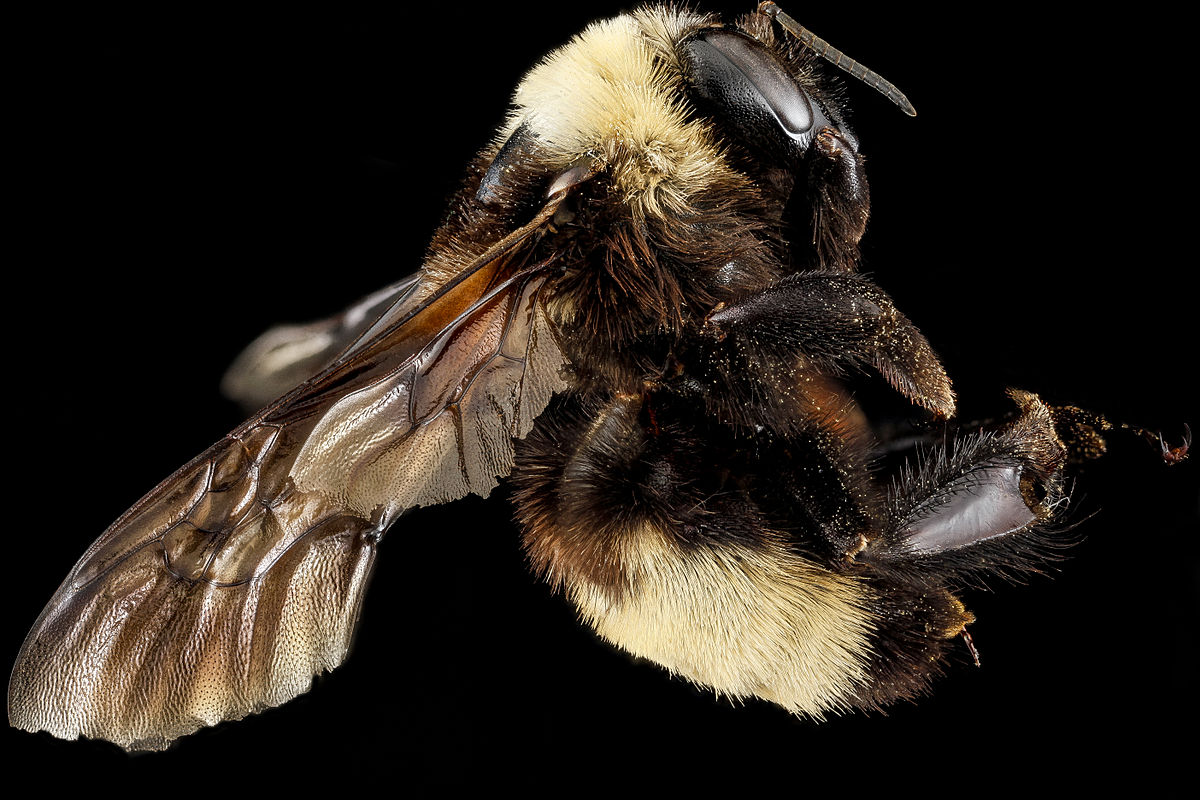
-
Article
Beech
Beech (Fagus), genus of trees of beech family (Fagaceae). Ten species occur worldwide; one, American beech (F. grandifolia), is native to North America.
"https://d3d0lqu00lnqvz.cloudfront.net/media/media/a2af7be4-325b-4223-ab2c-f192c693074d.jpg" // resources/views/front/categories/view.blade.php
https://d3d0lqu00lnqvz.cloudfront.net/media/media/a2af7be4-325b-4223-ab2c-f192c693074d.jpg
-
Article
Beef Cattle Farming
Beef cattle farming is a key component of Canadian agriculture. The four Western provinces account for about 85 per cent of beef cattle on Canadian cattle farms, with nearly one-half in Alberta alone. Beef farms make up about one-quarter of all farms in Canada, second only to field crops, while the dollar value of live cattle exports ranks just behind spring wheat, canola and durum exports. Canada ranks among the world’s top 10 per capita consumers and exporters of beef.
"https://d3d0lqu00lnqvz.cloudfront.net/media/media/723a21ea-1dd8-495d-9842-7cb533bfd984.jpg" // resources/views/front/categories/view.blade.php
https://d3d0lqu00lnqvz.cloudfront.net/media/media/723a21ea-1dd8-495d-9842-7cb533bfd984.jpg
-
Article
Beekeeping
The complex social organization, the biology and the industrious nature of honeybees (genus Apis) have long fascinated people.
"https://thecanadianencyclopedia.ca/images/tce_placeholder.jpg?v=e9dca980c9bdb3aa11e832e7ea94f5d9" // resources/views/front/categories/view.blade.php
https://thecanadianencyclopedia.ca/images/tce_placeholder.jpg?v=e9dca980c9bdb3aa11e832e7ea94f5d9
-
Article
Beet
Beet (Beta vulgaris), biennial herbaceous plant of the Chenopodiaceae family. There are 4 cultivated varieties: red or vegetable beet, fodder beet (mangel-wurzel), chard and sugar beet.
"https://d3d0lqu00lnqvz.cloudfront.net/media/media/f79c94c8-9f0d-444b-91cb-168c6903a0ea.jpg" // resources/views/front/categories/view.blade.php
https://d3d0lqu00lnqvz.cloudfront.net/media/media/f79c94c8-9f0d-444b-91cb-168c6903a0ea.jpg
-
Article
Beetle
Beetles are an extremely diverse group of insects, which together make up the order Coleoptera (from Greek koleos, meaning, “sheath,” and ptera, “wings”). So named for their hardened forewings, which conceal a second pair of flight wings, beetles have the greatest number of known species of any comparable group of living things. There are an estimated 380,000 described beetle species worldwide, representing about 40 per cent of the world’s known insects. Beetles occupy nearly every available terrestrial and freshwater habitat, having evolved to fulfill more ecological roles than probably any other group of organisms. As such, beetles are found all over the world. In Canada, over 8,150 species are known, representing 121 of the world’s 176 families of beetles. Familiar beetles include lady beetles, fireflies, scarabs, weevils, tiger, ground, blister and leaf beetles.
"https://d3d0lqu00lnqvz.cloudfront.net/media/media/363d9809-9283-479b-b225-1f7857211985.jpg" // resources/views/front/categories/view.blade.php
https://d3d0lqu00lnqvz.cloudfront.net/media/media/363d9809-9283-479b-b225-1f7857211985.jpg