
Browse "Things"
-
Article
Inco Limited
Inco Limited was a Canadian mining company and the world’s leading producer of nickel for much of the 20th century. In October 2006, Inco was purchased by the Brazilian mining company Vale for $19.4 billion. The company is now a fully owned subsidiary called Vale Canada Limited; it is based in Toronto and is responsible for Vale’s base metal mining operations worldwide. Click here for definitions of key terms used in this article.
"https://d3d0lqu00lnqvz.cloudfront.net/incolimited/creightonmine.jpg" // resources/views/front/categories/view.blade.php
https://d3d0lqu00lnqvz.cloudfront.net/incolimited/creightonmine.jpg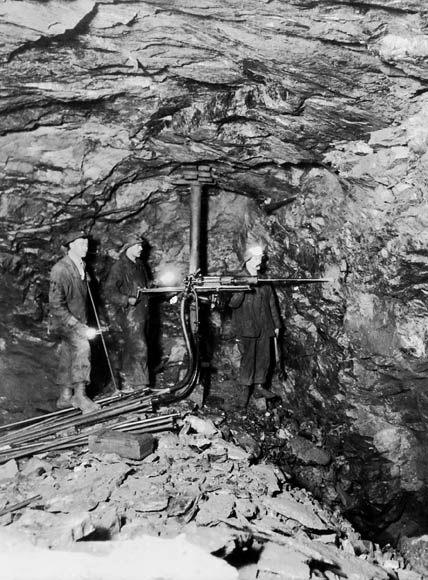
-
Article
Income Distribution
Income Distribution refers to the share of total income in society that goes to each fifth of the population, or, more generally, to the distribution of income among Canadian households.
"https://d3d0lqu00lnqvz.cloudfront.net/media/media/7debece7-f8e8-43a8-96bf-d9677736351f.jpg" // resources/views/front/categories/view.blade.php
https://d3d0lqu00lnqvz.cloudfront.net/media/media/7debece7-f8e8-43a8-96bf-d9677736351f.jpg
-
Article
Income Tax in Canada
Federal income tax was initiated in Canada in 1917 to help finance the First World War. The struggling economy and a political crisis resulting from conscription triggered its need. In the first years, income tax was imposed on a minute share of the population, but today, almost 80 per cent of Canada’s population files tax returns.
"https://d3d0lqu00lnqvz.cloudfront.net/IncomeTax/wtwhite.jpg" // resources/views/front/categories/view.blade.php
https://d3d0lqu00lnqvz.cloudfront.net/IncomeTax/wtwhite.jpg
-
Article
Income Trusts
Income trusts present an opportunity for investors to participate in a cash-flow stream generated by certain assets of an operating company.
"https://thecanadianencyclopedia.ca/images/tce_placeholder.jpg?v=e9dca980c9bdb3aa11e832e7ea94f5d9" // resources/views/front/categories/view.blade.php
https://thecanadianencyclopedia.ca/images/tce_placeholder.jpg?v=e9dca980c9bdb3aa11e832e7ea94f5d9
-
Macleans
India Celebrates 50 Years of Independence
A moment comes which comes but rarely in history, when we step out from the old to the new, when an age ends and when the soul of a nation, long suppressed, finds utterance. - Jawaharlal Nehru, first prime minister of a free India, on Aug.This article was originally published in Maclean's Magazine on August 18, 1997
"https://thecanadianencyclopedia.ca/images/tce_placeholder.jpg?v=e9dca980c9bdb3aa11e832e7ea94f5d9" // resources/views/front/categories/view.blade.php
https://thecanadianencyclopedia.ca/images/tce_placeholder.jpg?v=e9dca980c9bdb3aa11e832e7ea94f5d9
-
Article
Indian Music in Canada
In 1986 in Canada there were approximately 280,000 people of Asian Indian origin, the majority of whom had arrived after 1968. Earlier immigrants from India were mostly Sikh labourers who arrived ca 1905-8 from the Punjab.
"https://thecanadianencyclopedia.ca/images/tce_placeholder.jpg?v=e9dca980c9bdb3aa11e832e7ea94f5d9" // resources/views/front/categories/view.blade.php
https://thecanadianencyclopedia.ca/images/tce_placeholder.jpg?v=e9dca980c9bdb3aa11e832e7ea94f5d9
-
Article
Indian Act
The Indian Act is the primary law the federal government uses to administer Indian status, local First Nations governments and the management of reserve land. It also outlines governmental obligations to First Nations peoples. The Indian Act pertains to people with Indian Status; it does not directly reference non-status First Nations people, the Métis or Inuit. First introduced in 1876, the Act subsumed a number of colonial laws that aimed to eliminate First Nations culture in favour of assimilation into Euro-Canadian society. A new version of the Act was passed in 1951, and since then, has been amended several times, most significantly in 1985, with changes mainly focusing on the removal of discriminatory sections. It is an evolving, paradoxical document that has enabled trauma, human rights violations and social and cultural disruption for generations of Indigenous peoples. This article is a full-length entry about the Indian Act. For a plain-language summary, please see Indian Act (Plain-Language Summary).
"https://d3d0lqu00lnqvz.cloudfront.net/!feature-img-thumbnails/ind-act-feat.png" // resources/views/front/categories/view.blade.php
https://d3d0lqu00lnqvz.cloudfront.net/!feature-img-thumbnails/ind-act-feat.png
-
Collection
Indian Act
The Indian Act is the federal government’s primary law related to Indian Status, First Nations governance and control of reserve lands. It also outlines obligations the federal government has towards people registered as Status Indians. Though introduced in 1876, the Indian Act was a continuation of previous colonial policies, including the Gradual Civilization Act of 1857 and the Gradual Enfranchisement Act of 1869. The Indian Act has been amended and revised significantly since 1876, including...
"https://thecanadianencyclopedia.ca/images/tce_placeholder.jpg?v=e9dca980c9bdb3aa11e832e7ea94f5d9" // resources/views/front/categories/view.blade.php
https://thecanadianencyclopedia.ca/images/tce_placeholder.jpg?v=e9dca980c9bdb3aa11e832e7ea94f5d9
-
Article
Indian Act (Plain-Language Summary)
The Indian Act was first created in 1876. A new version was created in 1951. Since then, the Act has been revised several times. The main goal of the Act was to force First Nations peoples to lose their culture and become like Euro-Canadians. The Indian Act does not affect either the Métis or Inuit. This article is a plain-language summary of the Indian Act. If you are interested in reading about this topic more in depth, please see our full-length entry, Indian Act.
"https://d3d0lqu00lnqvz.cloudfront.net/!feature-img-thumbnails/ind-act-feat.png" // resources/views/front/categories/view.blade.php
https://d3d0lqu00lnqvz.cloudfront.net/!feature-img-thumbnails/ind-act-feat.png
-
Article
Indian Agents in Canada
Indian agents were the Canadian government’s representatives on First Nations reserves from the 1830s to the 1960s. Often working in isolated locations far from settler communities, Indian agents implemented government policy, enforced and administered the provisions of the Indian Act, and managed the day-to-day affairs of Status Indians. Today, the position of Indian agent no longer exists, as First Nations manage their own affairs through modern band councils or self-government.
"https://d3d0lqu00lnqvz.cloudfront.net/media/new_article_images/IndianAgent/indian agent3.jpg" // resources/views/front/categories/view.blade.php
https://d3d0lqu00lnqvz.cloudfront.net/media/new_article_images/IndianAgent/indian agent3.jpg
-
Article
Indian Boarding Homes Program in Canada
The Indian Boarding Homes Program was established by the Canadian federal government and operated from the early 1950s to the early 1990s. Its purpose was to relocate Indigenous children into non-Indigenous homes while they attended elementary and high schools, often far from their home communities. Relocation was compulsory; refusal was not permitted. The host families with whom they were placed were paid to provide care. Many children in this situation faced physical, sexual, verbal and psychological abuse (see also Child Abuse). The program was designed to assimilate Indigenous children into the mainstream Canadian society. As a result, children were often forbidden from speaking their native language or engaging in practices of their culture. This led, inevitably, to significant consequences that included loss of cultural identity and connection to their communities for the approximately 40,000 First Nations and Inuit children who were forced to relocate.
"https://d3d0lqu00lnqvz.cloudfront.net/TCE_placeholder.png" // resources/views/front/categories/view.blade.php
https://d3d0lqu00lnqvz.cloudfront.net/TCE_placeholder.png
-
Article
Classical Indian Dance
After long and persistent efforts on the part of Indian dancers living in Canada, Indian forms of dance came to be acknowledged as classical art by the arts councils and the Canadian dance audience at large.
"https://thecanadianencyclopedia.ca/images/tce_placeholder.jpg?v=e9dca980c9bdb3aa11e832e7ea94f5d9" // resources/views/front/categories/view.blade.php
https://thecanadianencyclopedia.ca/images/tce_placeholder.jpg?v=e9dca980c9bdb3aa11e832e7ea94f5d9
-
Article
Indian Day Schools in Canada
Indian Day Schools were racially segregated educational institutions that operated in Canada from the late 19th century until 2000 (see Racial Segregation of Indigenous Peoples in Canada). These schools were intended to assimilate Indigenous children into mainstream Canadian society by eradicating their cultural practices, languages and traditions. More than 150,000 Indigenous students attended these institutions. The Indian Day School system was closely linked to the larger residential school system. However, there are important distinctions between the two, namely that students were educated in their own communities and returned home to their families at the end of each day. The last federal recognized Indian Day School to close or be transferred was the Oka Country school in Kanesatake, Quebec on 1 September 2000. In 2019, a significant milestone was reached with a $1.47 billion class action settlement involving approximately 200,000 survivors. However, criticisms of the settlement process persist. Survivors have led efforts to support language revitalization, healing initiatives, commemoration efforts and truth-telling projects. Their efforts acknowledge the need for reconciliation and addressing the historical injustices inflicted upon Indigenous communities.
"https://d3d0lqu00lnqvz.cloudfront.net/IndianDaySchools/e011078111_s2-v8.jpg" // resources/views/front/categories/view.blade.php
https://d3d0lqu00lnqvz.cloudfront.net/IndianDaySchools/e011078111_s2-v8.jpg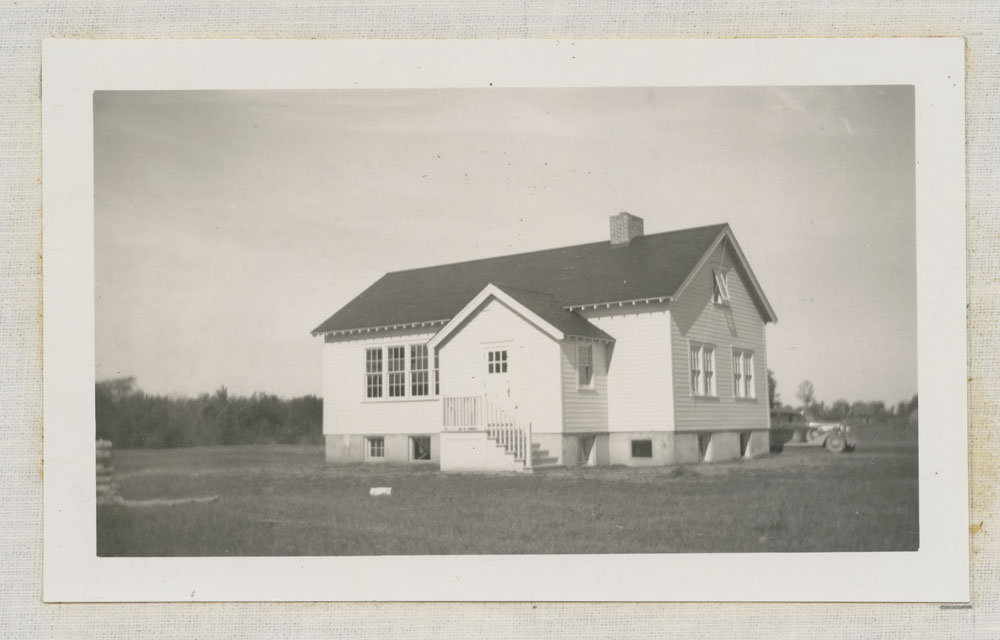
-
Article
Indian Food in Canada
Indian food is a more recent addition to the culinary scene in Canada, having gained prominence primarily in the post-1960s era of immigration. It is characterized mainly by the Northern Indian approach to cuisine, which features breads and warm curries and the use of yogurt and cream in meat-based dishes. But it also bears the influence of South Indian cooking, which frequently plays with the combination of sour and spicy and the use of tamarind and chilies. However, many typical Indo-Canadian dishes, such as kedgeree and some chutneys, are a product of Anglo-Indian cuisine stemming from Britain’s colonial rule of the Indian subcontinent.See also Popular Indian Dishes in Canada.
"https://d3d0lqu00lnqvz.cloudfront.net/media/media/76374c18-1a40-49ff-938a-c8dab85dacec.jpg" // resources/views/front/categories/view.blade.php
https://d3d0lqu00lnqvz.cloudfront.net/media/media/76374c18-1a40-49ff-938a-c8dab85dacec.jpg
-
Article
Indian Horse
Indian Horse (2012) is the sixth novel by Ojibwe author Richard Wagamese. Set in Northern Ontario in the late 1950s and early 1960s, it follows protagonist Saul Indian Horse as he uses his extraordinary talent for ice hockey to try and escape his traumatic residential school experience. He achieves moderate success as a hockey player but is unable to escape his “Indian” identity or the trauma from his past. Indian Horse was a finalist on CBC’s Canada Reads in 2013, where it won the People’s Choice award. It was also the winner of the 2013–14 First Nation Communities Read Selection and the Burt Award for First Nations, Inuit and Métis Literature from the Canadian Organization for Development through Education (CODE). In 2017, Indian Horse was adapted into an award-winning film by writer Dennis Foon and director Stephen S. Campanelli.
"https://d3d0lqu00lnqvz.cloudfront.net/media/media/4d3d2720-3ba1-468f-a6a3-db37fc2ad176.jpg" // resources/views/front/categories/view.blade.php
https://d3d0lqu00lnqvz.cloudfront.net/media/media/4d3d2720-3ba1-468f-a6a3-db37fc2ad176.jpg