Browse "Treaties"
-
Article
James Bay and Northern Quebec Agreement
The James Bay and Northern Quebec Agreement (JBNQA) is a legal agreement signed on 11 November 1975 by the government of Quebec, the government of Canada, Hydro-Québec and two of its subsidiaries, the Grand Council of the Crees of Quebec and the Northern Quebec Inuit Association. Described by many as the “first modern treaty,” the JBNQA redefined and framed land management as well as the relationship between the Quebecois state and the Indigenous peoples of the James Bay and Northern Quebec region (see James Bay Project, Treaties with Indigenous Peoples in Canada).
"https://thecanadianencyclopedia.ca/images/tce_placeholder.jpg?v=e9dca980c9bdb3aa11e832e7ea94f5d9" // resources/views/front/categories/view.blade.php
https://thecanadianencyclopedia.ca/images/tce_placeholder.jpg?v=e9dca980c9bdb3aa11e832e7ea94f5d9
-
Article
Jay's Treaty
Jay’s Treaty was signed on 19 November 1794 by representatives of United States and Britain. The treaty is the product of trade and border negotiations. It is known for the provision that allows Indigenous people from Canada to live and work freely in the United States. The Canadian federal government does not recognize the reciprocal provision as binding. (See also Treaties with Indigenous Peoples in Canada.)
"https://d3d0lqu00lnqvz.cloudfront.net/media/media/e2ed8154-40d4-4e3e-b31e-c5e732db0af5.jpg" // resources/views/front/categories/view.blade.php
https://d3d0lqu00lnqvz.cloudfront.net/media/media/e2ed8154-40d4-4e3e-b31e-c5e732db0af5.jpg
-
Article
John Collins' Purchase
John Collins’ Purchase of 1785 is one of the oldest land agreements between Indigenous peoples and British authorities in Upper Canada (later Ontario). It concerned the use of lands extending from the northwestern end of Lake Simcoe to Matchedash Bay, an inlet off Georgian Bay in Lake Huron. The purpose was to provide the British with a protected inland water route between Lake Ontario and Lake Huron, away from potential American interference. This passage was necessary for trade and the resupply of British western outposts. John Collins’ Purchase is one of many agreements made during the late 18th and early 19th centuries, known as the Upper Canada Land Surrenders.
"https://d3d0lqu00lnqvz.cloudfront.net/UCLS/345446e9-d0d1-4626-9702-e214ca87a8a7.jpg" // resources/views/front/categories/view.blade.php
https://d3d0lqu00lnqvz.cloudfront.net/UCLS/345446e9-d0d1-4626-9702-e214ca87a8a7.jpg
-
Article
Johnson-Butler Purchase
The Johnson-Butler Purchase of 1787–88 (also known as the “Gunshot Treaty,” referring to the distance a person could hear a gunshot from the lake’s edge) is one of the earliest land agreements between representatives of the Crown and the Indigenous peoples of Upper Canada (later Ontario). It resulted in a large tract of territory along the central north shore of Lake Ontario being opened for settlement. These lands became part of the Williams Treaties of 1923. (See also Upper Canada Land Surrenders and Treaties with Indigenous Peoples in Canada.)
"https://d3d0lqu00lnqvz.cloudfront.net/UCLS/345446e9-d0d1-4626-9702-e214ca87a8a7.jpg" // resources/views/front/categories/view.blade.php
https://d3d0lqu00lnqvz.cloudfront.net/UCLS/345446e9-d0d1-4626-9702-e214ca87a8a7.jpg
-
Article
Lake Simcoe Treaty (No. 16)
The Lake Simcoe Treaty, or Treaty No. 16, of 1815 was signed between the British authorities in Upper Canada (later Ontario) and the Anishinaabe peoples. It concerned the purchase of about 100,000 hectares of land between Lake Simcoe and Lake Huron. Its purpose was to acquire territory to the north and south of that covered under the John Collins’ Purchase of 1785 and south of that acquired by Penetanguishene Treaty, Treaty No. 5, of 1798. This gave the British control of all the land between Lake Simcoe and Georgian Bay. The Lake Simcoe Treaty is one of many agreements made during the late 18th and early 19th centuries known as the Upper Canada Land Surrenders.
"https://d3d0lqu00lnqvz.cloudfront.net/UCLS/345446e9-d0d1-4626-9702-e214ca87a8a7.jpg" // resources/views/front/categories/view.blade.php
https://d3d0lqu00lnqvz.cloudfront.net/UCLS/345446e9-d0d1-4626-9702-e214ca87a8a7.jpg
-
Article
Land Cession
A land cession is a transfer of land from one party to another through a deed of sale or surrender. Land cessions may also be referred to as land surrenders and land purchases. In Canada and the United States, Indigenous land cessions generally took place through negotiated treaties. There are cases, however, where Indigenous peoples claim that lands were taken unjustly. The Royal Proclamation of 1763 established the protocols for land cession in both Canada and the United States.
"https://d3d0lqu00lnqvz.cloudfront.net/Indigenous treaties across Canada.jpg" // resources/views/front/categories/view.blade.php
https://d3d0lqu00lnqvz.cloudfront.net/Indigenous treaties across Canada.jpg
-
Article
Indigenous Land Claims in Canada
Land claims seek to address wrongs made against Indigenous peoples, their rights and lands, by the federal and provincial or territorial governments. There are different types of land claims. Comprehensive claims (also known as modern treaties) deal with Indigenous rights, while specific claims concern the government’s outstanding obligations under historic treaties or the Indian Act. There are many ongoing comprehensive and specific claims negotiations in Canada.
"https://d3d0lqu00lnqvz.cloudfront.net/media/media/174cee51-4aca-4a67-ac60-f72697d35862.jpg" // resources/views/front/categories/view.blade.php
https://d3d0lqu00lnqvz.cloudfront.net/media/media/174cee51-4aca-4a67-ac60-f72697d35862.jpg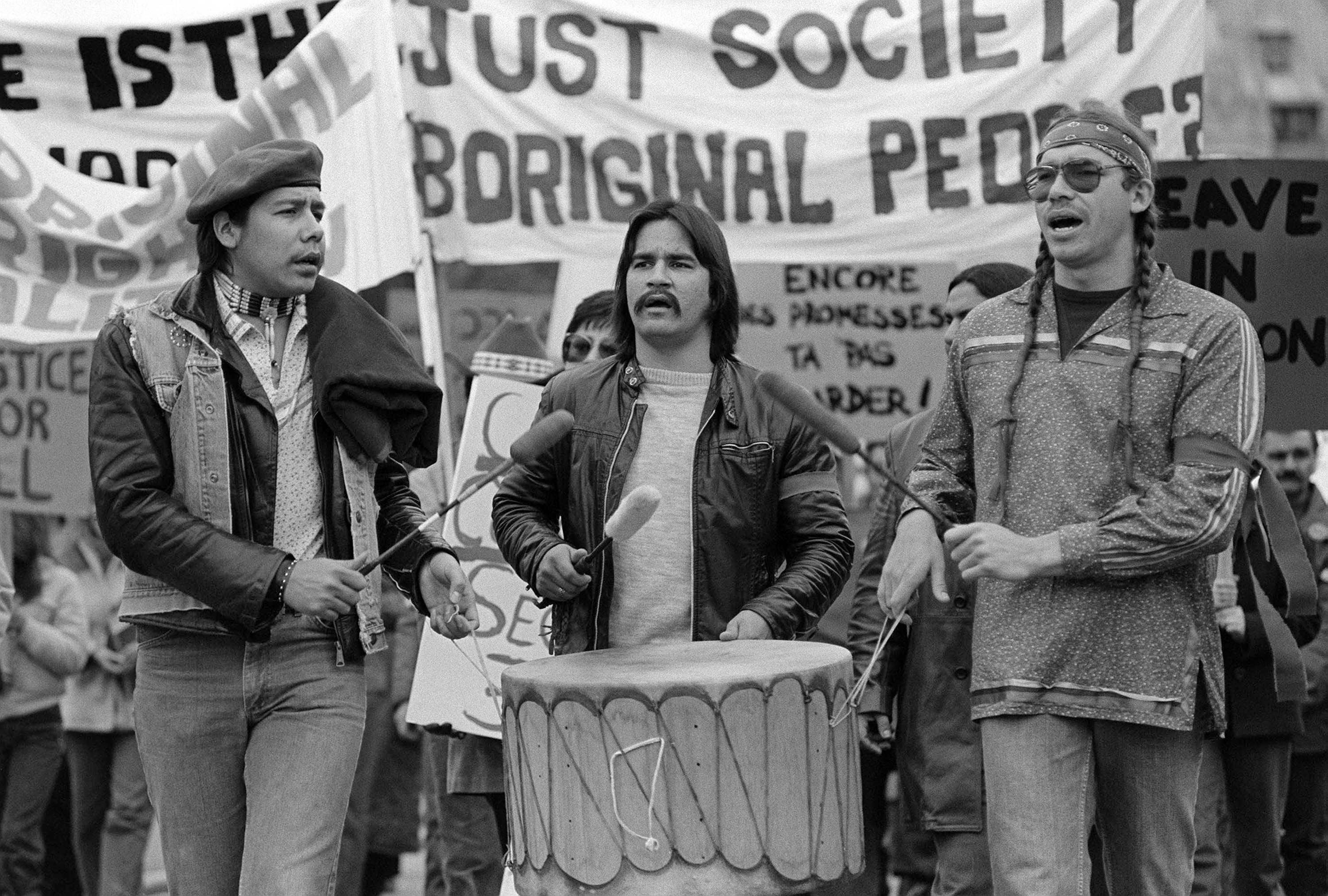
-
Article
London Township Treaty (No. 6)
The London Township Treaty of 1796 (also known as Treaty 6 in the Upper Canada treaties numbering system) was an early land agreement between First Nations and British authorities in Upper Canada (later Ontario). It was one of a series of Upper Canada Land Surrenders. The London Township Treaty encompassed a tract of land 12 miles square (about 31 kilometres square) in the southwestern part of the colony. The British originally purchased it as the location to establish the capital of the colony, but York (modern Toronto) became the capital instead. (See also Treaties with Indigenous Peoples in Canada.)
"https://d3d0lqu00lnqvz.cloudfront.net/DundasLondonON.jpg" // resources/views/front/categories/view.blade.php
https://d3d0lqu00lnqvz.cloudfront.net/DundasLondonON.jpg
-
Article
Marshall Case
The Marshall case is a landmark ruling in Indigenous treaty rights in Canada. The case centres on Donald Marshall Jr., a Mi’kmaq man from Membertou, Nova Scotia. In August 1993, Marshall caught and sold 210 kg of eel with an illegal net and without a licence during closed-season times. He was arrested after being charged under the federal Fisheries Act and the Maritime Provinces Fishery Regulations. In Marshall’s court case, R. v. Marshall, he was found guilty on all three charges in provincial court (1996) and appeals court (1997). The Supreme Court of Canada reversed Marshall’s convictions in September 1999. The Supreme Court recognized the hunting and fishing rights promised in the Peace and Friendship Treaties. These treaties were signed between the British and the Mi’kmaq, Wolastoqiyik and Peskotomuhkati in 1760–61.
"https://d3d0lqu00lnqvz.cloudfront.net/media/media/0696b0d3-e259-4e89-8895-f6296d7ab589.JPG" // resources/views/front/categories/view.blade.php
https://d3d0lqu00lnqvz.cloudfront.net/media/media/0696b0d3-e259-4e89-8895-f6296d7ab589.JPG
-
Article
McKee's Purchase
McKee’s Purchase of 1790 (also known as the McKee Treaty and Treaty 2) was an early land agreement between Indigenous peoples and British authorities in Upper Canada (later Ontario). It is the southernmost Upper Canada treaty and consisted of a large strip of territory from the southwestern shore of Lake Erie north to the Thames River and east to a point southwest of modern-day London, Ontario. This land was made available for settlement by Loyalists who were displaced by the American Revolution.
"https://d3d0lqu00lnqvz.cloudfront.net/McKeesPurchaseMonument.jpg" // resources/views/front/categories/view.blade.php
https://d3d0lqu00lnqvz.cloudfront.net/McKeesPurchaseMonument.jpg
-
Article
Murray Treaty of Longueuil (1760)
On 5 September 1760, three days before the Capitulation of Montreal, the chief of the Huron-Wendat of Lorette, who had accompanied the retreating French army from Quebec to the Montreal region, approached General James Murray at Longueuil. A treaty of peace — known as the Murray Treaty of Longueuil or simply, the Murray Treaty — was concluded whereby the Huron-Wendat came under British protection. (See also Treaties with Indigenous Peoples in Canada.)
"https://d3d0lqu00lnqvz.cloudfront.net/media/media/32a4e97d-85ed-4182-acd7-1f2fa6862fe7.jpg" // resources/views/front/categories/view.blade.php
https://d3d0lqu00lnqvz.cloudfront.net/media/media/32a4e97d-85ed-4182-acd7-1f2fa6862fe7.jpg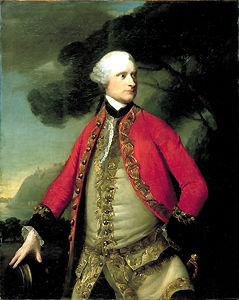
-
Article
Native People's Caravan
The Native People’s Caravan was a cross-country mobile protest that took place in 1974. Its main purpose was to raise awareness about the poor living conditions and discrimination experienced by Indigenous peoples in Canada. It travelled from Vancouver to Ottawa, where the subsequent occupation of a vacant warehouse on Victoria Island, near Parliament Hill, extended into 1975. The caravan brought various Indigenous groups together in protest of broken treaties, as well as a lack of government-supported education, housing and health care. As a result, meetings between Cabinet ministers and Indigenous leaders became more frequent. The protest is remembered as an important turning point in Indigenous activism in Canada.
"https://d3d0lqu00lnqvz.cloudfront.net/media/media/e9e4a925-a033-404d-9819-a3bb46fe9c8e.jpg" // resources/views/front/categories/view.blade.php
https://d3d0lqu00lnqvz.cloudfront.net/media/media/e9e4a925-a033-404d-9819-a3bb46fe9c8e.jpg
-
Article
Niagara Purchase
The Niagara Purchase of 1781, also known as Treaty 381, was one of the first land agreements between Indigenous peoples and British authorities in Upper Canada (later Ontario). It resulted in a six-and-a-half kilometre-wide strip along the west bank of the Niagara River, which connects Lake Erie and Lake Ontario, being made available for settlement by Loyalists who were displaced by the American Revolution. The Niagara Purchase was one of many agreements made in the 1700s and 1800s, which are collectively known as the Upper Canada Land Surrenders.
"https://d3d0lqu00lnqvz.cloudfront.net/NiagaraLate1700s.jpg" // resources/views/front/categories/view.blade.php
https://d3d0lqu00lnqvz.cloudfront.net/NiagaraLate1700s.jpg
-
Article
Oregon Treaty
The Oregon Treaty was an agreement between Britain and the United States. It came into force on 15 June 1846. It formalized the border between the United States and British North America west of the Rocky Mountains. It extended the border along the 49th parallel to the Pacific Ocean and down “the middle” of the channel that separates Vancouver Island from the mainland. The treaty resolved an important dispute between the two nations. But the lack of precision regarding the waterways between the mainland and Vancouver Island led to a dispute over the San Juan Islands, which resulted in an 1859 diplomatic conflict known as the Pig War.
"https://d3d0lqu00lnqvz.cloudfront.net/media/new_article_images/OregonTreaty/Vancouver_Island-relief.png" // resources/views/front/categories/view.blade.php
https://d3d0lqu00lnqvz.cloudfront.net/media/new_article_images/OregonTreaty/Vancouver_Island-relief.png
-
Article
Ottawa Treaty
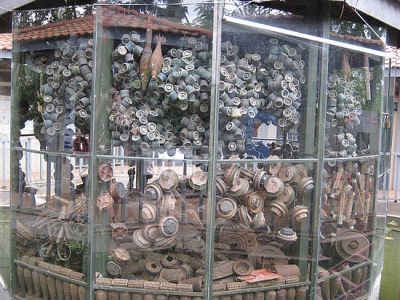
The Convention on the Prohibition of the Use, Stockpiling, Production and Transfer of Anti-Personnel Mines and on their Destruction — better known as the Ottawa Treaty or the Mine Ban Treaty — resulted from Canada’s leadership and its cooperation with the International Campaign To Ban Landmines (ICBL). In 1992, six non-governmental organizations launched an awareness campaign with the goal of banning landmines worldwide. In October 1996, at the first Ottawa Conference, Canadian minister of Foreign Affairs Lloyd Axworthy launched the Ottawa Process, which led to the ratification of the Mine Ban Treaty, signed by 122 countries at the Second Ottawa Conference in December 1997. The Ottawa Process was an innovative, unprecedented initiative that required a strategic partnership among countries, non-governmental organizations, international groups and the United Nations.
"https://d3d0lqu00lnqvz.cloudfront.net/media/media/52770ea6-6253-484f-b6a8-cca4a888898f.jpg" // resources/views/front/categories/view.blade.php
https://d3d0lqu00lnqvz.cloudfront.net/media/media/52770ea6-6253-484f-b6a8-cca4a888898f.jpg