
Browse "History"
-
Editorial
Colonel By and the Construction of the Rideau Canal
The following article is an editorial written by The Canadian Encyclopedia staff. Editorials are not usually updated. On September 29th of 1826 the governor of Canada, the Earl of Dalhousie, turned the first sod for construction of the lowest lock of the Rideau Canal. Later that day the participants gathered at Philemon Wright's tavern in Hull, where they indulged in a lavish dinner and the drinking of numerous toasts. One of the great engineering feats of its time was underway.
"https://thecanadianencyclopedia.ca/images/tce_placeholder.jpg?v=e9dca980c9bdb3aa11e832e7ea94f5d9" // resources/views/front/categories/view.blade.php
https://thecanadianencyclopedia.ca/images/tce_placeholder.jpg?v=e9dca980c9bdb3aa11e832e7ea94f5d9
-
Macleans
Bus Tragedy in Quebec
In Liboire Lefebvres four years as mayor, St-Bernard-de-Beauce has enjoyed small triumphs. Local residents have racked up honors in provincial flower competitions.This article was originally published in Maclean's Magazine on October 27, 1997
"https://thecanadianencyclopedia.ca/images/tce_placeholder.jpg?v=e9dca980c9bdb3aa11e832e7ea94f5d9" // resources/views/front/categories/view.blade.php
https://thecanadianencyclopedia.ca/images/tce_placeholder.jpg?v=e9dca980c9bdb3aa11e832e7ea94f5d9
-
Article
Canada
The name “Canada,” is derived from the Iroquoian word kanata, meaning a village or settlement. On 13 August 1535, as Jacques Cartier was nearing Île d'Anticosti, two Indigenous youths he was bringing back from France informed him that the route to Canada (“chemin de Canada”) lay to the south of the island. By Canada they meant the village of Stadacona, on the future site of Quebec City. Cartier used the word in that sense, but also referred to “the province of Canada,” meaning the area subject to Donnacona, chief at Stadacona. The name was soon applied to a much larger region. The “Harleian” world map of c. 1547, the first to show the discoveries made on Cartier's second voyage, applied it to an area north of the gulf and river St. Lawrence. By 1550 maps were also placing the name south of the river. (See also Cartography in Canada: 1500s.)
"https://d3d0lqu00lnqvz.cloudfront.net/media/new_article_images/CartographyInCanada1500s/DesceliersMap1546.jpg" // resources/views/front/categories/view.blade.php
https://d3d0lqu00lnqvz.cloudfront.net/media/new_article_images/CartographyInCanada1500s/DesceliersMap1546.jpg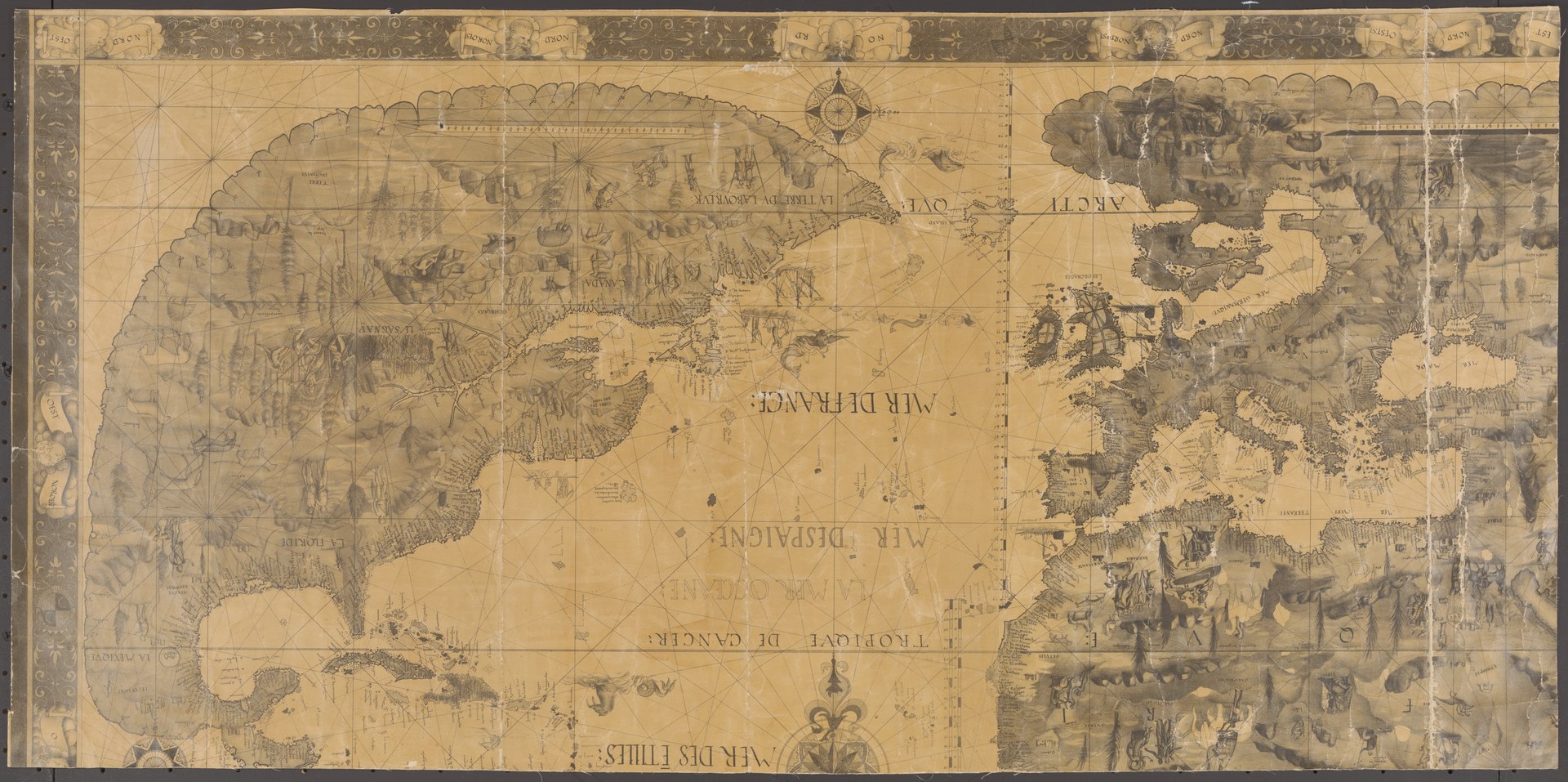
-
Article
Canada and Gas Warfare
Poison gas was used throughout the First World War by almost all armies. Its widespread use was unique in the history of warfare. The various types of gas, delivered by canisters, projectors, or shell, killed, maimed, and wore down morale. By 1918, soldiers of all armies encountered gas frequently while serving at the Western Front. Canadian soldiers were among the first to face the death clouds, at the Second Battle of Ypres in April 1915. At least 11,572 Canadian soldiers were casualties of poison gas, yet many were denied pensions after the war. During the Second World War, chemical weapons were not used on the battlefield; however, the Suffield Experimental Station in Alberta developed and tested chemical and biological weapons beginning in 1941. From about the middle of the 20th century, Canadian officials worked on the global stage to ban chemical weapons, and in the 1990s, Canada signed the Chemical Weapons Convention (see Arms Control and Disarmament.)
"https://d3d0lqu00lnqvz.cloudfront.net/media/new_article_images/GasWarfare/a002897-v8.jpg" // resources/views/front/categories/view.blade.php
https://d3d0lqu00lnqvz.cloudfront.net/media/new_article_images/GasWarfare/a002897-v8.jpg
-
Article
Canada and the Cold War (Plain Language Summary)
During the Cold War, most of the world was divided into two camps. The "West" was led by the US and the "East" was led by the Soviet Union. Canada sided with the West. The Cold War started after the Second World War. It ended in 1991 when the Soviet Union collapsed. There was no direct or "hot" war between the two superpowers. But tensions were high, and people were afraid of nuclear war. Some smaller wars were fought, like the Korean War. (This article is a plain-language summary of the Cold War. If you are interested in reading about this topic in more depth, please see our full-length entry, Canada and the Cold War.)
"https://d3d0lqu00lnqvz.cloudfront.net/media/new_article_images/CubanMissileCrisis/7322067464_e858ddfc17_z.jpg" // resources/views/front/categories/view.blade.php
https://d3d0lqu00lnqvz.cloudfront.net/media/new_article_images/CubanMissileCrisis/7322067464_e858ddfc17_z.jpg
-
Article
Canada and Weapons of Mass Destruction
Canada has a long, complicated history with weapons of mass destruction (WMDs). Canadian soldiers have been attacked with chemical weapons and have used them offensively. (See Canada and Gas Warfare.) Canada has researched chemical, biological and nuclear weapons; but also, ways to defend against them. Some chemical weapons were tested in Canada and against Canadians with long-term consequences. Canada played a crucial role in the development of nuclear weapons. (See Canada and the Manhattan Project.) The country employed nuclear weapons primarily as defensive weapons during the Cold War. Canada signed international documents limiting the use of these weapons. Canada no longer has weapons of mass destruction. However, Canada is a member of the North Atlantic Treaty Organization and NORAD — alliances that employ nuclear weapons and other weapons of mass destruction.
"https://d3d0lqu00lnqvz.cloudfront.net/media/media/fe8757c3-dd58-4969-92f1-316d16aa4e6c.jpg" // resources/views/front/categories/view.blade.php
https://d3d0lqu00lnqvz.cloudfront.net/media/media/fe8757c3-dd58-4969-92f1-316d16aa4e6c.jpg
-
Collection
Canada During COVID-19
Countries, communities, and individuals around the world are grappling with the COVID-19 pandemic. How will historians remember this time in history? Canada During COVID-19: A Living Archive is meant to capture the experiences of everyday Canadians as they live through this challenging time.
"https://d3d0lqu00lnqvz.cloudfront.net/user_canada_during_covid_submissions_imported/101037588_640061359916207_6879182772136426658_n_17903881852466121.jpg" // resources/views/front/categories/view.blade.php
https://d3d0lqu00lnqvz.cloudfront.net/user_canada_during_covid_submissions_imported/101037588_640061359916207_6879182772136426658_n_17903881852466121.jpg
-
Article
Canada East
In 1841, Britain united the colonies of Upper and Lower Canada into the Province of Canada. This was in response to the violent rebellions of 1837–38. The Durham Report (1839) laid out the guidelines to create the new colony with the Act of Union in 1840. The Province of Canada was made up of Canada West (formerly Upper Canada) and Canada East (formerly Lower Canada). The two regions were governed jointly until Confederation in 1867. Canada West then became Ontario and Canada East became Quebec.
"https://d3d0lqu00lnqvz.cloudfront.net/media/new_article_images/PoliticsInOntario/Map_Canada_West_East.jpg" // resources/views/front/categories/view.blade.php
https://d3d0lqu00lnqvz.cloudfront.net/media/new_article_images/PoliticsInOntario/Map_Canada_West_East.jpg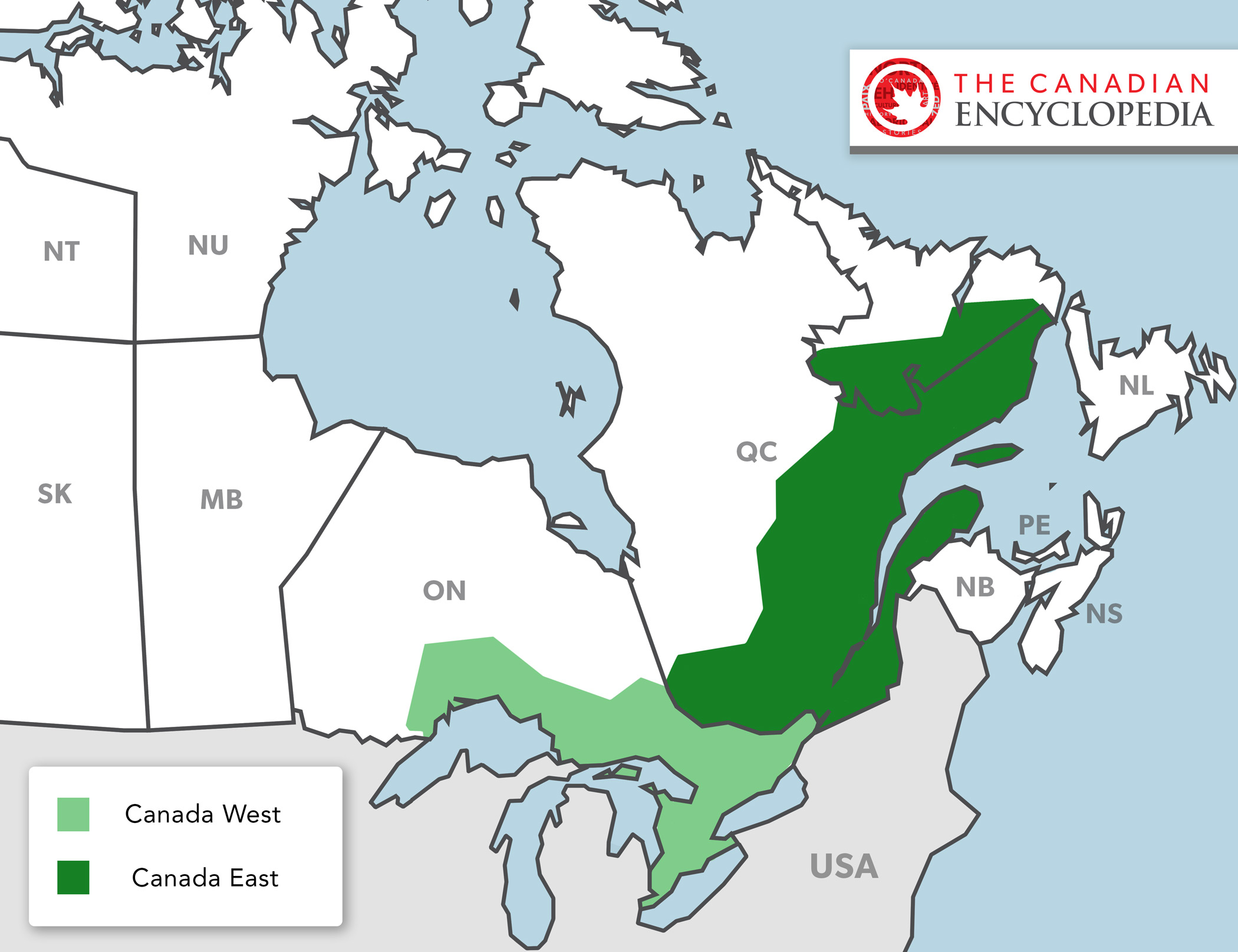
-
Article
Canada Studies Foundation
Canada Studies Foundation, was founded 1970 following revelations of the National History Project (1965-68) that the average Canadian high-school student had an abysmal knowledge of Canada. A.B.
"https://thecanadianencyclopedia.ca/images/tce_placeholder.jpg?v=e9dca980c9bdb3aa11e832e7ea94f5d9" // resources/views/front/categories/view.blade.php
https://thecanadianencyclopedia.ca/images/tce_placeholder.jpg?v=e9dca980c9bdb3aa11e832e7ea94f5d9
-
Article
Canada West
In 1841, Britain united the colonies of Upper and Lower Canada into the Province of Canada. This was in response to the violent rebellions of 1837–38. The Durham Report (1839) laid out the guidelines to create the new colony with the Act of Union in 1840. The Province of Canada was made up of Canada West (formerly Upper Canada) and Canada East (formerly Lower Canada). The two regions were governed jointly until Confederation in 1867. Canada West then became Ontario and Canada East became Quebec.
"https://thecanadianencyclopedia.ca/images/tce_placeholder.jpg?v=e9dca980c9bdb3aa11e832e7ea94f5d9" // resources/views/front/categories/view.blade.php
https://thecanadianencyclopedia.ca/images/tce_placeholder.jpg?v=e9dca980c9bdb3aa11e832e7ea94f5d9
-
Article
Canada's History
Canada's History (until 2010, The Beaver), a magazine published by the Hudson's Bay Company, was started in 1920 as a staff magazine as part of the company's 250th anniversary celebrations.
"https://thecanadianencyclopedia.ca/images/tce_placeholder.jpg?v=e9dca980c9bdb3aa11e832e7ea94f5d9" // resources/views/front/categories/view.blade.php
https://thecanadianencyclopedia.ca/images/tce_placeholder.jpg?v=e9dca980c9bdb3aa11e832e7ea94f5d9
-
Article
Canadian Bill of Rights
The Canadian Bill of Rights was the country’s first federal law to protect human rights and fundamental freedoms. It was considered groundbreaking when it was enacted by the government of John Diefenbaker in 1960. But it proved too limited and ineffective, mainly because it applies only to federal statutes and not provincial ones. Many judges regarded it as a mere interpretive aid. The bill was cited in 35 cases between 1960 and 1982; thirty were rejected by the courts. Though it is still in effect, the Bill of Rights was superseded by the Canadian Charter of Rights and Freedoms in 1982.
"https://d3d0lqu00lnqvz.cloudfront.net/media/media/eb737d9a-742e-418d-af4d-07440f789c20.jpg" // resources/views/front/categories/view.blade.php
https://d3d0lqu00lnqvz.cloudfront.net/media/media/eb737d9a-742e-418d-af4d-07440f789c20.jpg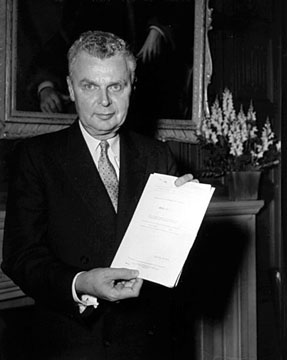
-
Article
Canadian Film History: 1939 to 1973
Filmmaking is a powerful form of cultural and artistic expression, as well as a highly profitable commercial enterprise. From a practical standpoint, filmmaking is a business involving large sums of money and a complex division of labour. This labour is involved, roughly speaking, in three sectors: production, distribution and exhibition. The history of the Canadian film industry has been one of sporadic achievement accomplished in isolation against great odds. Canadian cinema has existed within an environment where access to capital for production, to the marketplace for distribution and to theatres for exhibition has been extremely difficult. The Canadian film industry, particularly in English Canada, has struggled against the Hollywood entertainment monopoly for the attention of an audience that remains largely indifferent toward the domestic industry. The major distribution and exhibition outlets in Canada have been owned and controlled by foreign interests. The lack of domestic production throughout much of the industry’s history can only be understood against this economic backdrop. This article is one of four that surveys the history of the film industry in Canada. The entire series includes: Canadian Film History: 1896 to 1938; Canadian Film History: 1939 to 1973; Canadian Film History: 1974 to Present; Canadian Film History: Regional Cinema and Auteurs, 1980 to Present.
"https://d3d0lqu00lnqvz.cloudfront.net/media/media/365bfdc3-53d4-4033-b13f-5a89a83a85d5.jpg" // resources/views/front/categories/view.blade.php
https://d3d0lqu00lnqvz.cloudfront.net/media/media/365bfdc3-53d4-4033-b13f-5a89a83a85d5.jpg
-
Article
Canadian Film History: 1974 to Present
Filmmaking is a powerful form of cultural and artistic expression, as well as a highly profitable commercial enterprise. From a practical standpoint, filmmaking is a business involving large sums of money and a complex division of labour. This labour is involved, roughly speaking, in three sectors: production, distribution and exhibition. The history of the Canadian film industry has been one of sporadic achievement accomplished in isolation against great odds. Canadian cinema has existed within an environment where access to capital for production, to the marketplace for distribution and to theatres for exhibition has been extremely difficult. The Canadian film industry, particularly in English Canada, has struggled against the Hollywood entertainment monopoly for the attention of an audience that remains largely indifferent toward the domestic industry. The major distribution and exhibition outlets in Canada have been owned and controlled by foreign interests. The lack of domestic production throughout much of the industry’s history can only be understood against this economic backdrop. This article is one of four that surveys the history of the film industry in Canada. The entire series includes: Canadian Film History: 1896 to 1938; Canadian Film History: 1939 to 1973; Canadian Film History: 1974 to Present; Canadian Film History: Notable Films and Filmmakers 1980 to Present.
"https://d3d0lqu00lnqvz.cloudfront.net/media/media/4fd4ee50-6f27-491b-aeb7-2f5cd3c95f9e.jpg" // resources/views/front/categories/view.blade.php
https://d3d0lqu00lnqvz.cloudfront.net/media/media/4fd4ee50-6f27-491b-aeb7-2f5cd3c95f9e.jpg
-
Article
Canadian Film History: Notable Films and Filmmakers 1980 to Present
Filmmaking is a powerful form of cultural and artistic expression, as well as a highly profitable commercial enterprise. From a practical standpoint, filmmaking is a business involving large sums of money and a complex division of labour. This labour is involved, roughly speaking, in three sectors: production, distribution and exhibition. The history of the Canadian film industry has been one of sporadic achievement accomplished in isolation against great odds. Canadian cinema has existed within an environment where access to capital for production, to the marketplace for distribution and to theatres for exhibition has been extremely difficult. The Canadian film industry, particularly in English Canada, has struggled against the Hollywood entertainment monopoly for the attention of an audience that remains largely indifferent toward the domestic industry. The major distribution and exhibition outlets in Canada have been owned and controlled by foreign interests. The lack of domestic production throughout much of the industry’s history can only be understood against this economic backdrop. This article is one of four that surveys the history of the film industry in Canada. The entire series includes: Canadian Film History: 1896 to 1938; Canadian Film History: 1939 to 1973; Canadian Film History: 1974 to Present; Canadian Film History: Notable Films and Filmmakers 1980 to Present.
"https://d3d0lqu00lnqvz.cloudfront.net/media/media/193cc1b9-24f9-4e96-a47d-4fc2142514ae.jpg" // resources/views/front/categories/view.blade.php
https://d3d0lqu00lnqvz.cloudfront.net/media/media/193cc1b9-24f9-4e96-a47d-4fc2142514ae.jpg