
Browse "History"
-
Article
Samson
Samson, first locomotive in North America to burn coal and the first to run over all-iron rails. Built in New Shildon, England, it was shipped to Pictou, NS, to haul coal from the Albion Mines 9.6 km over a tramway to Dunbar Point on Pictou Harbour.
"https://thecanadianencyclopedia.ca/images/tce_placeholder.jpg?v=e9dca980c9bdb3aa11e832e7ea94f5d9" // resources/views/front/categories/view.blade.php
https://thecanadianencyclopedia.ca/images/tce_placeholder.jpg?v=e9dca980c9bdb3aa11e832e7ea94f5d9
-
Article
Saskatchewan and Confederation
Saskatchewan joined Confederation along with Alberta in 1905, when the two new provinces were carved out of the Northwest Territories (NWT).
"https://d3d0lqu00lnqvz.cloudfront.net/media/media/70c52f68-faf0-4d61-b849-c0bf34342d19.jpg" // resources/views/front/categories/view.blade.php
https://d3d0lqu00lnqvz.cloudfront.net/media/media/70c52f68-faf0-4d61-b849-c0bf34342d19.jpg
-
Article
Saskatchewan Doctors' Strike
The Saskatchewan Medical Care Insurance Bill was introduced in the Legislature 13 Oct 1961, and received royal assent 17 Nov 1961, after Woodrow S. LLOYD had replaced Douglas as premier. It was to come into force April 1, but this was amended, later, to 1 July 1962.
"https://d3d0lqu00lnqvz.cloudfront.net/media/media/88cc44c6-bfc5-41bd-894a-9734f479ff16.jpg" // resources/views/front/categories/view.blade.php
https://d3d0lqu00lnqvz.cloudfront.net/media/media/88cc44c6-bfc5-41bd-894a-9734f479ff16.jpg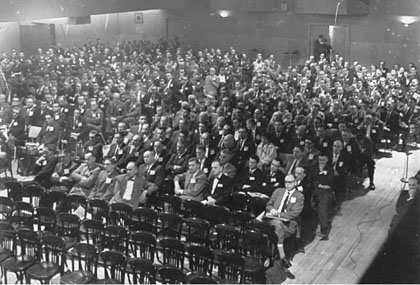
-
Article
Saskatchewan Rock Art
Rock art exists throughout Canada. Generally, rock art includes petroglyphs, images carved into rock, and pictographs, images painted onto rocks (see Pictographs and Petroglyphs). There are numerous rock art sites in Saskatchewan. Two significant Indigenous rock art sites in southwestern Saskatchewan were excavated during the early 1990s. These were the Herschel Petroglyph Site 95 km southwest of Saskatoon, and the Swift Current Creek Site just north of Canada No. 1 highway as it passes the city of Swift Current.
"https://d3d0lqu00lnqvz.cloudfront.net/media/media/2262176f-2d63-4520-bfba-05167c978d44.jpg" // resources/views/front/categories/view.blade.php
https://d3d0lqu00lnqvz.cloudfront.net/media/media/2262176f-2d63-4520-bfba-05167c978d44.jpg
-
Macleans
Schooner or later
The Bluenose schooner went undefeated in nearly two decades of racing starting in 1921, but restoring memories of its past glory has left Nova Scotia taxpayers at a loss.This article was originally published in Maclean's Magazine on September 23, 2013
"https://thecanadianencyclopedia.ca/images/tce_placeholder.jpg?v=e9dca980c9bdb3aa11e832e7ea94f5d9" // resources/views/front/categories/view.blade.php
https://thecanadianencyclopedia.ca/images/tce_placeholder.jpg?v=e9dca980c9bdb3aa11e832e7ea94f5d9
-
Article
Separate School
In both the US and Canada parents are free to choose to send their children to the state-run public SCHOOL SYSTEM or to a variety of private fee-paying schools.
"https://thecanadianencyclopedia.ca/images/tce_placeholder.jpg?v=e9dca980c9bdb3aa11e832e7ea94f5d9" // resources/views/front/categories/view.blade.php
https://thecanadianencyclopedia.ca/images/tce_placeholder.jpg?v=e9dca980c9bdb3aa11e832e7ea94f5d9
-
Article
Serpent Mounds
Serpent Mounds, situated on a bluff overlooking Rice Lake near Peterborough, Ont, is the only known effigy mound in Canada.
"https://thecanadianencyclopedia.ca/images/tce_placeholder.jpg?v=e9dca980c9bdb3aa11e832e7ea94f5d9" // resources/views/front/categories/view.blade.php
https://thecanadianencyclopedia.ca/images/tce_placeholder.jpg?v=e9dca980c9bdb3aa11e832e7ea94f5d9
-
Article
Shattered
Eric Walters’s young adult novel Shattered (2006) tells the story of Ian Blackburn. He is shaken out of his privileged life when he meets Jack, a homeless veteran of the Canadian Armed Forces. A member of the failed United Nations peacekeeping mission to Rwanda, Jack introduces Ian to some of humanity’s darkest moments. Shattered received the 2007 Ontario Library Association’s White Pine Award for best Canadian children’s book and the 2007 National Chapter of Canada International Order of the Daughters of Empire Violet Downey Book Award.
"https://d3d0lqu00lnqvz.cloudfront.net/media/home-page-images/Peacekeepers-in-Rwanda.jpg" // resources/views/front/categories/view.blade.php
https://d3d0lqu00lnqvz.cloudfront.net/media/home-page-images/Peacekeepers-in-Rwanda.jpg
-
Article
Shell Middens
Archaeologists and natural historians have long been fascinated by shell middens because of their great potential to enhance information about human adaptations and cultures. Early studies focused on the Mesolithic køkkenmøddinger ("kitchen middens") of northern Europe, but similar studies were conducted in Canada by the late 19th century. The English term midden is derived from a Scandinavian root referring to a trash heap composed of domestic refuse and located near a dwelling.
"https://d3d0lqu00lnqvz.cloudfront.net/media/media/b0317788-22f0-4674-95ad-d8206ed9fece.jpg" // resources/views/front/categories/view.blade.php
https://d3d0lqu00lnqvz.cloudfront.net/media/media/b0317788-22f0-4674-95ad-d8206ed9fece.jpg
-
Article
Ships of the War of 1812
The war on the water was an essential, if not the most important, aspect of the WAR OF 1812. Great Britain was obviously at a disadvantage geographically when trying to defend its colony Canada in a conflict with the United States.
"https://thecanadianencyclopedia.ca/images/tce_placeholder.jpg?v=e9dca980c9bdb3aa11e832e7ea94f5d9" // resources/views/front/categories/view.blade.php
https://thecanadianencyclopedia.ca/images/tce_placeholder.jpg?v=e9dca980c9bdb3aa11e832e7ea94f5d9
-
Article
Siege of Fort Erie, War of 1812
The siege of Fort Erie was a British blockade of their own fort located at the entrance to the Niagara River opposite Buffalo, New York, which the Americans had captured on 3 July 1814.
"https://thecanadianencyclopedia.ca/images/tce_placeholder.jpg?v=e9dca980c9bdb3aa11e832e7ea94f5d9" // resources/views/front/categories/view.blade.php
https://thecanadianencyclopedia.ca/images/tce_placeholder.jpg?v=e9dca980c9bdb3aa11e832e7ea94f5d9
-
Article
Sinking of HMCS Esquimalt
HMCS Esquimalt was the last Canadian warship lost to enemy action in the Second World War. The ship was on an antisubmarine patrol around the approaches to Halifax harbour when it was torpedoed by German submarine U-190. Esquimalt sank on 16 April 1945; in total, 44 of 71 crew members died — many of them from exposure while waiting to be rescued.
"https://d3d0lqu00lnqvz.cloudfront.net/media/media/462169b7-3005-4458-85d7-605eb8f68e2d.jpg" // resources/views/front/categories/view.blade.php
https://d3d0lqu00lnqvz.cloudfront.net/media/media/462169b7-3005-4458-85d7-605eb8f68e2d.jpg
-
Article
Sinking of HMHS Llandovery Castle
On the evening of 27 June 1918, while sailing from Halifax, Nova Scotia, to Liverpool, England, the Canadian hospital ship Llandovery Castle was torpedoed and sunk by a German U-boat (U-86). Of the 258 crew and passengers, only 24 survived. Almost all the Canadian Army Medical Corps personnel were killed: six male officers, 64 enlisted men and 14 nursing sisters. Only one lifeboat escaped; the rest were either sucked under as the ship sank or attacked by the U-boat. The submarine’s officers were later charged with committing a war crime.
"https://d3d0lqu00lnqvz.cloudfront.net/ASW/VictoryBondsPosterLlandoveryCastle1918.jpg" // resources/views/front/categories/view.blade.php
https://d3d0lqu00lnqvz.cloudfront.net/ASW/VictoryBondsPosterLlandoveryCastle1918.jpg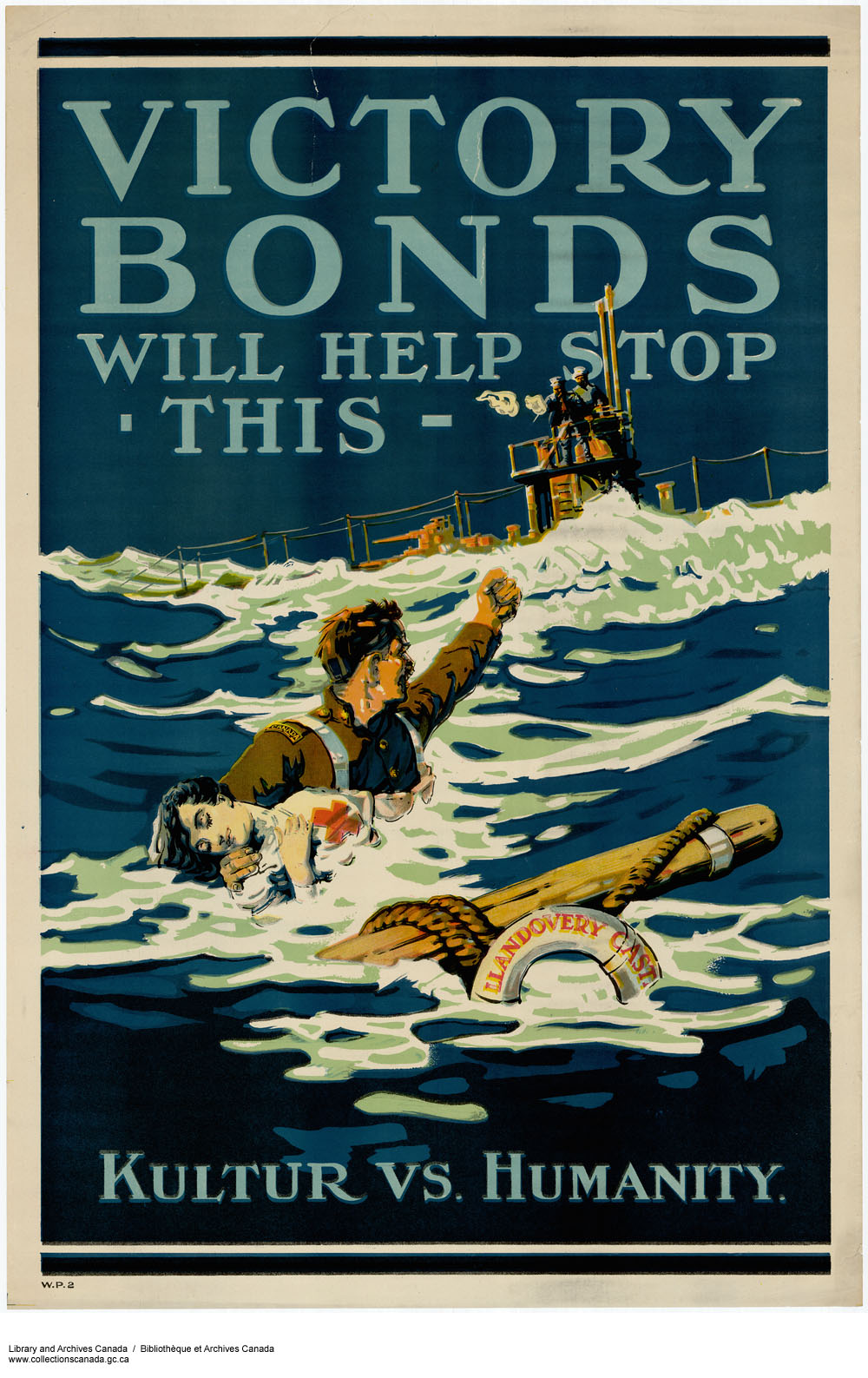
-
Article
Sinking of the SS Caribou
The SS Caribou was a passenger and train ferry that operated in the Cabot Strait between Port aux Basques, Newfoundland and North Sydney, Nova Scotia. On 14 October 1942, the German submarine U-69 sank the vessel, causing the worst loss of life in Canadian waters during the Second World War.
"https://d3d0lqu00lnqvz.cloudfront.net/media/new_article_images/Caribou/ss-caribou-1920-1940.jpg" // resources/views/front/categories/view.blade.php
https://d3d0lqu00lnqvz.cloudfront.net/media/new_article_images/Caribou/ss-caribou-1920-1940.jpg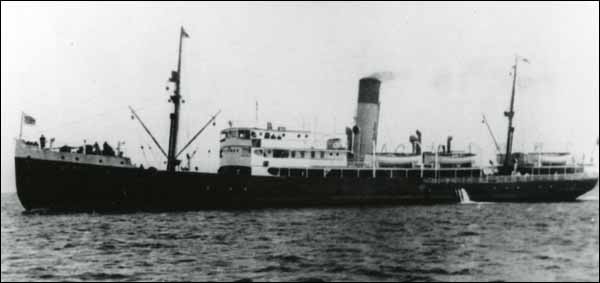
-
Article
Sir George Williams Affair
The Sir George Williams affair (also known as the Sir George Williams riot) took place in winter 1969, when more than 200 students decided to peacefully occupy the ninth floor of the Henry F. Hall Building at Sir George Williams University in Montreal. (See Concordia University.) These students were protesting the university administration’s decision regarding a complaint of racism that had been filed several months earlier by six Black students from the Caribbean. On 11 February 1969, to dislodge the students occupying the building, the police intervened forcefully, and the situation deteriorated, resulting in over $2 million worth of damage and the arrest of 97 people. The Sir George Williams affair is regarded as the largest student riot in Canadian history. For many observers and historians, it represents a key moment in the rebirth of Black militancy in Montreal.
"https://d3d0lqu00lnqvz.cloudfront.net/media/media/e31f1667-bf31-4052-95c4-22a3da881f96.jpg" // resources/views/front/categories/view.blade.php
https://d3d0lqu00lnqvz.cloudfront.net/media/media/e31f1667-bf31-4052-95c4-22a3da881f96.jpg