
Browse "Communities & Sociology"
-
Editorial
The arrival of Doukhobors in Canada (1899)
The following article is an editorial written by The Canadian Encyclopedia staff. Editorials are not usually updated.
"https://thecanadianencyclopedia.ca/images/tce_placeholder.jpg?v=e9dca980c9bdb3aa11e832e7ea94f5d9" // resources/views/front/categories/view.blade.php
https://thecanadianencyclopedia.ca/images/tce_placeholder.jpg?v=e9dca980c9bdb3aa11e832e7ea94f5d9
-
Article
Ex-gay Movement
The ex-gay movement, commonly referred to in popular culture by the phrase “pray the gay away,” is a predominantly conservative Christian movement that operates worldwide but is most prominent in the United States, Canada, Britain, and Australia.
"https://thecanadianencyclopedia.ca/images/tce_placeholder.jpg?v=e9dca980c9bdb3aa11e832e7ea94f5d9" // resources/views/front/categories/view.blade.php
https://thecanadianencyclopedia.ca/images/tce_placeholder.jpg?v=e9dca980c9bdb3aa11e832e7ea94f5d9
-
Editorial
The First Thanksgiving in North America
The following article is an editorial written by The Canadian Encyclopedia staff. Editorials are not usually updated. It has become common knowledge that the first Thanksgiving in North America was held by Sir Martin Frobisher and his crew in Nunavut in 1578. There are those — mainly Americans upset by the thought of having their holiday co-opted — who argue that it wasn't a “real” Thanksgiving. I would counter that Frobisher had reason to give thanks, and that giving thanks was an important aspect of Elizabethan society, so it would have been a natural thing for him and his men to do.
"https://d3d0lqu00lnqvz.cloudfront.net/media/media/c07fc308-7b63-421f-8b08-2c821321ba57.jpg" // resources/views/front/categories/view.blade.php
https://d3d0lqu00lnqvz.cloudfront.net/media/media/c07fc308-7b63-421f-8b08-2c821321ba57.jpg
-
Editorial
Editorial: Baldwin, LaFontaine and Responsible Government
The following article is an editorial written by The Canadian Encyclopedia staff. Editorials are not usually updated. The Baldwin–LaFontaine government of 1848 has been called the “great ministry.” In addition to establishing responsible government, it had an incomparable record of legislation. It established a public school system and finalized the founding of the University of Toronto. It set up municipal governments and pacified French-Canadian nationalism after a period of unrest. Responsible government did not transform Canada overnight into a fully developed democracy. But it was an important milestone along the road to political autonomy. Most importantly, it provided an opportunity for French Canadians to find a means for their survival through the British Constitution. The partnership and friendship between Baldwin and LaFontaine were brilliant examples of collaboration that have been all too rare in Canadian history.
"https://d3d0lqu00lnqvz.cloudfront.net/media/media/ba6bdff6-574a-4697-ac95-afdcc5ddfcc9.jpg" // resources/views/front/categories/view.blade.php
https://d3d0lqu00lnqvz.cloudfront.net/media/media/ba6bdff6-574a-4697-ac95-afdcc5ddfcc9.jpg
-
Article
Canadian Film History: 1896 to 1938
Filmmaking is a powerful form of cultural and artistic expression, as well as a highly profitable commercial enterprise. From a practical standpoint, filmmaking is a business involving large sums of money and a complex division of labour. This labour is involved, roughly speaking, in three sectors: production, distribution and exhibition. The history of the Canadian film industry has been one of sporadic achievement accomplished in isolation against great odds. Canadian cinema has existed within an environment where access to capital for production, to the marketplace for distribution and to theatres for exhibition has been extremely difficult. The Canadian film industry, particularly in English Canada, has struggled against the Hollywood entertainment monopoly for the attention of an audience that remains largely indifferent toward the domestic industry. The major distribution and exhibition outlets in Canada have been owned and controlled by foreign interests. The lack of domestic production throughout much of the industry’s history can only be understood against this economic backdrop. This article is one of four that surveys the history of the film industry in Canada. The entire series includes: Canadian Film History: 1896 to 1938; Canadian Film History: 1939 to 1973; Canadian Film History: 1974 to Present; Canadian Film History: Notable Films and Filmmakers 1980 to Present.
"https://d3d0lqu00lnqvz.cloudfront.net/media/media/1f440346-22dd-48de-951f-264baf7a7fc4.jpg" // resources/views/front/categories/view.blade.php
https://d3d0lqu00lnqvz.cloudfront.net/media/media/1f440346-22dd-48de-951f-264baf7a7fc4.jpg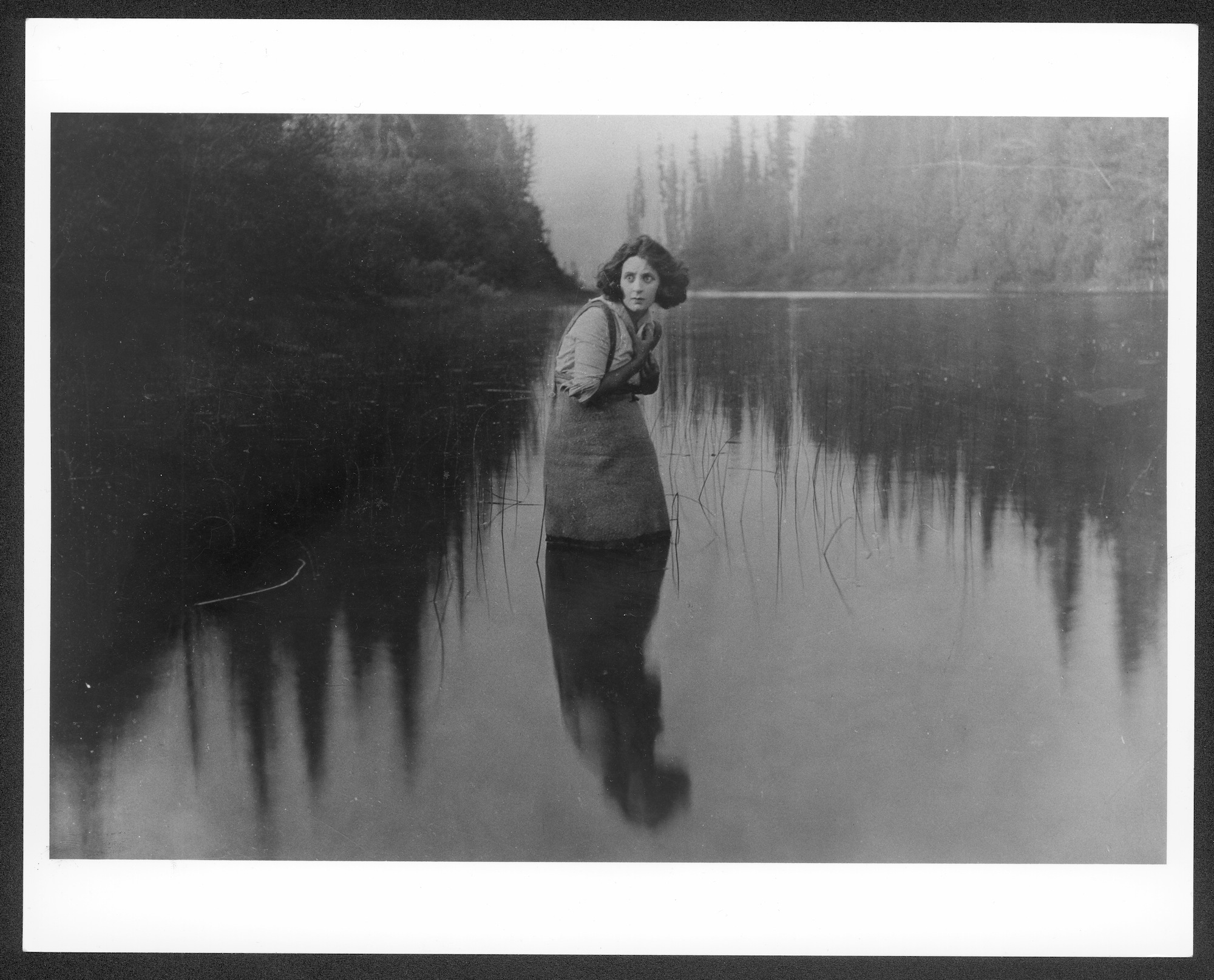
-
Article
The Journey of Nishiyuu (The Journey of the People)
Between 16 January and 25 March 2013, six Cree youths and their guide walked 1,600 km from Whapmagoostui First Nation, the northernmost Cree village in Quebec on Hudson Bay, to Parliament Hill in Ottawa in support of the Idle No More movement. They called the trek “The Journey of Nishiyuu,” which is Cree for “people.” Known as the Nishiyuu Walkers, the group attracted national media attention and inspired Indigenous youth to be the force of change in their lives and communities. (See also Indigenous Women Activists in Canada and Indigenous Political Organization and Activism in Canada.)
"https://d3d0lqu00lnqvz.cloudfront.net/media/media/00339332-5ac9-4b3b-8578-b7200b7db6fc.jpg" // resources/views/front/categories/view.blade.php
https://d3d0lqu00lnqvz.cloudfront.net/media/media/00339332-5ac9-4b3b-8578-b7200b7db6fc.jpg
-
Article
The Memory Project
The Memory Project is a bilingual program whose mandate is to record and share the stories of veterans and currently serving Canadian Forces members. The Memory Project has two branches: a speakers bureau and an archive. The program aims to preserve Canada’s military history through the voices of those who serve. In addition to the speakers bureau and archive, the Memory Project creates free, bilingual educational materials, including videos, podcasts, and learning tools for classroom use, using oral testimony. The Memory Project is an initiative of the not-for-profit organization Historica Canada (publisher of The Canadian Encyclopedia and maker of the Heritage Minutes) and made possible with funding from the Government of Canada through the departments of Canadian Heritage and Veterans Affairs.
"https://d3d0lqu00lnqvz.cloudfront.net/media/media/b5d10d9d-bc08-4d55-969d-32c81691fbeb.jpg" // resources/views/front/categories/view.blade.php
https://d3d0lqu00lnqvz.cloudfront.net/media/media/b5d10d9d-bc08-4d55-969d-32c81691fbeb.jpg
-
Article
The New Canadian
The New Canadian (1938–2001) was an English-language newspaper published by and for the Japanese Canadian community. Initially, the newspaper was founded as a forum for second-generation Japanese Canadians to express and foster their identity as English-speaking Canadians and to support a mission of “cultural, economic, and political assimilation.” (See also Canadian English; Languages in use in Canada.) The newspaper became the primary source of both English- and Japanese-language news for Japanese Canadians during their forced uprooting from the west coast in the 1940s (see Internment of Japanese Canadians). It continued to be published in the postwar years, with its English-language content shifting towards social and community news while its Japanese-language section grew in importance for pre-war and postwar Japanese immigrants. The newspaper was sold to Japan Communications in 1990 and its final edition was published in 2001.
"https://d3d0lqu00lnqvz.cloudfront.net/thenewcanadian/thenewcanadian.jpg" // resources/views/front/categories/view.blade.php
https://d3d0lqu00lnqvz.cloudfront.net/thenewcanadian/thenewcanadian.jpg
-
Editorial
The "Other" Métis
In the interest of promoting a better understanding of the complex issue of Métis identity and how it is defined, The Canadian Encyclopedia has commissioned two opinion pieces exploring different perspectives on the topic. This article explores Métis identity from the perspective of Métis who do not have ancestral ties to the Red River Settlement. For another perspective on Métis identity, see Métis Are a People, Not a Historical Process.
"https://d3d0lqu00lnqvz.cloudfront.net/media/media/d5acb8a6-e170-4297-9cbf-a570c7237db3.jpg" // resources/views/front/categories/view.blade.php
https://d3d0lqu00lnqvz.cloudfront.net/media/media/d5acb8a6-e170-4297-9cbf-a570c7237db3.jpg
-
Article
The Quebec Act, 1774 (Plain-Language Summary)
In 1759, the British defeated the French on the Plains of Abraham. Soon after, the British took control of Quebec (see also The Conquest of New France.) The Quebec Act of 1774 was passed to gain the loyalty of the French who lived in the Province of Quebec. The Act had serious consequences for Britain’s North American empire. The Quebec Act was one of the direct causes of the American Revolution. (This article is a plain-language summary of The Quebec Act, 1774. If you are interested in reading about this topic in more depth, please see our full-length entry on The Quebec Act, 1774.)
"https://d3d0lqu00lnqvz.cloudfront.net/media/media/bcf0dcc3-ce34-4098-8543-00bcccbaabe0.jpg" // resources/views/front/categories/view.blade.php
https://d3d0lqu00lnqvz.cloudfront.net/media/media/bcf0dcc3-ce34-4098-8543-00bcccbaabe0.jpg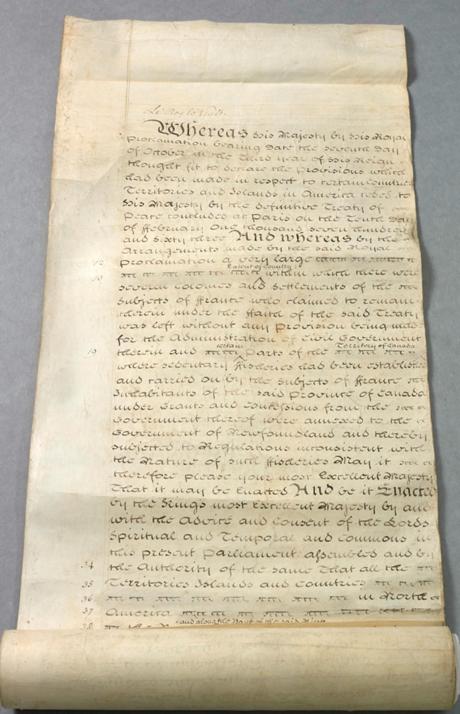
-
Editorial
The Road to Inclusion: Transgender Health Care in Canada
The following article is an editorial written by The Canadian Encyclopedia staff. Editorials are not usually updated.
"https://d3d0lqu00lnqvz.cloudfront.net/media/media/24478bd6-f253-477b-9a25-5061605c986c.jpg" // resources/views/front/categories/view.blade.php
https://d3d0lqu00lnqvz.cloudfront.net/media/media/24478bd6-f253-477b-9a25-5061605c986c.jpg
-
Article
Shelburne Race Riots
On 26 July 1784, a mob of Loyalist settlers stormed the home of a Black preacher in Shelburne, Nova Scotia. They were armed with hooks and chains seized from ships in the harbour. The confrontation ignited a wave of violence in Shelburne County that lasted approximately 10 days. The majority of the attacks targeted the county’s free Black population. The Shelburne Riot has been described as the first race riot in North America. (See also British North America.)
"https://d3d0lqu00lnqvz.cloudfront.net/media/media/be13527b-b76d-408a-afca-30acbd4f7bfc.png" // resources/views/front/categories/view.blade.php
https://d3d0lqu00lnqvz.cloudfront.net/media/media/be13527b-b76d-408a-afca-30acbd4f7bfc.png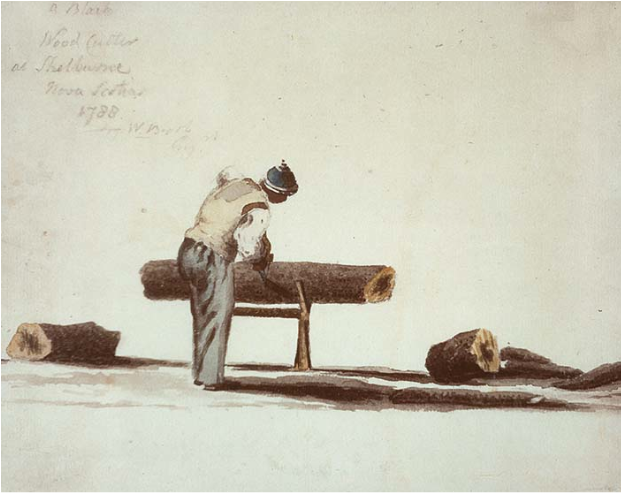
-
Article
Editorial: The Stanley Flag and the “Distinctive Canadian Symbol”
The following article is an editorial written by The Canadian Encyclopedia staff. Editorials are not usually updated. Prime Minister Lester Pearson and John Matheson, one of his Liberal Members of Parliament, are widely considered the fathers of the Canadian flag. Their names were front and centre in 2015 during the tributes and celebrations to mark the 50th anniversary of the flag’s creation. But the role played by George Stanley is often lost in the story of how this iconic symbol came to be.
"https://d3d0lqu00lnqvz.cloudfront.net/media/media/a9adffc5-8796-4968-ac52-ab33df0fe6eb.jpg" // resources/views/front/categories/view.blade.php
https://d3d0lqu00lnqvz.cloudfront.net/media/media/a9adffc5-8796-4968-ac52-ab33df0fe6eb.jpg
-
Article
Toronto and French Place Names
Streets, avenues, roads and parks are named according to criteria set by the municipal council concerned.
"https://d3d0lqu00lnqvz.cloudfront.net/media/media/b8905984-938b-4199-bf9f-f2357238baa9.jpg" // resources/views/front/categories/view.blade.php
https://d3d0lqu00lnqvz.cloudfront.net/media/media/b8905984-938b-4199-bf9f-f2357238baa9.jpg
-
Article
Toronto Feature: Huron-Wendat Village
This article is from our Toronto Feature series. Features from past programs are not updated.
"https://d3d0lqu00lnqvz.cloudfront.net/media/media/b26f0658-9c91-4722-b371-4bbe28799d26.jpg" // resources/views/front/categories/view.blade.php
https://d3d0lqu00lnqvz.cloudfront.net/media/media/b26f0658-9c91-4722-b371-4bbe28799d26.jpg