
Browse "Communities & Sociology"
-
Article
Music Festivals
Music festivals generally consist of two types: competition and non-competition festivals; and opera or concert festivals.
"https://thecanadianencyclopedia.ca/images/tce_placeholder.jpg?v=e9dca980c9bdb3aa11e832e7ea94f5d9" // resources/views/front/categories/view.blade.php
https://thecanadianencyclopedia.ca/images/tce_placeholder.jpg?v=e9dca980c9bdb3aa11e832e7ea94f5d9
-
Article
Filipino Food in Canada
According to the 2021 census, there were over 925,000 Filipino Canadians in Canada. That year, the Philippines was also the second most common country of birth among people who moved to Canada. (See Immigration to Canada.) As a result, Filipino food is an emerging cuisine in Canada. However, it’s underrepresented in Canada’s diverse food landscape compared to other Asian cuisines. (See also: Chinese Food in Canada; Indian Food in Canada.) Filipino cuisine is made up of multiple food traditions. It combines Indigenous Austronesian food practices with other overseas traditions. Notably, the Philippines' colonial past led to Spanish and American culinary influences. Mexican, Chinese and other international influences also shaped Filipino food because of trade or as indirect results of colonialism. The Philippines is a very diverse country, which is also reflected in Filipino cuisine. See also Popular Filipino Dishes in Canada.
"https://d3d0lqu00lnqvz.cloudfront.net/FilipinoFood/adobo.jpg" // resources/views/front/categories/view.blade.php
https://d3d0lqu00lnqvz.cloudfront.net/FilipinoFood/adobo.jpg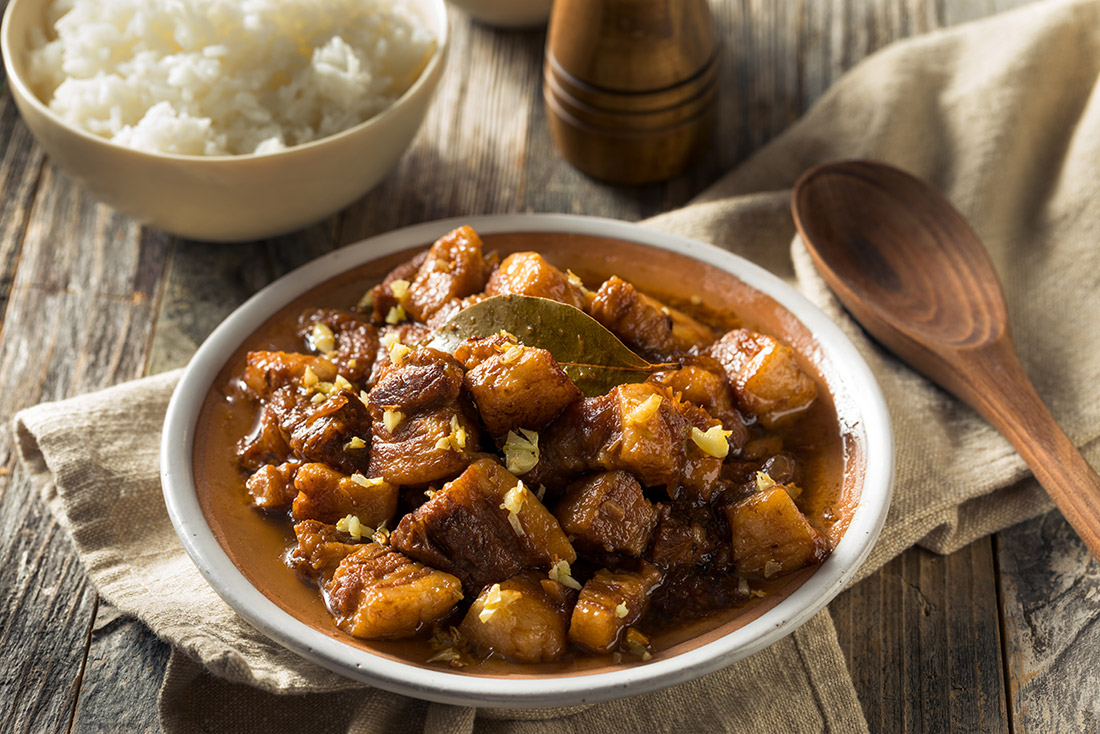
-
Article
Finnish Canadians
Between 1835 and 1865, several hundred immigrants from Finland settled in Alaska (which was part of Russia at that time). Many moved down the coast to British Columbia (see Sointula). Some early Finnish immigrants to Ontario worked on the construction of the first Welland Canal, which was completed in 1829. The 2021 census reported 144,055 people of Finnish origin in Canada.
"https://d3d0lqu00lnqvz.cloudfront.net/media/new_article_images/FinnishCanadians/Finnish_immigrants_in_Rouyn,_Quebec,_Canada,_1926.png" // resources/views/front/categories/view.blade.php
https://d3d0lqu00lnqvz.cloudfront.net/media/new_article_images/FinnishCanadians/Finnish_immigrants_in_Rouyn,_Quebec,_Canada,_1926.png
-
Article
Music of Indigenous Peoples in Canada
Indigenous people (First Nations, Inuit, Métis) who reside in what is now Canada have diverse cultural traditions that are reflected in the variety of their musical genres and styles. Music is generally seen as an integral part of the daily life and spiritual beliefs of Indigenous people in Canada. The diversity of Indigenous life and music has been recognized by scholars who attempted to classify people according to "culture areas,"which were also applied to music made by people in each area. Indigenous people have their own distinct musical traditions, repertoire, and meanings. As well, genres of music have emerged that traverse boundaries and are performed by Indigenous musicians across North America. Some generalizations are that traditional Indigenous music is predominantly vocal, with drums, rattles and flutes serving as common instruments. As well, Indigenous musicians have been influenced by non-Indigenous music-making, often adopting other musical styles (such as country music and pop) and instruments (guitars, fiddles).
"https://d3d0lqu00lnqvz.cloudfront.net/media/media/824b051b-b939-4324-adbc-132f86ca5763.jpg" // resources/views/front/categories/view.blade.php
https://d3d0lqu00lnqvz.cloudfront.net/media/media/824b051b-b939-4324-adbc-132f86ca5763.jpg
-
Article
Food Insecurity in Canada
Household food insecurity— the inadequate or insecure access to food due to financial constraints — is a serious public health problem in Canada. In 2017–18, 1 in 8 households were food insecure. This amounted to over 4.4 million Canadians. Of that number, 1.2 million were children under 18 years. While food banks are a well-known public response to food insecurity, most food insecure households do not use food banks and there is no evidence that food charity is a durable solution. There is wide consensus that governments need to act on food insecurity through income-based interventions.
"https://d3d0lqu00lnqvz.cloudfront.net/media/new_article_images/FoodInsecurityCanada/food-insecurity-map.jpg" // resources/views/front/categories/view.blade.php
https://d3d0lqu00lnqvz.cloudfront.net/media/new_article_images/FoodInsecurityCanada/food-insecurity-map.jpg
-
Article
Forbidden City
William Bell’s historical novel Forbidden City (1990) tells the story of Alex, a teenager who accompanies his father on a trip to Beijing, China. Alex’s initial excitement at exploring the history of the city turns to horror when he becomes trapped near the Forbidden City during the Tiananmen Square Massacre. The most popular novel of Bell’s career, Forbidden City was published in 11 countries and eight languages. Reviewers praised its depiction of the on-the-ground reality of the Tiananmen Square Massacre. The novel received Ontario’s Ruth and Sylvia Schwartz Children’s Book Award, the Ontario School Librarians Association Award and the Belgium Award for Excellence.
"https://thecanadianencyclopedia.ca/images/tce_placeholder.jpg?v=e9dca980c9bdb3aa11e832e7ea94f5d9" // resources/views/front/categories/view.blade.php
https://thecanadianencyclopedia.ca/images/tce_placeholder.jpg?v=e9dca980c9bdb3aa11e832e7ea94f5d9
-
Article
Right to Vote in Canada
The term franchise denotes the right to vote in elections for members of Parliament, provincial legislatures and municipal councils. The Canadian franchise dates from the mid-18th-century colonial period. At that time, restrictions effectively limited the right to vote to male property holders. Since then, voting qualifications and the categories of eligible voters have expanded according to jurisdiction. These changes reflect the evolution of Canada’s social values and constitutional requirements.
"https://d3d0lqu00lnqvz.cloudfront.net/media/media/bd7dcb30-05e5-4ba5-a9f7-9adea1ed9928.jpg" // resources/views/front/categories/view.blade.php
https://d3d0lqu00lnqvz.cloudfront.net/media/media/bd7dcb30-05e5-4ba5-a9f7-9adea1ed9928.jpg
-
Article
Francophonie and Canada
The term francophonie has been in common use since the 1960s. It has several meanings. In its most general sense, it refers to all peoples and communities anywhere in the world that have French as their mother tongue or customary language. The term can also refer to the wider, more complex network of government agencies and non-government organizations that work to establish, maintain and strengthen the special ties among French-speaking people throughout the world. Lastly, the expression “La Francophonie” is increasingly used as shorthand for the Organisation internationale de la Francophonie (International Organisation of La Francophonie).
"https://d3d0lqu00lnqvz.cloudfront.net/media/media/5a849720-0aa9-4516-a19a-0b599bde2bc2.png" // resources/views/front/categories/view.blade.php
https://d3d0lqu00lnqvz.cloudfront.net/media/media/5a849720-0aa9-4516-a19a-0b599bde2bc2.png
-
Article
Fraser River Fishermen's Strikes
On 8 July 1900, fishermen for 47 salmon canneries that lined the lower Fraser River from New Westminster to the river mouth struck for a season-long, 25-cent, minimum price instead of prices which dropped as catches increased.
"https://thecanadianencyclopedia.ca/images/tce_placeholder.jpg?v=e9dca980c9bdb3aa11e832e7ea94f5d9" // resources/views/front/categories/view.blade.php
https://thecanadianencyclopedia.ca/images/tce_placeholder.jpg?v=e9dca980c9bdb3aa11e832e7ea94f5d9
-
Article
Fraser River Railway Strikes
The Wobbly poet and martyr Joe Hill visited the camp at Yale and wrote several songs, including "Where the Fraser River Flows," still a labour standard.
"https://d3d0lqu00lnqvz.cloudfront.net/media/media/85c764cc-4b3c-42f9-9953-5f1f2c40cbde.jpg" // resources/views/front/categories/view.blade.php
https://d3d0lqu00lnqvz.cloudfront.net/media/media/85c764cc-4b3c-42f9-9953-5f1f2c40cbde.jpg
-
Article
Freemasonry
Changing economic and religious conditions after the Gothic period brought a decline in majestic building projects, and by the 17th century, lodges could stay alive only by supplementing the membership of working ("operative") masons with nonmasons ("accepted masons").
"https://d3d0lqu00lnqvz.cloudfront.net/media/media/9cd311ef-e60d-424e-853c-2d818079595a.jpg" // resources/views/front/categories/view.blade.php
https://d3d0lqu00lnqvz.cloudfront.net/media/media/9cd311ef-e60d-424e-853c-2d818079595a.jpg
-
Article
French Canadian Nationalism
French Canadian nationalism concerns a wide variety of manifestations of the collective will of much of Canada's French-speaking population to live as a distinct cultural community. Its innumerable ramifications have been not only cultural but also political, economic and social.
"https://d3d0lqu00lnqvz.cloudfront.net/media/media/04c5cf2b-940f-4410-b1a6-fa7105c8b99e.jpg" // resources/views/front/categories/view.blade.php
https://d3d0lqu00lnqvz.cloudfront.net/media/media/04c5cf2b-940f-4410-b1a6-fa7105c8b99e.jpg
-
Article
French Immigration in Canada
After New France was ceded to Great Britain in 1763, the migration of French colonists slowed considerably. A trickle of clergy members, farmers and professionals settled during the 19th century. However, after the Second World War, French immigration — which was then politically favoured — resumed with renewed vigour. This effort was geared towards recruiting francophone professionals and entrepreneurs, who settled in Canada’s big cities. The French spawned many cultural associations and had a large presence in French-Canadian schools.
"https://d3d0lqu00lnqvz.cloudfront.net/media/media/d698c031-e790-4c17-906a-5b880e71e24d.jpg" // resources/views/front/categories/view.blade.php
https://d3d0lqu00lnqvz.cloudfront.net/media/media/d698c031-e790-4c17-906a-5b880e71e24d.jpg
-
Article
French in the West
The French came to the North-West from Montréal in search of furs and an overland route to the Mer de l'Ouest which would lead to a short route to China (see coureurs de bois).
"https://d3d0lqu00lnqvz.cloudfront.net/media/media/89ed12ff-4e88-4efb-aca4-d26cd48ca4c3.jpg" // resources/views/front/categories/view.blade.php
https://d3d0lqu00lnqvz.cloudfront.net/media/media/89ed12ff-4e88-4efb-aca4-d26cd48ca4c3.jpg
-
Article
French Language in Canada
French is one of Canada’s two official languages. Although every province in Canada has people whose mother tongue is French, Québec is the only province where speakers of French are in the majority. In 2011, 7,054,975 people in Canada (21 per cent of the country’s population) had French as their mother tongue.
"https://thecanadianencyclopedia.ca/images/tce_placeholder.jpg?v=e9dca980c9bdb3aa11e832e7ea94f5d9" // resources/views/front/categories/view.blade.php
https://thecanadianencyclopedia.ca/images/tce_placeholder.jpg?v=e9dca980c9bdb3aa11e832e7ea94f5d9