Browse "Business & Economics"
-
Article
Pacific Western Airlines Ltd
In 1984, with the advent of the Economic Regulatory Reform (ERR), most of Canada experienced a deregulation program similar to that in the United States. The ERR had several significant effects. Two large trunk carriers, CAI and Air Canada, emerged, competing on major domestic routes.
"https://d3d0lqu00lnqvz.cloudfront.net/media/media/5c388c63-b1f0-49ff-a8bf-0f60b265c315.jpg" // resources/views/front/categories/view.blade.php
https://d3d0lqu00lnqvz.cloudfront.net/media/media/5c388c63-b1f0-49ff-a8bf-0f60b265c315.jpg
-
Article
Political Party Financing in Canada
The financial activities of political parties in Canada were largely unregulated until the Election Expenses Act was passed in 1974. Canada now has an extensive regime regulating federal political party financing, both during and outside of election periods. Such regulation encourages greater transparency of political party activities. It also ensures a fair electoral system that limits the advantages of those with more money. Political parties and candidates are funded both privately and publicly. Election finance laws govern how parties and candidates are funded, as well as the ways in which they can spend money.
"https://d3d0lqu00lnqvz.cloudfront.net/media/media/3217b36a-f0cf-4108-91d7-0d45276492fc.jpg" // resources/views/front/categories/view.blade.php
https://d3d0lqu00lnqvz.cloudfront.net/media/media/3217b36a-f0cf-4108-91d7-0d45276492fc.jpg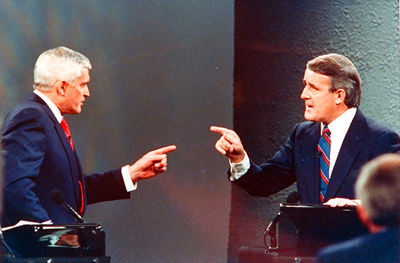
-
Article
Pay Television
Although undertaken experimentally in Etobicoke, Ontario, between 1960 and 1965, pay television as a major venture was licensed only in March 1982, after a decade of debate.
"https://thecanadianencyclopedia.ca/images/tce_placeholder.jpg?v=e9dca980c9bdb3aa11e832e7ea94f5d9" // resources/views/front/categories/view.blade.php
https://thecanadianencyclopedia.ca/images/tce_placeholder.jpg?v=e9dca980c9bdb3aa11e832e7ea94f5d9
-
Article
Petro-Canada
Petro-Canada, created by the federal government in the mid-1970s as Canada's national oil company, was the offspring of the world energy crisis, Canadian ECONOMIC NATIONALISM, and a tradition of state-supported development of the country's costly energy frontier.
"https://thecanadianencyclopedia.ca/images/tce_placeholder.jpg?v=e9dca980c9bdb3aa11e832e7ea94f5d9" // resources/views/front/categories/view.blade.php
https://thecanadianencyclopedia.ca/images/tce_placeholder.jpg?v=e9dca980c9bdb3aa11e832e7ea94f5d9
-
Article
Petrochemical Industry
The petrochemical industry, which produces chemicals using OIL AND NATURAL GAS as major raw materials, occupies an important position in Canada's MANUFACTURING and consuming sectors. Oil and natural gas are composed primarily of hydrocarbons. Most petrochemicals contain hydrogen or carbon or both.
"https://thecanadianencyclopedia.ca/images/tce_placeholder.jpg?v=e9dca980c9bdb3aa11e832e7ea94f5d9" // resources/views/front/categories/view.blade.php
https://thecanadianencyclopedia.ca/images/tce_placeholder.jpg?v=e9dca980c9bdb3aa11e832e7ea94f5d9
-
Article
Petroleum
Since its first commercial exploitation in the 1850s, petroleum has become the major energy source of Canada and the industrial world.
"https://d3d0lqu00lnqvz.cloudfront.net/media/media/b1bdae25-5b0f-46c9-b9d1-47b72ddc49ba.jpg" // resources/views/front/categories/view.blade.php
https://d3d0lqu00lnqvz.cloudfront.net/media/media/b1bdae25-5b0f-46c9-b9d1-47b72ddc49ba.jpg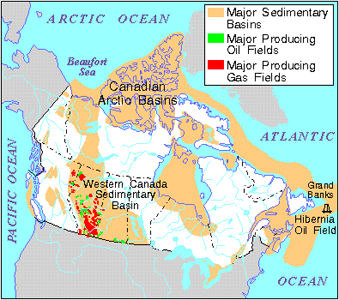
-
Article
Petroleum Industries
Petroleum industries find, produce, process, transport, refine and market petroleum commodities.
"https://d3d0lqu00lnqvz.cloudfront.net/media/media/5ceeeefa-12aa-419d-91aa-b6c959804761.jpg" // resources/views/front/categories/view.blade.php
https://d3d0lqu00lnqvz.cloudfront.net/media/media/5ceeeefa-12aa-419d-91aa-b6c959804761.jpg
-
Article
Petroleum Research and Development
Research has always been the backbone of the petroleum industry. Bringing crude oil, bitumen or natural gas to the surface presents major technological problems and, once recovered, there is little use for the resource in its raw state.
"https://thecanadianencyclopedia.ca/images/tce_placeholder.jpg?v=e9dca980c9bdb3aa11e832e7ea94f5d9" // resources/views/front/categories/view.blade.php
https://thecanadianencyclopedia.ca/images/tce_placeholder.jpg?v=e9dca980c9bdb3aa11e832e7ea94f5d9
-
Article
Petroleum Supply and Demand
Petroleum demand reflects energy use in society and is usually forecast by projecting recent trends in economic growth, energy consumption, petroleum technology and prices.
"https://thecanadianencyclopedia.ca/images/tce_placeholder.jpg?v=e9dca980c9bdb3aa11e832e7ea94f5d9" // resources/views/front/categories/view.blade.php
https://thecanadianencyclopedia.ca/images/tce_placeholder.jpg?v=e9dca980c9bdb3aa11e832e7ea94f5d9
-
Macleans
Philip Services Corp
There has been growth - but, lately, in the field of bad news (page 54). On Jan. 27, the company announced an after-tax loss in 1997 of close to $260 million. That figure, the firm acknowledged, included $88 million worth of reclaimed copper that Philip could not account for.This article was originally published in Maclean's Magazine on March 2, 1998
"https://d3d0lqu00lnqvz.cloudfront.net/media/media/ef04da1a-a28f-4890-a279-5ba5041d5d8b.jpg" // resources/views/front/categories/view.blade.php
https://d3d0lqu00lnqvz.cloudfront.net/media/media/ef04da1a-a28f-4890-a279-5ba5041d5d8b.jpg
-
Article
Pipeline Debate, 1956
The Pipeline Debate, 8 May-6 June 1956, was one of the most famous confrontations in Canadian parliamentary history.
"https://d3d0lqu00lnqvz.cloudfront.net/media/media/5b52b570-6e9b-476a-94a9-af4ca135ac51.jpg" // resources/views/front/categories/view.blade.php
https://d3d0lqu00lnqvz.cloudfront.net/media/media/5b52b570-6e9b-476a-94a9-af4ca135ac51.jpg
-
Article
Political Economy
Political Economy is the study of the relationship between Politics and Economics.
"https://thecanadianencyclopedia.ca/images/tce_placeholder.jpg?v=e9dca980c9bdb3aa11e832e7ea94f5d9" // resources/views/front/categories/view.blade.php
https://thecanadianencyclopedia.ca/images/tce_placeholder.jpg?v=e9dca980c9bdb3aa11e832e7ea94f5d9
-
Article
Power Corporation of Canada
Power Corporation of Canada, controlled by Paul Desmarais Jr. and André Desmarais (sons of the late PAUL DESMARAIS), was incorporated in 1925. It is a large and diversified company engaged in communications and financial services, as well as other business interests.
"https://thecanadianencyclopedia.ca/images/tce_placeholder.jpg?v=e9dca980c9bdb3aa11e832e7ea94f5d9" // resources/views/front/categories/view.blade.php
https://thecanadianencyclopedia.ca/images/tce_placeholder.jpg?v=e9dca980c9bdb3aa11e832e7ea94f5d9
-
Article
History of Settlement in the Canadian Prairies
The Canadian Prairies were peopled in six great waves of migration, spanning from prehistory to the present. The migration from Asia, about 13,300 years ago, produced an Indigenous population of 20,000 to 50,000 by about 1640. Between 1640 and 1840, several thousand European and Canadian fur traders arrived, followed by several hundred British immigrants. They created dozens of small outposts and a settlement in the Red River Colony, where the Métis became the largest part of the population. The third wave, from the 1840s to the 1890s, consisted mainly but not solely of Canadians of British heritage. The fourth and by far the largest wave was drawn from many nations, mostly European. It occurred from 1897 to 1929, with a pause (1914–22) during and after the First World War. The fifth wave, drawn from other Canadian provinces and from Europe and elsewhere, commenced in the late 1940s. It lasted through the 1960s. The sixth wave, beginning in the 1970s, drew especially upon peoples of the southern hemisphere. It has continued, with fluctuations, to the present. Throughout the last century, the region has also steadily lost residents, as a result of migration to other parts of Canada, to the United States, and elsewhere.
"https://d3d0lqu00lnqvz.cloudfront.net/media/media/e1c671ab-3dcf-459c-b108-0bc6e4a86b99.jpg" // resources/views/front/categories/view.blade.php
https://d3d0lqu00lnqvz.cloudfront.net/media/media/e1c671ab-3dcf-459c-b108-0bc6e4a86b99.jpg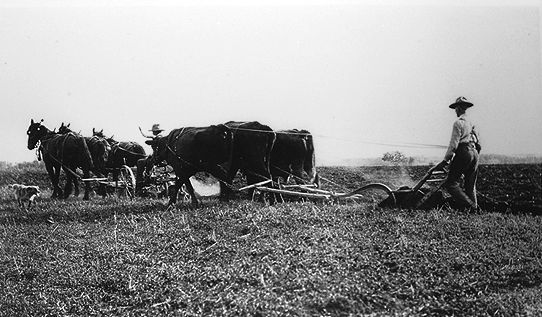
-
Article
Print Industry
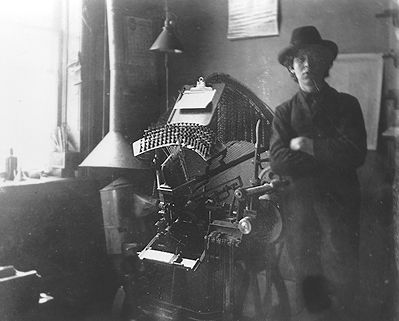
Prior to the printing process of putting impressions on paper, foil, plastic or cloth, there are pre-press procedures such as design, artwork, layout, creation of type or graphics, film and platemaking, and press makeready. In the past all these processes were done by hand or camera.
"https://d3d0lqu00lnqvz.cloudfront.net/media/media/5177ea5a-5977-4f69-832c-20bdf5fc2d60.jpg" // resources/views/front/categories/view.blade.php
https://d3d0lqu00lnqvz.cloudfront.net/media/media/5177ea5a-5977-4f69-832c-20bdf5fc2d60.jpg