Browse "People"
-
Article
Highway of Tears
The Highway of Tears refers to a 724 km length of Yellowhead Highway 16 in British Columbia where many women (mostly Indigenous) have disappeared or been found murdered. The Highway of Tears is part of a larger, national crisis of missing and murdered Indigenous women and girls. In 2015, the federal government launched a national inquiry into these cases. This article contains sensitive material that may not be suitable for all audiences.
"https://d3d0lqu00lnqvz.cloudfront.net/media/media/1f33c6d4-24d9-4dfa-9de4-11d8765e2ad3.jpg" // resources/views/front/categories/view.blade.php
https://d3d0lqu00lnqvz.cloudfront.net/media/media/1f33c6d4-24d9-4dfa-9de4-11d8765e2ad3.jpg
-
Article
Tomson Highway
Tomson Highway, OC, playwright, novelist, pianist and songwriter (born 6 December 1951 in northwestern Manitoba). Tomson Highway is one of the most prominent and influential Indigenous writers in Canada. His works discuss and explore important issues affecting First Nations people, including residential schools, reserve life, Indigenous identity and more. In 1998, Highway was named one of the 100 most important people in Canadian history by Maclean’s. He is an Officer of the Order of Canada. Highway received the Award for Lifetime Artistic Achievement at the Governor General's Performing Arts Awards in 2022. (See also Influential Indigenous Writers in Canada.)
"https://d3d0lqu00lnqvz.cloudfront.net/media/media/c4ed4b66-a1f7-4925-9b6d-3a0896efef75.jpg" // resources/views/front/categories/view.blade.php
https://d3d0lqu00lnqvz.cloudfront.net/media/media/c4ed4b66-a1f7-4925-9b6d-3a0896efef75.jpg
-
Article
Hilary M. Weston
Hilary Mary Weston (née Frayne), CM, CVO, OOnt, philanthropist, businesswoman, lieutenant-governor of Ontario 1997-2002 (born 12 January 1942 in Dún Laoghaire, Ireland; died 2 August 2025). Weston was regarded as a fashion mogul and generous philanthropist who supported research, the arts and charitable campaigns in Canada and abroad. She was the second woman to be appointed lieutenant-governor of Ontario.
"https://d3d0lqu00lnqvz.cloudfront.net/hilarymweston/hilarymweston.jpg" // resources/views/front/categories/view.blade.php
https://d3d0lqu00lnqvz.cloudfront.net/hilarymweston/hilarymweston.jpg
-
Article
Hilary Radley
Hilary Radley, fashion designer (b at Yorkshire England October 5 1947). Raised in England, Radley began her studies in fashion at Sheffield College with a pre-diploma in Art and Design.
"https://thecanadianencyclopedia.ca/images/tce_placeholder.jpg?v=e9dca980c9bdb3aa11e832e7ea94f5d9" // resources/views/front/categories/view.blade.php
https://thecanadianencyclopedia.ca/images/tce_placeholder.jpg?v=e9dca980c9bdb3aa11e832e7ea94f5d9
-
Article
Hilda Marion Neatby
Hilda Ada Marion Neatby, CC, historian, author, and educator (born 19 February 1904 in Sutton, United Kingdom; died 14 May 1975 in Saskatoon, Saskatchewan). Neatby was the first woman to lead a university history department in Canada and the first female president of the Canadian Historical Association (CHA). She was also the only woman to serve on the Massey Commission. In 1967, she was chosen as Saskatchewan’s Woman of the Century and became a Companion of the Order of Canada. Since 1982, the CHA has awarded the Hilda Neatby Prize for women’s history.
"https://d3d0lqu00lnqvz.cloudfront.net/Hilda-Neatby-Stamp.jpg" // resources/views/front/categories/view.blade.php
https://d3d0lqu00lnqvz.cloudfront.net/Hilda-Neatby-Stamp.jpg
-
Article
Hilda Ramacière
Hilda Ramacière (née Hildegard Weiland), community worker and volunteer (born 7 November 1927 in Zizenhausen, Germany; died 6 January 2010 in Montreal, Quebec). Mrs. Ramacière left her mark through her social commitment in the Plateau Mont-Royal neighbourhood. A strong-minded and determined woman, she exemplified the pride of Montreal's immigrant community.
"https://d3d0lqu00lnqvz.cloudfront.net/media/Twitter_Cards/Hilda Rananciere.jpg" // resources/views/front/categories/view.blade.php
https://d3d0lqu00lnqvz.cloudfront.net/media/Twitter_Cards/Hilda Rananciere.jpg
-
Article
Hilda Ranscombe
Hilda Doris Ranscombe, hockey player (born 3 September 1913 in Doon [now part of Kitchener] ON; died 25 August 1998 in Cambridge ON). Hilda Ranscombe was a natural athlete who excelled at several sports but was especially skilled at ice hockey. She pioneered women’s hockey in Canada and led her team, the Preston Rivulettes, to 10 Ontario provincial championships, six Eastern Canadian championships and six national championships. In her day, she was regarded as the greatest female hockey player in the world. She was nominated twice for the Lou Marsh Trophy (now Northern Star Award) as Canada’s athlete of the year. She has been inducted into Canada’s Sports Hall of Fame and the World Women’s Hockey Hall of Fame.
"https://d3d0lqu00lnqvz.cloudfront.net/media/new_article_images/LadiesOntarioHockeyAssociation/Hilda_Ranscombe_with_hockey_stick.jpg" // resources/views/front/categories/view.blade.php
https://d3d0lqu00lnqvz.cloudfront.net/media/new_article_images/LadiesOntarioHockeyAssociation/Hilda_Ranscombe_with_hockey_stick.jpg
-
Article
Hilda Strike
Hilda Strike, (born at Montréal, 1 Sep 1910; died at Ottawa, 9 Mar 1989). Hilda Strike was an athlete in the 1932 SUMMER OLYMPICS in TRACK AND FIELD.
"https://d3d0lqu00lnqvz.cloudfront.net/media/new_article_images/SportsAwards/Strike on Podium.jpg" // resources/views/front/categories/view.blade.php
https://d3d0lqu00lnqvz.cloudfront.net/media/new_article_images/SportsAwards/Strike on Podium.jpg
-
Article
Hildegard Westerkamp
Hildegard Westerkamp. Audio artist, composer, teacher, b Osnabrück, West Germany, 8 Apr 1946, naturalized Canadian 1975; B MUS (British Columbia) 1972, MA (Simon Fraser) 1988.
"https://thecanadianencyclopedia.ca/images/tce_placeholder.jpg?v=e9dca980c9bdb3aa11e832e7ea94f5d9" // resources/views/front/categories/view.blade.php
https://thecanadianencyclopedia.ca/images/tce_placeholder.jpg?v=e9dca980c9bdb3aa11e832e7ea94f5d9
-
Article
Hippies in Canada
“Hippies” is a term used to describe young people who participated in the 1960s counterculture movement, which originated in the United States and spread throughout Canada in the second half of that decade. As a noun, “hippie” was a play on the adjective “hip,” which was used to describe young bohemians who lived in Greenwich Village in New York City, and in San Francisco, in the 1950s and early 1960s. Hippies were part of the “baby boom” generation, born immediately following the end of the Second World War (see Baby Boomers in Canada). This demographic wave was significant enough to transform Canadian society; by the mid-1960s more than half of Canada’s population of 20 million was under the age of 25.
"https://d3d0lqu00lnqvz.cloudfront.net/media/new_article_images/HippiesinCanada/VW_Van_Hippies_British_Columbia.jpg" // resources/views/front/categories/view.blade.php
https://d3d0lqu00lnqvz.cloudfront.net/media/new_article_images/HippiesinCanada/VW_Van_Hippies_British_Columbia.jpg
-
Article
Hiram Alfred (H.A.) Cody
Hiram Alfred (H.A.) Cody, clergyman, novelist (born at Codys, NB 3 Jul 1872; died at Saint John, NB 9 Feb 1948). Born in Codys, New Brunswick, a town named after his family, H.A. Cody moved to Windsor, Nova Scotia to study at KING'S COLLEGE.
"https://thecanadianencyclopedia.ca/images/tce_placeholder.jpg?v=e9dca980c9bdb3aa11e832e7ea94f5d9" // resources/views/front/categories/view.blade.php
https://thecanadianencyclopedia.ca/images/tce_placeholder.jpg?v=e9dca980c9bdb3aa11e832e7ea94f5d9
-
Article
Hiram Blanchard
Hiram Blanchard, lawyer, politician, premier of Nova Scotia (b at West River, NS 17 Jan 1820; d at Halifax 17 Dec 1874). Blanchard began his legal career at Port Hood, moving to Halifax only after election as Reform (Liberal) member for Inverness County in 1859.
"https://thecanadianencyclopedia.ca/images/tce_placeholder.jpg?v=e9dca980c9bdb3aa11e832e7ea94f5d9" // resources/views/front/categories/view.blade.php
https://thecanadianencyclopedia.ca/images/tce_placeholder.jpg?v=e9dca980c9bdb3aa11e832e7ea94f5d9
-
Article
Hiram Walker
Hiram Walker, distiller, businessman (b at East Douglas, Mass 4 July 1816; d at Detroit, Mich 12 Jan 1899). Though Walker lived in Canada for only 5 years (1859-64), he built a distillery, a new town and a major railway line.
"https://thecanadianencyclopedia.ca/images/tce_placeholder.jpg?v=e9dca980c9bdb3aa11e832e7ea94f5d9" // resources/views/front/categories/view.blade.php
https://thecanadianencyclopedia.ca/images/tce_placeholder.jpg?v=e9dca980c9bdb3aa11e832e7ea94f5d9
-
Article
Hiromi Goto
Hiromi Goto, writer (b. at Chiba-ken, Japan 13 Dec 1966). Hiromi Goto's family immigrated to Canada in 1969. They lived on the west coast of British Columbia for 8 years, before moving to Nanton, Alberta, where her father started a mushroom farm.
"https://thecanadianencyclopedia.ca/images/tce_placeholder.jpg?v=e9dca980c9bdb3aa11e832e7ea94f5d9" // resources/views/front/categories/view.blade.php
https://thecanadianencyclopedia.ca/images/tce_placeholder.jpg?v=e9dca980c9bdb3aa11e832e7ea94f5d9
-
Article
History of Acadia
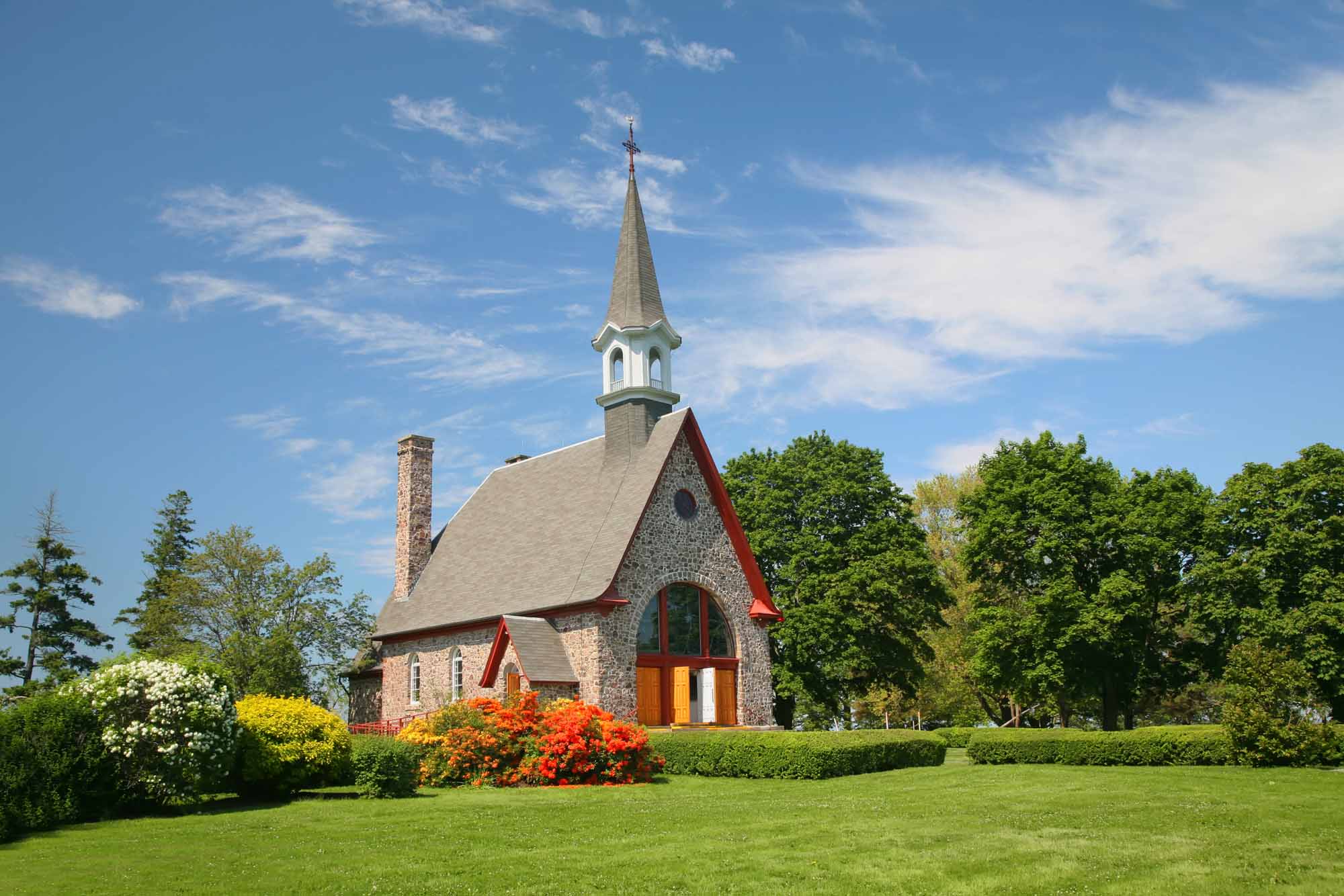
Acadia’s history as a French-speaking colony stretches as far back as the early 17th century. The French settlers who colonized the land and coexisted alongside Indigenous peoples became called Acadians. Acadia was also the target of numerous wars between the French and the English. Ultimately, the colony fell under British rule. Many Acadians were subsequently deported away from Acadia. Over time, as a British colony and then as part of Canada, Acadians increasingly became a linguistic minority. Nonetheless, Acadians have strived to protect their language and identity throughout time.
"https://d3d0lqu00lnqvz.cloudfront.net/media/media/66c056b0-bee3-47a2-9680-5d5a50b5e7eb.jpg" // resources/views/front/categories/view.blade.php
https://d3d0lqu00lnqvz.cloudfront.net/media/media/66c056b0-bee3-47a2-9680-5d5a50b5e7eb.jpg