
Browse "History/Historical Figures"
-
Article
Arthur Ewert
Arthur Ewert (b Germany 1890; d Germany 1959), early communist agent in Canada. Ewert immigrated to Canada with his wife Elise in 1914, was arrested in Toronto 23 Mar 1919 under the pseudonym Arthur Brown and expelled as a subversive alien.
"https://thecanadianencyclopedia.ca/images/tce_placeholder.jpg?v=e9dca980c9bdb3aa11e832e7ea94f5d9" // resources/views/front/categories/view.blade.php
https://thecanadianencyclopedia.ca/images/tce_placeholder.jpg?v=e9dca980c9bdb3aa11e832e7ea94f5d9
-
Article
Arthur Herbert Lindsay Richardson, VC
Arthur Herbert Lindsay “Tappy” Richardson, VC, policeman, soldier, war hero, labourer (born 23 September 1872 in Southport, England; died 15 December 1932 in Liverpool, England). Richardson served in the North-West Mounted Police from 1894 to 1907 but took leave in 1900 to fight in the South African War. He was the first member of a Canadian unit to receive the Victoria Cross.
"https://d3d0lqu00lnqvz.cloudfront.net/BoerWar/arthur-richardson.png" // resources/views/front/categories/view.blade.php
https://d3d0lqu00lnqvz.cloudfront.net/BoerWar/arthur-richardson.png
-
Article
Arthur Jackman
Arthur Jackman, mariner, nicknamed "Viking Arthur" (b at Renews, Nfld 1843; d at St John's 31 Jan 1907). He commanded his first sealing steamer, Hawk, to the ice fields in 1872. His other vessels, in later years, included Aurora, Falcon, Terra Nova and Eagle.
"https://thecanadianencyclopedia.ca/images/tce_placeholder.jpg?v=e9dca980c9bdb3aa11e832e7ea94f5d9" // resources/views/front/categories/view.blade.php
https://thecanadianencyclopedia.ca/images/tce_placeholder.jpg?v=e9dca980c9bdb3aa11e832e7ea94f5d9
-
Article
Arthur Roy Brown
Arthur Roy Brown, fighter pilot and ace, businessman, civil aviation pioneer (born 23 December 1893 in Carleton Place, Ontario; died 9 March 1944 in Stouffville, Ontario). Brown is credited with killing Germany’s top First World War ace, Manfred von Richthofen, the famed “Red Baron.” Richthofen may, however, have been shot down by two Australian army machine-gunners.
"https://d3d0lqu00lnqvz.cloudfront.net/media/media/dd4b0848-4236-4de3-9d3a-faff42f2bcd4.jpg" // resources/views/front/categories/view.blade.php
https://d3d0lqu00lnqvz.cloudfront.net/media/media/dd4b0848-4236-4de3-9d3a-faff42f2bcd4.jpg
-
Article
Augustin de Saffray de Mézy
Augustin de Saffray de Mézy, governor of New France (d at Québec C 6 May 1665). De Mézy was chosen first governor of New France under direct royal rule 1663-65. The colonial administration was reorganized on his arrival and the Sovereign Council established.
"https://thecanadianencyclopedia.ca/images/tce_placeholder.jpg?v=e9dca980c9bdb3aa11e832e7ea94f5d9" // resources/views/front/categories/view.blade.php
https://thecanadianencyclopedia.ca/images/tce_placeholder.jpg?v=e9dca980c9bdb3aa11e832e7ea94f5d9
-
Article
Aylesworth Bowen Perry
Aylesworth Bowen Perry, police officer (b at Violet, Ont 21 Aug 1860; d at Ottawa 14 Feb 1956). As commissioner of the NWMP, Perry transformed the police from a romantic frontier force into a modern national police force.
"https://d3d0lqu00lnqvz.cloudfront.net/Aylesworth_Bowen_Perry.jpg" // resources/views/front/categories/view.blade.php
https://d3d0lqu00lnqvz.cloudfront.net/Aylesworth_Bowen_Perry.jpg
-
Article
Baillairgé Family
Baillairgé Family, architects, sculptors and painters active in Québec for 5 generations until well into the 20th century, the most prominent of whom are Jean, François, Thomas and Charles.
"https://d3d0lqu00lnqvz.cloudfront.net/media/media/8974a6e6-5c11-42b1-9850-3ab323151552.jpg" // resources/views/front/categories/view.blade.php
https://d3d0lqu00lnqvz.cloudfront.net/media/media/8974a6e6-5c11-42b1-9850-3ab323151552.jpg
-
Article
Barr Colonists
The Barr Colonists were a group of nearly 2,000 British settler colonists who immigrated to Canada in 1903 and founded the “Barr Colony.” The all-British colony was named after their leader, Isaac Barr. Despite disorganized leadership, poor preparation and hardship, the colony survived with the help of the federal government and their Indigenous neighbours. The Barr Colony grew into what is now Lloydminster, a city that straddles the Alberta-Saskatchewan border.
"https://d3d0lqu00lnqvz.cloudfront.net/BarrColonists-1903.jpg" // resources/views/front/categories/view.blade.php
https://d3d0lqu00lnqvz.cloudfront.net/BarrColonists-1903.jpg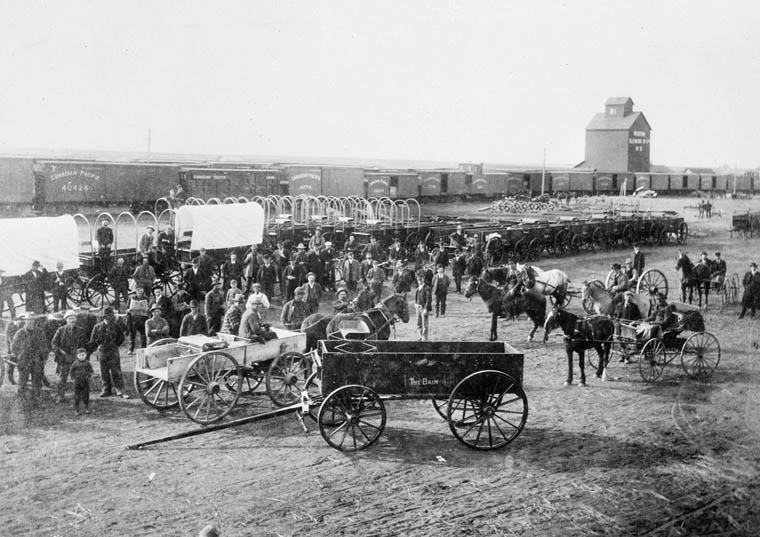
-
Editorial
Barr: An All-English Agrarian Settlement in the Prairies
The following article is an editorial written by The Canadian Encyclopedia staff. Editorials are not usually updated. "The English race gets continually into the most unheard of scrapes all over the world by reason of its insular prejudices and superiority to advice; but somehow they muddle through and when they do they are on the ground to hold it." Manitoba Free Press, December 1903
"https://d3d0lqu00lnqvz.cloudfront.net/media/media/f64936a3-133d-4589-831d-04059009e258.jpg" // resources/views/front/categories/view.blade.php
https://d3d0lqu00lnqvz.cloudfront.net/media/media/f64936a3-133d-4589-831d-04059009e258.jpg
-
Article
Bartholomew Roberts (Black Bart)
Bartholomew Roberts, pirate (born circa 1682 in Pembrokeshire, Wales; died 10 February 1722 in Guinea, West Africa). Nicknamed “Black Bart,” Bartholomew Roberts became a pirate, captaining more than 400 ships off the coasts of Africa, North America and South America, including the Caribbean and Newfoundland and Labrador. Only three years after becoming a pirate, he was killed by a cannon blast in a battle with a British ship off the coast of Guinea.
"https://d3d0lqu00lnqvz.cloudfront.net/BlackBartBartholomewRoberts/Bartholomew_Roberts.jpg" // resources/views/front/categories/view.blade.php
https://d3d0lqu00lnqvz.cloudfront.net/BlackBartBartholomewRoberts/Bartholomew_Roberts.jpg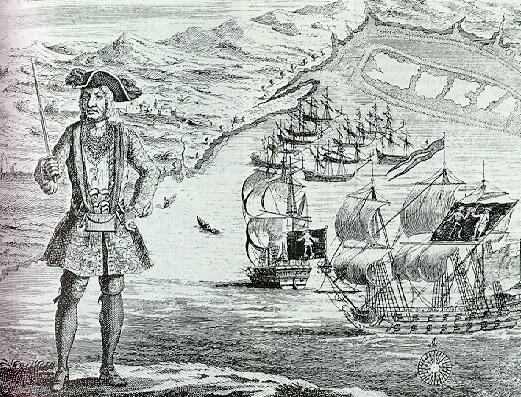
-
Article
Peter Bostonais Pangman
Peter (or Pierre) Bostonais Pangman, Métis leader, bison hunter (born 20 October 1791 in the North Saskatchewan River Valley area, present-day AB; died 4 March 1850 in St. François Xavier, present-day MB). Peter Bostonais Pangman was a skilled hunter who helped provide much-needed bison meat to the Red River Colony. He was actively involved in the Pemmican Wars and events surrounding the Battle of Seven Oaks. As part of the Pembina fur trade, Pangman was a key figure who rallied and inspired the Red River Valley Métis to see and express themselves with an identity separate from surrounding Indigenous peoples. The name Bostonais is variously spelled Bastonnais and Bostonnais.
"https://thecanadianencyclopedia.ca/images/tce_placeholder.jpg?v=e9dca980c9bdb3aa11e832e7ea94f5d9" // resources/views/front/categories/view.blade.php
https://thecanadianencyclopedia.ca/images/tce_placeholder.jpg?v=e9dca980c9bdb3aa11e832e7ea94f5d9
-
Article
Benedict Arnold
Benedict Arnold, merchant, army officer (born 14 January 1741/42 in Norwich, Connecticut; died 14 June 1801 in London, England). Benedict Arnold fought for the rebel Continental Army during the American Revolution and played a leading role in the invasion of Canada in 1775–76. He rose to the rank of major general but defected to the British in 1780. Arnold became a brigadier general in the British Army and led the American Legion, a provincial regiment. He later settled in England.
"https://d3d0lqu00lnqvz.cloudfront.net/American-Revolution/Benedict-Arnold.jpg" // resources/views/front/categories/view.blade.php
https://d3d0lqu00lnqvz.cloudfront.net/American-Revolution/Benedict-Arnold.jpg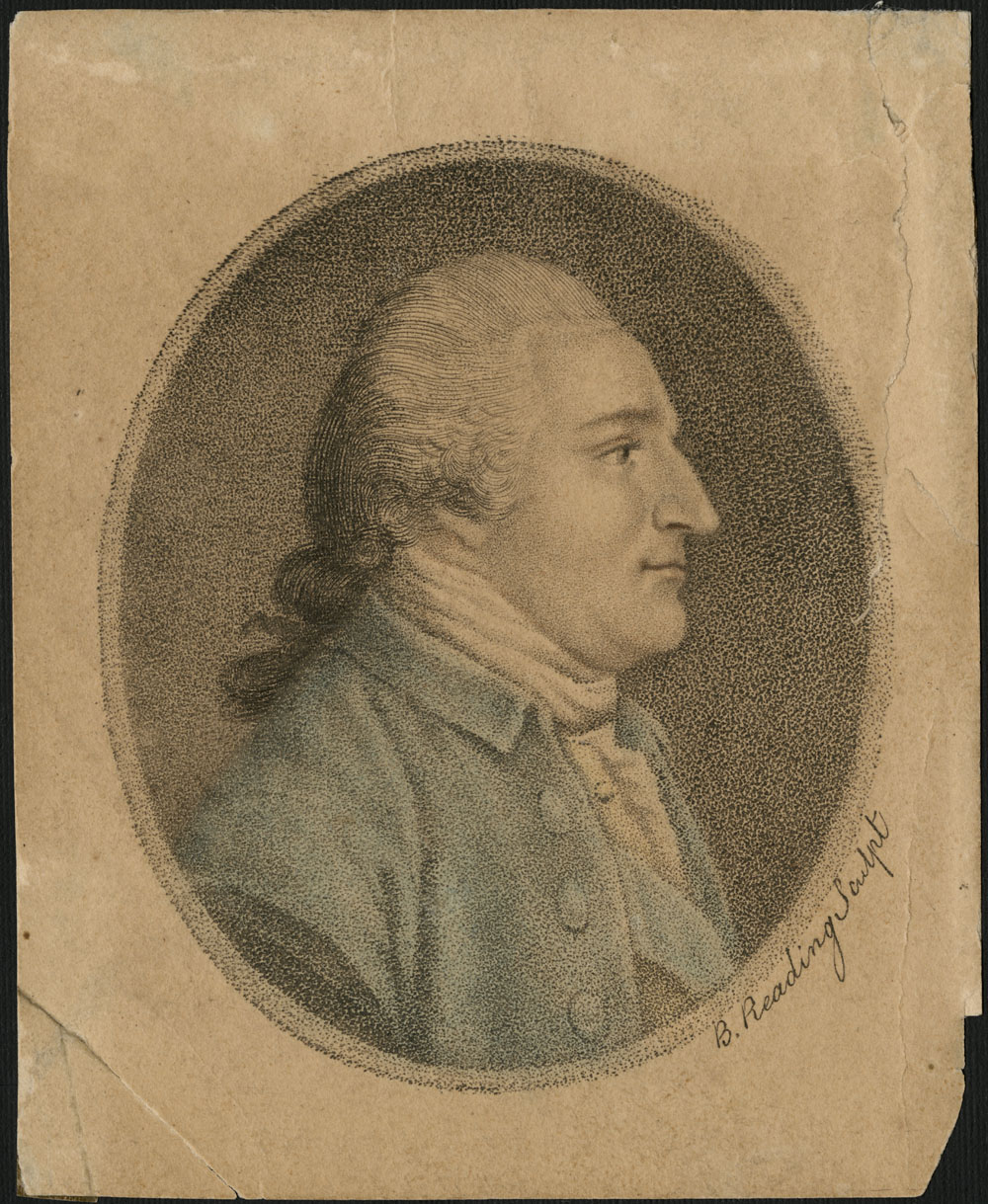
-
Article
Benedictines
Exterior view of the Abbey Church, designed by Dom Paul Bellot, a Benedictine monk (courtesy Dan S. Hanganu).A major landmark in Mission, BC, is the Benedictine monastic complex, Westminster Abbey (courtesy Dr Noel Hall).PreviousNext Various monastic traditions were already in existence in western Europe when Saint Benedict of Nursia founded the Abbey of Monte Cassino in Italy in 529. His rule, which quickly replaced most others in Western monasteries, is known for its moderation and...
"https://d3d0lqu00lnqvz.cloudfront.net/media/media/31ddf4eb-2a59-4969-932c-cea873fe5f25.jpg" // resources/views/front/categories/view.blade.php
https://d3d0lqu00lnqvz.cloudfront.net/media/media/31ddf4eb-2a59-4969-932c-cea873fe5f25.jpg
-
Article
Benjamin Bowring
Benjamin Bowring, silversmith, watchmaker, merchant (b in Devonshire, Eng 1778; d at Liverpool, Eng June 1846). One of a large number of Devonshire tradesmen who immigrated to St John's, Bowring first visited Newfoundland in 1811; in 1815 he sold his shop in Exeter and opened a store in St John's.
"https://thecanadianencyclopedia.ca/images/tce_placeholder.jpg?v=e9dca980c9bdb3aa11e832e7ea94f5d9" // resources/views/front/categories/view.blade.php
https://thecanadianencyclopedia.ca/images/tce_placeholder.jpg?v=e9dca980c9bdb3aa11e832e7ea94f5d9
-
Article
Benjamin Frobisher
Benjamin Frobisher, fur trader (b at Halifax, Eng c 1742; d at Montréal 14 Apr 1787), brother of Joseph and Thomas Frobisher.
"https://d3d0lqu00lnqvz.cloudfront.net/media/media/BenjaminFrobisher.jpg" // resources/views/front/categories/view.blade.php
https://d3d0lqu00lnqvz.cloudfront.net/media/media/BenjaminFrobisher.jpg