
Browse "History/Historical Figures"
-
Article
Récollets
Récollets, a reformed branch of the Franciscan family, came to France at the end of the 16th century. The main objective of the Récollets was to observe more strictly the Rule of St Francis, and like other semiautonomous branches, they came under the minister general of the Franciscans.
"https://thecanadianencyclopedia.ca/images/tce_placeholder.jpg?v=e9dca980c9bdb3aa11e832e7ea94f5d9" // resources/views/front/categories/view.blade.php
https://thecanadianencyclopedia.ca/images/tce_placeholder.jpg?v=e9dca980c9bdb3aa11e832e7ea94f5d9
-
Article
Mi’k ai’stoowa (Red Crow)
Mi’k ai’stoowa, also known as Red Crow, warrior, peacemaker, Kainai (Blood) leader (born ca. 1830 near the junction of St. Mary’s and Oldman rivers, AB; died 28 August 1900 near the Belly River on the Kainai reserve, AB). Head chief of the Kainai, Mi’k ai’stoowa was a skilled negotiator and passionate advocate for his people. Mi’k ai’stoowa sought improved conditions for the Kainai in the wake of monumental changes amid the decline of the bison in traditional territories in the 1860s and 1870s, the encroachment of European settlers and the disastrous effects of smallpox epidemics.
"https://d3d0lqu00lnqvz.cloudfront.net/media/media/3448fc69-8d63-4d11-a1d3-797faa551123.jpg" // resources/views/front/categories/view.blade.php
https://d3d0lqu00lnqvz.cloudfront.net/media/media/3448fc69-8d63-4d11-a1d3-797faa551123.jpg
-
Editorial
Mi’k ai’stoowa (Red Crow) and Treaty 7
The following article is an editorial written by The Canadian Encyclopedia staff. Editorials are not usually updated.
"https://thecanadianencyclopedia.ca/images/tce_placeholder.jpg?v=e9dca980c9bdb3aa11e832e7ea94f5d9" // resources/views/front/categories/view.blade.php
https://thecanadianencyclopedia.ca/images/tce_placeholder.jpg?v=e9dca980c9bdb3aa11e832e7ea94f5d9
-
Article
Red Jacket (Otetiani)
Red Jacket (Otetiani), Indigenous leader (born 1750 near Canoga, Seneca County, New York; died 30 January 1830 at Seneca Village, near Buffalo, New York). Otetiani was also known as Red Jacket. This is based on an ornate red officer's coat he received from the British. He received this coat in recognition of wartime service during the American Revolution. He supported the American side during the War of 1812.
"https://d3d0lqu00lnqvz.cloudfront.net/media/media/06f02eb5-58ae-43f4-b4ca-9c8585f49790.jpg" // resources/views/front/categories/view.blade.php
https://d3d0lqu00lnqvz.cloudfront.net/media/media/06f02eb5-58ae-43f4-b4ca-9c8585f49790.jpg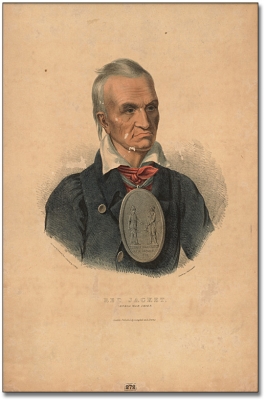
-
Article
Reform Movement in Upper Canada
After the War of 1812, Upper Canada began to develop rapidly. This resulted in social and economic tensions and political issues. These included the expulsion of Robert Gourlay, the Alien Question, the Anglican monopoly of the Clergy Reserves and education, and Tory control of patronage.
"https://d3d0lqu00lnqvz.cloudfront.net/media/media/9e9e3848-d959-4713-9a6f-8747181ebc24.jpg" // resources/views/front/categories/view.blade.php
https://d3d0lqu00lnqvz.cloudfront.net/media/media/9e9e3848-d959-4713-9a6f-8747181ebc24.jpg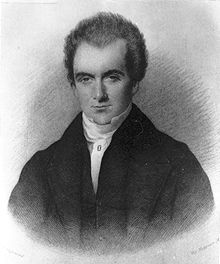
-
Article
Remittance Man
Remittance Man, a term once widely used, especially in the West before WWI, for an immigrant living in Canada on funds remitted by his family in England, usually to ensure that he would not return home and become a source of embarrassment.
"https://thecanadianencyclopedia.ca/images/tce_placeholder.jpg?v=e9dca980c9bdb3aa11e832e7ea94f5d9" // resources/views/front/categories/view.blade.php
https://thecanadianencyclopedia.ca/images/tce_placeholder.jpg?v=e9dca980c9bdb3aa11e832e7ea94f5d9
-
Article
René-Robert Cavelier de La Salle
René-Robert Cavelier de La Salle, would-be Jesuit, fur trader, explorer, intriguer, discoverer of the Mississippi delta (b at Rouen, France 21 Nov 1643; assassinated 19 Mar 1687 in Texas).
"https://d3d0lqu00lnqvz.cloudfront.net/media/media/719a5a9d-e031-496a-a4d4-2555d667b686.jpg" // resources/views/front/categories/view.blade.php
https://d3d0lqu00lnqvz.cloudfront.net/media/media/719a5a9d-e031-496a-a4d4-2555d667b686.jpg
-
Article
Representing the Home Front: The Women of the Canadian War Memorials Fund
While they may not have had access to the battlefields, a number of Canadian women artists made their mark on the visual culture of the First World War by representing the home front. First among these were the women affiliated with the Canadian War Memorials Fund, Canada’s first official war art program. Founded in 1916, the stated goal of the Fund was to provide “suitable Memorials in the form of Tablets, Oil-Paintings, etc. […], to the Canadian Heroes and Heroines in the War.” Expatriates Florence Carlyle and Caroline Armington participated in the program while overseas. Artists Henrietta Mabel May, Dorothy Stevens, Frances Loringand Florence Wyle were commissioned by the Fund to visually document the war effort in Canada.
"https://d3d0lqu00lnqvz.cloudfront.net/media/media/c5bd4814-1974-4a38-b0bf-006c4ec26687.jpg" // resources/views/front/categories/view.blade.php
https://d3d0lqu00lnqvz.cloudfront.net/media/media/c5bd4814-1974-4a38-b0bf-006c4ec26687.jpg
-
Article
Richard Bulkeley
Richard Bulkeley. British army officer, provincial secretary of Nova Scotia 1758-92, amateur organist, b Dublin 26 Dec 1717, d Halifax, NS, 7 Dec 1800. He came from London in 1749 as aide-de-camp to Governor Edward Cornwallis at the time of the founding of Halifax.
"https://thecanadianencyclopedia.ca/images/tce_placeholder.jpg?v=e9dca980c9bdb3aa11e832e7ea94f5d9" // resources/views/front/categories/view.blade.php
https://thecanadianencyclopedia.ca/images/tce_placeholder.jpg?v=e9dca980c9bdb3aa11e832e7ea94f5d9
-
Article
Richard Chapman Weldon
Richard Chapman Weldon, educator, politician (b at Sussex, NB 19 Jan 1849; d at Dartmouth, NS 26 Nov 1925). His education was unusually broad for his day: BA (1866) and MA (1870) from Mount Allison; he received his doctorate in international law from Yale at age 23.
"https://thecanadianencyclopedia.ca/images/tce_placeholder.jpg?v=e9dca980c9bdb3aa11e832e7ea94f5d9" // resources/views/front/categories/view.blade.php
https://thecanadianencyclopedia.ca/images/tce_placeholder.jpg?v=e9dca980c9bdb3aa11e832e7ea94f5d9
-
Article
Richard Clement Moody
Richard Clement Moody, royal engineer (b in Barbados, British W Indies 13 Feb 1813; d at Boumemouth, England 31 Mar 1887).
"https://thecanadianencyclopedia.ca/images/tce_placeholder.jpg?v=e9dca980c9bdb3aa11e832e7ea94f5d9" // resources/views/front/categories/view.blade.php
https://thecanadianencyclopedia.ca/images/tce_placeholder.jpg?v=e9dca980c9bdb3aa11e832e7ea94f5d9
-
Article
Richard George Amherst Luard
Richard George Amherst Luard, army officer (b in Eng 29 July 1827; d at Eastbourne, Eng 24 July 1891). A British military officer, he was general officer commanding the Canadian Militia 1880-84, following active service in India, the Crimea and China.
"https://thecanadianencyclopedia.ca/images/tce_placeholder.jpg?v=e9dca980c9bdb3aa11e832e7ea94f5d9" // resources/views/front/categories/view.blade.php
https://thecanadianencyclopedia.ca/images/tce_placeholder.jpg?v=e9dca980c9bdb3aa11e832e7ea94f5d9
-
Article
Richard George McConnell
Richard George McConnell, geologist, explorer (b at Chatham, Canada E 26 Mar 1857; d at Ottawa 1 Apr 1942). In 1879 he graduated from McGill and began working for the GEOLOGICAL SURVEY OF CANADA in Québec.
"https://thecanadianencyclopedia.ca/images/tce_placeholder.jpg?v=e9dca980c9bdb3aa11e832e7ea94f5d9" // resources/views/front/categories/view.blade.php
https://thecanadianencyclopedia.ca/images/tce_placeholder.jpg?v=e9dca980c9bdb3aa11e832e7ea94f5d9
-
Article
Richard John Uniacke
Uniacke, Richard John, lawyer, politician (b at Castletown, Ire 22 Nov 1753; d at Mount Uniacke, NS 11 Oct 1830). After a turbulent early career in the Cumberland district of NS as a trader and a sympathizer with the American
"https://d3d0lqu00lnqvz.cloudfront.net/media/media/2fed33dd-b18d-4689-948b-43e3d0d1b45b.jpg" // resources/views/front/categories/view.blade.php
https://d3d0lqu00lnqvz.cloudfront.net/media/media/2fed33dd-b18d-4689-948b-43e3d0d1b45b.jpg
-
Article
Richard Maurice Bucke
Richard Maurice Bucke, psychiatrist, author (b at Methwold, Eng 18 Mar 1837; d at London, Ont 19 Feb 1902). Brought to Upper Canada when one year old, Bucke was raised and educated on the family farm near Hamilton.
"https://thecanadianencyclopedia.ca/images/tce_placeholder.jpg?v=e9dca980c9bdb3aa11e832e7ea94f5d9" // resources/views/front/categories/view.blade.php
https://thecanadianencyclopedia.ca/images/tce_placeholder.jpg?v=e9dca980c9bdb3aa11e832e7ea94f5d9