Browse "History/Historical Figures"
-
Article
Marie de l'Incarnation
Marie de l’Incarnation, born Marie Guyart, founder of the religious order of the Ursulines in Canada, mystic and writer (born 28 October 1599 in Tours, France; died 30 April 1672 in Quebec City). Her writings are among the most important accounts of the founding of the colony of New France and the establishment of the Roman Catholic Church in the Americas. Her work as a teacher helped to lay the foundations for formal education in Canada.
"https://d3d0lqu00lnqvz.cloudfront.net/media/new_article_images/mariedelincarnation/800px-Portrait_de_Mère_Marie_de_l'Incarnation.jpg" // resources/views/front/categories/view.blade.php
https://d3d0lqu00lnqvz.cloudfront.net/media/new_article_images/mariedelincarnation/800px-Portrait_de_Mère_Marie_de_l'Incarnation.jpg
-
Article
Marie-Jeanne-Madeleine Legardeur de Repentigny
Repentigny, Marie-Jeanne-Madeleine Legardeur de, dite de Sainte Agathe (1698-1739), remembered because of the "lamp which is never extinguished," a lamp burning at the foot of the statue of Notre-Dame du Grand Pouvoir
"https://d3d0lqu00lnqvz.cloudfront.net/media/media/5fea8d5f-c017-4e25-8d5c-6949571d3798.jpg" // resources/views/front/categories/view.blade.php
https://d3d0lqu00lnqvz.cloudfront.net/media/media/5fea8d5f-c017-4e25-8d5c-6949571d3798.jpg
-
Article
Marie-Madeleine de Gruel de La Peltrie
Marie-Madeleine de Gruel de La Peltrie, née Chauvigny, patron of Ursuline nuns in New France (b at Alençon, France 1603; d at Québec C 18 Nov 1671). Born into the aristocracy, widowed at 22, Mme de La Peltrie
"https://d3d0lqu00lnqvz.cloudfront.net/media/media/5fea8d5f-c017-4e25-8d5c-6949571d3798.jpg" // resources/views/front/categories/view.blade.php
https://d3d0lqu00lnqvz.cloudfront.net/media/media/5fea8d5f-c017-4e25-8d5c-6949571d3798.jpg
-
Article
Madeleine de Verchères
Marie-Madeleine Jarret de Verchères (born 3 March 1678 in Verchères, Quebec; died August 1747 in Sainte-Anne-de-la-Pérade, Quebec). Madeleine de Verchères is best known for her role in the defence of Fort Verchères in New France in 1692. She is remembered as a military heroine, and her image became part of efforts to recruit Canadian women for wartime work during the First and Second World Wars.
"https://d3d0lqu00lnqvz.cloudfront.net/MadeleinedeVercheres/Madelaine-2.JPG" // resources/views/front/categories/view.blade.php
https://d3d0lqu00lnqvz.cloudfront.net/MadeleinedeVercheres/Madelaine-2.JPG
-
Article
Marie-Marguerite d'Youville
Marie-Marguerite d'Youville, née Dufrost de Lajemmerais (born 15 October 1701 in Varennes, Quebec; died 23 December 1771 in Montreal). D'Youville was the founder of the Sisters of Charity of the Hôpital Général de Montréal, also known as the Grey Nuns. She was the first Canadian-born saint, canonized by Pope John Paul II in 1990.
"https://d3d0lqu00lnqvz.cloudfront.net/media/media/34236b4e-1829-4ee7-9927-c93f6fa7947f.jpg" // resources/views/front/categories/view.blade.php
https://d3d0lqu00lnqvz.cloudfront.net/media/media/34236b4e-1829-4ee7-9927-c93f6fa7947f.jpg
-
Article
Marie Rollet
Marie Rollet, first Frenchwoman to settle in New France (born circa 1580 in Paris, France; died in May 1649 and buried 27 May 1649 in Quebec City, New France). She is recognized as the first female French farmer in New France, alongside her husband Louis Hébert.
"https://d3d0lqu00lnqvz.cloudfront.net/media/media/5bc5a1a0-fdd2-4ca7-8c1a-eeb54a285dba.jpg" // resources/views/front/categories/view.blade.php
https://d3d0lqu00lnqvz.cloudfront.net/media/media/5bc5a1a0-fdd2-4ca7-8c1a-eeb54a285dba.jpg
-
Article
Jamaican Maroons in Nova Scotia
The ancestors of the Maroons of Jamaica were enslaved Africans who had been brought there by the Spanish in the 16th and 17th centuries, and later by the British (who captured Jamaica from Spain in 1655), to work its lucrative sugar plantations. The word maroon was widely used to describe a runaway, and maroonage to denote the act and action of escaping enslavement, whether temporarily or permanently. After a series of wars with the colonial government in Jamaica, one group of Maroons was deported to Nova Scotia in 1796. While Maroon communities existed in Nova Scotia for only four years before they were sent to Sierra Leone, their legacy in Canada endures.
"https://d3d0lqu00lnqvz.cloudfront.net/media/media/ec55dd45-84f0-4ca8-a613-cadef5f53496.jpg" // resources/views/front/categories/view.blade.php
https://d3d0lqu00lnqvz.cloudfront.net/media/media/ec55dd45-84f0-4ca8-a613-cadef5f53496.jpg
-
Article
Martin Boutet
Martin Boutet, (Sieur de Saint-Martin). Choirmaster, violinist, teacher, soldier, tailor, carpenter, b Sceaux, France, ca 1617, d Quebec City ca 1686. He enlisted 7 Apr 1643 at La Rochelle to serve for three years in Canada as a soldier and labourer.
"https://thecanadianencyclopedia.ca/images/tce_placeholder.jpg?v=e9dca980c9bdb3aa11e832e7ea94f5d9" // resources/views/front/categories/view.blade.php
https://thecanadianencyclopedia.ca/images/tce_placeholder.jpg?v=e9dca980c9bdb3aa11e832e7ea94f5d9
-
Article
Mary Ann Shadd
Mary Ann Camberton Shadd Cary, educator, publisher, lawyer, abolitionist (born 9 October 1823 in Wilmington, Delaware; died 5 June 1893 in Washington, D.C.). Mary Ann Shadd became the first Black woman in North America to publish and edit a newspaper, The Provincial Freeman. As one of the first Black newspaperwomen in North America, Shadd promoted the abolition of slavery and the emigration of African Americans to Canada (see Black Canadians; Black Enslavement in Canada; Slavery Abolition Act, 1833). She also advocated on behalf of women’s rights (see Women’s Movements in Canada).
"https://d3d0lqu00lnqvz.cloudfront.net/maryannshadd/maryannshaddcanadapost.jpg" // resources/views/front/categories/view.blade.php
https://d3d0lqu00lnqvz.cloudfront.net/maryannshadd/maryannshaddcanadapost.jpg
-
Article
Mary Barrow
Mary Barrow (née Robb), French horn player (born 28 September 1918 in Aberdeen, Scotland; died 22 June 2017 in Calgary, AB).
"https://thecanadianencyclopedia.ca/images/tce_placeholder.jpg?v=e9dca980c9bdb3aa11e832e7ea94f5d9" // resources/views/front/categories/view.blade.php
https://thecanadianencyclopedia.ca/images/tce_placeholder.jpg?v=e9dca980c9bdb3aa11e832e7ea94f5d9
-
Article
Mary Isabella Macleod
Mary Isabella Macleod, née Drever (b at Red R 11 Oct 1852; d at Calgary 15 Apr 1933).
"https://d3d0lqu00lnqvz.cloudfront.net/Mary_Macleod.jpg" // resources/views/front/categories/view.blade.php
https://d3d0lqu00lnqvz.cloudfront.net/Mary_Macleod.jpg
-
Article
Mary Riter Hamilton
Mary Matilda Hamilton (née Riter), artist (born 7 September c. 1867 in Teeswater, ON; died 5 April 1954 in Coquitlam, BC). Mary Riter Hamilton was a painter who exhibited her works in Europe and across Canada. Shortly after the fighting stopped, Hamilton travelled to Europe to paint First World War battlefield landscapes before they were cleared (see War Artists). She produced over 350 works in three years, which are a document of the destruction and devastation caused by the war.
"https://d3d0lqu00lnqvz.cloudfront.net/media/new_article_images/MaryRiterHamilton/March-22nd-Trenches-on-the-Somme-1919.jpg" // resources/views/front/categories/view.blade.php
https://d3d0lqu00lnqvz.cloudfront.net/media/new_article_images/MaryRiterHamilton/March-22nd-Trenches-on-the-Somme-1919.jpg
-
Article
Mary Simon
Mary Jeannie May Simon (Ningiukudluk), CC, OQ 30th governor general of Canada, diplomat, civil servant, (born 21 August 1947 in Kangiqsualujjuaq, Nunavik, QC). Mary Simon is an advocate for international cooperation in the Arctic and Indigenous education and rights. She has held multiple roles in the civil service, including secretary and co-director of policy of the Royal Commission on Aboriginal Peoples, secretary to the board of directors of the Northern Quebec Inuit Association, and member of the Nunavut Implementation Commission. She was also the first vice president of the Makivik Corporation and the first Inuk in Canada to hold the rank of ambassador. Simon has served as the president of Inuit Tapiriit Kanatami and of what is now the Inuit Circumpolar Council. From 26 July 2021 to June 2026, Simon served as Canada’s 30th governor general and the first Indigenous person to serve in that role.
"https://d3d0lqu00lnqvz.cloudfront.net/MarySimon.jpg" // resources/views/front/categories/view.blade.php
https://d3d0lqu00lnqvz.cloudfront.net/MarySimon.jpg
-
Article
Masumi Mitsui
Masumi Mitsui, MM, farmer, soldier, Canadian Legion official (born 7 October 1887 in Tokyo, Japan; died 22 April 1987 in Hamilton, ON). Masumi Mitsui immigrated to Canada in 1908 and served with distinction in the First World War. In 1931, he and his comrades persuaded the BC government to grant Japanese Canadian veterans the right to vote, a breakthrough for Japanese and other disenfranchised Canadians. Nevertheless, Matsui and more than 22,000 Japanese Canadians were displaced, detained and dispossessed by the federal government during the Second World War (see Internment of Japanese Canadians).
"https://d3d0lqu00lnqvz.cloudfront.net/media/new_article_images/MasumiMitsui/2010-23-2-4-551.jpg" // resources/views/front/categories/view.blade.php
https://d3d0lqu00lnqvz.cloudfront.net/media/new_article_images/MasumiMitsui/2010-23-2-4-551.jpg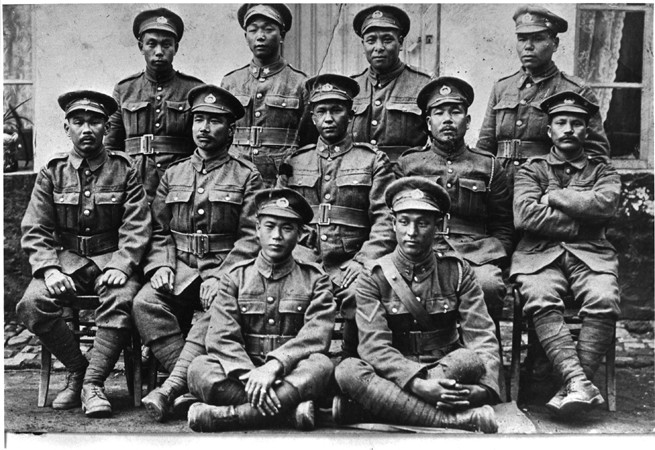
-
Article
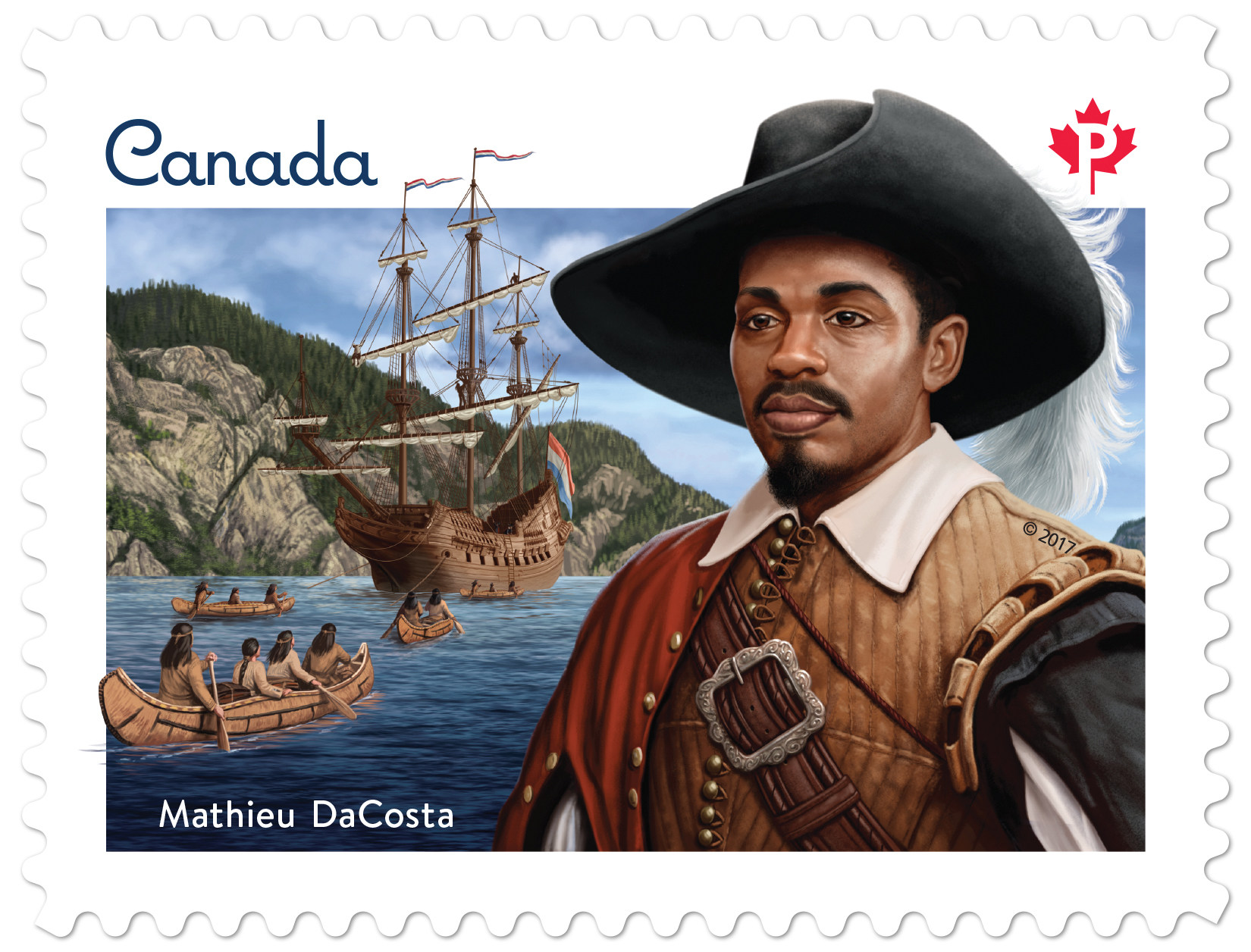
Mathieu Da Costa
Mathieu Da Costa (depending on the language of the documents that mention his name, also known as “Mateus Da Costa,” “Mathieu de Coste,” “Matheus de Cost” and “een Swart genamd Matheu”), interpreter (dates and places of birth and death unknown). Da Costa is one of the most fascinating and elusive figures in the early history of Canada. Historians consider him the first Black person known to have visited Canada, probably in the company of Pierre Dugua de Mons and Samuel de Champlain). (See also Black Canadians; African Canadians.) But many aspects of his life remain unclear or unknown.
"https://d3d0lqu00lnqvz.cloudfront.net/media/media/122b2db3-8b90-411b-97f2-6c1c1390feef.jpg" // resources/views/front/categories/view.blade.php
https://d3d0lqu00lnqvz.cloudfront.net/media/media/122b2db3-8b90-411b-97f2-6c1c1390feef.jpg