Share on Facebook
 Share on X
 Share by Email
 Share on Google Classroom
Species of Water Lily
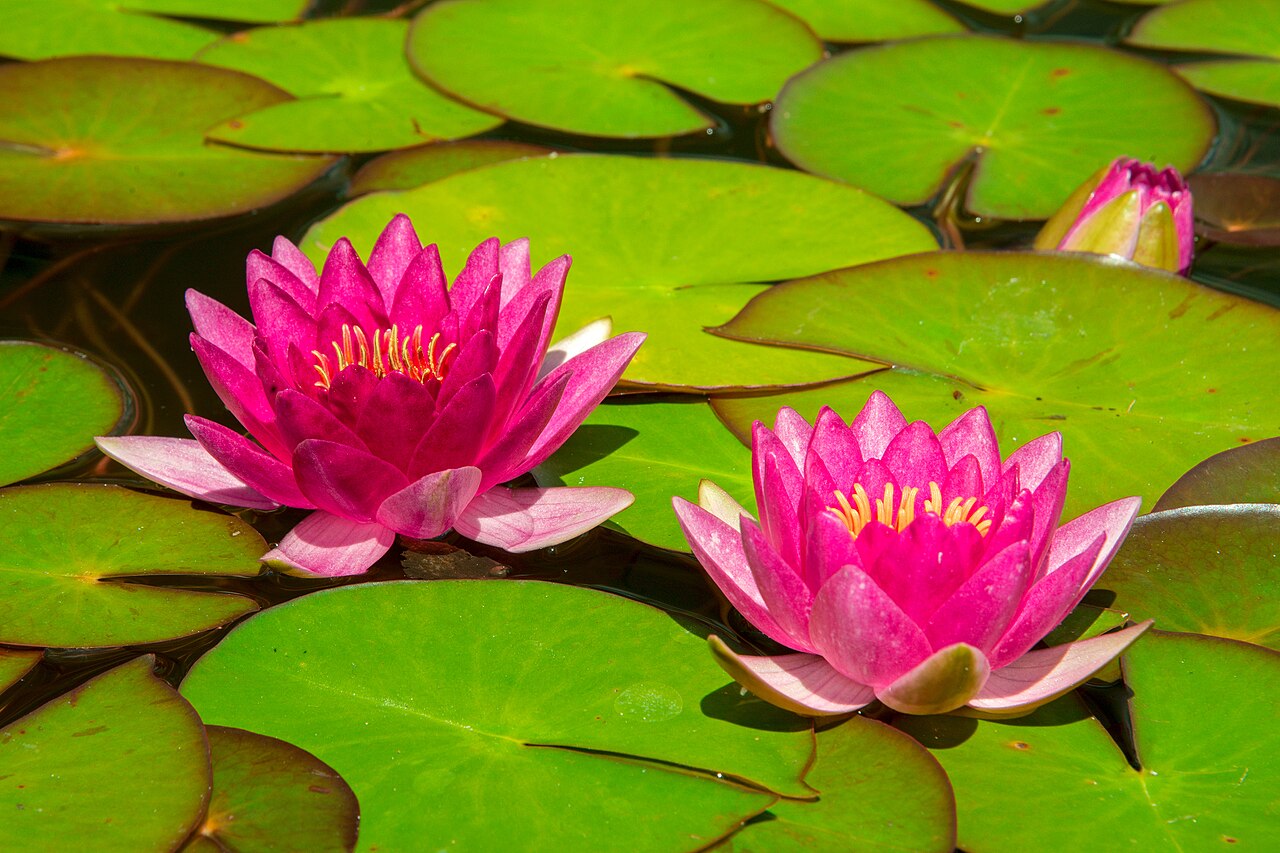
Four genera and nine species are native to Canada, of which three species are important. Yellow pond lily, cow lily or spatterdock (Nuphar variegatum) has yellow, globular flowers. It occurs as far north as the Yukon Territory and is widespread throughout Canada. White or pygmy water lily (Nymphaea tetragona) is found in northern Canada. Sweet or fragrant water lily (Nymphaea odorata), the most beautiful of the three, has waxy, white flowers, 10-15 cm across. It is found in ponds and quiet streams from southeastern Canada to Florida.
Medicinal Uses
All species of water lily are edible and have been an important emergency food for Indigenous peoples. The plant's rhizome can be boiled, baked or dried, while the seeds can be roasted and ground into a highly nutritious flour. The root, because of its astringent, antiseptic and demulcent properties, can be used externally for healing sores and internally for inflammation and dysentery.