Share on Facebook
 Share on X
 Share by Email
 Share on Google Classroom
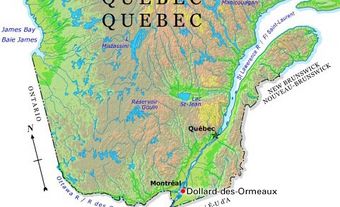
Vaudreuil-Dorion, Quebec, incorporated as a municipality in 1845 and 1850, as a city in 1994, population 43,268 (2021 census), 38,117 (2016 census). Vaudreuil-Dorion is the result of the merger of two sister towns, Vaudreuil and Dorion. Vaudreuil-Dorion is located about 50 km west of Montreal, opposite Pincourt on Île Perrot on the south shore of Lac des Deux-Montagnes.
Founding of Vaudreuil and Dorion
In 1703, Philippe de Rigaud de Vaudreuil was granted the area that would eventually become Vaudreuil. However, it was his successor, Michel Chartier de Lotbinière, who fostered the settlement and development of the seigneury that he had bought from the Vaudreuil family in 1763. The fur trade and agriculture supported the local economy.
Vaudreuil, named after its first seigneur, was made a municipality in 1845, but was abolished two years later and set up anew in 1850. Dorion had been set up as a separate village in 1891, splitting away from the village of Vaudreuil. Vaudreuil became a town in 1963 when it amalgamated with the parish municipality of Saint-Michel-de-Vaudreuil whereas Dorion's municipal status was raised much earlier in 1916. The name Dorion recalls Antoine-Aimé Dorion, the flamboyant politician who followed Louis-Joseph Papineau as leader of the Parti rouge and who was a prominent opponent of Confederation.
20th Century
A large portion of Vaudreuil-Dorion is still used for agriculture. This residential suburb of Montreal is also a regional commercial centre. Maison Trestler is an old fur-trading post dating back to 1798. It was built by Jean-Joseph Trestler and was one of the busiest west of Montreal. The Musée régional de Vaudreuil-Soulanges (1953) is located in an old schoolhouse completed in 1859.