Share on Facebook
 Share on X
 Share by Email
 Share on Google Classroom
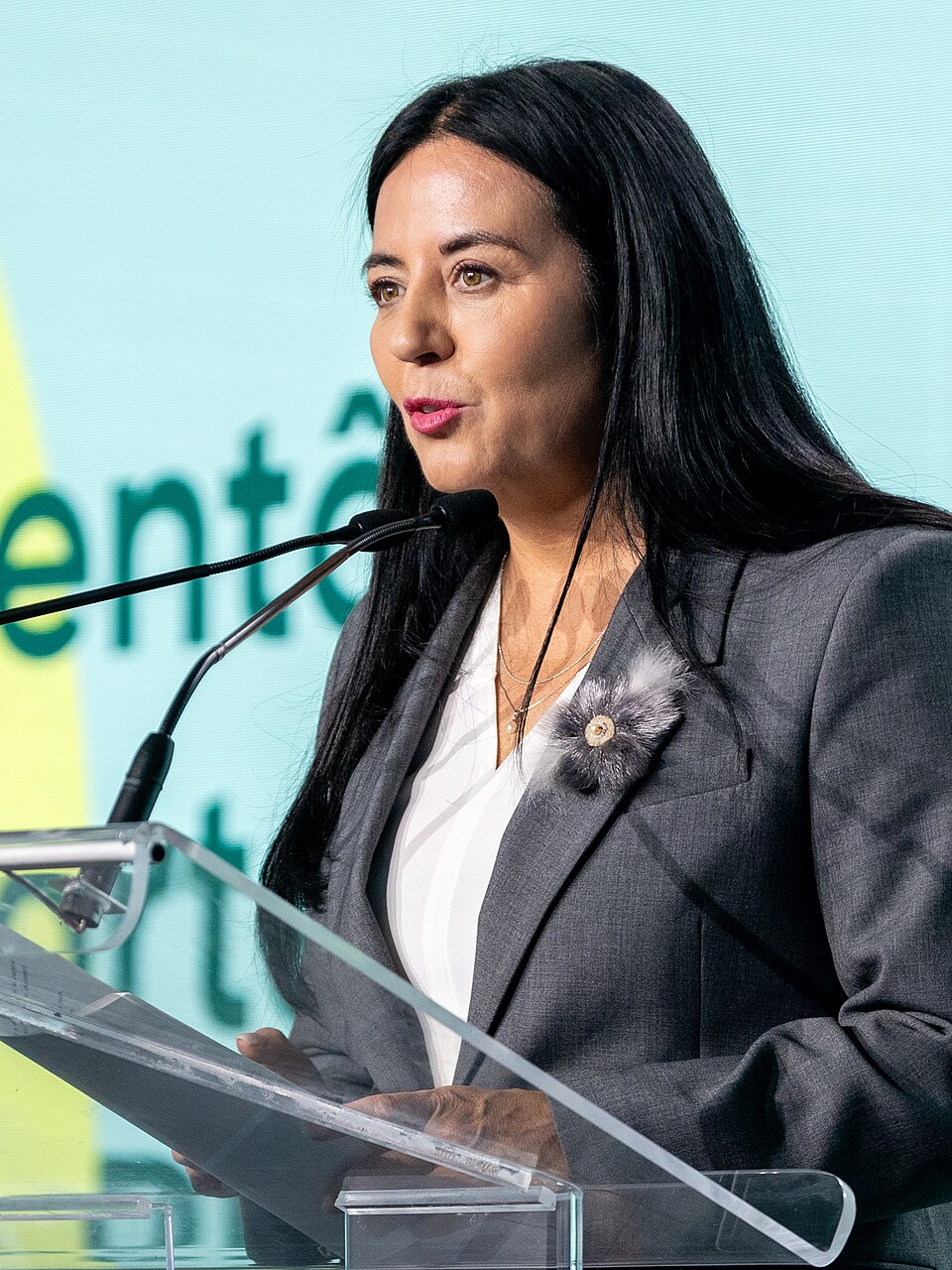
Soraya Martinez Ferrada, Mayor of Montreal since 2025, Canadian politician (born 28 August 1972 in Chile). She was elected mayor of Montreal on 2 November 2025. An immigrant of Chilean origin, a former Member of Parliament and a former federal minister, she is the first person of Latin American origin and the first racialized minority to serve as mayor in the Quebec metropolis. She is also the second woman to hold this position in the city's history.
Early Life and Education
Born in Chile, Soraya Martinez Ferrada spent her childhood under the dictatorship of Augusto Pinochet. As her family members had been active in Salvador Allende's Socialist Party, they were forced to flee the country. In 1980, Martinez Ferrada arrived in Canada with her mother and brother as a political refugee. She grew up in the east end of Montreal, while gradually mastering French. She describes herself as a "child of Bill 101".
Martinez Ferrada studied at HEC Montréal, where she obtained a Bachelor of Science in 2002. She faced economic challenges during her studies while also raising two children. She relied on food banks to support her family. These experiences shaped her commitment to social activism. Martinez Ferrada also cites her activist grandparents as a source of inspiration.
Early Municipal Political Career
In November 2005, Soraya Martinez Ferrada entered municipal politics. She was elected as a municipal councillor in the Saint-Michel district, under the banner of Mayor Gérald Tremblay's Union des citoyens et citoyennes de l'île de Montréal. She held this position until 2009, when she lost her bid for re-election while running for Louise Harel's Vision Montréal party.
She continued her involvement with Vision Montreal as Harel's chief of staff. Martinez Ferrada gained experience in managing municipal issues while serving the Official Opposition.
During her first years in municipal politics, Martinez Ferrada contributed to several notable projects. For example, she played a role in the transformation of the Miron Quarry— formerly used as a landfill for household waste— into Frédéric-Back Park, a sustainable development project. She also oversaw the undergrounding of power lines on Jarry Street, a project for which residents had been waiting for 40 years.
In 2013, Martinez Ferrada left municipal politics to dedicate herself to the community and cultural sectors. She returned to work at TOHU, which she helped found in the early 2000s. TOHU is a Montreal-based organization that promotes circus arts while combining social and environmental commitment.
Career in Federal Politics
In 2015, Soraya Martinez Ferrada made the jump to federal politics as a senior advisor to Heritage Minister Mélanie Joly. In the 2019 election, she decided to run as a candidate in the riding of Hochelaga, where she was elected under the banner of the Liberal Party of Canada. This riding, located in southeast Montreal, had not been Liberal for several decades, which underscores the impact of her candidacy.
During her two consecutive terms in Ottawa, she successively held the positions of Parliamentary Secretary to the Ministers of Immigration, Transport and Housing. In 2023, she was appointed Minister of Tourism and Minister responsible for the Economic Development Agency of Canada for the Regions of Quebec. (See Cabinet.)
On 9 May 2024, Martinez Ferrada raised concerns about abortion rights being called into question in the House of Commons. In particular, she told her personal story of abortion at the age of 18.
2025 Municipal Election
In February 2025, Soraya Martinez Ferrada left federal politics to return to municipal politics. She became the leader of Ensemble Montréal. Her candidacy for mayor marked her return to her Montreal political roots, after several years in Ottawa.
During her campaign, Martinez Ferrada identified several priorities that she considered essential to turn Montreal around.
- Homelessness: She sees this issue as her priority and called for a "war effort" to address the homelessness crisis. She promised to work with the boroughs to offer sustainable solutions. She said she did not just want to "dismantle" the camps of homeless people, but to find humane answers.
- Housing and accessibility: Affordable housing is a pillar of her campaign. She proposed incentives to stimulate the construction of social or affordable housing while maintaining a balance between real estate development and inclusion. (See Housing and Housing Policy.)
- Safety and municipal services: She wished to strengthen police resources and improve the cleanliness of the city to enhance citizens’ sense of safety.
- Mobility: Martinez Ferrada proposed reassessing certain bike paths that she considers "unsafe" and is considering a more pragmatic approach to infrastructure, in the first 100 days of her mandate.
- Spending: During her campaign, the mayoral candidate made another major promise to reduce the city's spending by eliminating at least 1,000 civil servant positions.
After eight years under the administration of Projet Montréal’s Valérie Plante, Martinez Ferrada positioned herself as a candidate for change in the city of Montreal. Her platform targeted voters who felt misunderstood by the Projet Montréal administration, particularly on everyday issues such as transportation and mobility. Cycle paths were also the subject of an important debate during the campaign. Martinez Ferrada proposed conducting an audit of the bicycle network, before deciding to go ahead with current projects or to dismantle existing paths.
On 2 November 2025, Martinez Ferrada won the municipal election with 43.4% of the vote. She finished ahead of her main opponent, Luc Rabouin of Projet Montréal, who won 35% of the vote. Ensemble Montréal also managed to elect a majority of its candidates for municipal council, obtaining 34 of the 65 seats.
During her victory speech, she declared: "I am an immigrant. I am a daughter of Bill 101. I am a girl from Montreal and I am at home here.”
Mayor of Montreal
On 13 November 2025, Soraya Martinez Ferrada was officially sworn in as the 46th mayor of Montreal during a ceremony at City Hall.
Her election has a strong symbolic and historical significance. She is the first female mayor of Montreal from a racialized minority. This election sends a message of inclusion to an increasingly diverse population. Members of the Latin American Family Support Centre say they will use the story of Martinez Ferrada to give hope to new immigrants as integration into a new society is sometimes difficult for them in the early years. (See also Quebec Immigration Policy.)
She is also the second woman to hold the position of mayor of Montreal, after Valérie Plante.
Despite a strong symbolic momentum, Mayor Martinez Ferrada faces challenges and criticisms. Her promise to reassess the cycling network is seen as a step backwards for active transportation in the city. In terms of housing, her proposals for incentives for real estate developers raise concerns. Some fear increased gentrification and the abandonment of certain forms of social housing. They are concerned that the incentives will benefit real estate development companies more than low- and middle-income residents.