Share on Facebook
 Share on X
 Share by Email
 Share on Google Classroom
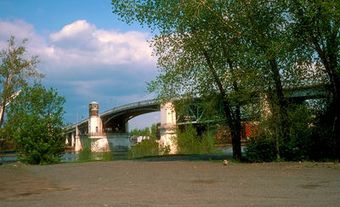
Saint-Charles, Quebec, municipality incorporated in 1924, population 1,357 (2021 census), 1,482 (2016 census). Saint-Charles is located on the Richelieu River, 25 km northwest of Saint-Hyacinthe.
Historical Importance
Saint-Charles was built on land belonging to the Saint-Charles seigneury (granted 1698). In the early 19th century, the village flourished from trade associated with river transportation. It played an important part in the Rebellions of 1837–38: the Assembly of the Six Counties was formed in Saint-Charles on 23 October 1837 (see Battle of Saint-Charles); and the Patriotes were defeated there by English troops on 25 November the same year.
Like many places in the lower Richelieu region, Saint-Charles experienced a decline in the second half of the 19th century. Towards the end of the century, one of the village's activities was the transportation of oats to New York City for use as feed for tramway horses. In the 20th century, bypassed by the major rail and road systems, it again became an agricultural village dominated by the dairy industry.
(See also Lower Canada.)