Share on Facebook
 Share on X
 Share by Email
 Share on Google Classroom
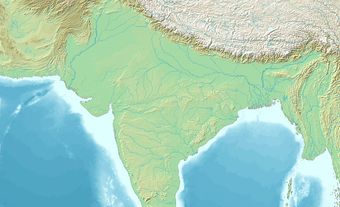
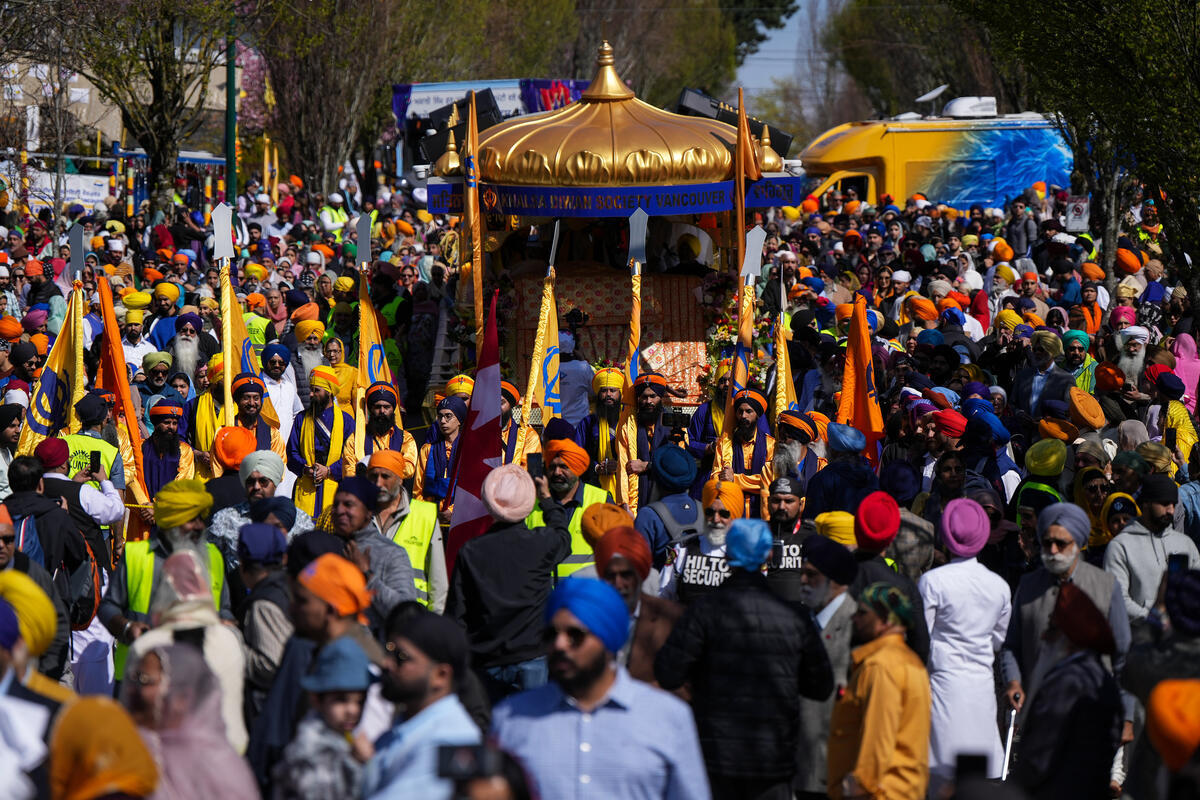
Punjabi refers to an ethnicity as well as a language. In 1947, British India (including Punjab) was partitioned into Pakistan and India. As such, Punjabi Canadians trace their roots to either Indian or Pakistani Punjab. Regional origins shape differences in language, faith and customs across the community. Dominant Punjabi Canadian narratives are centred around Sikh, Indian-origin Punjabis. However, Punjabi Canadians from Pakistan form a smaller but distinct part of the broader Punjabi Canadian community. (See Pakistani Canadians.) According to the 2021 Canadian census, 279,950 Canadians reported being of Punjabi ethnic or cultural origin. Meanwhile, 942,165 Canadians reported having knowledge of the Punjabi language. Moreover, 81.4 per cent of Punjabi Canadians identify as Sikh. Meanwhile, 6.9 per cent identify as Hindu and 6.8 per cent are Muslim. Notable Punjabi Canadians include Ujjal Dosanjh, Jagmeet Singh, Karan Aujla, AP Dhillon, Lilly Singh and Rupi Kaur.
Punjabi Immigration to Canada
The earliest Punjabi presence in Canada dates to at least the late 19th century. In 1897, Sikh soldiers from the British Indian Army travelled through British Columbia. They were on their way to Queen Victoria’s Diamond Jubilee celebration in Britain. In 1902, a similar military regiment passed through for the coronation of King Edward VII. These colonial soldiers were admired in Canada for their military bearing and decorated service.
Soon after, a separate stream of Sikh migrants, primarily farmers from Punjab, began arriving. Many were displaced by famine and colonial land ownership laws in British India. At the same time, migrants viewed British Columbia as a land of opportunity. They believed that land was plentiful and that work was available. Eventually, Punjabi immigrants found work in the Lower Mainland’s forests, farms and railways.
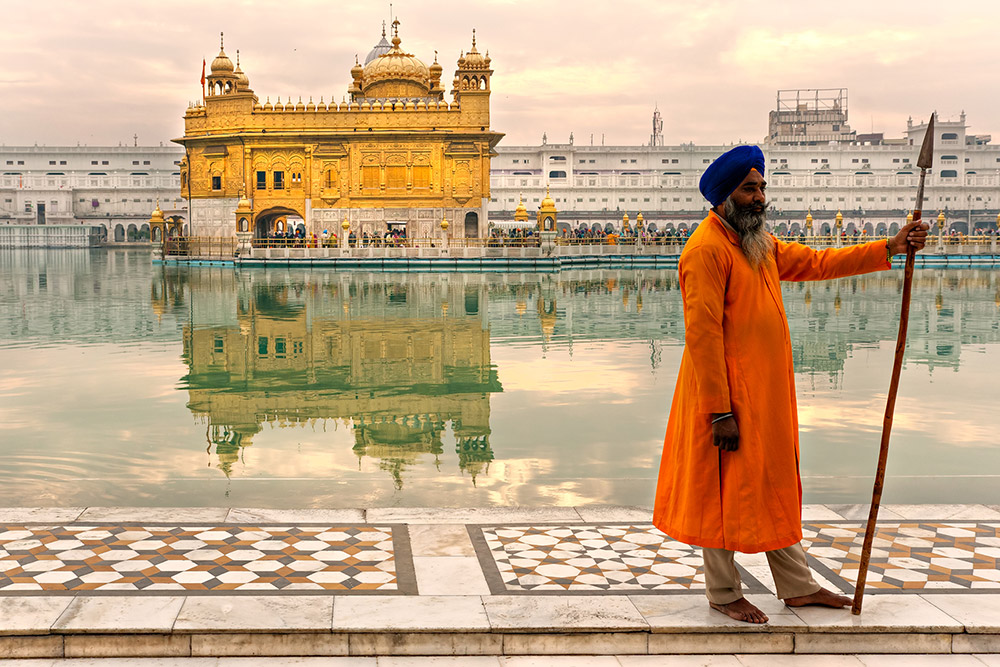
A second major cohort started arriving in the 1980s. At the time, political and social unrest in India led many Punjabi Sikhs to seek asylum in Canada. In June 1984, Indian prime minister Indira Gandhi ordered the Indian army to attack the Golden Temple in Punjab as part of Operation Blue Star. The temple is one of Sikhism’s holiest sites. The army wanted to evict Sikh separatists hiding there. A few months later, Gandhi was assassinated by her Sikh bodyguards.
In the days that followed, violent attacks against Sikhs swept through New Delhi, resulting in thousands of deaths and disappearances. Fearing for their safety, many young Sikhs fled the country and sought refuge in Canada. As refugees settled in Canada, they fostered connections that encouraged relatives to immigrate.
In the late 1980s and early 1990s, a third cohort of Punjabi immigration arrived in Canada thanks to new immigration policies. This group was made up of skilled labourers, including educated professionals and entrepreneurs seeking new economic opportunities. (See Economic Immigration to Canada.)
The community’s presence attracted a growing number of students from Punjab. In recent years, a fourth cohort of Punjabi Indians has become the largest group of international students in Canada.
Discrimination and Disfranchisement
From around 1906 onward, Punjabi immigrants faced increasing racial hostility in British Columbia. Anti-Indian feelings went alongside preexisting racial discrimination against other Asian communities. (See Anti-Asian Racism in Canada.)
Racist organizations such as the Asiatic Exclusion League heavily influenced public opinion and immigration policies in Canada and the United States. In 1907, anti-Asian violence broke out in Bellingham, Washington. There, a mob attacked around 250 South Asian — mostly Sikh — mill workers. Many fled north to Canada in search of greater security. Despite Canada being part of the British Empire and its promise of equal rights for imperial subjects, exclusionary practices persisted. (See Imperialism.)
In 1907, British Columbia amended the Provincial Elections Act. The province sought to stop “Hindus” from voting in elections. At the time, Chinese and Japanese people also could not vote. (See Right to Vote in Canada.)
In 1908, the Canadian government introduced the Continuous Journey Regulation. It required immigrants to travel directly from their country of origin to Canada. As there was no direct steamship route from India, the regulation effectively barred South Asian immigrants from coming to Canada. At the same time, the policy could not explicitly bar Indian immigrants from coming. Since they were British subjects, they were legally entitled to travel freely within the Empire.
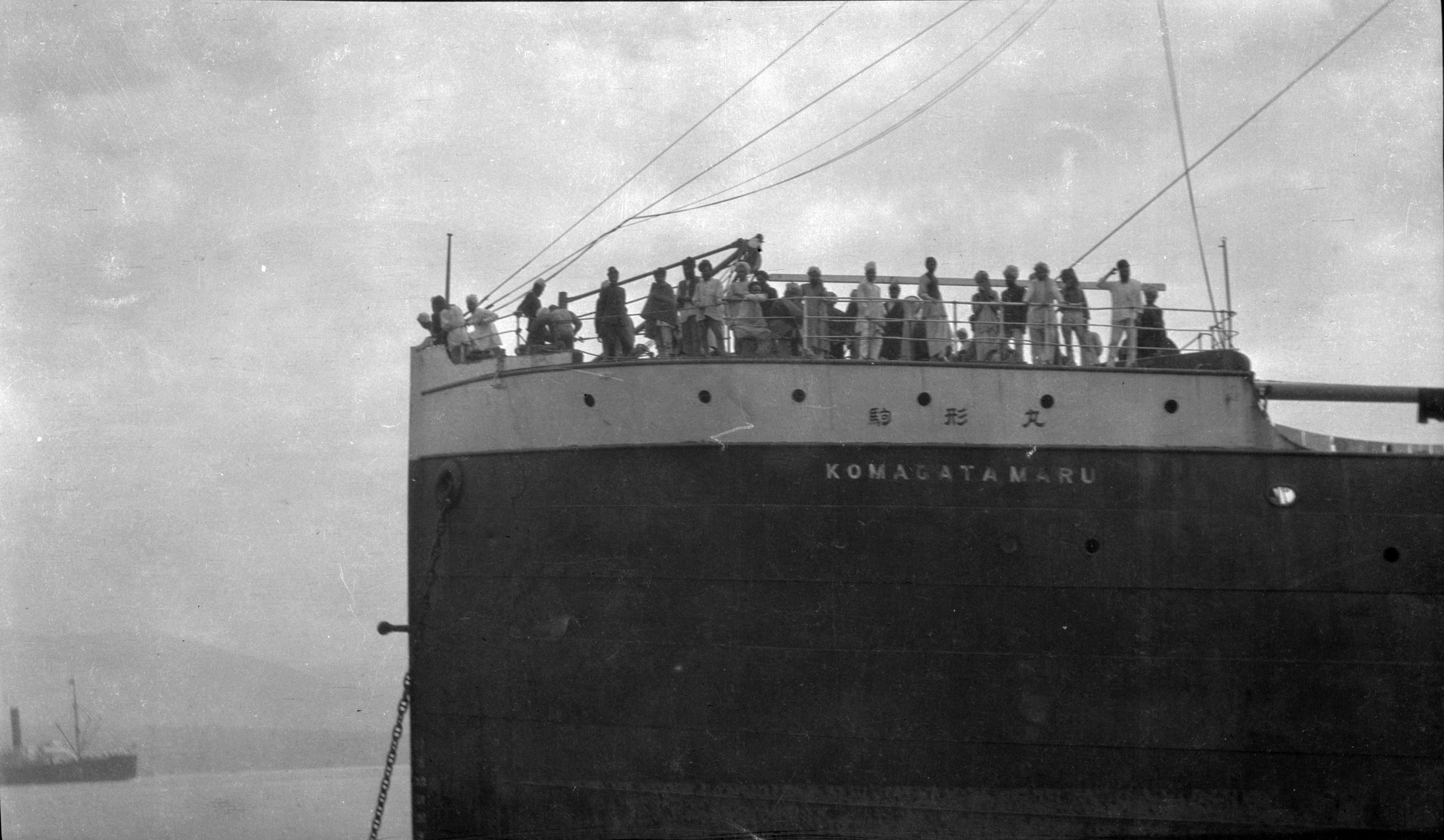
In 1914, the regulation played a central role in the Komagata Maru (Guru Nanak Jahaz) incident. The ship carried Indian passengers but was denied entry at Vancouver’s port. Instead, Canada forced the passengers to return to India, where many were arrested or killed. Over a century later, in 2016, the Canadian government formally apologized. It recognized the event as a historical injustice.
Restrictive immigration laws also prevented South Asian men from bringing their families. (See Family Reunification in Canada.) This made long-term settlement and community building in Canada extremely difficult.
Racist immigration policies shaped early Punjabi Canadians’ experiences. They forced the community to rely on mutual aid and solidarity. In response, Punjabi Canadians established important institutions such as the Khalsa Diwan Society and the first Sikh temple. These served as important religious, cultural and political hubs for the growing community.
In 1917, Punjabi entrepreneur Mayo Singh notably helped establish the community of Paldi on Vancouver Island. Named after Singh’s hometown in Punjab, the Canadian town became an example of early multi-ethnic coexistence in Canada. (See Multiculturalism.)


It wasn’t until after the Second World War that South Asians gained the right to vote. It also took until the immigration reforms of the 1960s for Canada to relax its family reunification policies, which allowed the community to further grow.
What started as a small group of marginalized labourers evolved into a thriving diaspora. Today, the Punjabi Canadian community plays a visible role in Canada’s cultural, economic and political life.
Civic and Political Engagement
Punjabi Canadians are one of the most politically active diaspora groups in Canada. In 2000, Ujjal Dosanjh made history as the first South Asian premier of a Canadian province. Meanwhile, Jagmeet Singh became the first racialized person to be elected leader of a major national political party. The community’s civic activism is not just limited to elected office. It’s also found in school boards, advocacy groups and local governance.
Punjabi Canadians have consistently mobilized around religious freedom, workers’ rights and community welfare. The community has also helped shape Canada’s broader multicultural policies. (See also: Charan Gill; Canadian Multiculturalism Act.)
Art and Entertainment
Punjabi Canadians have played a visible role in shaping Canada’s arts and entertainment industries. In music, performers like Karan Aujla, AP Dhillon and Sidhu Moose Wala have built large international followings.


In broadcasting, Harnarayan Singh became the first Punjabi-language commentator on Hockey Night in Canada. He has helped bring Canada’s national sport to Punjabi households. (See Ice Hockey in Canada.)
Punjabi Canadian voices are also present in film, literature and comedy. Creators like Lilly Singh and Rupi Kaur gained global recognition through their works. These artists have introduced Punjabi culture to wider Canadian audiences, while also creating space for new forms of cultural expression.
Recent Canada-India Relations
Canada-India relations have been strained in recent years. Due to tensions, both countries have previously expelled diplomats. In 2023, India temporarily halted visa services for Canadians. The Sikh Canadian diaspora is at the heart of the rift.
In 2023, Prime Minister Justin Trudeau accused the Indian government of being involved in the assassination of Hardeep Singh Nijjar. Nijjar was a Canadian Sikh activist and vocal supporter of Khalistan, a proposed independent Sikh state separate from India.
This diaspora-led activism has long been a point of contention with India. The country sees the movement as a threat to national security. Notably, the deadly 1985 Air India Flight 182 Bombing was linked to Sikh separatists.
Today, the Khalistan movement has a limited number of supporters in India. Many Sikh Canadians continue to engage with the idea of a separate nation as a political demand for justice and resistance. However, it remains an emotionally charged idea for segments of the diaspora. This is especially the case in Canada, the United States, the United Kingdom and Australia. For many, it is unresolved trauma and historic grievances; namely, from the 1984 anti-Sikh pogrom and the partition of India.
Conversations on the topic continue in gurdwaras, community organizations and digital spaces.
Canadian officials, meanwhile, emphasize the country’s protections for free speech and political expression. Many Sikh and Punjabi Canadians have raised concerns about Indian government surveillance and transnational repression.