Share on Facebook
 Share on X
 Share by Email
 Share on Google Classroom
Pakistani Canadians are Canadians whose family origins trace back to Pakistan. Migration to Canada from what would become Pakistan remained limited until the mid-20th century. It then grew steadily as Canada reformed its immigration system and opened pathways for skilled migration (see Economic Immigration to Canada) and family reunification. (See Immigration Policy in Canada.)
According to the 2021 census, 303,260 people in Canada reported Pakistani ethnic or cultural origin (0.83 per cent of the national population). The community reflects a range of ethnic, linguistic and religious backgrounds. Pakistani Canadians are mainly in major urban centres including Toronto, Calgary, Montreal, Vancouver and Edmonton.
Overview
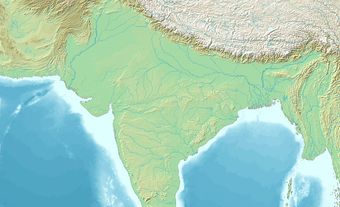
Pakistan is a country in South Asia which borders Iran, Afghanistan, China and India. A range of regional and ethnic backgrounds are found in Pakistan. These include, among others, Punjabis, Kashmiris, Sindhis, Saraikis, Balochis and Pashtuns. This diversity is reflected in the many languages spoken across the country, including Urdu, Punjabi and Pashto. Pakistanis are predominantly Muslim. However, there is considerable religious diversity within Islam. There are also minority faith groups such as Christians, Hindus and Sikhs.
The modern state of Pakistan originates from the 1947 Partition of British India. The British divided the nation into India and Pakistan. They did so along religious lines, with Pakistan being predominantly Muslim. However, the new borders satisfied few people and led to the displacement of millions of people, intense violence and suffering.
Pakistan was initially divided into two geographically separate regions: West Pakistan and East Pakistan. In 1971, East Pakistan became Bangladesh following a civil war driven by political and linguistic tensions.
In 2026, Pakistan’s population is estimated to be around 262 million people.
Migration and Settlement
Early South Asian migration from British India to Canada began in the late 1800s and early 1900s. (See also Immigration to Canada.) It was connected to British military and colonial travel routes at the time. In 1897, South Asian soldiers from Hong Kong and the Malay States passed through British Columbia. (See also Queen Victoria’s Diamond Jubilee – 1897.) They are believed to have shared stories about life and settlement opportunities there, which helped more South Asians learn about Canada.
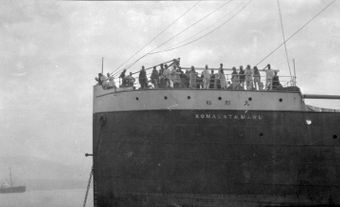
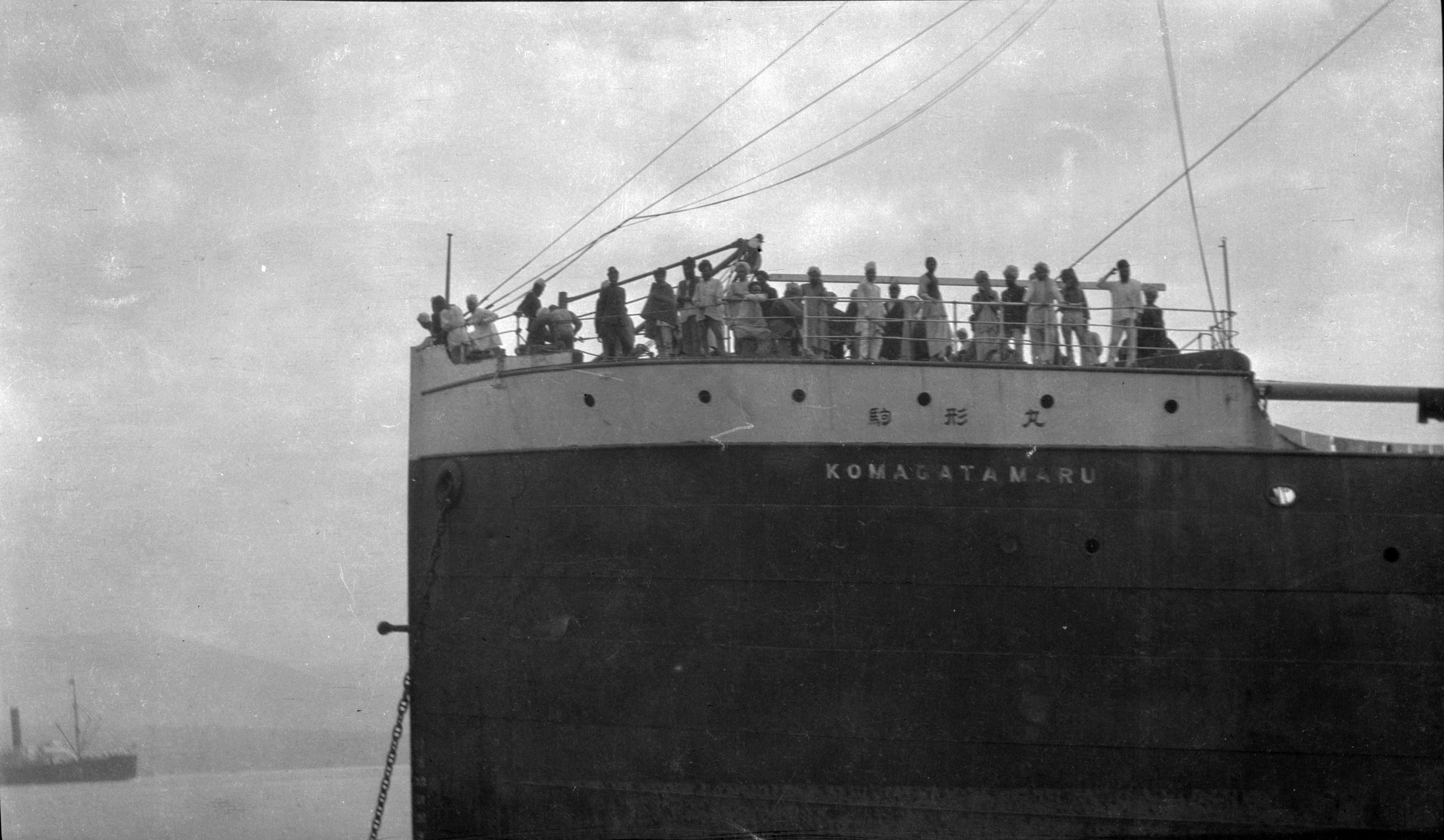
By 1903, small numbers of South Asian men, mostly Sikh, began arriving in Vancouver and Victoria as immigrants. This gradual movement marked the beginning of South Asian settlement in British Columbia. Imanat Ali Khan, Barkatullah and Muhammed Akbar are likely some of the first-known Muslim migrants from the Indian subcontinent. Their stories also tie into the Komagata Maru (Guru Nanak Jahaz) voyage, either as passengers or as witnesses. The ship carried 337 Sikh passengers, along with 27 Muslims and 12 Hindus. Notably, most of the Muslim passengers came from the Shahpur district of western Punjab. Today, the area is part of Pakistan.
From 1907 onwards, migration to Canada from the land that would become Pakistan remained limited due to racist immigration policies. (See also 1907 Vancouver Anti-Asian Riot.) The small South Asian male population was mainly based in British Columbia. They lived in a bachelor society as they couldn’t bring their family and children.
A shift came in 1951, when Canada and Pakistan signed an immigration agreement. It allowed up to 100 Pakistani citizens per year to immigrate for permanent residence. The agreement also made provisions for family reunification. From 1951 up until 1966, approximately 300 Pakistani students and trainees came to Canada. They did so through programs such as the Colombo Plan or Commonwealth Scholarships. Many of them were experienced professionals working in Pakistan's public sector. Although modest in scale, it marked an early move away from exclusionary policies and set the stage for later migration.
Another major shift came in 1967. Canada replaced its country-based immigration quotas with a points system. The new system assessed applicants on factors such as education, skills and work experience. The change opened new opportunities for immigrants from non-European countries, including Pakistan. It contributed to a steady increase in Pakistani migration to Canada. By 1970, approximately 1,010 people of Pakistani origin lived in Canada. They were primarily in Ontario, Quebec and Alberta. Many arrived looking for economic opportunities, higher education and greater political stability.
Community, Culture and Religion
Today, Pakistani Canadians are part of Canada’s broader South Asian population. In 2021, South Asians formed the largest racialized group in Canada. Pakistan remains one of the main countries of origin within that category. Pakistani Canadians made up about 9 per cent of the South Asian population by place of birth.
Educational attainment is high. Notably, 61 per cent of South Asians born in Pakistan hold a bachelor’s degree or higher.
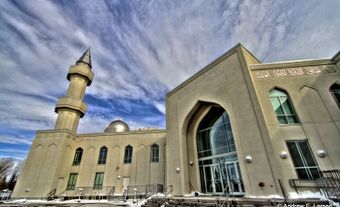
Through community organizations and civic engagement, Pakistani Canadians have contributed to Canada's multicultural landscape while maintaining strong ties to their heritage. The Pakistan Canada Association, for example, hosts cultural events, while mosques or Islamic centres like ISNA Canada Centre serve as community hubs. These both support newcomers’ integration and broader community life.
Large Pakistani Canadian communities are concentrated in the Greater Toronto Area (see Toronto), as well as Vancouver, Calgary, Edmonton and Montreal. Pakistani Canadians represent a range of ethnic, linguistic and religious backgrounds, including Sunni and Shia Muslims, Ismailis, Ahmadis, Christians, Hindus and Sikhs.
Notably, Canada is home to one of the world’s largest Ismaili communities outside South Asia and East Africa. According to Canadian prime minister Mark Carney, there are more than 120,000 members in Canada. Many Canadian Ismailis trace their ancestry to Pakistan. They often arrived from East African countries such as Uganda, Kenya and Tanzania following political upheaval and the 1972 expulsion of Asian people.
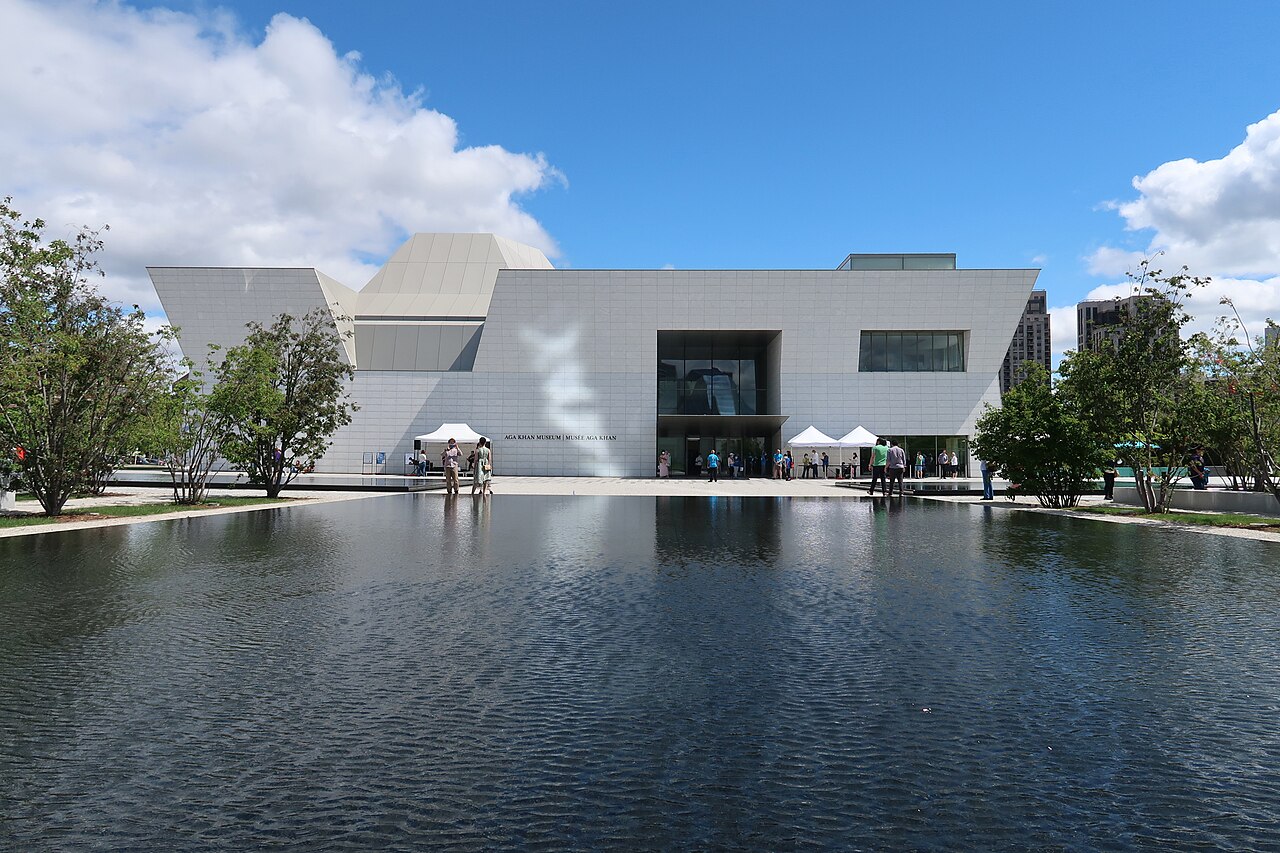
The community has established major institutions in Canada, including the Aga Khan Museum, the Ismaili Centre Toronto, the Ismaili Centre Vancouver and the Delegation of the Ismaili Imamat. These have become visible symbols of cultural and civic presence in Canadian public life.
Notable Pakistani Canadians
Pakistani Canadians are present across a wide range of fields, including politics, public service, business, academia, as well as in arts and entertainment.
In the arts, Iman Vellani is a Pakistani Canadian actress from Markham, Ontario. She gained international recognition for her leading role in Marvel’s “Ms. Marvel.” Sharmeen Obaid-Chinoy is the first Pakistani to receive an Academy Award. Fawzia Mirza is a filmmaker and writer. Her feature film The Queen of My Dreams premiered at the Toronto International Film Festival in 2023. She has also directed episodes of Hulu’s Deli Boys. Pakistani Canadian writer Zarqa Nawaz created the Canadian sitcom Little Mosque on the Prairie. It follows a Muslim community in rural Saskatchewan and offers a comedic lens on immigrant life in Canada.

In politics and civic life, Ausma Malik, a second-generation Pakistani Canadian, serves as Toronto’s deputy mayor. Meanwhile, Iqra Khalid represents Mississauga-Erin Mills in the House of Commons since 2015.
In 2017, women’s rights activist Malala Yousafzai was granted honorary Canadian citizenship and became the youngest person to address the House of Commons of Canada.