Share on Facebook
 Share on X
 Share by Email
 Share on Google Classroom
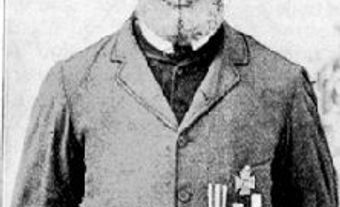
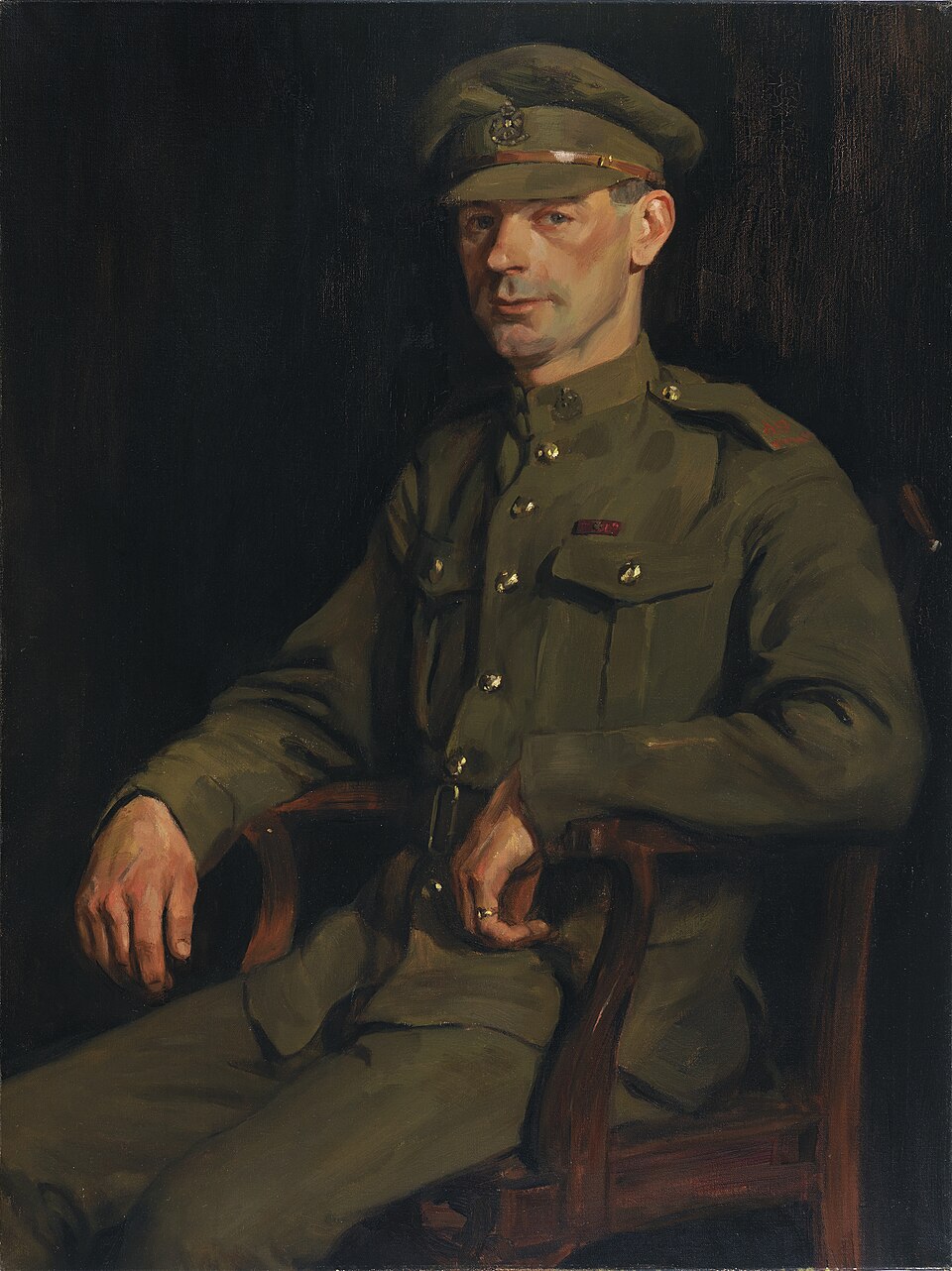
John Chipman (“Chip”) Kerr, VC, lumberman, farmer, ferry operator, airman, soldier (born 11 January 1887 in Fox River, NS; died 19 February 1963 in Port Moody, BC). Kerr was awarded the Victoria Cross for his actions in September 1916 near the village of Courcelette during the Battle of the Somme. When the Second World War broke out, Kerr rejoined the army but later transferred to the Royal Canadian Air Force (RCAF).
Early Life and Education
Chip Kerr was the son of lumberman and farmer Robert Kerr and his wife Elizabeth (née Greene). He received his education at the local Fox River School and went on to study at the Saint John Commercial School.
Homesteading
Chip Kerr left home in 1906 and worked as a lumberman in British Columbia’s Kootenay area. In 1912, he and his brother, Rollie, moved to the Spirit River area of northern Alberta and farmed a 65-hectare homestead they had purchased. One day in 1915, Kerr told Rollie that he was sick of raising bulls and was going to join the army. His brother did not want to be left alone and the two walked 80 km south to the railhead and took the train to Edmonton. Before they headed out, they left a note on the door reading, “War is hell, but what is homesteading?”
First World War
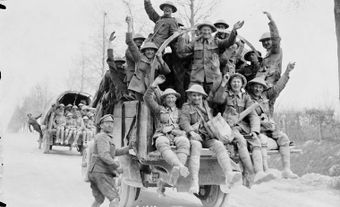
The Kerr brothers enlisted in the 66th Battalion, Canadian Expeditionary Force, in Edmonton on 25 September 1915. In May 1916, the battalion sailed to Britain for further training. Chip Kerr was transferred to the 49th (Edmonton) Battalion in June, one of 400 reinforcements for the unit that had suffered heavy losses at the Battle of Sanctuary Wood earlier that month.
Courage at Courcelette
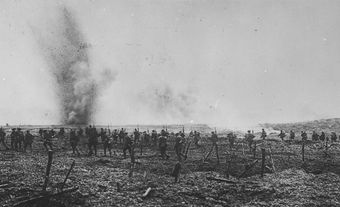
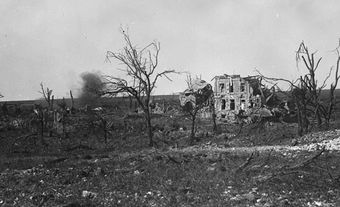
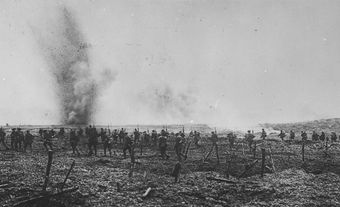
On 13 September 1916, Chip Kerr arrived with his unit in the Somme Department, where a battle had been raging since 1 July (see Canada and the Battle of the Somme). Three days later near Courcelette, Kerr was part of a 12-man bombing party advancing towards the German trenches with hand grenades. As first bayonet man, Kerr moved directly in front of the bomb-throwers to protect them and help clear trenches. He was far ahead of his group when he jumped into a trench and began cautiously moving along it.
After Kerr advanced almost 30 metres, a German sentry threw a grenade, and he instinctively put his hand up to shield his face. The move saved his sight, but the explosion blew off part of his forefinger and wounded him in the side.
When the rest of his group caught up to Kerr, they became involved in a grenade throwing fight around the corner of the trench. As the Canadians were rapidly exhausting their supply of grenades, Kerr climbed out of the trench and moved along the parados, or back of the trench, until he could see the enemy.
Kerr tossed his two remaining grenades into the Germans in the trench below, then opened fire with his rifle. Unfortunately, the gun jammed, but by then his number two bayonet man had joined him. Kerr borrowed his rifle and continued to fire into the Germans until the rest of the Canadians arrived and began throwing their remaining grenades at the enemy.
When the Germans retreated into one of their dugouts, Kerr and his men followed them. The remaining Germans, unnerved by Kerr’s tenacity, surrendered. Sixty-two Germans and about 230 of trench were captured. For his actions, Kerr was awarded the VC, which he received from King George V at Buckingham Palace on 5 February 1917.
Kerr’s wounds required hospitalization in Britain, followed by lighter duties and his eventual discharge. On 17 November 1917, he married Clarissa Bridger in London. The couple went on to have four sons and a daughter. Although Kerr survived the war, his brother was killed on 28 December 1917.
Life Between the Wars
Chip Kerr returned to Alberta in August 1918 to a hero’s reception, along with his new bride. They were welcomed at the train station by Edmonton’s mayor and then escorted through a cheering crowd of 10,000 people to the provincial legislature. There they were met by the lieutenant-governor, premier, cabinet ministers and members of the legislature. After a welcoming address, the premier presented the Kerrs with $700 in gold.
Kerr returned to his Spirit River homestead and took up farming again, but eventually tired of it. Six years later, he sold the property to work in the Turner Valley oil fields south of Calgary. Kerr then returned to the Spirit River area, where he worked as a forest ranger patrolling the Peace River area and operating the government ferry at Dunvegan, not far from Spirit River.
Second World War
Chip Kerr re-enlisted in the army on the outbreak of the Second World War when he was 53. He then transferred to the RCAF, hoping to be sent overseas. Instead, Kerr remained in Canada and was posted to Sea Island, British Columbia, where he served as an RCAF policeman.
Postwar Life
Chip Kerr moved to Port Moody, British Columbia, in 1947, where he worked in the salmon industry before he retired. After his death in 1963, he was buried in the Veterans’ Division of Vancouver’s Mountain View Cemetery.
Memory
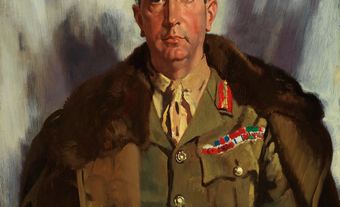
Group of Seven painter and war artist A.Y. Jackson painted an official portrait of Chip Kerr, who was the first VC recipient to be so recognized by the government. In 1951, a 2,560m high peak in Jasper National Park’s Victoria Cross Range was named Mount Kerr, one of five mountains in the range named after VC recipients with Alberta connections.
A memorial plaque was placed near the ferry Kerr operated at Dunvegan. In 1975, his widow donated his VC to the Canadian War Museum. In 2006, the city of Port Moody dedicated the Chip Kerr Park in his honour, and in 2018 it installed a memorial plaque in front of his house. The lounge at the Royal Canadian Legion Branch No. 119 in Port Moody is named after Kerr.