Share on Facebook
 Share on X
 Share by Email
 Share on Google Classroom
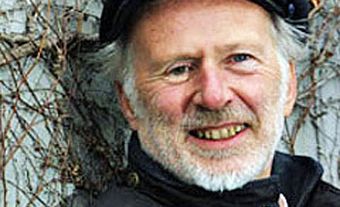
Franz-Paul Decker, conductor (born 22 June 1923 in Cologne, Germany; died 19 May 2014 in Montreal, QC).
Education and Early Career
From 1941 to 1944, Franz-Paul Decker studied the Hochschule für Musik in Cologne with Philip Jarnach and Eugen Papst. He also took classes in conducting, composition, and pedagogy at the University of Cologne.
Decker began his career in Giessen in 1944 and was a conductor of orchestras in a succession of German cities. He was artistic director of the Rotterdam Philharmonic Orchestra from 1962 to 1968.
Career in Canada
In the summer of 1965, Franz-Paul Decker visited Canada to direct the National Youth Orchestra of Canada, which hired him again for the 1968 session. He guest-conducted the Montreal Symphony Orchestra (MSO) in 1966 and succeeded Zubin Mehta as conductor and artistic director in 1967, retaining that position until 1975. The MSO made notable progress under his energetic and disciplined leadership and appeared under his direction at Expo 70 in Osaka, Japan. In 1975, he received an honorary Doctor of Law degree from Concordia University.
Decker has directed the premieres of several Canadian works, notably Clermont Pépin’s Quasars, Symphony No. 3 in 1967, R. Murray Schafer’s Son of Heldenleben and Serge Garant’s Phrases II in 1968, Micheline Coulombe Saint-Marcoux’s Hétéromorphie in 1970, Jacques Hétu’s Passacaille in 1971, and Pépin's Prismes et cristaux in 1974.
At the Opéra du Québec Decker directed Il Trittico (Il Tabarro, Suor Angelica, and Gianni Schicchi) in 1971, Cavalleria Rusticana and I Pagliacci in 1973, and Falstaff in 1974. He served as artistic adviser to the Calgary Philharmonic Orchestra (1975–77) and as artistic adviser to the Winnipeg Symphony Orchestra (1980–82). He has appeared with numerous major European orchestras and has toured South America in 1960, 1961, 1963, 1974, and 1975, Australia in 1967, 1975, and 1978, and New Zealand in 1966 and 1976.
In 1975 he was praised in Dallas, Texas, for his conducting of Tristan und Isolde with Jon Vickers; and in 1978 after he led the same company in performances of The Flying Dutchman, John Ardoin wrote, “His direction of Dutchman reaffirmed the luminous qualities of drama, style, and commitment he brought to Tristan, into which he had breathed life” (Dallas Morning News, 3 December 1978).
Appointed principal guest conductor of the New Zealand Symphony Orchestra in 1982 and artistic director of the Barcelona Orchestra in 1986, Decker continued to appear with Canadian orchestras such as the Orchestre des jeunes du Québec, the Toronto Symphony Orchestra and the MSO.
Discography
- Beethoven Symphonie no 3 : O phil de Rotterdam; 1966; DG 135050.
- Brahms Concerto no 1 en ré mineur 15 : O phil de Munich, Gelber p; 1976; EMI (HMV) HQS 1068 et Connoisseur Society CS 2102.
- Mozart Concerto no 22 en mi bémol 482, Haydn Concerto en ré op. 21 : O Berliner Rundfunk, Demus p; 1960; DG 138049.