Share on Facebook
 Share on X
 Share by Email
 Share on Google Classroom
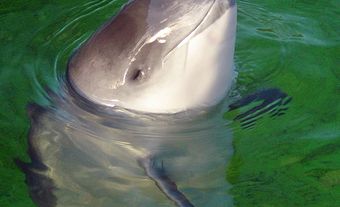
Dolphin and porpoise are the common names for small, toothed mammals of the order Cetacea, which also includes whales. They are found in all oceans and many major river systems. In North America, dolphins, with long snouts, are distinguished from porpoises, with blunt heads, but the terms are sometimes applied interchangeably to many small toothed whales, including members of the families Delphinidae, Phocoenidae, Stenidae and Platanistidae.

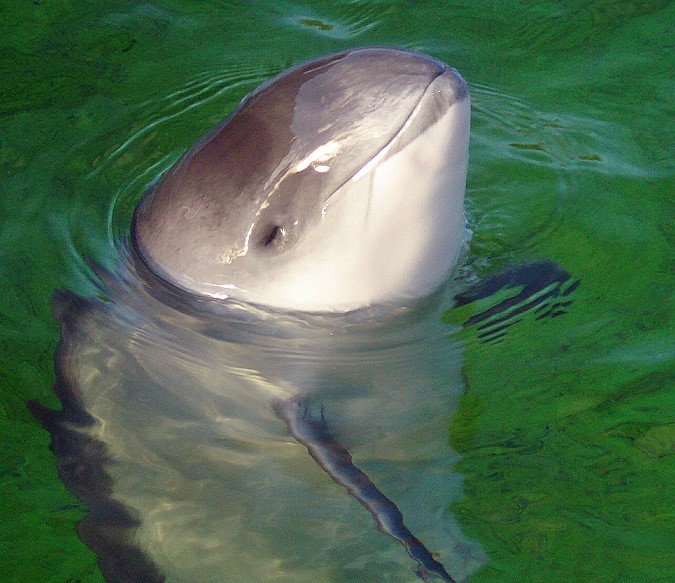
Harbour Porpoise
Five species are common in Canada. Harbour porpoise (Phocoena phocoena) is especially abundant in the lower Bay of Fundy, parts of the Gulf of St Lawrence and along the west coast. This, one of the smallest Northern Hemisphere cetaceans, has a relatively high metabolic rate and a short life span (about 13 years). Unlike some dolphins and porpoises, it does not live in large social aggregations, nor does it normally engage in aerial displays.
Dall's Porpoise
Dall's porpoise (Phocoenoides dalli), native to the North Pacific, occurs along the BC coast. Its colour pattern is reminiscent of the killer whale (Orcinus orca), which, at 9.5 m and 8,000 kg, is the largest delphinid.
Other Species
Three species of temperate-region dolphins occur in Canadian waters; all are gregarious and sometimes acrobatic. White-beaked dolphins (Lagenorhynchus albirostris) and Atlantic white-sided dolphins (L. acutus), both endemic to the North Atlantic, have overlapping ranges from Cape Cod to the Davis Strait. Their North Pacific relative is the Pacific white-sided dolphin (L. obliquidens).
The bottlenose dolphin (Tursiops truncatus), popular in animal exhibits, generally does not range into Canadian waters. Most captive specimens come from Florida or the Gulf of Mexico region.