Share on Facebook
 Share on X
 Share by Email
 Share on Google Classroom
Bats are nocturnal mammals of the order Chiroptera (literally "hand wing"). Bats are the only flying mammals. Most bats in Canada are plain-nosed (family Vespertilionidae). There are 19 Canadian species which range in size from the eastern small-footed bat (Myotis leibii), which weighs 4 g and has a wingspan of 21 cm, to the hoary bat (Lasiurus cinereus), which weighs 30 g and has a wingspan of 40 cm. The most common bat in Canada, the little brown myotis (Myotis lucifugus), weighs about 9 g and has a wingspan of 22–27 cm.

Canada’s Bat Species
|
Common Name |
Scientific Name |
Status |
Provinces/Territories |
|---|---|---|---|
|
Big brown bat |
Eptesicus fuscus |
||
|
Brazilian free-tailed bat |
Tadarida brasiliensis |
BC |
|
|
California myotis |
Myotis californicus |
BC |
|
|
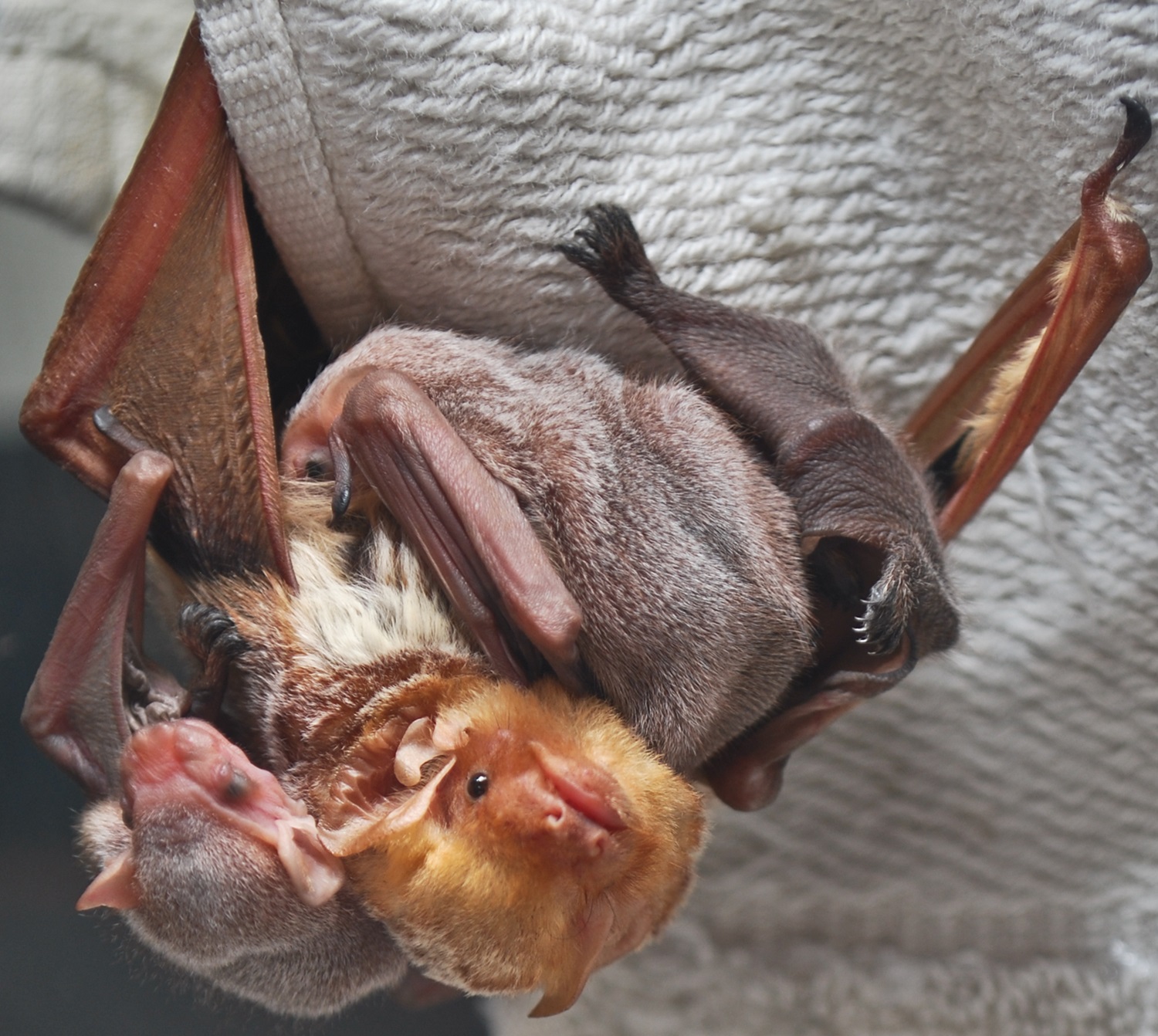
Eastern red bat |
Lasiurus borealis |
Endangered |
SK, MB, ON, QC, NB |
|
Eastern small-footed myotis |
Myotis leibii |
ON, QC |
|
|
Fringed myotis |
Myotis thysanodes |
Data deficient |
BC |
|
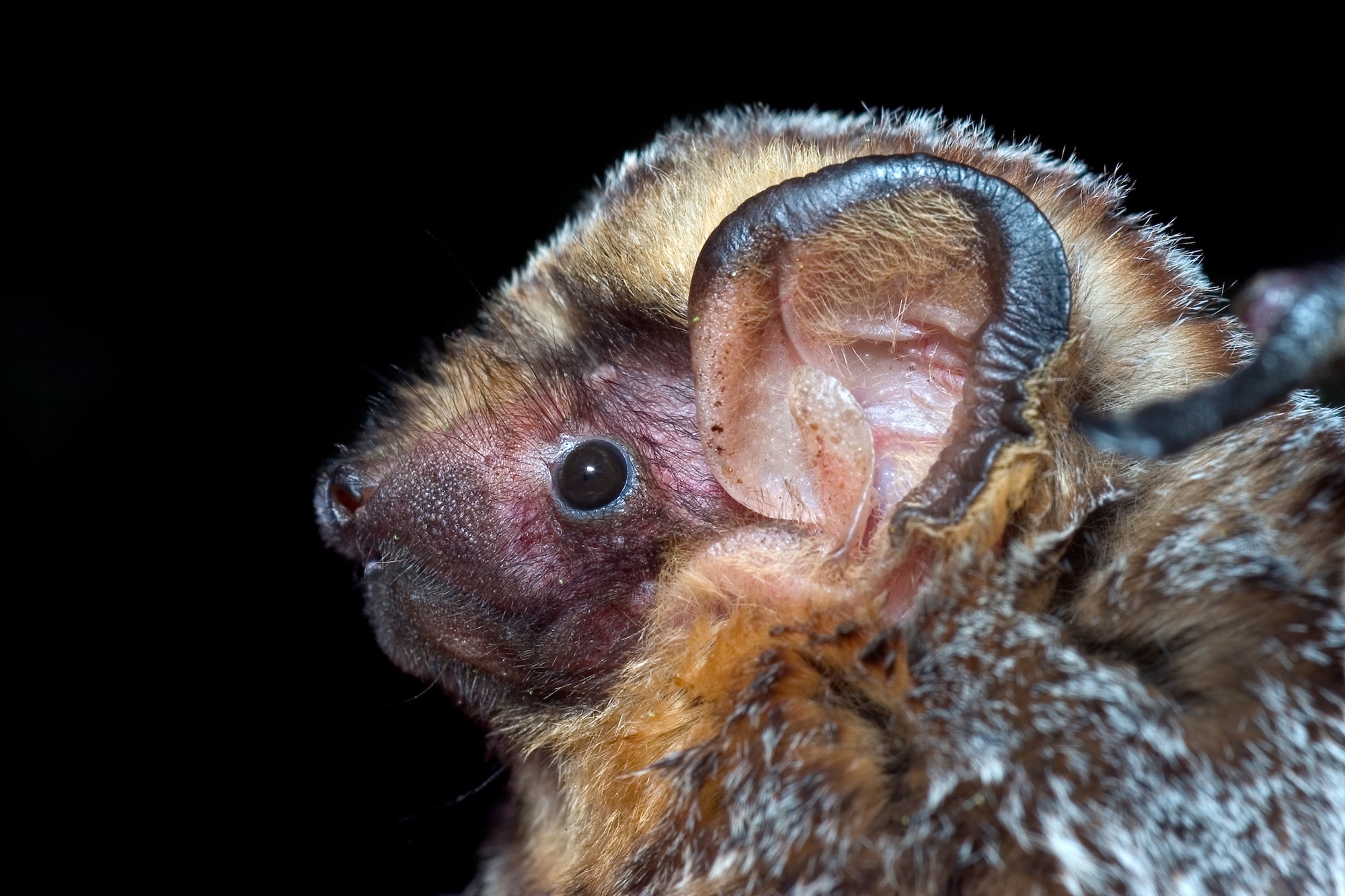
Hoary bat |
Lasiurus cinereus |
Endangered |
NWT, BC, AB, SK, MB, ON, QC, NB, NS |
|
Keen’s myotis |
Myotis keenii |
Data deficient |
BC |
|
Little brown myotis |
Myotis lucifugus |
Endangered |
|
|
Long-legged myotis |
Myotis volans |
BC, AB |
|
|
Northern long-eared myotis |
Myotis septentrionalis |
Endangered |
YK, NWT, BC, AB, SK, MB, ON, QC, NB, PEI, NS, NL |
|
Pallid bat |
Antrozous pallidus |
Threatened |
BC |
|
Silver-haired bat |
Lasionycteris noctivagrans |
Endangered |
BC, AB, SK, MB, ON, QC, NB, NS |
|
Spotted bat |
Euderma maculatum |
Special concern |
BC |
|
Townsend’s big-eared bat |
Corynorhinus townsendii |
BC |
|
|
Tri-coloured bat |
Perimyotis subflavus |
Endangered |
ON, QC, NB, NS |
|
Western long-eared myotis |
Myotis evotis |
BC, AB, SK |
|
|
Western small-footed myotis |
Myotis ciliolabrum |
BC, AB, SK |
|
|
Yuma Myotis |
Myotis yumanensis |
BC |
Reproduction and Development
Bats reproduce slowly, typically bearing one to two young per year (three to four is possible but rare). Most Canadian species mate in autumn and females store sperm in the uterus over winter. Ovulation and fertilization occur in spring when bats leave hibernation, and young are born about 60 days later, usually in mid June. Newborn bats weigh about 25 per cent of their mothers' mass and grow very quickly. Young bats consume only their mothers' milk until they are large enough to fly and hunt insects. Young little brown bats, for example, may fly by the age of three weeks. Bats are long-lived mammals: the oldest bat recorded in Canada was over 30 when last seen in the wild.
Distribution and Habitat
Bats live across Canada from Newfoundland and Labrador to Haida Gwaii and from the US border to the treeline. In summer, most roost in hollows and crevices in and around cliffs or buildings, while some roost in foliage. In winter, Canadian bats hibernate or migrate to warmer areas. Some Canadian bats migrate several hundred kilometres between summer and winter roosts. Bats that hibernate use underground sites, caves or old mines; only big brown bats (Eptesicus fuscus) regularly hibernate in buildings.
Diet
Active bats can eat over 50 per cent of their body weight every day, while lactating females may consume over 100 per cent of their body weight, reflecting the cost of producing milk. Canadian species of bats usually feed on insects. In the tropics and subtropics, there are many more species of bat, some of which eat fruit, leaves, nectar and pollen, other animals (even bats) and blood. The three species of blood feeders (vampires) occur in South and Central America.
Echolocation
Bats have eyes and can see, but most use echolocation to detect obstacles and prey. In echolocation, animals emit calls and then listen for echoes; they use the differences between the call and the echo to collect information about their surroundings. Like most bats, species in Canada produce their echolocation calls in their voice boxes. These calls can be very intense (~130 decibels), allowing bats to detect insect prey at distances of around 20 m. Little brown bats produce calls at rates of from 50 to 500 per second, while hoary bats produce calls at rates of 5 to 300 per second. Cruising bats emit calls at a relatively low rate when looking for prey or objects, but increase the number of calls per second when chasing prey. Although most bats use high-frequency calls, which are above the range of human hearing (ultrasonic), some bats use lower-frequency calls that are audible to humans. In Canada, people can hear the echolocation calls of spotted bats (Euderma maculatum), which can be found in British Columbia, while some children can hear the calls of hoary bats. Many insects, such as moths and crickets, have ears that are sensitive to these echolocation calls, alerting them to the threat of bats.
Ecological Significance
Worldwide, bats provide a variety of ecological services from pollination (see Pollinators in Canada) to insect control to seed dispersal. Canadian bats, by-and-large, are insectivores and therefore aid in insect population management (see Four Major Insect Pests of Forests in Canada). Canadian bats can be especially helpful to agriculture, consuming insect pests that can damage crop yields. In fact, bats provide approximately $3.7 billion in natural pest control services. This allows farmers to use fewer commercial pest control products.
Conservation and Threats
Bats face a number of threats in Canada. White-nose syndrome, a disease caused by an invasive cave-dwelling fungus, has killed millions of hibernating bats. White-nose syndrome causes bats to wake during winter hibernation, raising their metabolism and putting them at risk of starvation. Urban development, habitat loss, pesticides and wind turbines also significantly negatively impact Canadian bats.
As a result, several of Canada’s bat species have been assessed as at-risk by the Committee on the Status of Endangered Wildlife in Canada (COSEWIC), notably the eastern red bat, hoary bat, little brown myotis, northern long-eared myotis, pallid bat, silver-haired bat, spotted bat and tri-coloured bat (see Species at Risk Legislation). The little brown myotis and the northern long-eared myotis have seen their populations drop by more than 90 per cent since 2010. The tri-coloured bat, too, has seen a 75 per cent population decline over the same period.