Share on Facebook
 Share on X
 Share by Email
 Share on Google Classroom
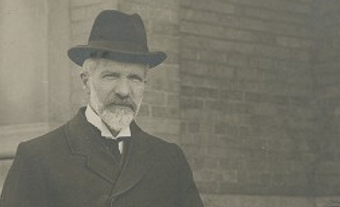
Chalmers Jack Mackenzie, CC, FRSC, engineer, research manager (born 10 July 1888 in St. Stephen, NB; died 26 February 1984 in Ottawa, ON). Chalmers Jack Mackenzie was the single most important figure in the postwar growth of Canadian science. He was Companion of the Order of Canada, and a member of the Royal Society of Canada and the Royal Society of London.
Career
Chalmers Jack Mackenzie was trained in civil engineering at Dalhousie University and Harvard and served in the Canadian Army during the First World War (MC, 1918) before moving to Saskatchewan (where he had worked 1910–15). Part-time lecturing at the University of Saskatchewan led to his becoming dean of engineering (1921–39). During this period, Mackenzie organized important research in protecting concrete buildings from attack by "alkali salts" in the soil, supervised the design and construction by his students of a highway bridge in Saskatoon, and served as chairman of the Town Planning Council.
Mackenzie was appointed to the National Research Council in 1935, and his abilities were recognized by NRC President Andrew George Latta McNaughton who personally chose him as acting president in 1939. Mackenzie was thus the government's chief scientist in the Second World War and became the right-hand man of C.D. Howe in planning postwar Science Policy. His war work included the tenfold expansion of the NRC Laboratories, top-secret war gas, aviation, radar and atomic bomb research, membership on the US-British-Canadian Combined Policy Committee, allocating uranium supplies, and even the chore of telling Winston Churchill that "Habakkuk," the British Prime Minister's pet project of an iceberg-aircraft carrier, was impossible.
Mackenzie was NRC president in his own right 1944–52, president of Atomic Energy of Canada Ltd 1953–54 and president of the Atomic Energy Control Board 1948–61. In the postwar years he and Edgar William Richard Steacie laid the foundations of the Canadian scientific system as it is today. He had a hand in the Igor Gouzenko investigations, the NRC's entry into basic research through Gerhard Herzberg and others, governmental responses to the Russian atomic bomb (1949) and Sputnik (1957), the foundation of the Defence Research Board and Medical Research Council (see Canadian Institutes of Health Research), the expansion of NRC university grants to equal its internal budget, the Industrial Research Assistance Programme of 1962, the enlargement of Canada Council grants (1963–69), and he served as chancellor of Carleton University (1954–68).
Though nominally retired in 1961, Mackenzie remained a member of the Advisory Panel on Science Policy to 1963, acting as chairman during Steacie's terminal illness; in 1964 he provided a "second opinion" for the government about the science policy reforms proposed by the Glassco Royal Commission Report of 1963, which were implemented 1964–70, and he maintained an office at the NRC until his 90th year.
Honours
Chalmers Jack Mackenzie received many honours and awards including the Companion of the Order of St. Michael and St. George (1943), US Medal of Merit (1947), Companion of the Order of Canada (1967), Royal Bank Award and fellowship in the Royal Society of Canada and that of London.