Share on Facebook
 Share on X
 Share by Email
 Share on Google Classroom
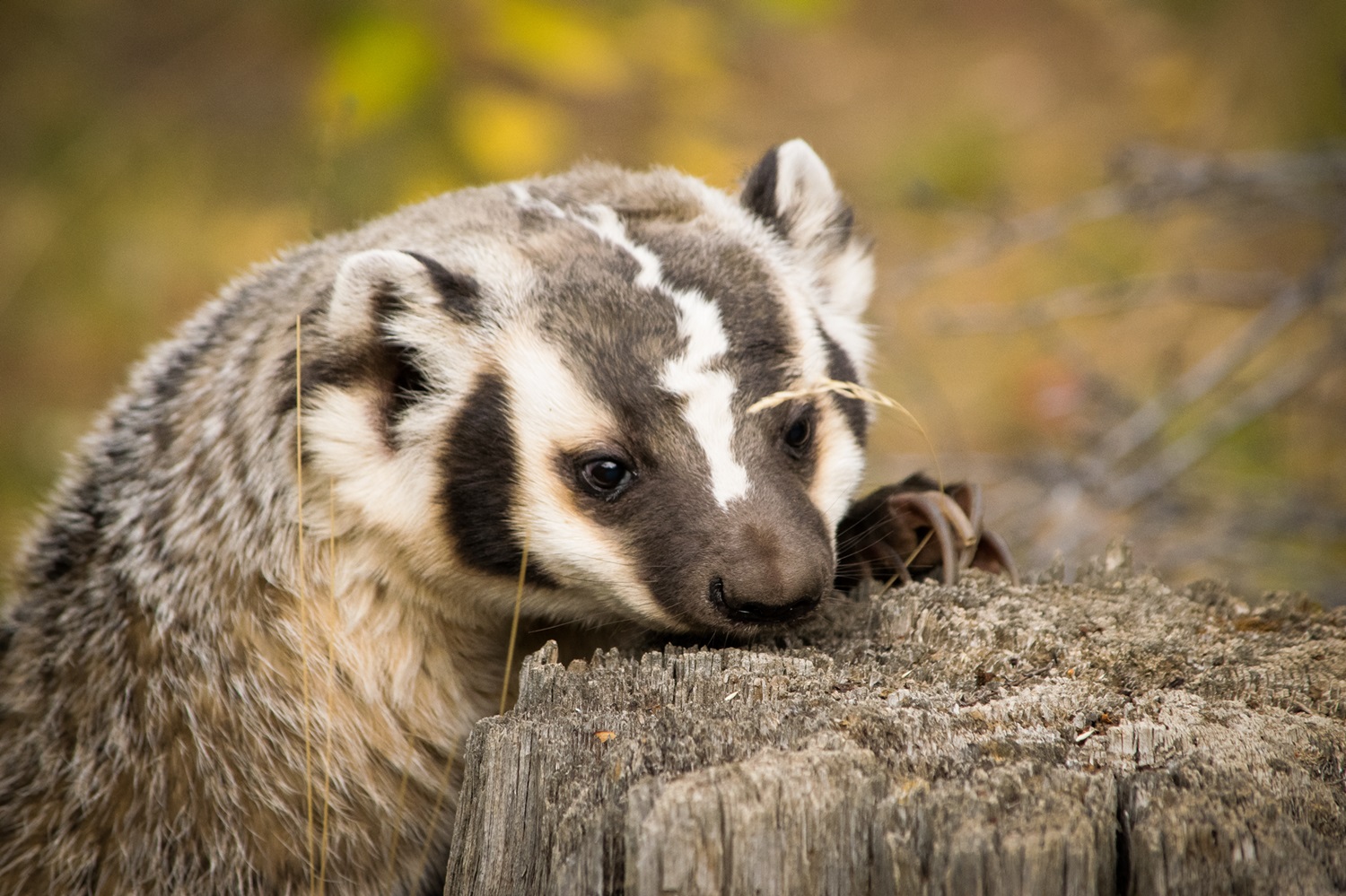
The American badger (Taxidea taxus) is the only North American member of the weasel family specialized for burrowing and capturing prey underground.
Description
The body is squat; legs are short and heavily muscled; and feet are large with long, heavy claws. Adult males may reach 11.4 kg in weight and 84 cm in length. The head is small, triangular and flattened, with a prominent snout and ears. The long, coarse fur on the body is silvery yellowish; underparts are paler, and feet are black. The head is brown with white crescents on the face. A narrow white stripe runs from muzzle to shoulders.
Range
Badgers inhabit the grasslands and open woodlands of the southern prairie provinces and BC, extending southward through the prairies and semideserts of the US and northern Mexico. Food is mostly burrowing rodents. The badger is primarily nocturnal, resting by day in extensive burrows, alone if male or with kits if female. Both sexes hibernate.
Reproduction
Mating occurs in July-August. After a long period of implantation, the embryo begins to develop, and litters (1–4 young) are born in March-April. Young are independent in 2–3 months and mature early; females may breed at 5 months, males usually not until 7 months.
Conservation and Threats
Overhunting and predator control have greatly reduced the number of badgers in parts of Canada. Currently, several American badger subspecies and populations are considered at risk under the Canadian Species at Risk Act (see endangered animals).