Share on Facebook
 Share on X
 Share by Email
 Share on Google Classroom

Mice in Canada
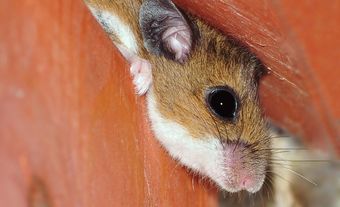
Of the 13 mouse species found in Canada, six are species native to the Americas of the family Muridae: the western harvest mouse, Reithrodontomys megalotis; the deer mouse, Peromyscus maniculatus; the cascade deer mouse, P. oreas; the Sitka mouse, P. sitkensis; the white-footed mouse, P. leucopus; and the northern grasshopper mouse, Onychomys leucogaster.
Four belong to the family Dipodidae: Pacific, western, meadow and woodland jumping mice (Zapus trinotatus, Z. princeps, Z. hudsonius and Napaeozapus insignis, respectively).
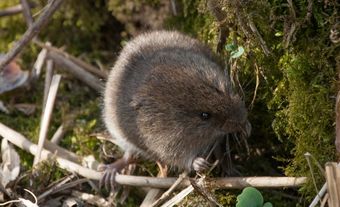
The family Heteromyidae has two representatives: the olive-backed pocket mouse and the Great Basin pocket mouse (Perognathus fasciatus and P. parvus, respectively). One species of the family Muridae, the house mouse (Mus musculus), was introduced by the first colonists and is not native to the Americas. The familiar field mice are actually voles.
Description
The western harvest mouse and the olive-backed pocket mouse are the smallest, only 13 cm long, including the tail. The largest, the western jumping mouse, measures 25 cm. All mice are nocturnal. Some species remain active throughout winter, while others hibernate. House mice reproduce throughout the year, but most species are sexually active only from spring to autumn, generally producing several litters during the period.

Distribution and Habitat
Meadow jumping mice, deer mice and house mice are common throughout Canada. Sitka mice occur on Haida Gwaii. Cascade deer mice are limited to southern interior British Columbia. Other species inhabit larger areas but are also limited to specific regions. Mice occur in forests and fields, but their habitats vary by species. Most mice are primarily granivorous; in contrast, northern grasshopper mice are insectivorous and carnivorous.
Biological Importance
Mice are an important source of prey for various birds, mammals and snakes. Although certain species do not affect the economy, other granivorous species damage crops and reforestation projects.