Share on Facebook
 Share on X
 Share by Email
 Share on Google Classroom
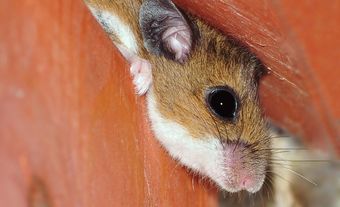
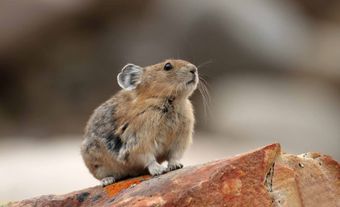
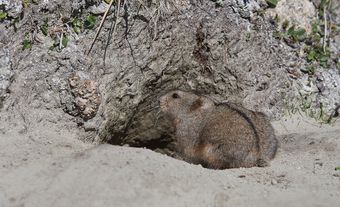
Vole is the common name for several rodents of the subfamily Arvicolinae. Voles range in size from 15–20 g (red-backed voles) to 200 g (Richardson's water vole, Microtus richardsoni). They have stout bodies, short legs and tails, and ears nearly hidden by moderately long hair.

Distribution and Habitat
Genus Microtus (about 55 species) is most widespread and diverse; about 13 Microtus species occur in Canada (including Richardson's, woodland, prairie, singing, montane, Townsend's, root, long-tailed, rock, chestnut-cheeked and creeping voles). Meadow voles (M. pennsylvanicus), commonly called field mice, occur throughout Canada, in grasslands, forsets and low arctic tundra. Red-backed voles (genus Clethrionomys), most abundant in forests, also occur on the prairies and on tundra west of Hudson Bay. Heather voles (Phenacomys intermedius), found across the boreal forest, are rare; sagebrush voles (Lagurus curtatus) are confined to dry grasslands of southwest Saskatchewan and southeast Alberta.
Reproduction and Development
Many voles make prominent runways and above-ground, grassy nests. They remain active and may breed under the snow cover. Females of many species become fertile immediately after giving birth, bearing litters at close intervals; they may have two or more litters in the summer of their own birth. Voles rarely survive more than one winter. Many species undergo cycles of abundance and scarcity, peaking every 3–4 years.
Diet and Predation
Voles are an important food source for many other wild animals. Voles can cause losses of hay and cereal crops, and damage fruit trees and ornamental shrubs.
Conservation
One species of vole in Canada, the woodland vole (Microtus pinetorum), is classified as a species of Special Concern by the Canadian Species at Risk Act.