Share on Facebook
 Share on X
 Share by Email
 Share on Google Classroom
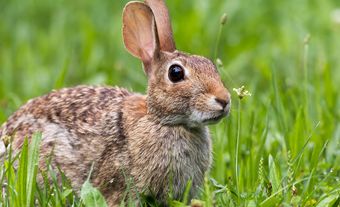
Hare is a term applied to midsized herbivores of the order Lagomorpha whose young are born fully haired, with eyes open, and can run within a few minutes of birth. All North American hares belong to the genus Lepus; three species are native to Canada, and one has been introduced.

Arctic Hare
The northernmost species, arctic hare (Lepus arcticus), found in the tundra zone beyond the treeline, is the largest Canadian species, with adults weighing 3.2–5.4 kg.

Snowshoe Hare
Snowshoe hares (Lepus americanus) are widespread throughout Canadian forested areas and provide meat to humans in remote communities. Snowshoe hares exhibit enormous population fluctuations, peaking every 9–10 years. Numbers vary from approximately one hare per 50 ha to upwards of 200 per ha.

White-tailed Jack Rabbit
The remaining native species, the white-tailed jack rabbit (Lepus townsendii), is largely nocturnal and solitary and is found throughout the prairies.
Other Species
In 1912, the European or Cape hare (Lepus europaeus) was introduced to Ontario as a game animal. Restricted to Ontario, it is sometimes a garden pest. Unlike native species, it does not turn white in winter.Reproduction and Development
Young hares (leverets) are born in the open and are weaned after 2–3 weeks (5–6 weeks in white-tailed jack rabbits). Gestation averages 36 days, and, depending on the species, a litter contains 1–7 young, with up to four litters born over a summer. Female hares are usually larger than males; hares are larger than rabbits.