Share on Facebook
 Share on X
 Share by Email
 Share on Google Classroom
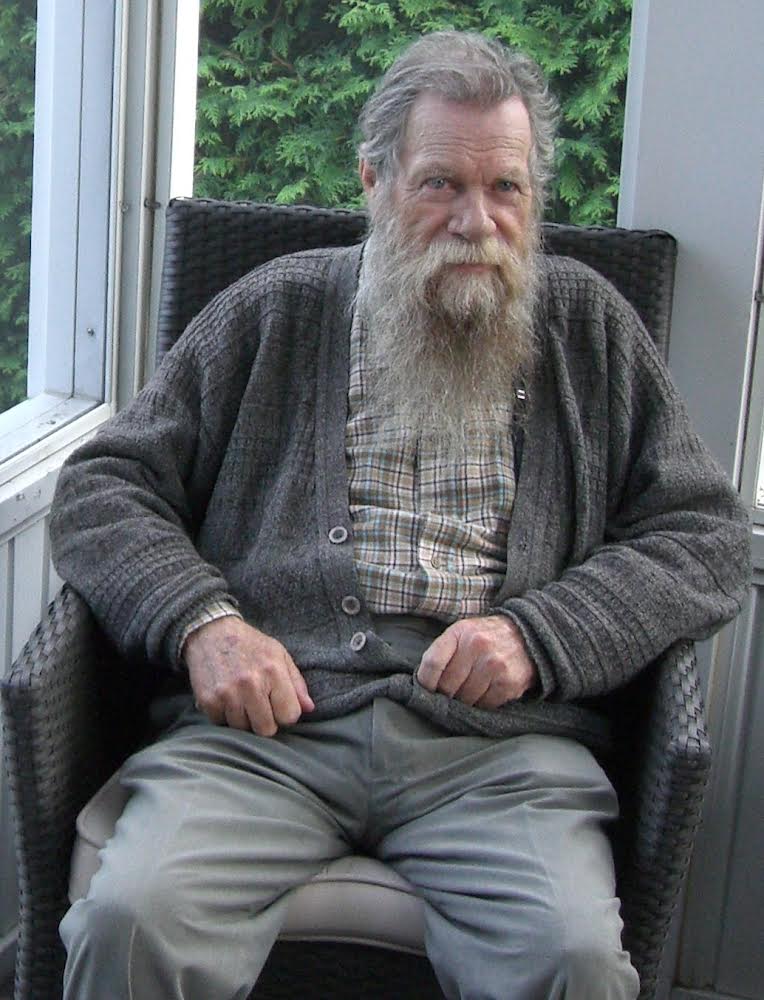
Jean St-Germain, inventor (born 29 March 1937 in Drummondville, QC; died 16 September 2016 in Saint-Hyacinthe, QC). Jean St-Germain is known for his many inventions, including the modern baby bottle, a feat he accomplished when he was still a teenager. He was also a paratrooper in the Canadian Army and a restaurateur. He perfectly embodied the Quebec term "patenteux", designating a handy, resourceful and ingenious person.
Did you know?
Jean St-Germain used to answer the phone by saying "this is St-Germain the patenteux."
Early Life and First Invention
Jean St-Germain was the seventh of eleven children. His parents, Alphonse St-Germain and Rosalie Tétreault, were farmers (see Agriculture in Canada). As a child, he struggled academically in elementary school and dropped out after repeating grade four twice.
At 16, while looking after his older brother's son, he wondered why his sister-in-law patted her baby on the back after each bottle. This was how Jean St-Germain realized that traditional bottles fill with air when the milk was moved. The infant then swallowed the air, which could cause gas and discomfort. St-Germain had the idea of adding a lining inside the bottle to separate the liquid from the container. He finally used a condom inside a glass bottle to prevent air pockets from forming. The result was a bottle that effectively eliminated burping in babies.
St-Germain sold his idea to an Ottawa businessman for US$1,000 (equivalent to more than $12,000 in 2026 dollars). This led to the Playtex company marketing airless bottles in 1953. St-Germain never sought to earn more for his invention, despite the immense fortune it brought to the company. He used part of the money he received to build a small workshop.
Military Service
After working in the laundry and construction industries, Jean St-Germain chose to follow in the footsteps of his older brother, Fernand, who died during the Korean War, and joined the Canadian Army. He was recruited into the Royal 22e Régiment where he received paratrooper training. In the mid-1950s, he was stationed in West Germany. This experience instilled in him a lasting passion for aviation and skydiving. He also continued to cultivate his love of DIY during this period, notably building a ceremonial clock more than two metres high, operated by a sewing machine motor and capable of playing the regiment’s official march, "Vive la Canadienne."
Career of an Eccentric Inventor
After returning from military service, Jean St-Germain settled near Saint-Hyacinthe and started a family, eventually having twelve children. At one point, he ran his own skydiving school where he used a DC-3 transport aircraft from the 1930s. He and his family lived in an adjacent aircraft hangar at the time. He continued to work on his original inventions.
St-Germain's property was full of the various projects and inventions he created. His children remember the craftsmen who regularly came to help them bring their vision to live through his various creations.
Perhaps one of St-Germain's most successful inventions was the aerodium, the world's first indoor vertical wind tunnel. The aerodium was a 12-metre-tall silo with a propeller fan at its base. It was a free-fall simulator that allowed you to experience skydiving without jumping out of a plane.
In 1982, American real estate magnate Marvin Kratter offered St-Germain $1.5 million for the rights to operate the aerodium.
This invention allowed people from all over the world to experience the sensations of freefall jumping while allowing experienced skydivers to train safely in a controlled environment.
In the 1980s, Jean St-Germain had a 10-meter-tall pyramid built on his property in the municipality of Saint-Simon, to which he attributed spiritual and healing powers. He sold access to its interior to people who wished to meditate, a practice he enjoyed. He planned to build a much larger pyramid – a 160-meter-tall monument – including a restaurant, a museum and a mausoleum that could accommodate thousands of coffins and funeral urns. The project was finally rejected for non-compliance with local planning rules.
L'Extra-Terrasse Restaurant
In 1992, Jean St-Germain briefly entered the restaurant business by opening L'Extra-Terrasse in Saint-Simon, Quebec. The restaurant, shaped like a flying saucer, was named after a play on words of "extra-terrestrial". What made it special was that the dishes were served to customers by a robot named Del-Robik, and the service was supposed to be provided by a single employee who was responsible for operating it. (See also Robotics in Canada.) After five months, he eventually closed the establishment, realizing he was not cut out for the restaurant business.
Helicopter-Related Inventions
Jean St-Germain was one of the first Canadians to design amateur-built helicopters. He created at least two different models that he tested in flight in the 1970s. Lacking a helicopter pilot's license or permission from the authorities to test his inventions, the federal government twice ordered him to stop testing. It is believed that he developed up to three distinct types of engines for these experiments and was later contacted by a British company to turn his Hélipack concept – an ultralight single-seat helicopter – into a portable back-mounted helicopter. The fate of this project remains unknown.
Other Inventions and Interests
Among the dozen or so inventions patented in Canada by Jean St-Germain are a safety throttle control for snowmobiles, an airflow deflector that attaches to the rear of heavy trucks and a mobile scaffolding system for construction.
In addition to being a prolific inventor, St-Germain was also a talented musician, able to play the accordion, guitar and piano.