Share on Facebook
 Share on X
 Share by Email
 Share on Google Classroom
Jacques Poulin, novelist, translator (born 23 September 1937 in Saint-Gédéon de Beauce, QC; died 21 August 2025). Author of 14 novels, winner of several literary awards including the Governor General's Literary Award (1978), the Molson Prize (1990) and the Athanase-David Prize (1995), Jacques Poulin is one of the most widely read and critically acclaimed Quebec novelists of his generation. With an understated writing style, stripped down in both syntax and style, seemingly simple and even light, Poulin's novels tell the story of characters in search of themselves and others, wounded rather than torn apart by the desire to rediscover themselves and the almost absolute impossibility of doing so. Meditative solitude, love marked by tenderness and ambiguity, and the desperate gentleness that inhabits the characters in their quests are the favourite themes of a writer concerned with recounting the fragility of beings even in the banality of everyday life.
Education
After completing his high school diploma in classical studies at the Saint-Georges and Nicolet seminaries in 1957, Jacques Poulin obtained a bachelor's degree in psychology in 1960 and a second bachelor's degree in literature in 1964 at Université Laval.
He worked as a career counsellor at a college in Sainte-Foy from 1967 to 1970, then as a translator for the federal government from 1970 to 1973. Later, he finally devoted himself to writing, living modestly in Paris for approximately ten years before returning to settle in his native Quebec, first in the capital, then on Île d’Orléans.
Early Career
My Horse for a Kingdom (transl. Mon cheval pour un royaume), Jacques Poulin’s first novel published in 1967, is the story of a man struggling with himself (committed to a psychiatric hospital), a woman (whose love he shares with one of his friends), a city (Quebec City) and a society from which he tries to free himself through a terrorist act that ends up hurting him.
This was followed by Jimmy in 1969, a story about a child who witnesses the decay of everything (the cottage on stilts by the river, his parents’ relationship, society); The Heart of the Blue Whale (transl. Le coeur de la baleine bleue) in 1970, the story of a man who receives a heart transplant from a young girl and awakens to the uncertainties of a problematic sexual identity; and Faites de beaux rêves, a story of love and fraternal drama set against the backdrop of a Formula 1 race in Mont Tremblant, in the Laurentians, for which Jacques Poulin won the La Presse literary prize in 1974.
Spring Tides (1978)
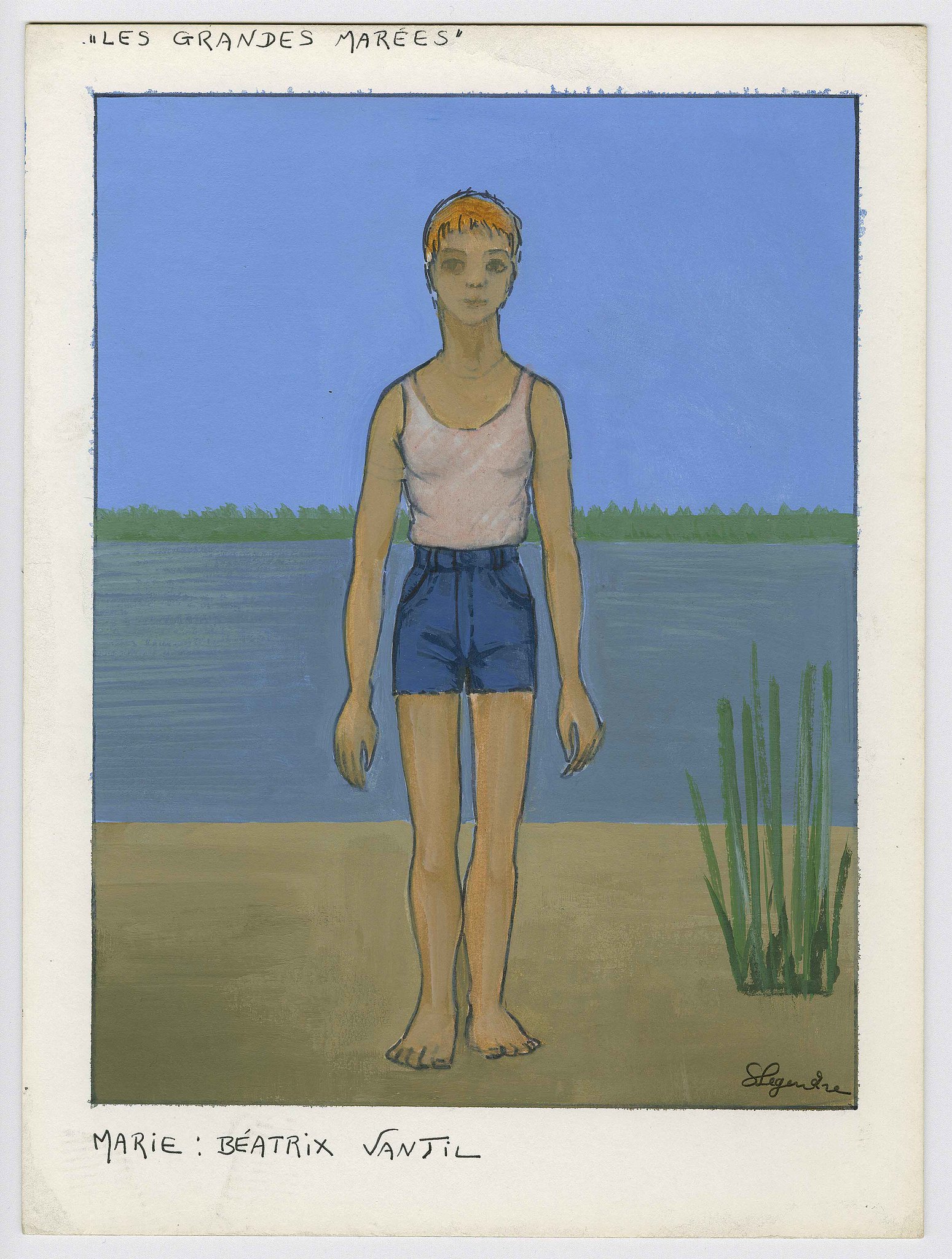
Spring Tides (transl. Les grandes marées), one of the author’s most powerful works and one of Quebec’s most profound novels despite its apparent lightness, recounts the story of a solitary translator, isolated on an island that is like a new Eden. The protagonist momentarily experiences the love of a young woman who has arrived from the sky (by the boss's helicopter), but whose loneliness is later shattered and annihilated by the arrival of a multitude of characters who end up casting him off of the island so they can settle there themselves. The novel is a fable about the impossibility of living in society.
Poulin won the Governor General's Literary Award in 1978 for this novel.
Volkswagen Blues (1984)
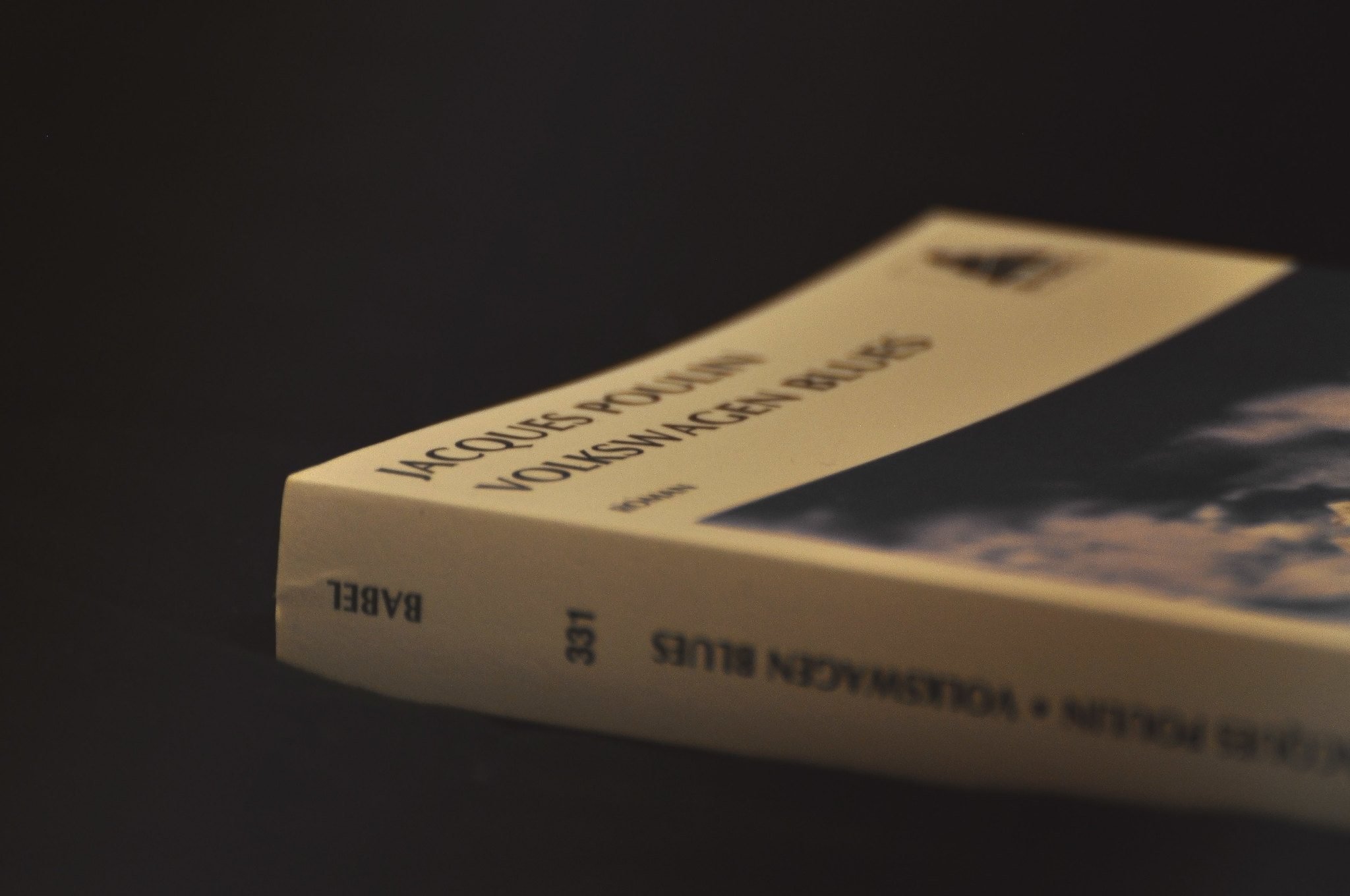
Volkswagen Blues (1984), like Jack Kerouac's travel stories, is about the journey of two protagonists who are passionate about history and culture, Jack Waterman and Pitsémine (nicknamed La Grande Sauterelle or The Grasshopper), a young Métis woman, from Gaspé to San Francisco. Jack receives a letter from his brother Théo after 20 years of estrangement. This sudden contact takes him on the road in an old Westfalia, retracing an ancestral route once taken by the Indigenous people. Flanked by Pitsémine’s little black cat, Jack Waterman and his companion rediscover the setbacks of North American history as they travel along the Great Lakes, the Oregon Trail and the Mississippi.
Many consider Volkswagen Blues to be Jacques Poulin's greatest work, who always wanted to write the "great American novel." It earned him the Canada-Belgium Prize in 1984.
Mr. Blue (1989)
Published in 1989 in both Quebec and France, Mr. Blue (transl. Le vieux chagrin) is the story of a writer suffering from writer’s block who wants to write a romance novel. Obsessed by the appearance of a woman at sea, he finds a copy of The Arabian Nights in a forgotten cave where he had often played during his childhood. This collection of folktales is a clue to the presence of the mysterious woman he will only be able to meet in a dream. The writer ends up reconciling himself with his profession by welcoming into his home a young girl abused by her father who makes him discover the true meaning of tenderness.
Autumn Rounds (1993) and Wild Cat (1997)
During the 1990s, when Jacques Poulin's readership grew, he published two new novels, Autumn Rounds (transl. La tournée d'automne; 1993) and Wild Cat (transl. Chat sauvage; 1997). In Autumn Rounds, a travelling librarian forms a romantic relationship with a woman during a trip between Quebec City and the Côte-Nord region. In Wild Cat, the narrator plays detective in the streets of Quebec City and happens to meet a young girl he was not looking for, but who ends up becoming an increasingly important part of his life.
My Sister’s Blue Eyes (2002)
In his subsequent novels, Jacques Poulin draws his readers back into the world of Volkswagen Blues, and Jack Waterman fans reconnect with him in My Sister’s Blue Eyes (transl. Les yeux bleus de Mistassini). The writer and bookseller from Old Quebec gets lost in a maze of memories, a nod to Poulin's previous works. Jack meets Jimmy and his sister Mistassini and sets them on the most beautiful and tortuous path, that of writing.
Translation is a Love Affair (2006) and English Is Not a Magic Language (2009)
The plot of Translation is a Love Affair (transl. La traduction est une histoire d'amour; 2006) is set on Île d'Orléans, Quebec, following the unexpected encounter of Marine, a young translator, with Jack Waterman (the main character in Volkswagen Blues), the writer whose works she is tasked with translating.
The story continues in English is Not a Magic Language (transl. L'anglais n'est pas une langue magique), published in 2009. The protagonist Limoilou meets Francis, Jack Waterman's little brother and nephew of the "driver" in Autumn Rounds. Literature, history and political intrigues are at play.
L’homme de la Saskatchewan (2011)
Jack Waterman chooses to work on a new novel rather than honour his commitment to write the biography of Isidore Dumont, a former hockey player whose ancestor fought alongside Louis Riel. Instead, Jack entrusts the job to his younger brother Francis, the protagonist of English Is Not a Magic Language. Francis benefits from the advice of The Grasshopper, Pitsémine, who accompanied Jack in search of his other brother in Volkswagen Blues.
Un jukebox dans la tête (2015)
In Jacques Poulin's latest novel, Un jukebox dans la tête (2015), Jack Waterman meets Mélodie, one of his most devoted readers. Their paths cross for a while, and Jack is moved by the sad fate of the young woman marked by a troubled past: orphanage, foster families, drugs, tumultuous relationships... Jack's neighbour is added to the picture and threatens the fragile bond between the writer and his new flame.
Awards
- La Presse Literary Award (Faites de beaux rêves) (1974)
- Governor General's Literary Award (Spring Tides) (1978)
- Canada-Belgium Award (Volkswagen Blues) (1984)
- Québec-Paris Award (Mr. Blue) (1989)
- Molson Prize (Mr. Blue) (1990)
- Jean-Hamelin Award (Mr. Blue) (1991)
- Athanase-David Prize (1995)
- Quebec City Literary Award, Salon international du livre de Québec (2003)
- Literary Prize for College Students (My Sister’s Blue Eyes) (2003)
- Gilles Corbeil Award, Émile-Nelligan Foundation (2008)
(See also Literary Prizes in French.)