Share on Facebook
 Share on X
 Share by Email
 Share on Google Classroom
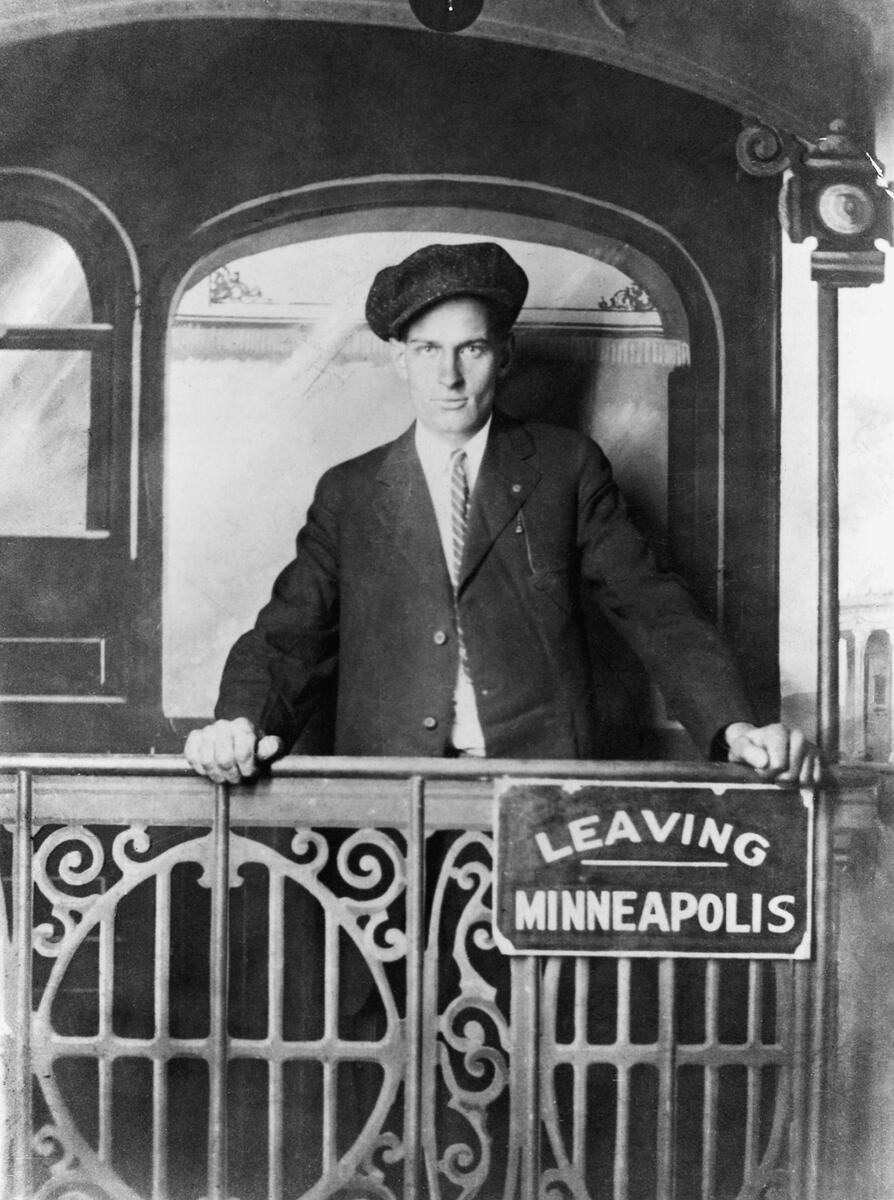
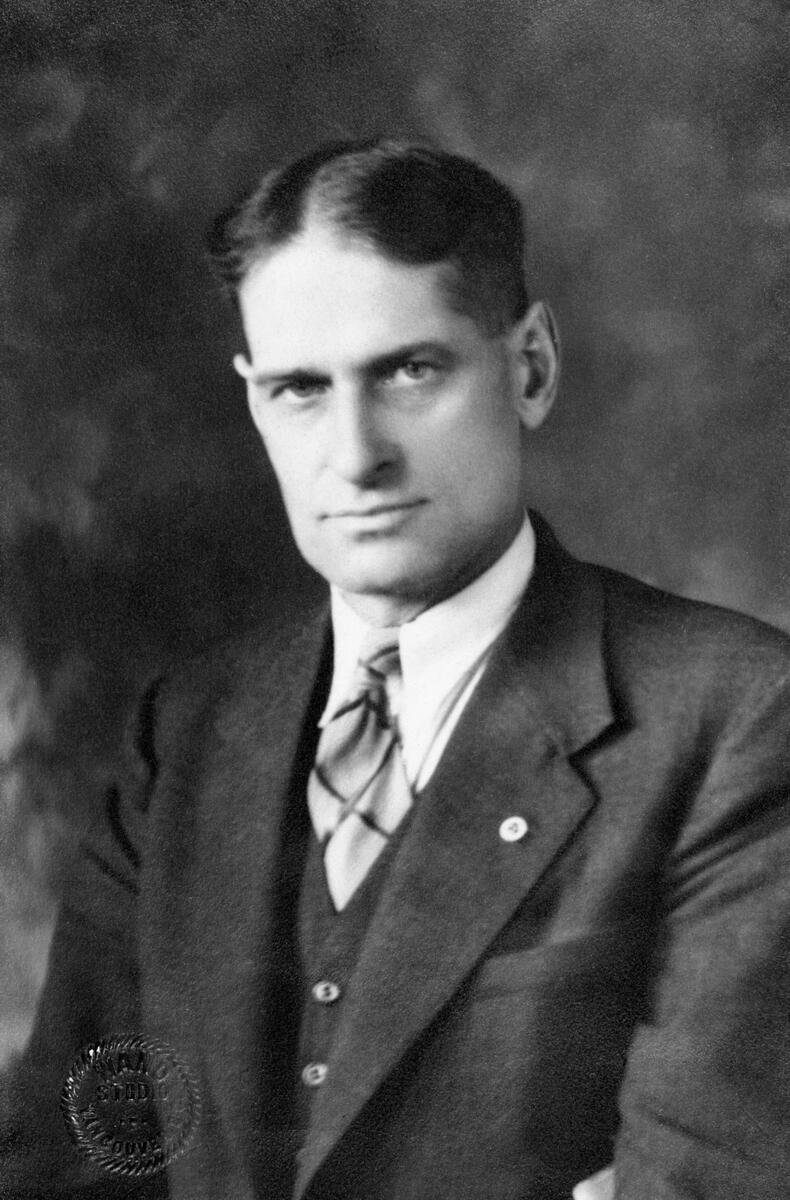
Arthur Herbert “Slim” Evans, labour activist, trade union organizer and communist (born 24 April 1890 in Toronto, ON; died 13 February 1944 in Vancouver, BC). Arthur Evans was a champion for workers’ rights and played a leading role in the industrial labour movement. He was influential in several industrial unions (Industrial Workers of the World, the One Big Union and the communist Workers Unity League) and was imprisoned several times for his activism. Evans is best known for leading the On to Ottawa Trek in 1935.
Early Life
Arthur Evans was born in Toronto to English immigrant Samuel Evans and his wife Mary Ann Evans, née Bryan, an Irish immigrant. He was the third of seven children, three of whom died in infancy. As both his parents were of poor health, he left school at the age of 13 and worked odd jobs to support the family. He sold newspapers, drove a team of horses and eventually apprenticed as a carpenter.
Activism in the US
In 1911, Evans left Toronto and traveled west as a journeyman carpenter. He worked on farms in Saskatchewan before moving on to the United States, where he found his calling with the labour rights movement. In Minneapolis, he became involved with the Industrial Workers of the World (IWW, also known as “Wobblies”), a radical anticapitalist union. At the time, unions in the western U.S. and Canada were organizing “free-speech fights” to resist municipal authorities’ attempts to use public-order laws against them. When giving a speech at such an event in Kansas, Evans was arrested and imprisoned, even though, according to his own account, he merely read the Declaration of Independence. The sentence was three years, but he was released after several months after leading a jail strike.
In 1913, Evans traveled to Ludlow, Colorado, to participate in a coalminers’ strike. While there, he met famous IWW leaders such as Joe Hill, “Big Bill” Haywood and Frank Little. In April 1914, the mining corporation’s militant attempts to suppress the strike escalated into what became known as the Ludlow massacre in which militia attacked a strikers’ camp and killed many miners and their families. Evans was struck by bullets and was hospitalized with leg wounds. He had a limp for the rest of his life.
Labour Leader in Canada
Arthur Evans remained in the northwestern U.S. after his recovery, traveling, working and continuing his engagement with labour rights groups. He returned to Canada in 1916 and worked as a carpenter and miner in Alberta and British Columbia. In 1919, he became an organizer for the newly founded One Big Union (OBU), one of the first Canadian cross-industrial labour organizations, in Drumheller, Alberta. There he met Ethel Jane Hawkins, a miner’s daughter, whom he married in 1920.
The OBU immediately found itself in opposition with the existing trade-based unions and under pressure from the federal government’s antilabour legislation. (Section 98, a 1919 addition to the Criminal Code, essentially outlawed labour groups and enabled draconian legal action against their leaders.) When Evans led the Drumheller miners in a strike in solidarity with the Winnipeg General Strike of 1919, the strikers were fought by the mine owners, the Alberta government and the parent union, United Mine Workers of America (UMWA). Evans was charged with embezzling UMWA funds for a wildcat strike and sentenced to three years in prison. In reality, he had used the funds to help the Drumheller strikers. He fled bail but was apprehended and sent to Prince Albert Penitentiary in 1924. After 14 months, he received an early release following a successful petition from the miners he had supported.
Evans and his wife moved to Vancouver, where he worked as a carpenter and was involved in the Carpenters’ Union. In 1926, he became a member of the Communist Party of Canada (CPC). Referring to his many prior years of labour activism, he later said, “I have been a Communist much longer than I have been in the Communist Party.” He also joined the Workers Unity League (WUL), a CPC-controlled, revolutionary umbrella union formed in 1930, which included unemployed workers.
Strike Leader in British Columbia
In the fall of 1932, the WUL office in Vancouver sent Arthur Evans to Princeton, British Columbia, at the request of local coal miners. They needed support in fighting drastic wage cuts and unsafe working conditions. Evans’ activities — mass rallies and the forming of a union — did not go unnoticed by the authorities, and police and RCMP were dispatched to the town. In December 1932, during the strike he had helped to plan, Evans was arrested and charged under Section 98.
After his release on bail in early 1933 (with the trial scheduled for June), police and local adversaries colluded with members of the Ku Klux Klan to stage a vigilante kidnapping. They captured Evans at gunpoint in the house of a Princeton resident and put him on a train to Vancouver. He returned right away, only to be abducted again a few weeks later with the same result. It was not until the summer of 1933 that his trial and subsequent 18-month prison sentence removed him from the scene. Since he was now unable to earn an income and make mortgage payments on his Vancouver home, authorities evicted his wife and seven-year-old daughter in April 1934.
Relief Camp Workers’ Strike
By the time Arthur Evans was released in December 1934, the focus of labour organization in British Columbia had shifted toward the prison-like conditions in the Unemployment Relief Camps established by the Bennett administration. The Relief Camp Workers’ Union (RCWU), which was closely affiliated with the WUL, elected Evans as organizer for a large strike in Vancouver in April 1935.
Under Evans’ leadership, more than 1,000 camp workers all over British Columbia walked out and traveled to Vancouver. Starting on 9 April, approximately 1,500 strikers participated in rallies, protests and parades that continued through April and May. They were supported by sympathetic locals and organized by a tight structure of committees designed and headed by Evans. The strikers’ demands included reform of the camp system, a work and wages program with a minimum wage, unemployment insurance and the repeal of Section 98 and related legislation. Neither the city nor the provincial or federal government were willing to negotiate, however, and the strike began to disperse at the end of May.
On to Ottawa Trek
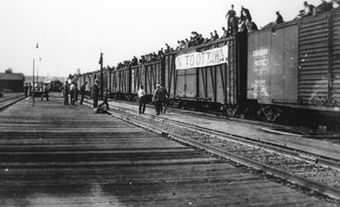
On 30 May 1935, Arthur Evans and the other strikers decided to take their concerns to the prime minister. On 3 and 4 June, over 1,000 men boarded eastbound freight trains — despite explicit opposition from the Communist party leadership. They met no resistance from police or Canadian Pacific, since it was in the authorities’ interest to move the strikers out of the city; most thought that the trek would quickly lose momentum and dissolve.(See On to Ottawa Trek)
Evans himself was kept in Vancouver by his WUL superiors, but they allowed him to meet the trek in Kamloops and Golden, British Columbia. He arrived ahead of the trains to organize funds and supplies. In Golden, he procured ample food for the trekkers and boosted morale. He also organized the rest of the trek before returning to Vancouver. Upon request of the other strike leaders, however, the WUL let him rejoin the trek in Medicine Hat, Alberta.
On 14 June, the trek (which had grown to about 2,000 men) reached Regina, Saskatchewan. Here the railway companies refused them further transportation, as ordered by the prime minister. Not willing to give up, Evans accepted the federal government’s proposal to travel to Ottawa with seven other delegates to negotiate with Bennett directly.
The talks took place on 22 June. Evans acted as the spokesperson for the trekkers’ delegation. The discussion turned heated as Evans questioned Bennett’s politics. Bennett retorted by alluding to Evans’ embezzlement charges, and Evans shouted, “You’re a liar!” Bennett then dismissed all demands.
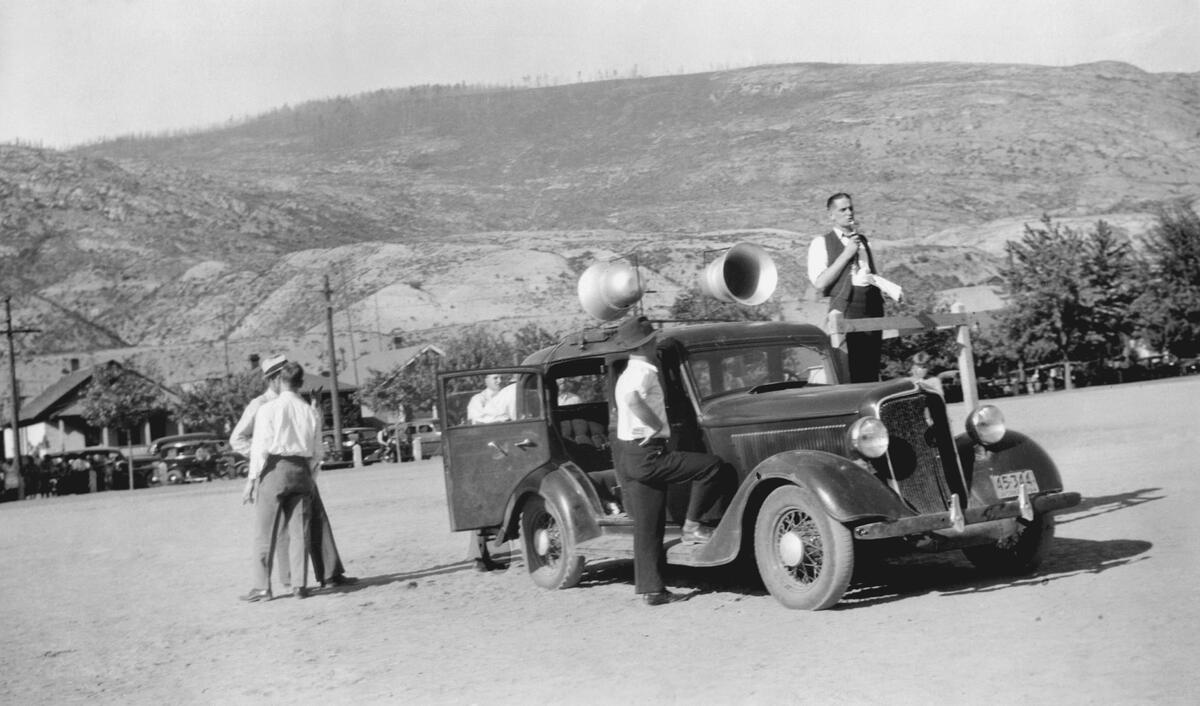
Upon the delegation’s return to Regina on 26 June, Evans tried to organize the continuation of the trek by different means of transport. But funds were running out and the plans fell through. On 1 July, Evans made arrangements to disband the trek. That evening, at a rally in Regina’s Market Square, RCMP and police were present to arrest the trek leaders. They entered the crowd of about 1,500, the majority of whom were local residents, including children, in a show of force with combat gear and batons. This provoked the trekkers in attendance to throw rocks and escalated into what became known as the Regina Riot. Evans was quickly arrested, but the riots raged on for several hours, leaving two dead and hundreds of people injured.
Evans was charged under Section 98, but the charges were later withdrawn. The government of Saskatchewan supported the trekkers’ return to their homes or camps.
Later Life and Death
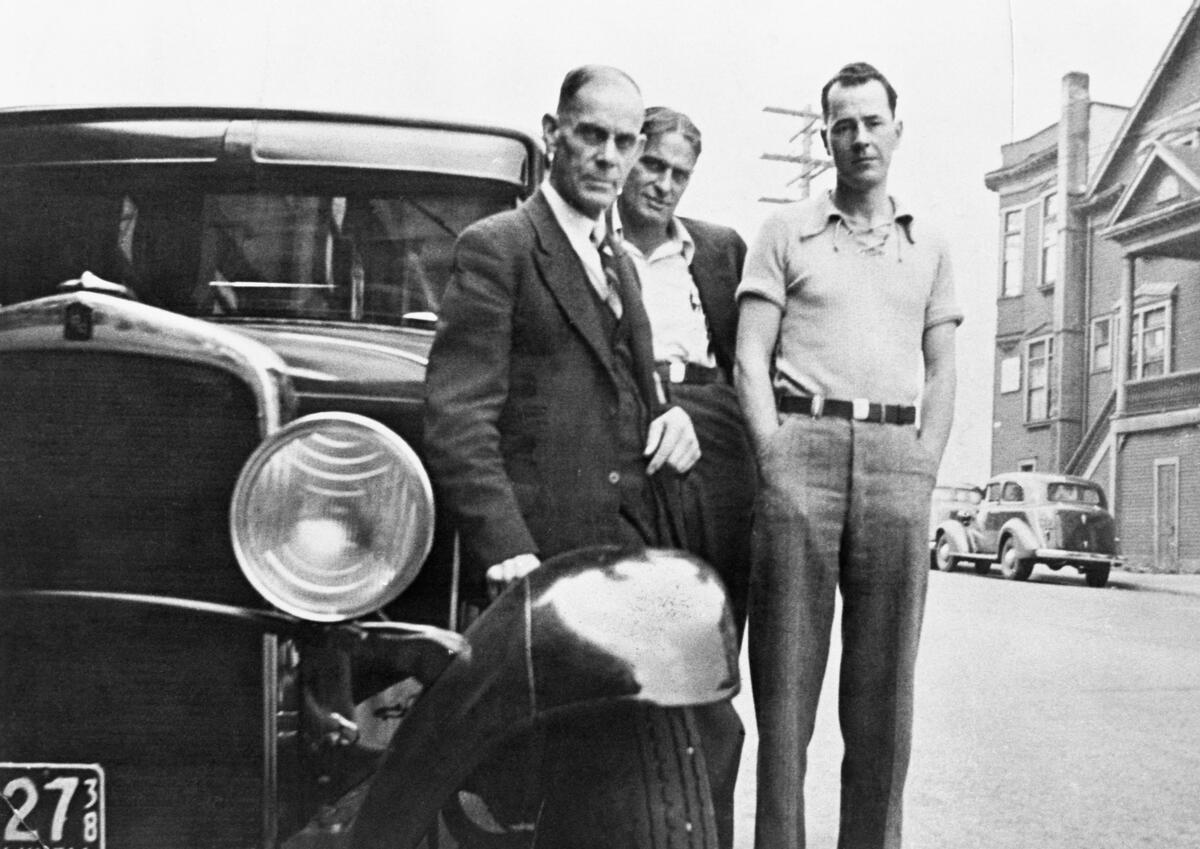
After the Regina trials, Arthur Evans returned to British Columbia to work various jobs and continue his labour activism. He unionized mine workers in Trail, British Columbia and in 1937–38 led a fundraising campaign for medical support of the Mackenzie-Papineau Battalion. In his last years, during the Second World War, he was employed at the Vancouver shipyards.
In January 1944, after a union meeting, Evans was hit by a car on a Vancouver street. He died of his injuries three weeks later.
Legacy
Arthur Evans is widely considered a labour hero. He was a charismatic leader, instilling loyalty and discipline even in large crowds. By organizing the relief camp strike in Vancouver and the On to Ottawa Trek, he brought wide attention to the dire circumstances of unemployed workers during the Great Depression. Even though these actions were not immediately successful, they contributed to R.B. Bennett’s political decline and the end of the relief camp system.
Evans’ life is narrated in a book coauthored by his daughter, Jean Evans Sheils, ‘Work and Wages!’ A Semi-Documentary Account of the Life and Times of Arthur H. (Slim) Evans, 1890–1944. He is also commemorated in a song by Edmonton singer-songwriter Maria Dunn.