Share on Facebook
 Share on X
 Share by Email
 Share on Google Classroom
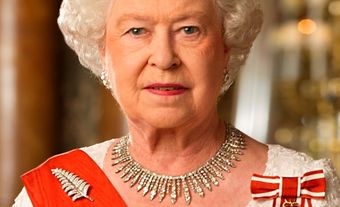
The 1951 Royal Tour of Canada, from 8 October to 12 November, was the first visit to Canada by the future Queen Elizabeth II. Accompanied by her husband, Prince Philip, Duke of Edinburgh, she spent 33 days travelling across Canada, visiting all 10 provinces. The couple also visited Washington, D.C., during the tour.
Preparations
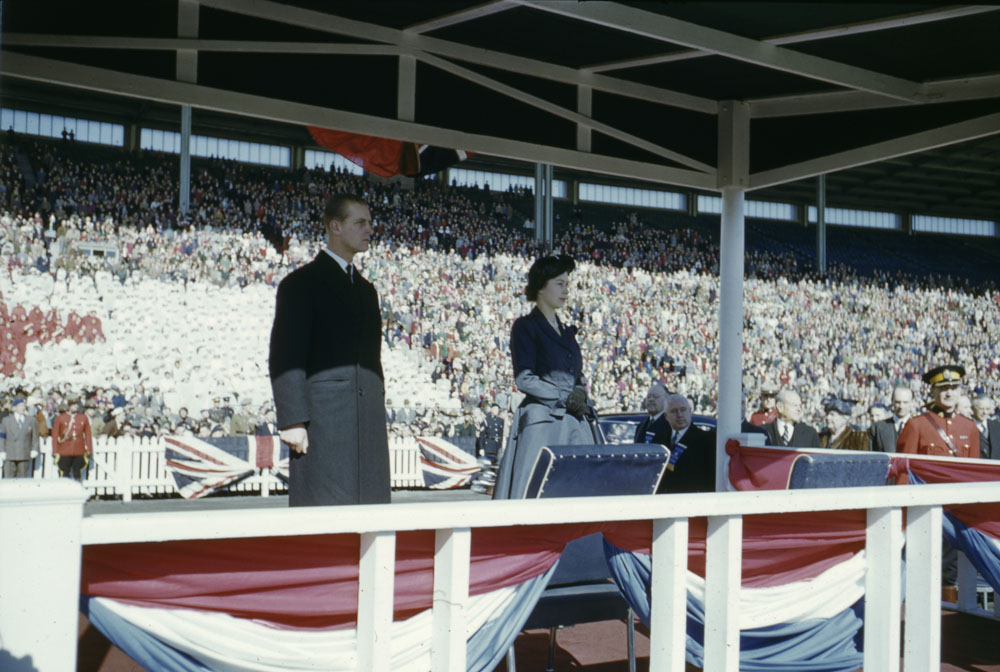
In 1947, King George VI, Queen Elizabeth (later the Queen Mother) and their daughters, Princess Elizabeth and Princess Margaret, toured South Africa. This was intended to be the first of a series of overseas tours to acknowledge the contributions of Commonwealth nations to the Second World War. George VI couldn’t undertake further tours because of his declining health and was instead represented by his daughter Princess Elizabeth and her husband, Prince Philip.
Their trip to Canada was planned for October 1951 but nearly cancelled because of the King’s lung surgery on 23 September. Elizabeth and Philip flew to Montreal by BOAC Stratocruiser, arriving at Montréal-Dorval International Airport (now known as Montréal-Trudeau International Airport) on 8 October 1951. It was the first royal tour of Canada to begin with a transatlantic flight. They were greeted by Governor General Viscount Alexander and Prime Minister Louis St-Laurent.
Itinerary
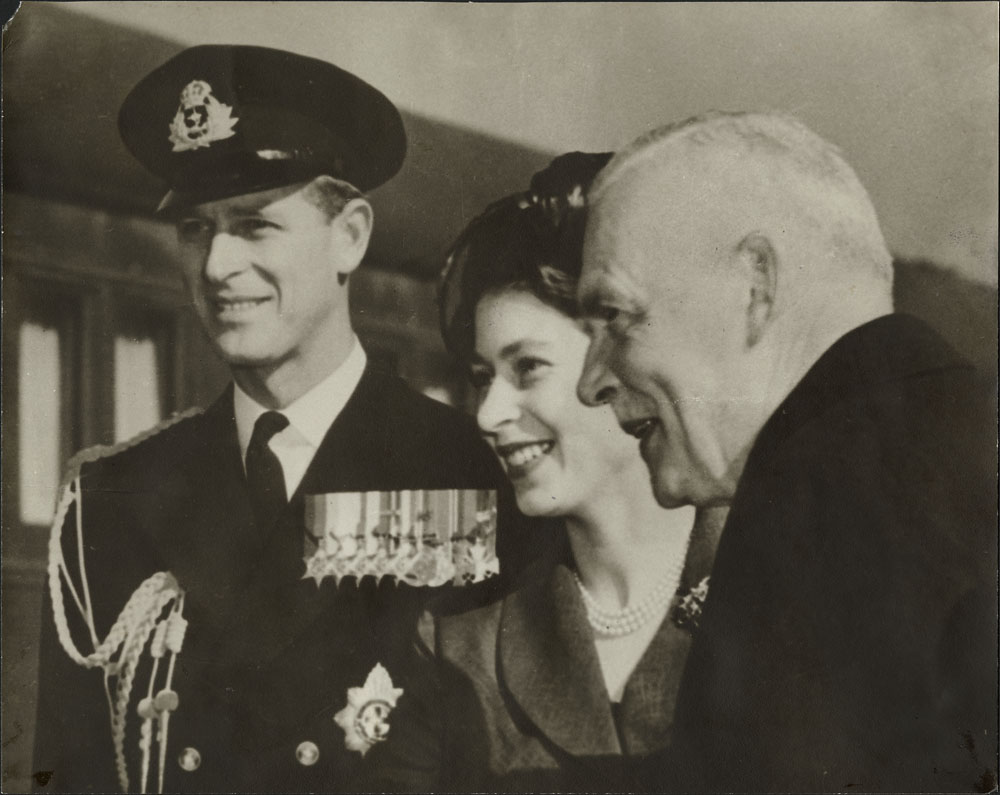
On 9 October, Princess Elizabeth (wearing the Diamond Maple Leaf Brooch) and Prince Philip attended an official dinner at the Château Frontenac in Quebec City. The dinner was hosted by Quebec premier Maurice Duplessis, who stated that francophone Canadians in Quebec “have for centuries been faithful to the Crown, recognizing it as a symbol of authority and freedom.”
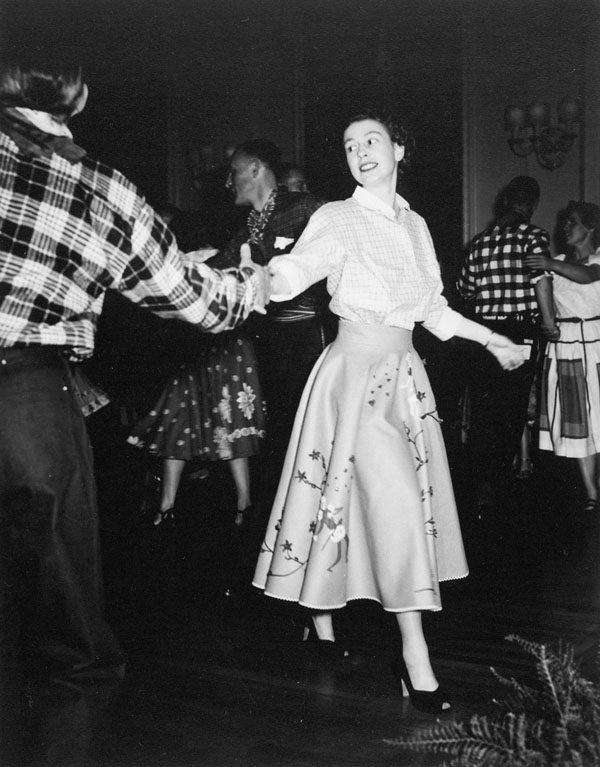
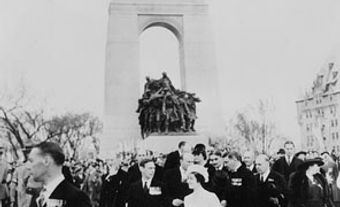
On 13 October, Elizabeth and Philip arrived in Ottawa. They visited Parliament Hill, the National War Memorial and the National Gallery of Canada, where Elizabeth presented a carpet embroidered by her grandmother Queen Mary, who had toured Canada in 1901 (see 1901 Royal Tour). They also greeted 14,000 schoolchildren at Lansdowne Park, attended luncheons hosted by Prime Minister St-Laurent and Ottawa mayor Charlotte Whitton (the only female mayor of a major Canadian city at the time) and attended an official dinner and square dance at Rideau Hall.
Elizabeth and Philip met with Indigenous leaders in Belleville and visited Kingston and Trenton. On 12 October, they arrived in Toronto, where 300,000 people lined the route between Malton Airport (now Toronto Pearson Airport) and City Hall (now Old City Hall). The royal couple attended a hockey season opener at Maple Leaf Gardens and a civic reception at City Hall and inspected the 48th Highlanders of Canada.
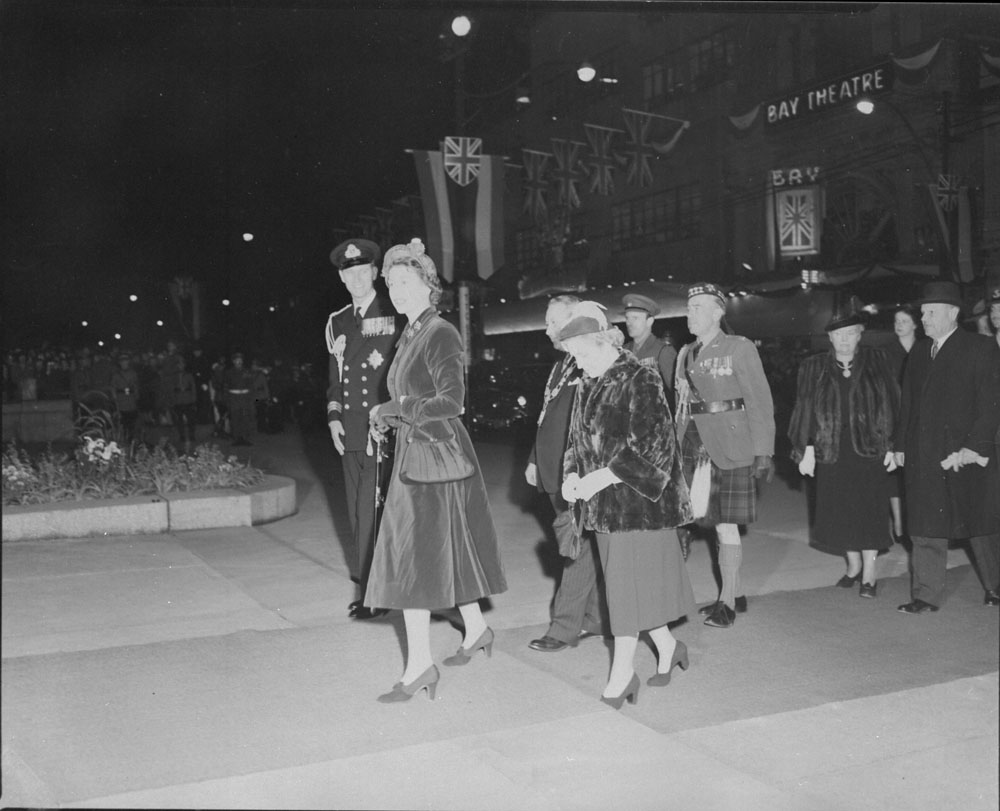
The royal couple also visited Hamilton, Niagara Falls and Windsor, where they received a miniature battery-operated car from the Ford Motor Company for their then-two-year-old son, the future King Charles III. They then travelled to Winnipeg, where they attended a performance of the Winnipeg Ballet (now Royal Winnipeg Ballet). The royal tour continued westbound to Regina, Moose Jaw, Calgary, Banff, Kamloops, Vancouver and Victoria. The royal couple then travelled east across the Rockies through Yellowhead Pass to Edmonton, Saskatoon, North Bay and Montreal, where 70,000 people gathered in Dominion Square to see them.
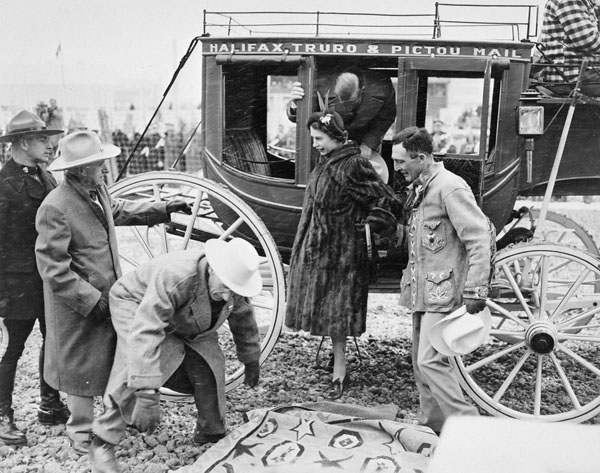
On 31 October, Elizabeth and Philip flew to Washington, D.C., for a three-day visit to the United States. In Washington, Elizabeth hosted a reception for Commonwealth ambassadors to the United States and a gala dinner for U.S. president Harry S. Truman and the First Lady at the Canadian embassy. Elizabeth stated, “During our trip through Canada, I heard much of the warm goodwill felt by the people of the United States toward the people of Canada.”
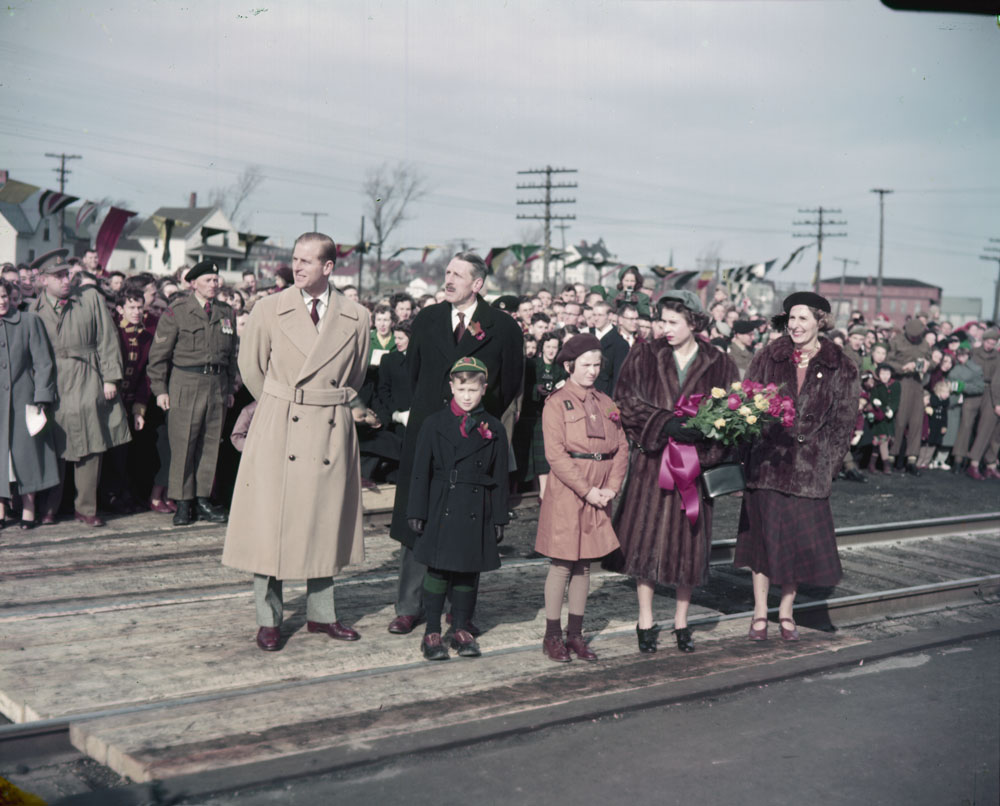
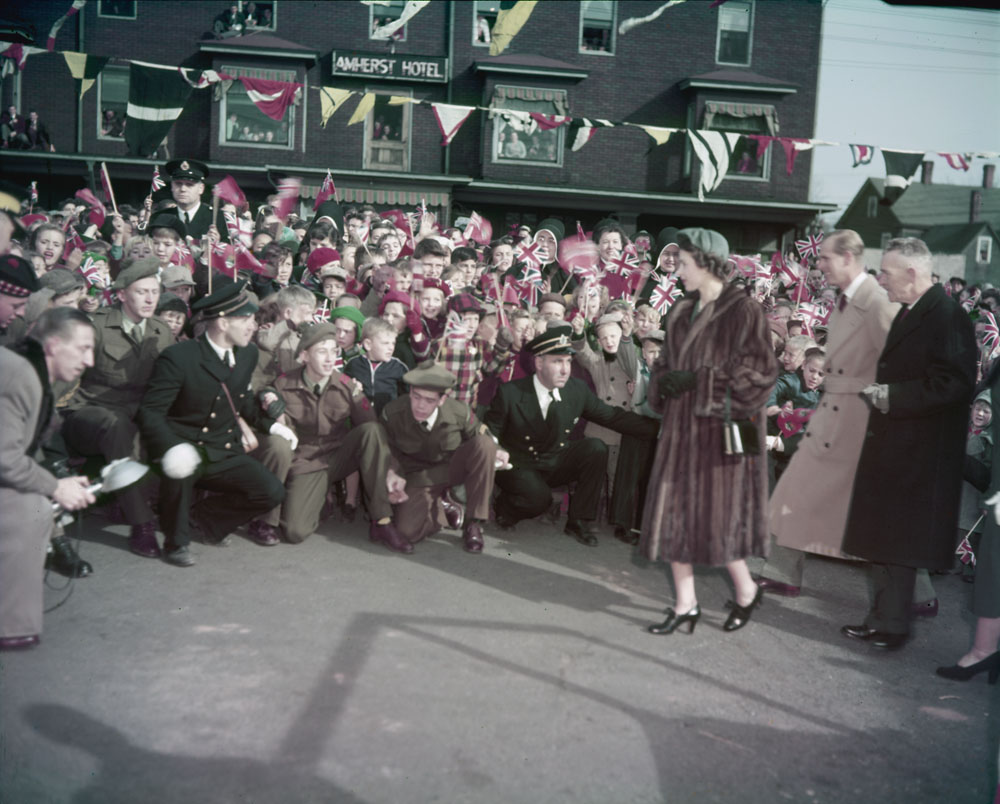
Upon their return to Canada, Elizabeth and Philip travelled through Quebec and the Maritime provinces. In Halifax, they were greeted by 50,000 people amid heavy rains and high winds. In her closing radio broadcast from Government House in St John’s, Elizabeth stated, “We have been welcomed with a warmth of heart that has made us feel how truly we belong to Canada.” The royal couple departed from Portugal Cove-St. Philip’s in Newfoundland and Labrador on 12 November aboard the RMS Empress of Scotland.
According to historian Pierre Berton, Elizabeth shook hands at a rate of 30,000 times a week, heard the national anthem played 150 times and met 53 mayors during the 1951 Royal Tour.
Did you know?
While most Canadian royal tours take place in spring and summer, Princess Elizabeth and Prince Philip encountered wintry weather in 1951. In Winnipeg, a transparent plastic bubble was installed over the open-topped car to protect the royal couple from the cold while allowing the public to still see them. In Quebec, they enjoyed a brief November holiday in Sainte-Agathe-des-Monts in the Laurentian Mountains, sleighing in the snow and building a snowman nicknamed “Mr. Churchill” after the British prime minister.
Public Response
Approximately 4,500 accredited journalists reported on the tour, considered to be the “most-covered” news event in Canadian history at the time. Canadian media coverage of the tour was overwhelmingly positive but noted Princess Elizabeth’s reserve compared to Prince Philip’s gregarious charm and humour. On 11 October 1951, the Canadian Press reported, “Elizabeth conducts herself with a regal bearing, with dignity and a pleasant, unassuming charm. When she smiles, she has a beautiful smile, but some people think she doesn’t smile enough at the crowds.” Elizabeth followed the press coverage and remarked to her private secretary Martin Charteris, “My face is aching with smiling.”
International media coverage emphasized the immense crowds of Canadians who greeted the royal couple. British news photographer Stanley Devon reported, “I can claim to have seen every big royal occasion in Britain since 1930. I have seen…the wedding of Princess Juliana at The Hague. None of these had anything on the entry of Princess Elizabeth and the Duke into Toronto…the crowds were denser than London on V-E Day.”
Cultural Impact
The National Film Board of Canada documentary Royal Journey — the first feature film ever shot in Eastmancolor photography — won Theatrical Feature Length (Documentary) at the 1952 Canadian Film Awards and Best Documentary Film from the British Academy of Film and Television Arts) in 1953.
A painting of Princess Elizabeth and Prince Philip square dancing at Rideau Hall by artist Hilton Hassell became a popular Canadian Christmas-card design in 1958 and the most famous image of the tour.