
Browse "Things"
-
Article
Indigenous Peoples and Government Policy in Canada
For most of the history of political interaction between Indigenous people and the Canadian government (and its colonial predecessors) government policy has focused on First Nations. The Inuit were barely acknowledged until the 1940s, while special responsibility for Métis and Non-Status Indians was largely denied until 2016. The early history of Indigenous policy in Canada is characterized by the presence of both France and Britain as colonizing powers. British colonial policy acknowledged Indigenous peoples as sovereign nations. Post-Confederation Canadian Indigenous policy initially was based on a model of assimilation, with one of its main instruments being the Indian Act. Since the late 1960s, government policy has gradually shifted to a goal of self-determination for Indigenous peoples, to be achieved through modern-day treaties and self-government agreements.
"https://d3d0lqu00lnqvz.cloudfront.net/media/media/4bdede30-06f1-4f71-9047-c7db15051829.jpg" // resources/views/front/categories/view.blade.php
https://d3d0lqu00lnqvz.cloudfront.net/media/media/4bdede30-06f1-4f71-9047-c7db15051829.jpg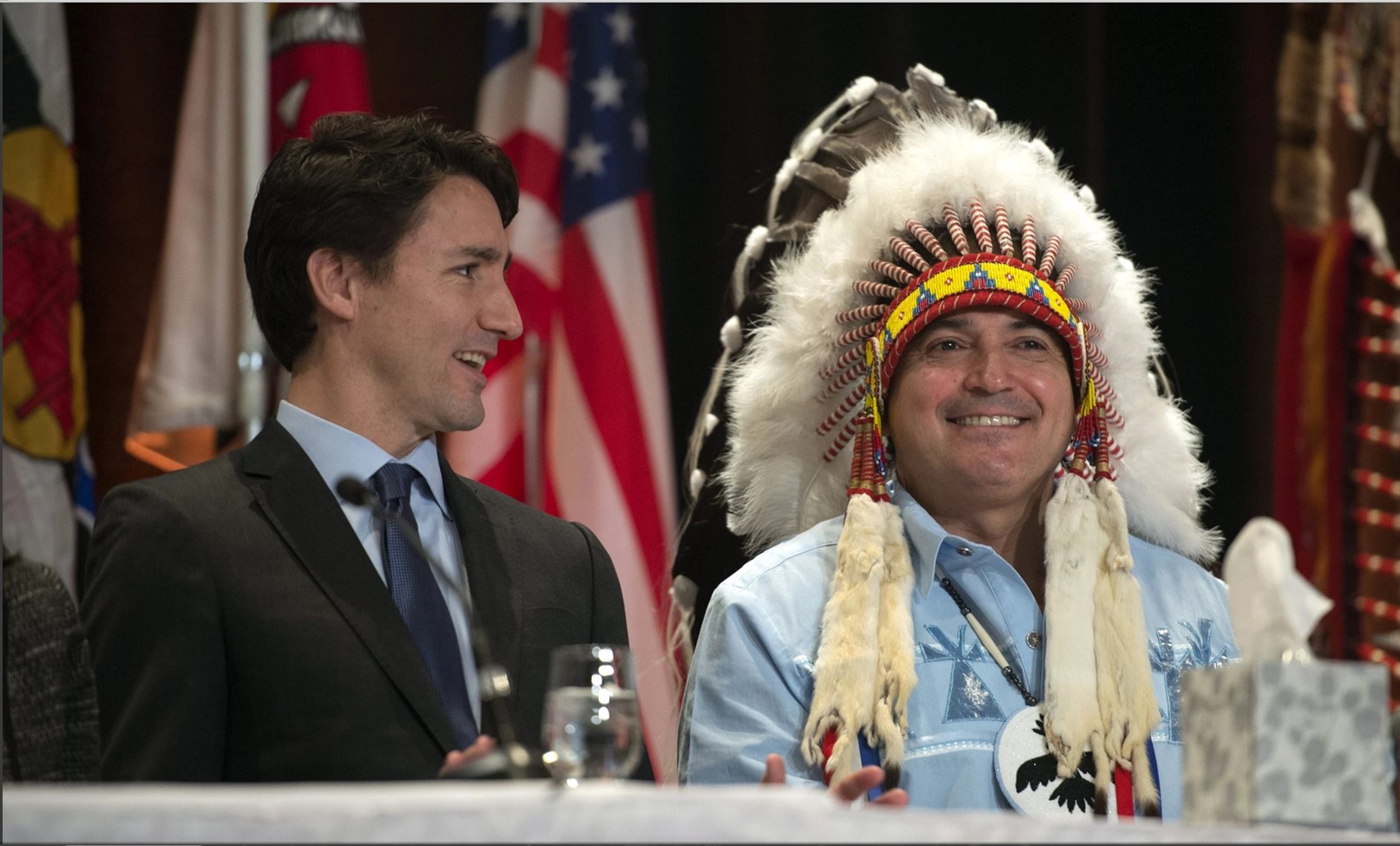
-
Article
Health of Indigenous Peoples in Canada
Prior to colonization, Indigenous Peoples possessed rich and diverse healing systems. Settlers’ introduction of new and contagious diseases placed these healing systems under considerable strain. Europeans also brought profound social, economic and political changes to the well-being of Indigenous communities. These changes continue to affect the health of Indigenous Peoples in Canada today. ( See also Social Conditions of Indigenous Peoples in Canada and Economic Conditions of Indigenous Peoples in Canada.)
"https://d3d0lqu00lnqvz.cloudfront.net/0b79190e-b969-4e93-a6c2-d2aec320ed1c.jpg" // resources/views/front/categories/view.blade.php
https://d3d0lqu00lnqvz.cloudfront.net/0b79190e-b969-4e93-a6c2-d2aec320ed1c.jpg
-
Article
Indigenous Languages in Canada
There are around 70 distinct Indigenous languages in Canada, falling into 12 separate language families. While in many places there has been decreased transmission of languages from one generation to the next, recognition of this has led to efforts by Indigenous peoples to revitalize and sustain their languages. (See also Indigenous Language Revitalization in Canada.) Canada, and North America more generally, represent a highly complex linguistic region, with numerous languages and great linguistic diversity. Indigenous languages are spoken widely and are official languages in Nunavut and the Northwest Territories, while the Yukon recognizes the significance of the Indigenous languages of the territory. On 5 February 2019, the Canadian government tabled the Indigenous Languages Act, which seeks to protect and revitalize Indigenous languages in Canada.
"https://d3d0lqu00lnqvz.cloudfront.net/media/media/b6607b22-8c55-4f10-86dd-a72dfcb1b740.jpg" // resources/views/front/categories/view.blade.php
https://d3d0lqu00lnqvz.cloudfront.net/media/media/b6607b22-8c55-4f10-86dd-a72dfcb1b740.jpg
-
Article
Indigenous Political Organization and Activism in Canada
Political activism among Indigenous people in Canada since the late 19th century has largely reflected attempts to organize political associations beyond the band level to pursue common interests. In the wake of persistent criticism of the federal government’s proposed “White Paper” policy (1969), major Indigenous organizations, most notably the Assembly of First Nations, gained political recognition and became established players on the national scene. These organizations were joined in 2012 by the national movement Idle No More. This article describes Indigenous political organization as it relates to Canadian federal, provincial or territorial political bodies, not the political structures of specific Indigenous communities, which often predate interaction with Europeans and subsequent colonial infrastructure.
"https://d3d0lqu00lnqvz.cloudfront.net/media/media/73c1f655-bfcc-4aa6-9251-c0d5c550fde4.jpg" // resources/views/front/categories/view.blade.php
https://d3d0lqu00lnqvz.cloudfront.net/media/media/73c1f655-bfcc-4aa6-9251-c0d5c550fde4.jpg
-
Article
Subarctic Indigenous Peoples in Canada
The term “Subarctic Indigenous peoples” describes a number of different ethnic and linguistic groups, including the Dene, Cree, Ojibwe, Atikamekw, Innu and Beothuk. The Subarctic region consists largely of a five million square kilometre zone of boreal forest extending from the arctic tundra south to the mountains, plains and deciduous forest in the mid-section of the country. West to east, it extends from the Bering Sea to Labrador. The Subarctic is one of six cultural areas contained in what is now Canada. Unlike provinces and countries, these cultural areas do not have strict boundaries, and instead refer to areas in more general terms.
"https://d3d0lqu00lnqvz.cloudfront.net/media/media/aaade293-e5e4-4d2c-a714-b1bc09661bb1.jpg" // resources/views/front/categories/view.blade.php
https://d3d0lqu00lnqvz.cloudfront.net/media/media/aaade293-e5e4-4d2c-a714-b1bc09661bb1.jpg
-
Article
Urban Migration of Indigenous Peoples in Canada
The Indigenous population is the most rural in Canada. According to the 2021 census, 1.8 million people claimed to be of Indigenous ancestry, and 801,045 Indigenous people lived in urban centres in Canada.
"https://d3d0lqu00lnqvz.cloudfront.net/media/media/66fc9616-fe99-4ef4-a49a-d7528ad2566e.jpg" // resources/views/front/categories/view.blade.php
https://d3d0lqu00lnqvz.cloudfront.net/media/media/66fc9616-fe99-4ef4-a49a-d7528ad2566e.jpg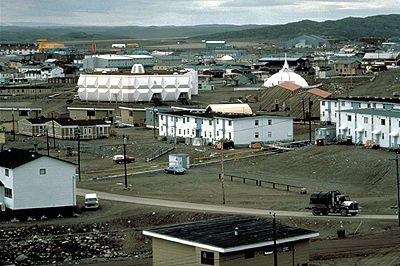
-
Article
Aboriginal Peoples Television Network (APTN)
Aboriginal Peoples Television Network (APTN) is the world’s first Indigenous national broadcaster dedicated to Indigenous programming. First broadcast on 1 September 1999 in Winnipeg, Manitoba, APTN provides various content, including news, dramas and documentaries. Aimed at diverse audiences, APTN offers programming in Indigenous languages, English and French. It broadcasts into more than 11 million Canadian households and businesses, a significant portion of which are located in remote areas. APTN mainly generates revenue for operations through subscriber fees, advertising sales and partnerships.
"https://d3d0lqu00lnqvz.cloudfront.net/media/media/1498d362-9fd2-4468-b357-106d5c0fc9d3.jpg" // resources/views/front/categories/view.blade.php
https://d3d0lqu00lnqvz.cloudfront.net/media/media/1498d362-9fd2-4468-b357-106d5c0fc9d3.jpg
-
Article
Rights of Indigenous Peoples in Canada
It is difficult to generalize about definitions of Indigenous rights because of the diversity among First Nations, Métis and Inuit peoples in Canada. Broadly speaking, however, Indigenous rights are inherent, collective rights that flow from the original occupation of the land that is now Canada, and from social orders created before the arrival of Europeans to North America. For many, the concept of Indigenous rights can be summed up as the right to independence through self-determination regarding governance, land, resources and culture.
"https://d3d0lqu00lnqvz.cloudfront.net/media/media/174cee51-4aca-4a67-ac60-f72697d35862.jpg" // resources/views/front/categories/view.blade.php
https://d3d0lqu00lnqvz.cloudfront.net/media/media/174cee51-4aca-4a67-ac60-f72697d35862.jpg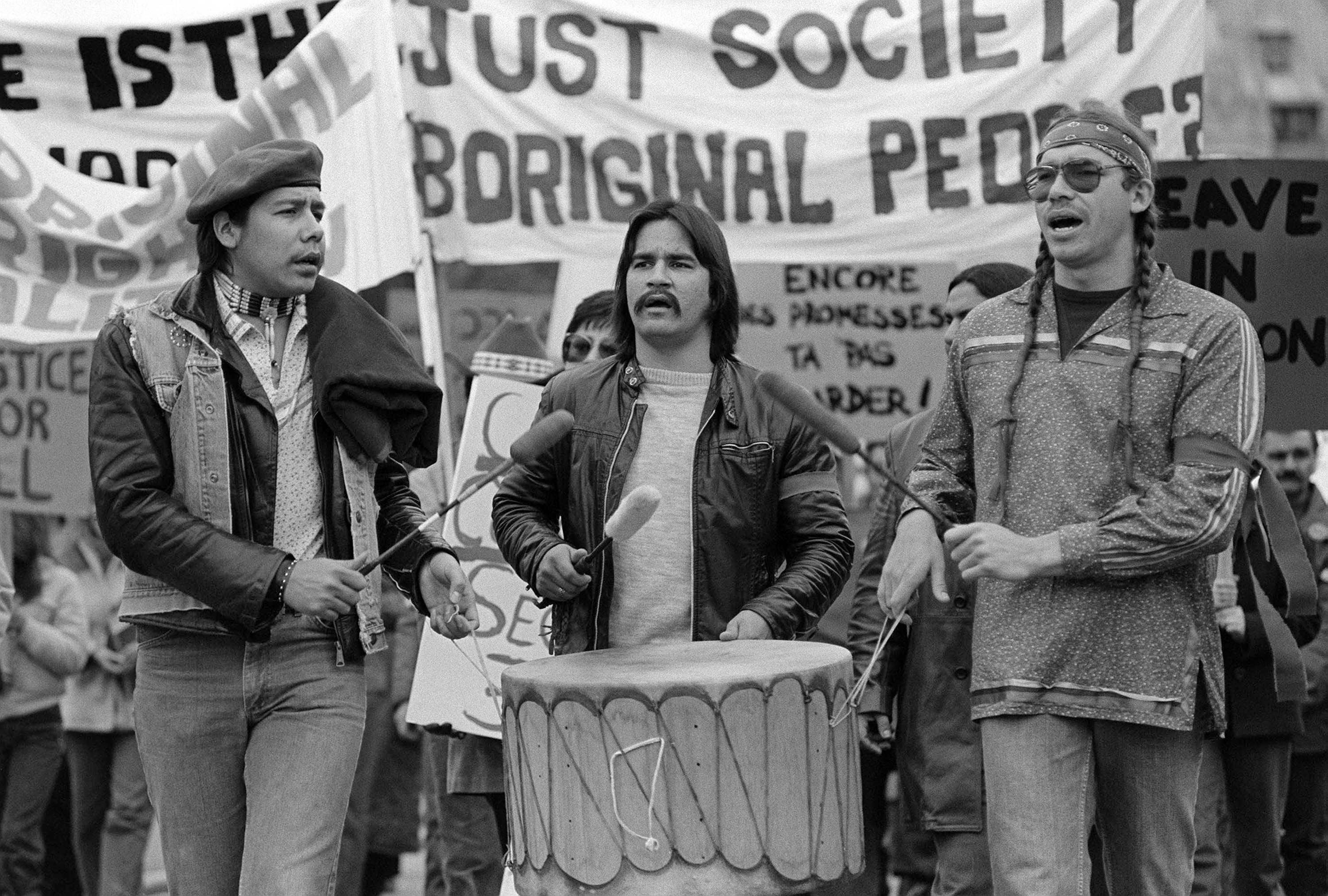
-
Article
Indigenous Self-Government in Canada
Indigenous self-government is the formal structure through which Indigenous communities may control the administration of their people, land, resources and related programs and policies. These structures form through agreements with federal and provincial governments. The forms of self-government are diverse. Self-government remains an evolving and contentious issue in Canadian law, policy and public life.
"https://d3d0lqu00lnqvz.cloudfront.net/media/media/1eef3d08-4031-40d3-bbd4-6443822cd128.jpg" // resources/views/front/categories/view.blade.php
https://d3d0lqu00lnqvz.cloudfront.net/media/media/1eef3d08-4031-40d3-bbd4-6443822cd128.jpg
-
Article
Indigenous Title and the War of 1812
In the first decade of the 19th century, relations between Great Britain and the United States deteriorated, primarily due to the widening influence of the Napoleonic Wars. At the centre of this movement, two Shawnee brothers implored Indigenous peoples to unite in order to defend their dwindling lands against the growing incursions of Anglo-American settlers and the United States government. The promise of an Indigenous state never came to fruition. After the War of 1812, the United States and Britain found it more advantageous to ignore Aboriginal title.
"https://d3d0lqu00lnqvz.cloudfront.net/media/media/643cf6b2-b555-4624-bac0-8717cf614cf6.jpg" // resources/views/front/categories/view.blade.php
https://d3d0lqu00lnqvz.cloudfront.net/media/media/643cf6b2-b555-4624-bac0-8717cf614cf6.jpg
-
Macleans
Aboriginal TV Launched
Long before the arrival of European visitors, the Cree of northern Saskatchewan used the area's rivers for communication. Travellers carried information by canoe from community to community.This article was originally published in Maclean's Magazine on September 6, 1999
"https://thecanadianencyclopedia.ca/images/tce_placeholder.jpg?v=e9dca980c9bdb3aa11e832e7ea94f5d9" // resources/views/front/categories/view.blade.php
https://thecanadianencyclopedia.ca/images/tce_placeholder.jpg?v=e9dca980c9bdb3aa11e832e7ea94f5d9
-
Article
Abortion in Canada
Abortion is the premature ending of a pregnancy. Inducing an abortion was a crime in Canada until 1988, when the Supreme Court of Canada struck down the law as unconstitutional. Since then, abortion has been legal at any stage in a woman’s pregnancy. Abortion is publicly funded as a medical procedure under the Canada Health Act. (See Health Policy.) However, access to abortion services differs across the country. Despite its legalization, abortion remains one of the most divisive political issues of our time.
"https://d3d0lqu00lnqvz.cloudfront.net/media/media/ffed93ed-6e85-442c-8316-619f423fa8cd.jpg" // resources/views/front/categories/view.blade.php
https://d3d0lqu00lnqvz.cloudfront.net/media/media/ffed93ed-6e85-442c-8316-619f423fa8cd.jpg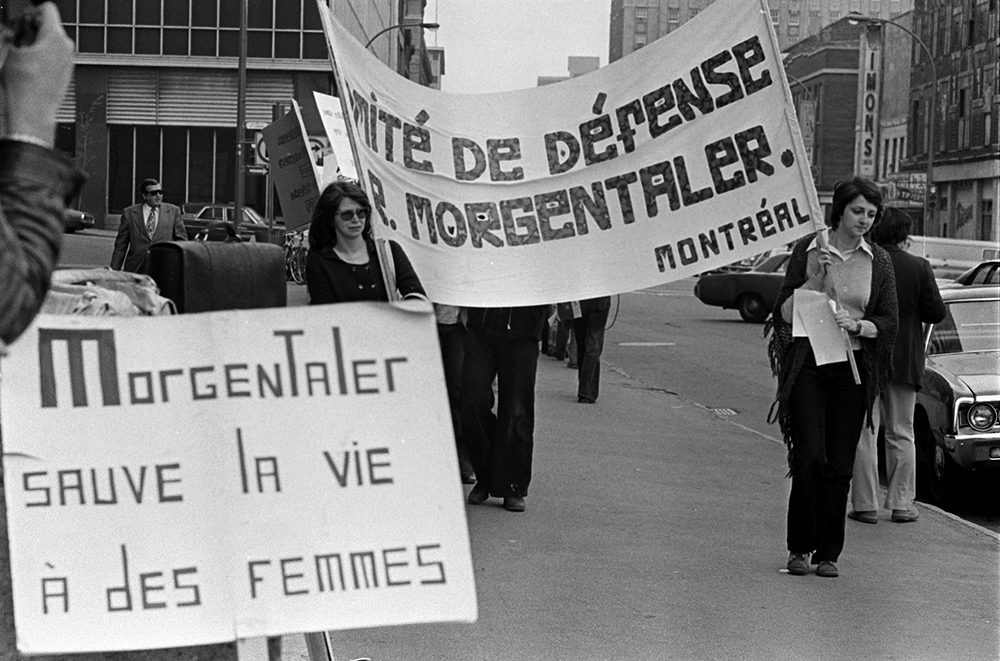
-
Article
Abortion in Canada (Plain-Language Summary)
Abortion is when a pregnancy is ended before birth. Abortion was a crime in Canada until 1988. The Supreme Court of Canada struck down the law. Since then, abortion has been legal at any stage of a woman’s pregnancy. It is a publicly funded medical service under the Canada Health Act. (See Health Policy.) But access to abortion services differs across the country. Despite being legal, abortion remains one of the most divisive issues of our time. This article is a plain-language summary of Abortion in Canada. If you would like to read about this topic in more depth, please see our full-length entry: Abortion in Canada.
"https://d3d0lqu00lnqvz.cloudfront.net/media/media/d075067e-4fdb-4a4f-947c-0b9c5b472632.jpg" // resources/views/front/categories/view.blade.php
https://d3d0lqu00lnqvz.cloudfront.net/media/media/d075067e-4fdb-4a4f-947c-0b9c5b472632.jpg
-
Article
Academic Freedom
Academic freedom commonly means the freedom of professors to teach, research and publish, to criticize and help determine the policies of their institutions, and to address public issues as citizens without fear of institutional penalties.
"https://thecanadianencyclopedia.ca/images/tce_placeholder.jpg?v=e9dca980c9bdb3aa11e832e7ea94f5d9" // resources/views/front/categories/view.blade.php
https://thecanadianencyclopedia.ca/images/tce_placeholder.jpg?v=e9dca980c9bdb3aa11e832e7ea94f5d9
-
Article
Academy String Quartet
Academy String Quartet. Group associated with the Canadian Academy of Music, Toronto, and led by Luigi von Kunits. It performed at academy functions as early as 1912, and accompanied the academy's Madrigal Society in 1913.
"https://thecanadianencyclopedia.ca/images/tce_placeholder.jpg?v=e9dca980c9bdb3aa11e832e7ea94f5d9" // resources/views/front/categories/view.blade.php
https://thecanadianencyclopedia.ca/images/tce_placeholder.jpg?v=e9dca980c9bdb3aa11e832e7ea94f5d9