
Browse "Things"
-
Article
Bloc populaire canadien
The Bloc populaire canadien is an anti-conscription and nationalist political party of the 1940s. The party participated in federal elections and in Quebec provincial elections. The Bloc received some minor electoral successes, but, by 1948, its influence had drastically diminished and the party faded away.
"https://d3d0lqu00lnqvz.cloudfront.net/media/single_use_images/Jean_Drapeau_BPC.jpg" // resources/views/front/categories/view.blade.php
https://d3d0lqu00lnqvz.cloudfront.net/media/single_use_images/Jean_Drapeau_BPC.jpg
-
Article
Bloc Québécois
The Bloc Québécois is a federal political party. It was created on 15 June 1991 and was registered with Elections Canada on 11 September 1993. It was founded as a parliamentary movement composed of Quebec MPs who left the Conservative and Liberal parties after the failure of the Meech Lake Accord. The party promotes Quebec's interests and Quebec sovereignty in the House of Commons. The party only runs candidates in Quebec. Former Parti Québécois cabinet minister Yves-François Blanchet became leader of the party in January 2019. Under Blanchet, the Bloc returned to official party status, winning 32 seats in both the 2019 and 2021 federal elections. It won 23 seats in the 2025 election, good for third place in the House.
"https://d3d0lqu00lnqvz.cloudfront.net/media/media/3d3fb86b-61d3-48f1-a4cc-159ce47d256d.jpg" // resources/views/front/categories/view.blade.php
https://d3d0lqu00lnqvz.cloudfront.net/media/media/3d3fb86b-61d3-48f1-a4cc-159ce47d256d.jpg
-
Macleans
Blood Substitute Tested
According to medical lore, the ancient Incas were the first to attempt blood transfusions. And over the centuries doctors around the world have pumped everything from beer to urine into hemorrhaging patients.This article was originally published in Maclean's Magazine on August 24, 1998
"https://thecanadianencyclopedia.ca/images/tce_placeholder.jpg?v=e9dca980c9bdb3aa11e832e7ea94f5d9" // resources/views/front/categories/view.blade.php
https://thecanadianencyclopedia.ca/images/tce_placeholder.jpg?v=e9dca980c9bdb3aa11e832e7ea94f5d9
-
Article
Bloodvein River
Named, perhaps, for the red granite stripes running through the bedrock near its source, the Bloodvein River begins in the vast wilderness of the Canadian Shield, 600 km northwest of Thunder Bay, Ont, and 500 km northeast of Winnipeg.
"https://thecanadianencyclopedia.ca/images/tce_placeholder.jpg?v=e9dca980c9bdb3aa11e832e7ea94f5d9" // resources/views/front/categories/view.blade.php
https://thecanadianencyclopedia.ca/images/tce_placeholder.jpg?v=e9dca980c9bdb3aa11e832e7ea94f5d9
-
Article
Bloody Falls
Bloody Falls are rapids located about 15 km above the mouth of the Coppermine River in the central Arctic.
"https://d3d0lqu00lnqvz.cloudfront.net/media/media/ae69d3f2-aebe-4a53-b1a8-ddfebac57e3f.jpg" // resources/views/front/categories/view.blade.php
https://d3d0lqu00lnqvz.cloudfront.net/media/media/ae69d3f2-aebe-4a53-b1a8-ddfebac57e3f.jpg
-
Article
Bloody Sunday
Bloody Sunday was a violent confrontation between protesters and the Royal Canadian Mounted Police and Vancouver police in Vancouver on Sunday 19 June 1938.
"https://d3d0lqu00lnqvz.cloudfront.net/media/media/5ba00723-deb8-4e3b-b0a0-79e9b85cb189.jpg" // resources/views/front/categories/view.blade.php
https://d3d0lqu00lnqvz.cloudfront.net/media/media/5ba00723-deb8-4e3b-b0a0-79e9b85cb189.jpg
-
Article
Blue Box
The blue box is a plastic bin used in curbside recycling programs. The bins are filled with materials — including paper, glass, cans and select plastics — which are then collected by waste management professionals. Resource Integration Systems, the sister organization of a countercultural non-profit, and Superior Sanitation pioneered the blue box system in Kitchener, Ontario, in 1981. By 1986, the program began to operate province-wide. Today, blue boxes continue to be used in Ontario, home to one of the world’s most comprehensive recycling programs. Blue boxes are also used in municipal recycling programs in British Columbia, Alberta, Saskatchewan, Manitoba and Quebec.
"https://d3d0lqu00lnqvz.cloudfront.net/media/new_article_images/BlueBox/PeopleAndBox.jpg" // resources/views/front/categories/view.blade.php
https://d3d0lqu00lnqvz.cloudfront.net/media/new_article_images/BlueBox/PeopleAndBox.jpg
-
Article
Blue-green Algae
Blue-green Algae, now known as Cyanobacteria, are named for the blue-green pigment phycocyanin which along with chlorophyll a gives them a blue-green appearance. This led to Cyanobacteria being called blue-green algae before the kingdom Monera was recognized.
"https://thecanadianencyclopedia.ca/images/tce_placeholder.jpg?v=e9dca980c9bdb3aa11e832e7ea94f5d9" // resources/views/front/categories/view.blade.php
https://thecanadianencyclopedia.ca/images/tce_placeholder.jpg?v=e9dca980c9bdb3aa11e832e7ea94f5d9
-
Article
Blue-Grey Gnatcatcher
The Blue-grey gnatcatcher (Polioptila caerulea, family Muscicapidae, subfamily Sylviinae) is a tiny, migratory, insectivorous songbird.
"https://d3d0lqu00lnqvz.cloudfront.net/media/media/e06faec4-a017-43e4-acbd-b40dd8ec37f0.jpg" // resources/views/front/categories/view.blade.php
https://d3d0lqu00lnqvz.cloudfront.net/media/media/e06faec4-a017-43e4-acbd-b40dd8ec37f0.jpg
-
Article
Blue Mountains
The Blue Mountains (Montagnes Bleues) is a 240 km long group of high hills along the Canada and United States border in the Eastern Townships.
"https://thecanadianencyclopedia.ca/images/tce_placeholder.jpg?v=e9dca980c9bdb3aa11e832e7ea94f5d9" // resources/views/front/categories/view.blade.php
https://thecanadianencyclopedia.ca/images/tce_placeholder.jpg?v=e9dca980c9bdb3aa11e832e7ea94f5d9
-
Article
Blue Rodeo
Blue Rodeo, a rock group, was formed in 1984 by high school friends and songwriters Jim Cuddy and Greg Keelor. After playing as the high-energy pop group the HiFi's and the New York-based Fly to France, Cuddy and Keelor returned to Toronto and recruited self-taught jazz pianist Bobby Wiseman, bass guitarist Bazil Donovan, and drummer Cleave Anderson. Beginning in clubs along their hometown's Queen Street, Blue Rodeo delivered a melodic blend of folk, rock and country marked by Beatle-esque harmonies.
"https://d3d0lqu00lnqvz.cloudfront.net/media/media/e9556825-e802-4e4a-abb9-0087d0e8eb95.jpg" // resources/views/front/categories/view.blade.php
https://d3d0lqu00lnqvz.cloudfront.net/media/media/e9556825-e802-4e4a-abb9-0087d0e8eb95.jpg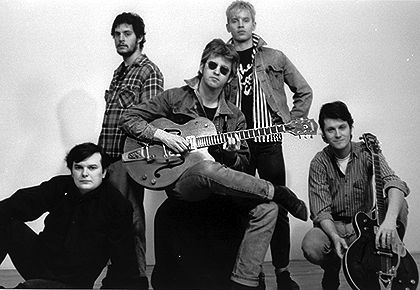
-
Article
Blue Rodeo
Its affinity for the "roots music" styles of US pop - country, rockabilly, and folk-rock, as well as rock 'n' roll - initially drew Blue Rodeo comparisons to The Band and gave it both a populist and critical appeal.
"https://d3d0lqu00lnqvz.cloudfront.net/media/media/e9556825-e802-4e4a-abb9-0087d0e8eb95.jpg" // resources/views/front/categories/view.blade.php
https://d3d0lqu00lnqvz.cloudfront.net/media/media/e9556825-e802-4e4a-abb9-0087d0e8eb95.jpg
-
Macleans
Blue Rodeo (Profile)
Jim Cuddy hears the music. I see the grotty stairwell. Standing in the open doorway amid the stacks of cardboard boxes and equipment cases, he slaps his palms together and cocks his head for the echo that stretches thin above us.This article was originally published in Maclean's Magazine on July 15, 2002
"https://thecanadianencyclopedia.ca/images/tce_placeholder.jpg?v=e9dca980c9bdb3aa11e832e7ea94f5d9" // resources/views/front/categories/view.blade.php
https://thecanadianencyclopedia.ca/images/tce_placeholder.jpg?v=e9dca980c9bdb3aa11e832e7ea94f5d9
-
Article
Blue-spotted Salamander
The blue-spotted salamander (Ambystoma laterale) is a forest-dwelling salamander native to northeastern North America. It has a large distribution in eastern Canada that extends from Manitoba to Nova Scotia, Prince Edward Island and Labrador. These salamanders belong to the Ambystomatidae family, also known as “mole salamanders” because they spend much of their lives underground.
"https://d3d0lqu00lnqvz.cloudfront.net/bluespottedsalamander/Crowley-Blue-spotted-Salamander-Ambystoma-laterale-4.jpg" // resources/views/front/categories/view.blade.php
https://d3d0lqu00lnqvz.cloudfront.net/bluespottedsalamander/Crowley-Blue-spotted-Salamander-Ambystoma-laterale-4.jpg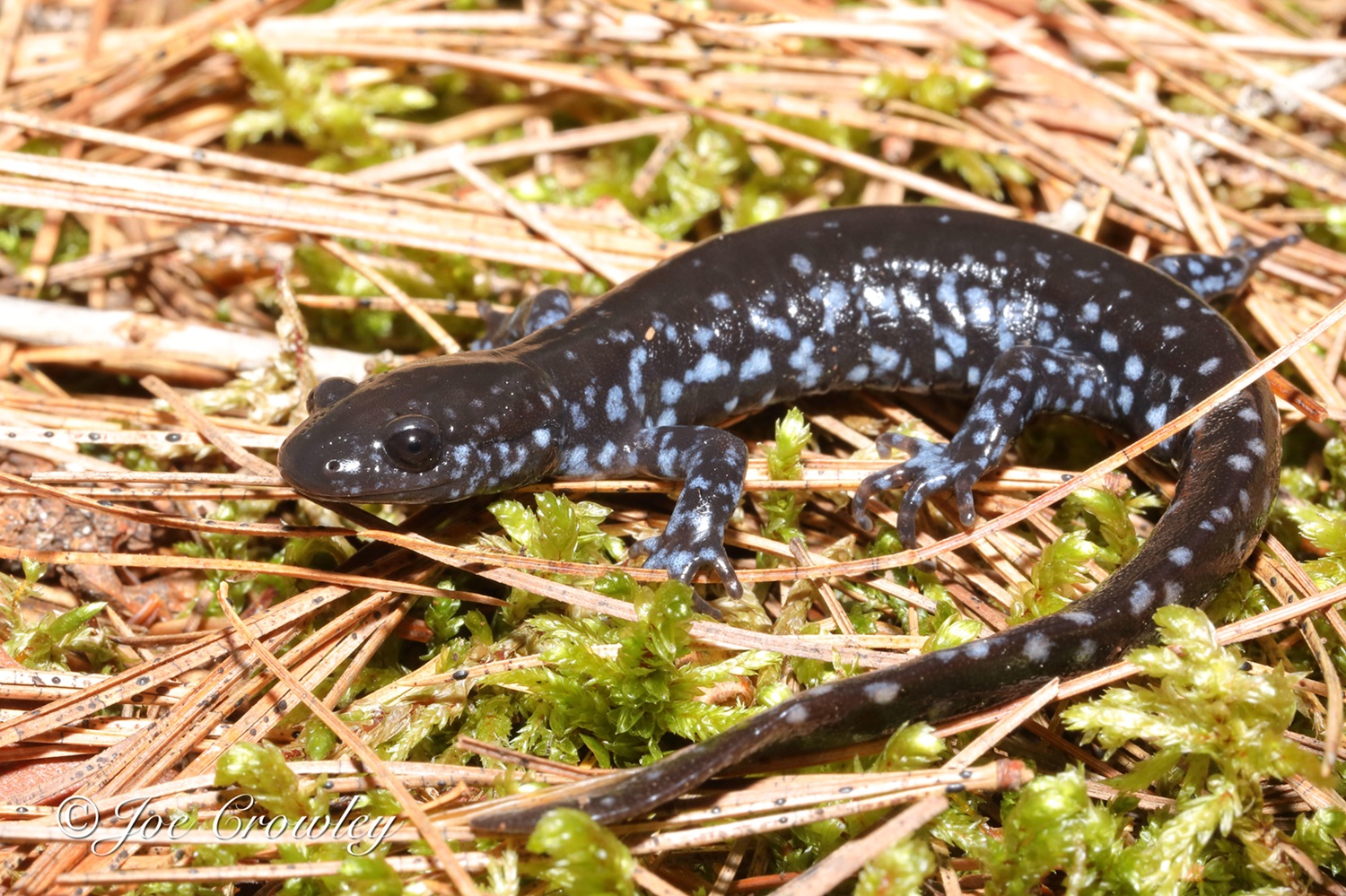
-
Article
Blue Whale
The blue whale (Balaenoptera musculus) is the largest animal known to have ever lived on Earth. It is a difficult whale to study because of its low numbers and its preference for deep, offshore waters. Within Balaenoptera musculus, authorities recognize between three and five subspecies. Blue whales live in oceans throughout the world, including off the Atlantic and Pacific coasts of Canada. Although blue whale sightings are rare, experts believe that about 250 mature individuals live off each coast.
"https://d3d0lqu00lnqvz.cloudfront.net/media/new_article_images/BlueWhale/dreamstime_xl_152597313.jpg" // resources/views/front/categories/view.blade.php
https://d3d0lqu00lnqvz.cloudfront.net/media/new_article_images/BlueWhale/dreamstime_xl_152597313.jpg