Browse "Things"
-
Article
Whooping Crane
The whooping crane (Grus americana), standing almost 1.5 m high, is the tallest North American bird. Adults may weigh 7.5 kg and have a 2.2 m wingspan. They are impressive in their pure white plumage with black wing tips, long black legs, black moustache-like markings and red crown. In their first summer and fall, juveniles are predominantly cinnamon and white. After their first birthday, they are almost indistinguishable from adults.
"https://d3d0lqu00lnqvz.cloudfront.net/media/media/07fa9294-61a9-4b80-a73c-315f77b0909a.jpg" // resources/views/front/categories/view.blade.php
https://d3d0lqu00lnqvz.cloudfront.net/media/media/07fa9294-61a9-4b80-a73c-315f77b0909a.jpg
-
Editorial
Why Do We Pay Taxes?
The following article is an editorial written by The Canadian Encyclopedia staff. Editorials are not usually updated.
"https://thecanadianencyclopedia.ca/images/tce_placeholder.jpg?v=e9dca980c9bdb3aa11e832e7ea94f5d9" // resources/views/front/categories/view.blade.php
https://thecanadianencyclopedia.ca/images/tce_placeholder.jpg?v=e9dca980c9bdb3aa11e832e7ea94f5d9
-
Macleans
Why doctors want the right to pull the plug
The battle between doctors and patients’ families has only just begunThis article was originally published in Maclean's Magazine on October 18, 2013
"https://thecanadianencyclopedia.ca/images/tce_placeholder.jpg?v=e9dca980c9bdb3aa11e832e7ea94f5d9" // resources/views/front/categories/view.blade.php
https://thecanadianencyclopedia.ca/images/tce_placeholder.jpg?v=e9dca980c9bdb3aa11e832e7ea94f5d9
-
Excerpt
Widows and Widowers of the Halifax Explosion
A major feature of the 1917 Halifax Explosion was the high loss of life among not just men but also women and children. The death of male heads of household, or of their wives, proved highly disruptive for family life and created a major challenge for those providing assistance to the survivors.
"https://d3d0lqu00lnqvz.cloudfront.net/media/media/16d8bd85-267a-4a27-a90b-c6332d9eec71.jpg" // resources/views/front/categories/view.blade.php
https://d3d0lqu00lnqvz.cloudfront.net/media/media/16d8bd85-267a-4a27-a90b-c6332d9eec71.jpg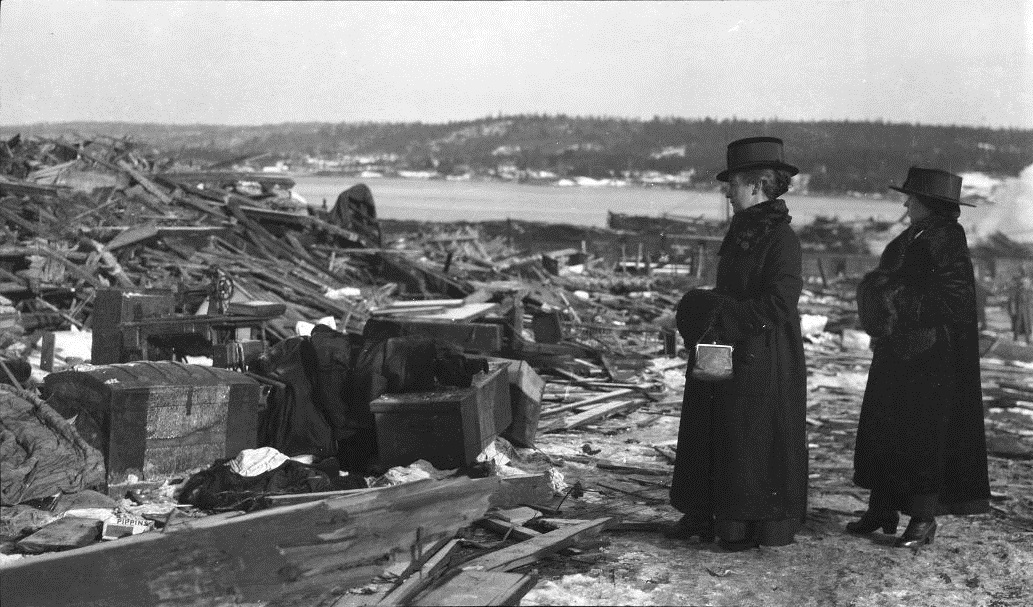
-
Article
Wigwam
A wigwam is a domed or cone-shaped house that was historically used by Indigenous peoples. It was prevalent in the eastern half of North America before the era of colonization. Today, wigwams are used for cultural functions and ceremonial purposes. (See also Architectural History of Indigenous Peoples in Canada.)
"https://d3d0lqu00lnqvz.cloudfront.net/media/media/f334ab17-d8ce-4754-a97a-5d2035880401.jpg" // resources/views/front/categories/view.blade.php
https://d3d0lqu00lnqvz.cloudfront.net/media/media/f334ab17-d8ce-4754-a97a-5d2035880401.jpg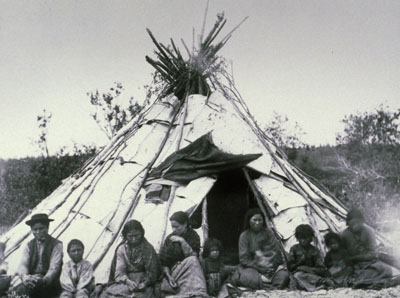
-
Article
Wild Berries in Canada
Over 200 species of small, fleshy, wild fruits occur in Canada. Most people consider them all “berries” but, technically, they are classed in different categories. These categories include drupes (e.g. cherries, elderberries), pomes (e.g. saskatoon berries), true berries (e.g. gooseberries, blueberries) and aggregate fruits (e.g. raspberries, strawberries). In this article “berry” is used in its less technical sense. The following are favourite Canadian wild berries.
"https://d3d0lqu00lnqvz.cloudfront.net/media/new_article_images/WildBerries/4744108143_2507ee0b47_z.jpg" // resources/views/front/categories/view.blade.php
https://d3d0lqu00lnqvz.cloudfront.net/media/new_article_images/WildBerries/4744108143_2507ee0b47_z.jpg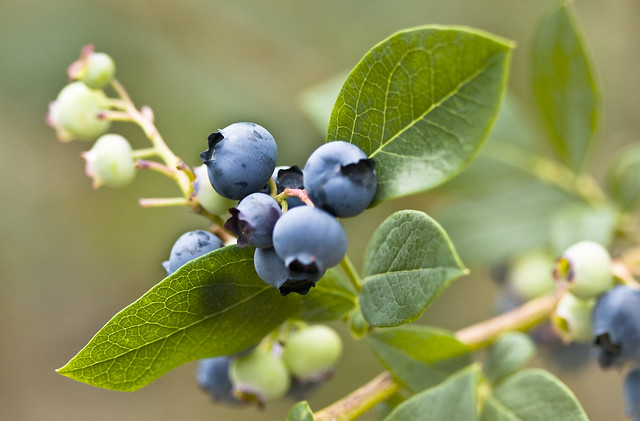
-
Article
Wild Geese
Wild Geese, novel credited to Martha Ostenso (London, New York and Toronto, 1925). Published first in England as The Passionate Flight, Wild Geese was one of the Best-Selling Canadian novels of the 20th century.
"https://thecanadianencyclopedia.ca/images/tce_placeholder.jpg?v=e9dca980c9bdb3aa11e832e7ea94f5d9" // resources/views/front/categories/view.blade.php
https://thecanadianencyclopedia.ca/images/tce_placeholder.jpg?v=e9dca980c9bdb3aa11e832e7ea94f5d9
-
Article
Wild Mushrooms in Canada
Mushrooms are the fleshy, spore-bearing fruit of various fungi. They are classed within the major groups of Basidiomycetes and Ascomycetes. Hundreds of different kinds of mushrooms grow wild in Canada, from the US border to the Arctic, and from sea level to alpine environments. Some of these are well-known edible species, such as chanterelles (Cantharellus species) and pine mushrooms (Tricholoma species); others have medicinal properties or can cause hallucinations, such as “magic mushrooms” ( Psilocybe species) and fly agaric (Amanita muscaria). Some others, like emetic russula (Russula emetica), are poisonous to varying degrees, and a few mushroom species, like deadly galerina (Galerina marginata), death cap (Amanita phalloides) and panther mushroom (Amanita pantherinoides), can be deadly. This article includes descriptions of some of the most widely-used wild, edible mushrooms found in Canada.
"https://d3d0lqu00lnqvz.cloudfront.net/media/new_article_images/WildMushroomsInCanada/VermillionWaxyCap.jpg" // resources/views/front/categories/view.blade.php
https://d3d0lqu00lnqvz.cloudfront.net/media/new_article_images/WildMushroomsInCanada/VermillionWaxyCap.jpg
-
Article
Wild Nuts in Canada
Nuts are the hard-shelled fruits of flowering trees or shrubs. Within each shell are one or more seed kernels that are easily separated from the outer shell. Most nuts are edible and nutritious, and are sought after by many animals as well as people. There are about 20 edible nut species native to Canada. Most of these species are found in the Great Lakes-St Lawrence and deciduous forest regions of southeastern Canada, including the American hazelnut (Corylus americana), American beechnut (Fagus grandifolia) and black walnut (Juglans nigra). Nuts found in western Canada include the beaked hazelnut (Corylus cornuta), whitebark pine seeds (Pinus albicaulis), and garry oak acorns (Quercus garryana). Virtually all are known to have been used as food by Indigenous Peoples. Some are still harvested and used today, but most have been replaced in peoples’ diets by imported nut species such as European filbert (Corylus avellana), English or Persian walnut (Juglans regia), American pecan (Carya illinoinensis) and cashews ( Anacardium occidentale). This article includes descriptions of the most widely-used wild nuts in Canada.
"https://d3d0lqu00lnqvz.cloudfront.net/media/new_article_images/wildnutsincanada/Corylus cornuta.jpg" // resources/views/front/categories/view.blade.php
https://d3d0lqu00lnqvz.cloudfront.net/media/new_article_images/wildnutsincanada/Corylus cornuta.jpg
-
Article
Wild Turkeys in Canada
The wild turkey (Meleaagris gallopavo) is a species of bird native to North America. There are six subspecies of M. gallopavo, two of which have populations in Canada: the Eastern wild turkey, M. gallopavo silvestris and Merriam’s wild turkey, M. gallopavo merriami. The Eastern wild turkey is native to southern Ontario and Quebec, while Merriam’s wild turkey was introduced to Manitoba in 1958 and to Alberta in 1962. In the 1960s, Merriam’s wild turkey naturally expanded their range from the northwestern United States into southern British Columbia. Today, Merriam’s wild turkey can also be found in Saskatchewan.
"https://d3d0lqu00lnqvz.cloudfront.net/media/new_article_images/WildTurkeys/30116989461_1794d87fc5_c.jpg" // resources/views/front/categories/view.blade.php
https://d3d0lqu00lnqvz.cloudfront.net/media/new_article_images/WildTurkeys/30116989461_1794d87fc5_c.jpg
-
Article
Wildflowers
There are approximately 4000 species of flowering plants in Canada, of which about 3000 may be considered wildflowers. About one-quarter of these have been introduced from other regions of the world.
"https://d3d0lqu00lnqvz.cloudfront.net/media/media/cddcaafa-9983-4e00-a25e-b5c73c40a3b8.jpg" // resources/views/front/categories/view.blade.php
https://d3d0lqu00lnqvz.cloudfront.net/media/media/cddcaafa-9983-4e00-a25e-b5c73c40a3b8.jpg
-
Article
Wildlife Conservation and Management
Wildlife comprises those forms of animal life that are not domesticated. Individual members of wild species held tame in captivity are still considered "wildlife" as they are not genetically different from those remaining in a wild state. Wildlife conservation and management is the conservation, use and management of wild-animal populations and of the land necessary to support them to ensure that productivity and ecological balance are maintained in perpetuity, while social benefits are realized. Human activity has become one of the most significant influences on the abundance and well-being of wildlife.
"https://d3d0lqu00lnqvz.cloudfront.net/media/new_article_images/LeatherbackSeaTurtle/BabyLeatherback.jpg" // resources/views/front/categories/view.blade.php
https://d3d0lqu00lnqvz.cloudfront.net/media/new_article_images/LeatherbackSeaTurtle/BabyLeatherback.jpg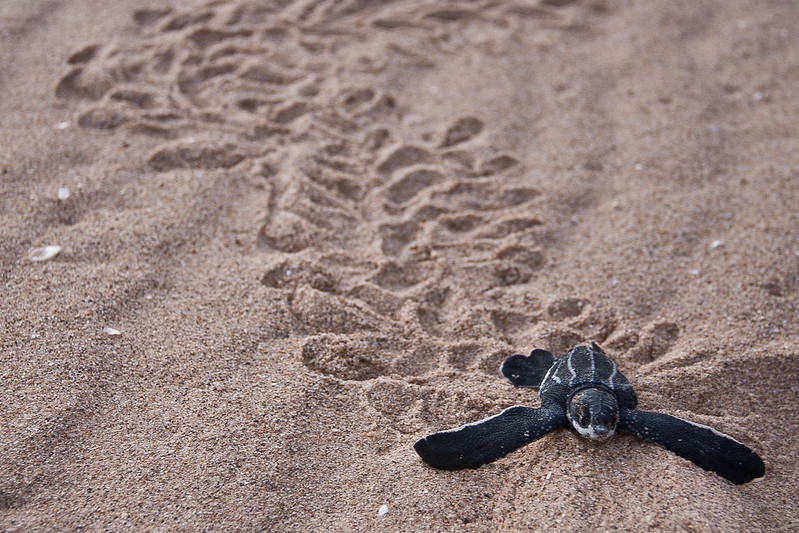
-
Article
Wildlife Preserve
A wildlife preserve is an area of land or water set aside from at least some forms of development or recreational use, particularly from industrial use, hunting and motorized recreation, to protect wildlife and their habitats.
"https://d3d0lqu00lnqvz.cloudfront.net/media/media/7b55e832-3d32-423c-98ad-13134417ad71.jpg" // resources/views/front/categories/view.blade.php
https://d3d0lqu00lnqvz.cloudfront.net/media/media/7b55e832-3d32-423c-98ad-13134417ad71.jpg
-
Article
Wildrose Party
The Wildrose Party was a political party in Alberta that promoted fiscal conservatism and rural values. In the 2015 provincial election the party, once known as the Wildrose Alliance, was elected as the official opposition. It also replaced the former governing Progressive Conservative Association of Alberta as the main conservative voice in the legislature. In 2017, the party merged with the Progressive Conservatives to form the United Conservative Party under the leadership of Jason Kenney, a former federal cabinet minister.
"https://d3d0lqu00lnqvz.cloudfront.net/media/media/d3800917-69c5-4a10-aca3-9f0faa785d28.jpg" // resources/views/front/categories/view.blade.php
https://d3d0lqu00lnqvz.cloudfront.net/media/media/d3800917-69c5-4a10-aca3-9f0faa785d28.jpg
-
Speech
Wilfrid Laurier: Canada’s Century, 1904
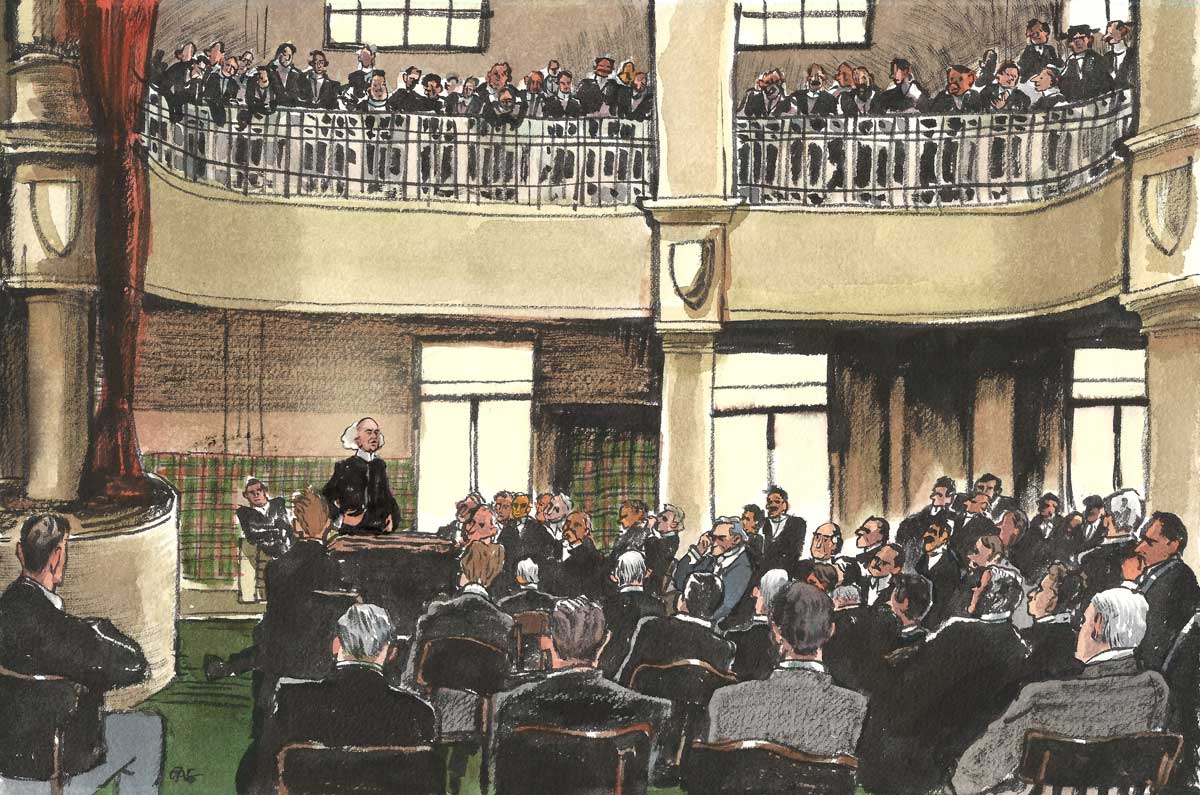
Remembered for his liberal ideals, Wilfrid Laurier was also a skilled political manipulator. He used his oratory on the campaign trail, both to savage his opponents, and to shamelessly pluck the heartstrings of Canadian voters. He did both in this speech delivered while campaigning in Toronto on 14 October 1904 at Massey Hall. He first defends his eight-year record in power by comparing his government’s “minute” and “trivial” mistakes with the “mountain of iniquity” that the Tories built while in power for some 24 years. He then sounds the trumpet of patriotism, uttering a version of his most famous line (delivered in different ways, in several speeches that year) that the 20th century would belong to Canada.
"https://d3d0lqu00lnqvz.cloudfront.net/media/media/adc9e102-e290-429c-8225-2fbbc673880f.jpg" // resources/views/front/categories/view.blade.php
https://d3d0lqu00lnqvz.cloudfront.net/media/media/adc9e102-e290-429c-8225-2fbbc673880f.jpg