
Browse "Things"
-
Article
Volcano
A volcano is an opening in the crust of a planetary body through which liquid, gaseous or solid material is expelled; also, the structure formed by the eruption of this material. Most terrestrial volcanoes expel magma, a mixture of molten rock and dissolved gases (eg, water vapour, carbon dioxide, sulphur dioxide). The Earth's volcanic belts are located above zones of anomalously high temperature (700–1,400°C) where magma is produced by partial melting of solid material in the crust and upper mantle. These areas commonly occur along crustal plate margins at depths of 10–50 km (see plate tectonics). Basalt is the principal magma at diverging plate boundaries, such as oceanic spreading ridges; basalt, andesite, dacite, and rhyolite characterize volcanic arcs along converging plate margins. The relatively low density of magma causes it to rise through fractures into regions of lower pressure where dissolved gases expand and propel it toward the surface. Magma trapped in shallow reservoirs may solidify to form subvolcanic intrusions or may undergo chemical change before resuming its ascent. Evacuation of such reservoirs sometimes causes overlying rocks to collapse, leaving steep-walled, circular depressions (calderas). Groundwater heated by magma may discharge as hot mineral springs, as geysers or as fumaroles, or steam may escape in explosive bursts (phreatic eruptions) which commonly precede eruptions of magma. Magma reaching the surface may issue as molten lava or as solid, pyroclastic ejecta (bombs, blocks, lapilli, ash).
"https://d3d0lqu00lnqvz.cloudfront.net/media/media/55b65d67-fab1-4bea-a12a-8d19e4088565.jpg" // resources/views/front/categories/view.blade.php
https://d3d0lqu00lnqvz.cloudfront.net/media/media/55b65d67-fab1-4bea-a12a-8d19e4088565.jpg
-
Article
Voles in Canada
Vole is the common name for several rodents of the subfamily Arvicolinae. Voles range in size from 15–20 g (red-backed voles) to 200 g (Richardson's water vole, Microtus richardsoni). They have stout bodies, short legs and tails, and ears nearly hidden by moderately long hair.
"https://d3d0lqu00lnqvz.cloudfront.net/vole/eastern-meadow-vole.jpg" // resources/views/front/categories/view.blade.php
https://d3d0lqu00lnqvz.cloudfront.net/vole/eastern-meadow-vole.jpg
-
Article
Volleyball
The playing court, 18 m x 9 m, is divided by a centreline. Above the centreline is an extended net, placed 2.43 m high for men and 2.24 m high for women. The goal of the game is to send the ball, according to the regulations, over the net to the floor on the opposite court.
"https://d3d0lqu00lnqvz.cloudfront.net/media/media/81278aef-fd97-4f30-a208-e4f27e413565.jpg" // resources/views/front/categories/view.blade.php
https://d3d0lqu00lnqvz.cloudfront.net/media/media/81278aef-fd97-4f30-a208-e4f27e413565.jpg
-
Article
Voltigeurs de Québec Armoury
The Québec City Armoury, in Place Georges V, dates back to 1884 when architect Eugène-Étienne Taché drew up the building plans alternately with those for the Québec National Assembly and the old Palais de justice.
"https://d3d0lqu00lnqvz.cloudfront.net/media/media/60f3bef8-e5e4-4a32-81f7-311fa72662ab.jpg" // resources/views/front/categories/view.blade.php
https://d3d0lqu00lnqvz.cloudfront.net/media/media/60f3bef8-e5e4-4a32-81f7-311fa72662ab.jpg
-
Article
Voltigeurs of the War of 1812
The Voltigeurs were a Provincial Corps of Light Infantry in Lower Canada created in 1812. They are best known for their service at the Battle of Châteauguay and the Battle of Crysler's Farm (see also War of 1812).
"https://d3d0lqu00lnqvz.cloudfront.net/media/media/3c8e4ab9-41f4-46fd-bbd1-e45854bfb33d.jpg" // resources/views/front/categories/view.blade.php
https://d3d0lqu00lnqvz.cloudfront.net/media/media/3c8e4ab9-41f4-46fd-bbd1-e45854bfb33d.jpg
-
Editorial
Voting in Early Canada
The following article is an editorial written by The Canadian Encyclopedia staff. Editorials are not usually updated. Before Confederation, the right to vote in elections was restricted to a small, wealthy, property-owning elite. Because votes were declared publicly, elections were rowdy, highly competitive and even violent. Voting by secret ballot was first introduced in New Brunswick in 1855 and federally in 1874.
"https://d3d0lqu00lnqvz.cloudfront.net/media/media/1e88decf-02d6-4b89-b522-383f360ecac4.jpg" // resources/views/front/categories/view.blade.php
https://d3d0lqu00lnqvz.cloudfront.net/media/media/1e88decf-02d6-4b89-b522-383f360ecac4.jpg
-
Collection
Voting Rights
The right to vote in Canada has not been straightforward. Race, ethnicity, and gender were often factors in determining who had the right to vote, a right that, once earned, could be taken away. Learn about the complicated history of Voting Rights in Canada.
"https://d3d0lqu00lnqvz.cloudfront.net/Final_1949.jpg" // resources/views/front/categories/view.blade.php
https://d3d0lqu00lnqvz.cloudfront.net/Final_1949.jpg
-
Timelines
Voting Rights in Canada
The struggle for voting rights is the struggle for human rights. Historically, governments have given the right to vote to the people who they’ve valued the most. Typically, this included only a select few. The majority of the population had to fight for their right to vote — a right that, once earned, could be taken away. The story of the right to vote in Canada is complex. Provincial and federal franchise regulations varied widely....
"https://d3d0lqu00lnqvz.cloudfront.net/media/media/88bab6f6-366c-45d5-be02-092e23d46e97.jpg" // resources/views/front/categories/view.blade.php
https://d3d0lqu00lnqvz.cloudfront.net/media/media/88bab6f6-366c-45d5-be02-092e23d46e97.jpg
-
Article
Votive Painting
Congratulatory ex-votos, offered for a favour received, are the most common.
"https://d3d0lqu00lnqvz.cloudfront.net/media/media/70b6c367-9cfc-4d12-977a-3e8929412b6e.jpg" // resources/views/front/categories/view.blade.php
https://d3d0lqu00lnqvz.cloudfront.net/media/media/70b6c367-9cfc-4d12-977a-3e8929412b6e.jpg
-
Editorial
Voyage of the Nonsuch: A Turning Point in the Fur Trade
The following article is an editorial written by The Canadian Encyclopedia staff. Editorials are not usually updated.At some point in the 1650s, two adventurers from New France embarked on a journey that eventually revolutionized the fur trade and changed the course of Canadian history.
"https://thecanadianencyclopedia.ca/images/tce_placeholder.jpg?v=e9dca980c9bdb3aa11e832e7ea94f5d9" // resources/views/front/categories/view.blade.php
https://thecanadianencyclopedia.ca/images/tce_placeholder.jpg?v=e9dca980c9bdb3aa11e832e7ea94f5d9
-
Article
Voyageurs
Voyageurs were independent contractors, workers or minor partners in companies involved in the fur trade. They were licensed to transport goods to trading posts and were usually forbidden to do any trading of their own. The fur trade changed over the years, as did the groups of men working in it. In the 17th century, voyageurs were often coureurs des bois — unlicensed traders responsible for delivering trade goods from suppliers to Indigenous peoples. The implementation of the trading licence system in 1681 set voyageurs apart from coureurs des bois, who were then considered outlaws of sorts. Today, the word voyageur, like the term coureur des bois, evokes the romantic image of men canoeing across the continent in search of furs. Their life was full of perilous adventure, gruelling work and cheerful camaraderie.
"https://d3d0lqu00lnqvz.cloudfront.net/media/media/50d0c290-345d-4655-b501-3cfa471dfdb7.jpg" // resources/views/front/categories/view.blade.php
https://d3d0lqu00lnqvz.cloudfront.net/media/media/50d0c290-345d-4655-b501-3cfa471dfdb7.jpg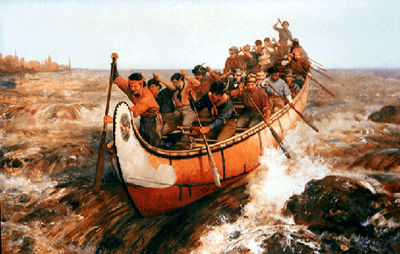
-
Article
Vulture
The vulture is a large, long-winged, bald-headed bird of prey, normally abundant in warmer latitudes.
"https://d3d0lqu00lnqvz.cloudfront.net/media/media/70245b69-4c81-436d-b1c9-79c1e3d9b92c.jpg" // resources/views/front/categories/view.blade.php
https://d3d0lqu00lnqvz.cloudfront.net/media/media/70245b69-4c81-436d-b1c9-79c1e3d9b92c.jpg
-
Article
W5
W5 (1966–2024) was an hour-long weekly investigative journalism news magazine program that aired on CTV. Its name refers to the central questions of journalism known as the “Five Ws” — who, what, where, when and why. W5 was Canada's most-watched current affairs and documentary program. It was also North America’s longest-running prime time current affairs program. It inspired other similar programs, such as CBS’s 60 Minutes and the CBC’s The Fifth Estate. W5 won six Gemini Awards, including two for Best News Information Series, and 14 Canadian Screen Awards, including the Gordon Sinclair Award for excellence in broadcast journalism. It was cancelled as a stand-alone program in February 2024. W5 was retained as the name for CTV News’ investigative journalism unit.
"https://d3d0lqu00lnqvz.cloudfront.net/media/media/2da3e6d2-49c8-423a-8280-eea0b56098b3.jpg" // resources/views/front/categories/view.blade.php
https://d3d0lqu00lnqvz.cloudfront.net/media/media/2da3e6d2-49c8-423a-8280-eea0b56098b3.jpg
-
Article
Wacousta; Or, The Prophecy: A Tale of the Canadas
Wacousta; Or, The Prophecy: A Tale of the Canadas, novel by John Richardson, was published in London and Edinburgh in 1832; and in Montréal in 1868, as Wacousta; Or the Prophecy.
"https://thecanadianencyclopedia.ca/images/tce_placeholder.jpg?v=e9dca980c9bdb3aa11e832e7ea94f5d9" // resources/views/front/categories/view.blade.php
https://thecanadianencyclopedia.ca/images/tce_placeholder.jpg?v=e9dca980c9bdb3aa11e832e7ea94f5d9
-
Article
Waffle
The Waffle is a group established in 1969 as a caucus within the New Democratic Party (NPD) and dismantled in 1974. Its members' choice of name was self-consciously ironic.
"https://thecanadianencyclopedia.ca/images/tce_placeholder.jpg?v=e9dca980c9bdb3aa11e832e7ea94f5d9" // resources/views/front/categories/view.blade.php
https://thecanadianencyclopedia.ca/images/tce_placeholder.jpg?v=e9dca980c9bdb3aa11e832e7ea94f5d9