Browse "Things"
-
Article
Prohibition in Canada
Prohibition in Canada came about as a result of the temperance movement. It called for moderation or total abstinence from alcohol, based on the belief that drinking was responsible for many of society’s ills. The Canada Temperance Act (Scott Act) of 1878 gave local governments the “local option” to ban the sale of alcohol. Prohibition was first enacted on a provincial basis in Prince Edward Island in 1901. It became law in the remaining provinces, as well as in Yukon and Newfoundland, during the First World War. Liquor could be legally produced in Canada (but not sold there) and legally exported out of Canadian ports. Most provincial laws were repealed in the 1920s. PEI was the last to give up the “the noble experiment” in 1948. (This is the full-length entry about Prohibition in Canada. For a plain-language summary, please see Prohibition in Canada (Plain-Language Summary).)
"https://d3d0lqu00lnqvz.cloudfront.net/media/media/c0f20001-e566-4ebf-9c88-f1a5ae278291.jpg" // resources/views/front/categories/view.blade.php
https://d3d0lqu00lnqvz.cloudfront.net/media/media/c0f20001-e566-4ebf-9c88-f1a5ae278291.jpg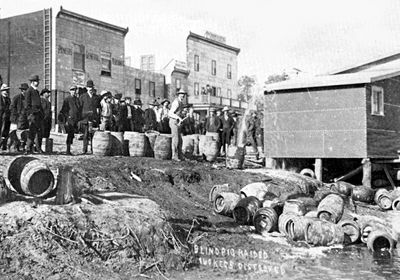
-
Article
Prohibition in Canada (Plain-Language Summary)
Prohibition was the ban on alcohol in the 19th and 20th centuries. It happened because of the temperance movement. Some places in Canada had prohibition laws before Confederation. The first province to enact prohibition was Prince Edward Island in 1901. During the First World War, the other provinces passed similar laws. In the 1920s, most prohibition laws were lifted. Prince Edward Island was the last province to end prohibition (1948). (This article is a plain-language summary of prohibition in Canada. If you are interested in reading about this topic in more depth, please see our full-length entry, Prohibition in Canada.)
"https://d3d0lqu00lnqvz.cloudfront.net/media/media/9e862988-20af-42f4-b701-22a215cc7ea7.jpg" // resources/views/front/categories/view.blade.php
https://d3d0lqu00lnqvz.cloudfront.net/media/media/9e862988-20af-42f4-b701-22a215cc7ea7.jpg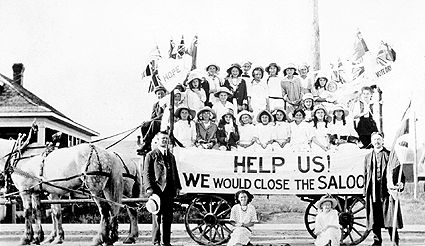
-
Article
Project Ploughshares
Project Ploughsharesis an organization founded in 1976 to promote disarmament and demilitarization, the peaceful resolution of political conflict, and the pursuit of security based on equity, justice and a sustainable environment.
"https://thecanadianencyclopedia.ca/images/tce_placeholder.jpg?v=e9dca980c9bdb3aa11e832e7ea94f5d9" // resources/views/front/categories/view.blade.php
https://thecanadianencyclopedia.ca/images/tce_placeholder.jpg?v=e9dca980c9bdb3aa11e832e7ea94f5d9
-
Article
Project Surname
In 1970, the federal government undertook a program, known as Project Surname, to assign last names to Inuit in northern Canada. These surnames were to replace the personal disc numbers (see Inuit Disc Numbers) that Inuit had been given by the Canadian government in the 1940s. Some Inuit and non-Inuit viewed Project Surname as a more effective and politically correct system of identification. Others saw it as another instrument of paternalism.
"https://d3d0lqu00lnqvz.cloudfront.net/media/media/8607a8a5-1ddc-4146-8933-4b8b62a608ca.jpg" // resources/views/front/categories/view.blade.php
https://d3d0lqu00lnqvz.cloudfront.net/media/media/8607a8a5-1ddc-4146-8933-4b8b62a608ca.jpg
-
Article
Promyshlennik
A Promyshlennik is a Russian (chiefly Cossack) free-lance exploiter of natural resources, notably furs. Like the coureurs de bois, promyshlenniki had a sure instinct for rivers, forests and terrain.
"https://thecanadianencyclopedia.ca/images/tce_placeholder.jpg?v=e9dca980c9bdb3aa11e832e7ea94f5d9" // resources/views/front/categories/view.blade.php
https://thecanadianencyclopedia.ca/images/tce_placeholder.jpg?v=e9dca980c9bdb3aa11e832e7ea94f5d9
-
Article
Pronghorn
The pronghorn (Antilocapra americana) is a small, very fleet ungulate of the order Artiodactyla. It is the last surviving species of a once abundant and diverse North American family of ruminants, known as Antilocapridae. Although sometimes called pronghorn antelope, it is not a true antelope.
"https://d3d0lqu00lnqvz.cloudfront.net/media/media/3993ea60-8103-42ca-ab0e-377311c98d8f.jpg" // resources/views/front/categories/view.blade.php
https://d3d0lqu00lnqvz.cloudfront.net/media/media/3993ea60-8103-42ca-ab0e-377311c98d8f.jpg
-
Article
Propaganda in Canada
Propaganda refers to messaging that aims to spread or “propagate” an ideology or worldview. Psychologists have described propaganda as “manipulative persuasion in the service of an agenda” or communications that “induce the individual to follow non-rational emotional drives.” During the First World War, propaganda was used to recruit soldiers and supporters. The Second World War saw it take a dark turn toward using outright lies to spread hateful ideologies and practices. (See also Fake News a.k.a. Disinformation.) During the Cold War, governments in the West and East used propaganda to try to spread the ideologies of capitalism and democracy, or communism and the Soviet Union. Today, propaganda is most often found on social media; it is used to marshal support for, or opposition to, various political, economic and social movements.
"https://d3d0lqu00lnqvz.cloudfront.net/media/new_article_images/Propaganda/492px-Canada_WWI_Victory_Bonds2.jpg" // resources/views/front/categories/view.blade.php
https://d3d0lqu00lnqvz.cloudfront.net/media/new_article_images/Propaganda/492px-Canada_WWI_Victory_Bonds2.jpg
-
Article
The Propaganda War in Canada During the American Revolution
American colonists conducted a propaganda campaign in the British colony of Canada prior to and during the American Revolution. Its aim was to persuade French Canada become the 14th colony and join the rebellion against Britain. The propaganda initially took the form of appeals. The core message was that Britain was tyrannizing its colonies and that joining the rebellion would deliver liberty and happiness to French Canadians. American agents and sympathizers in Canada helped spread the message, often adding rumours of British plans to raise taxes or deport French Canadians. The propaganda campaign helped weaken support for British rule prior to the American invasion of 1775, but it lost traction in the face of counterpropaganda by British authorities and growing public hostility to invading American troops, who seized goods and plundered properties.
"https://d3d0lqu00lnqvz.cloudfront.net/American-Revolution/1783-Map.jpg" // resources/views/front/categories/view.blade.php
https://d3d0lqu00lnqvz.cloudfront.net/American-Revolution/1783-Map.jpg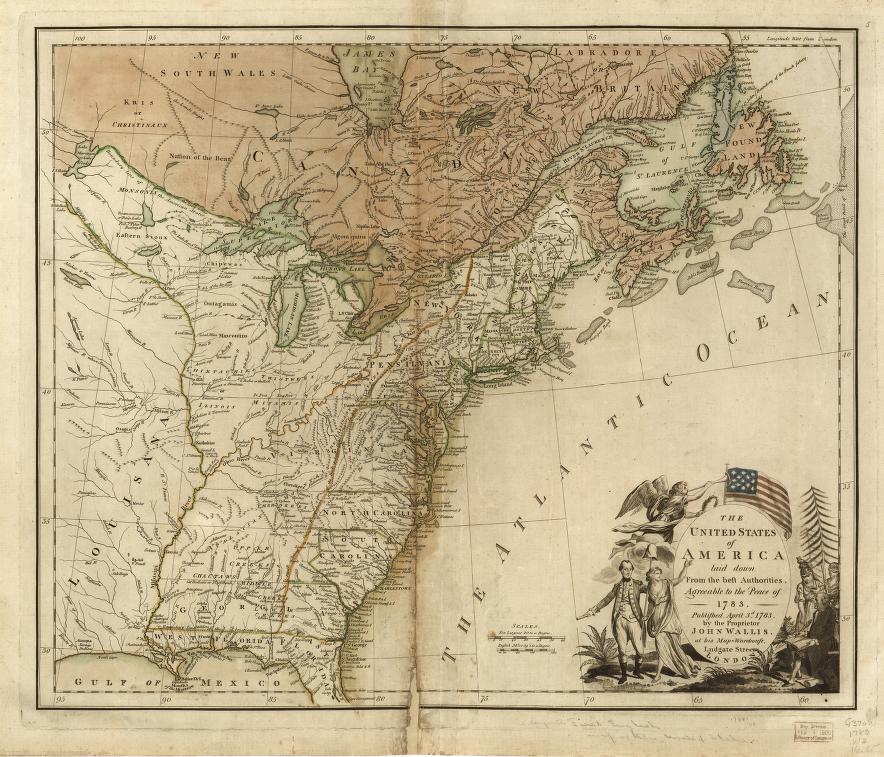
-
Article
Property Law
Property, in the legal sense, can mean real property in the form of land and buildings, or personal, movable property. Property law — whether under the common law in most of Canada, or the Civil Code in Quebec — deals with a wide range of rights and obligations owing to individuals and governments, and has evolved enormously, particularly in fairness to women, since the 19th Century.
"https://thecanadianencyclopedia.ca/images/tce_placeholder.jpg?v=e9dca980c9bdb3aa11e832e7ea94f5d9" // resources/views/front/categories/view.blade.php
https://thecanadianencyclopedia.ca/images/tce_placeholder.jpg?v=e9dca980c9bdb3aa11e832e7ea94f5d9
-
Article
Prorogation in Canada
A prorogation is a suspension of Parliament. All parliamentary activity is stopped, but the government remains in power and is not dissolved. Every session of Parliament begins with a summons and ends with prorogation; both are issued by the governor general (or lieutenant-governor at the provincial level) at the government’s request. Throughout Canadian history, governments have at times used prorogation to their own advantage. The main purpose of prorogation is to wipe clean the Order Paper of old or existing business and to set a new legislative agenda. All unfinished business at the end of a session dies on the Order Paper. There are procedures in place to reinstate previous activities in a new session, which begins with a Speech from the Throne.
"https://d3d0lqu00lnqvz.cloudfront.net/media/media/12c94628-6ad2-455b-9ada-0a1e6df2849d.jpg" // resources/views/front/categories/view.blade.php
https://d3d0lqu00lnqvz.cloudfront.net/media/media/12c94628-6ad2-455b-9ada-0a1e6df2849d.jpg
-
Article
Prospecting
The first organized mineral exploration by Europeans in what is now Canada was led by Martin FROBISHER in his 3 expeditions to Baffin Island (1576, 1577 and 1578).
"https://d3d0lqu00lnqvz.cloudfront.net/media/media/50d17472-14d8-445a-a4f6-cfa35a8e7e85.jpg" // resources/views/front/categories/view.blade.php
https://d3d0lqu00lnqvz.cloudfront.net/media/media/50d17472-14d8-445a-a4f6-cfa35a8e7e85.jpg
-
Article
Sex Work (Prostitution) in Canada
Sex work (referred to in legal terms as prostitution) is the exchange of sexual services for money or other needs, such as food or shelter. Sex work itself has never been a crime in Canada. But communicating and other activities relating to the exchange have been prohibited. Street-based sex work is the most visible form and receives the most attention. But it represents only a small proportion of the sex industry, which also includes brothels, escort services and strip clubs. There is an ongoing political and social debate about how and whether to decriminalize parts of the trade.
"https://d3d0lqu00lnqvz.cloudfront.net/Sex_work_is_work_-_Europride_2019.jpg" // resources/views/front/categories/view.blade.php
https://d3d0lqu00lnqvz.cloudfront.net/Sex_work_is_work_-_Europride_2019.jpg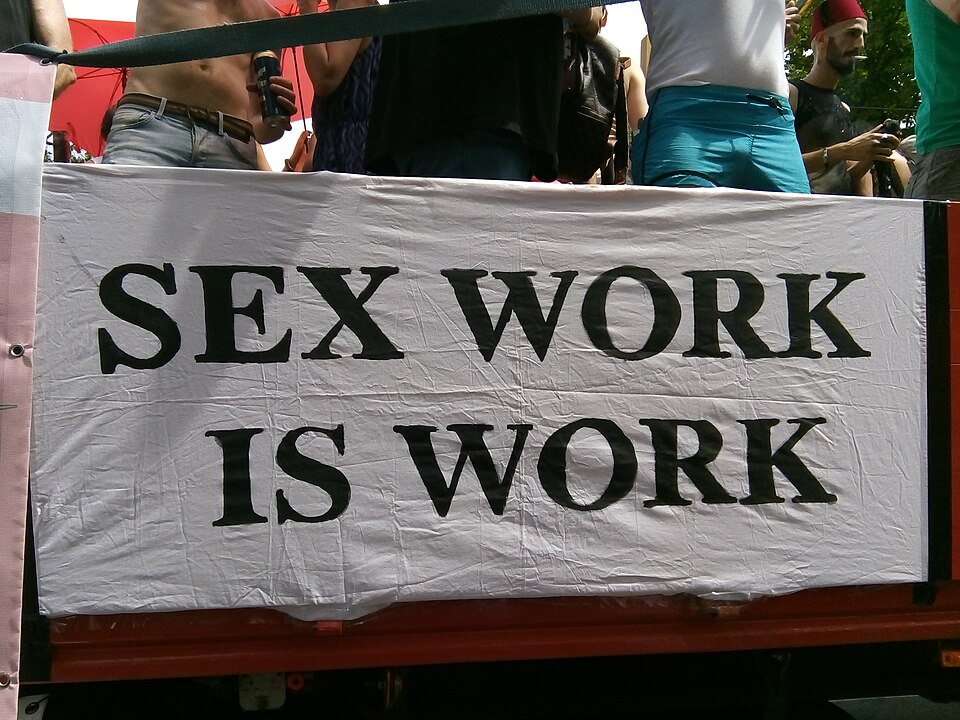
-
Article
Protectionism
Protectionism refers to government policies that shield domestic production (and producers) from foreign competition.
"https://thecanadianencyclopedia.ca/images/tce_placeholder.jpg?v=e9dca980c9bdb3aa11e832e7ea94f5d9" // resources/views/front/categories/view.blade.php
https://thecanadianencyclopedia.ca/images/tce_placeholder.jpg?v=e9dca980c9bdb3aa11e832e7ea94f5d9
-
Article
Protestantism
When a carefully engineered Catholic majority voted down certain reforms at the Diet of Speyer in Germany in 1529, the defeated minority earned the name "Protestant," derived from the Latin phrase meaning "to testify in favour of something.
"https://d3d0lqu00lnqvz.cloudfront.net/media/media/30714712-4e41-49c8-b7a6-da44f6fb0b80.jpg" // resources/views/front/categories/view.blade.php
https://d3d0lqu00lnqvz.cloudfront.net/media/media/30714712-4e41-49c8-b7a6-da44f6fb0b80.jpg
-
Article
Provigo
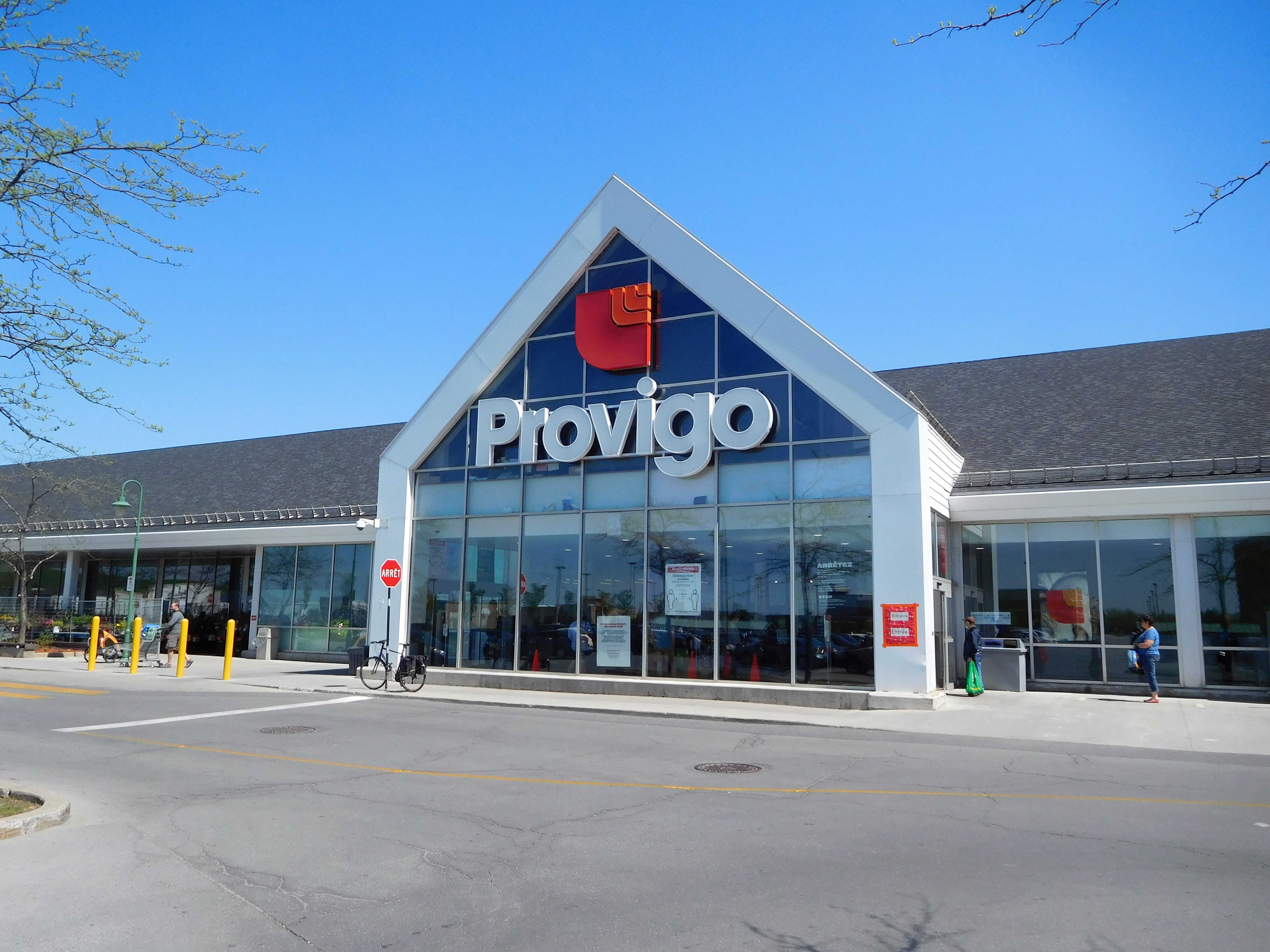
Provigo Inc. is a grocery wholesaler and retailer. Formed in a merger of three of Quebec’s major food wholesalers in 1969, its operations later spread into Ontario, Western Canada and the United States. Its most prominent retail banners included Provigo, Loeb and Maxi supermarkets and Provi-soir convenience stores. The company was purchased by Loblaw in 1998, who retained the Provigo brand for its Quebec supermarkets.
"https://d3d0lqu00lnqvz.cloudfront.net/provigo/provigomontreal.jpg" // resources/views/front/categories/view.blade.php
https://d3d0lqu00lnqvz.cloudfront.net/provigo/provigomontreal.jpg