
Browse "Things"
-
Article
Peace Movement
Canada has a long tradition of an active and vocal peace movement. The Mennonites and Quakers, guided by a philosophy of nonviolence, have consistently spoken out against war and militarism.
"https://thecanadianencyclopedia.ca/images/tce_placeholder.jpg?v=e9dca980c9bdb3aa11e832e7ea94f5d9" // resources/views/front/categories/view.blade.php
https://thecanadianencyclopedia.ca/images/tce_placeholder.jpg?v=e9dca980c9bdb3aa11e832e7ea94f5d9
-
Article
Great Peace of Montreal, 1701
On 4 August 1701, the French concluded a peace agreement with the Five Nations Haudenosaunee (Iroquois). This brought to an end almost a century of hostilities marked by atrocities on both sides. The Haudenosaunee were permitted to trade freely and to obtain goods from the French at a reduced cost. In exchange, they pledged to allow French settlement at Detroit and to remain neutral in the event of a war between England and France. The accord assured New France superiority in dealing with issues related to the region’s First Nations. It also gave the French the freedom to expand militarily over the next half century.
"https://d3d0lqu00lnqvz.cloudfront.net/media/new_article_images/GreatPeaceOfMontreal/640px-Grande_Paix_Montreal.jpg" // resources/views/front/categories/view.blade.php
https://d3d0lqu00lnqvz.cloudfront.net/media/new_article_images/GreatPeaceOfMontreal/640px-Grande_Paix_Montreal.jpg
-
Article
Peace, Order and Good Government
“Peace, order and good government” is a phrase that is used in section 91 of the British North America Act of 1867 (now called the Constitution Act, 1867). It offers a vague and broad definition of the Canadian Parliament’s lawmaking authority over provincial matters. Since Confederation, it has caused tensions between federal and provincial governments over the distribution of powers. The phrase has also taken on a value of its own with Canadians beyond its constitutional purpose. It has come to be seen as the Canadian counterpart to the American “life, liberty and the pursuit of happiness” and the French “liberty, equality, fraternity.”
"https://d3d0lqu00lnqvz.cloudfront.net/media/media/143f8587-f938-4cf1-bdc2-c441d02dc962.jpg" // resources/views/front/categories/view.blade.php
https://d3d0lqu00lnqvz.cloudfront.net/media/media/143f8587-f938-4cf1-bdc2-c441d02dc962.jpg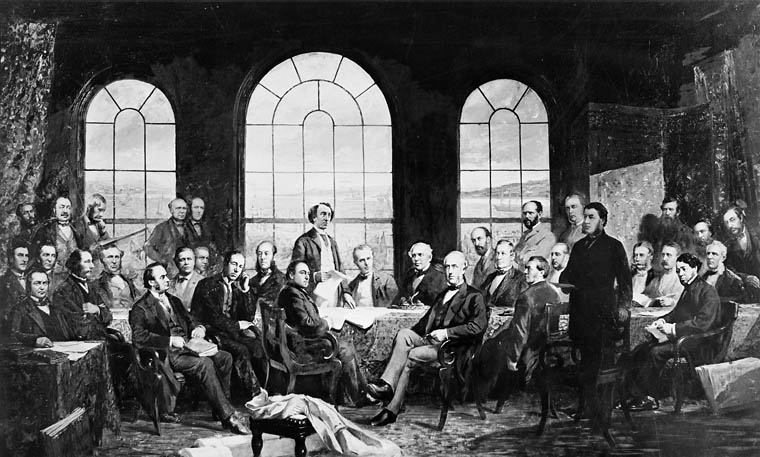
-
Macleans
Peacekeepers Leave East Timor
The job holds less significance to the mandarins in Ottawa. Tremblay and his fellow soldiers from the Royal 22nd Regiment in Valcartier, Que., wound up five months of operations at the end of last week and began preparing to return home.This article was originally published in Maclean's Magazine on March 20, 2000
"https://d3d0lqu00lnqvz.cloudfront.net/media/media/1db7b7a1-dbc0-4403-be0f-8bbfebb8765f.jpg" // resources/views/front/categories/view.blade.php
https://d3d0lqu00lnqvz.cloudfront.net/media/media/1db7b7a1-dbc0-4403-be0f-8bbfebb8765f.jpg
-
Article
Canada and Peacekeeping
Peacekeeping is the term usually applied to United Nations (UN) operations in countries affected by conflict. Peacekeepers work to maintain peace and security, protect human rights and help restore the rule of law. Peacekeepers can be members of the armed forces, police officers or civilian experts. As a result of Lester Pearson's leadership in the 1956 Suez Crisis and Canada's role in the UN Emergency Force he helped create, many Canadians consider peacekeeping part of the country's identity. However, since the 1990s Canada's reputation as a peacekeeping nation has been affected by scandal and by the failure of some overseas missions. Although Canada’s contribution to peace operations has declined since then, Canadian peacekeepers continue to serve overseas in such places as Sudan and the Democratic Republic of Congo. In total, more than 125,000 Canadians have served in UN peace operations. Canadians have also participated in UN-sanctioned peace operations led by NATO and in missions sponsored by the Multinational Force and Observers (MFO). Approximately 130 Canadians have died in peace operations.
"https://d3d0lqu00lnqvz.cloudfront.net/media/media/b52c2243-2c08-4941-9163-e8feea5c4cd3.jpg" // resources/views/front/categories/view.blade.php
https://d3d0lqu00lnqvz.cloudfront.net/media/media/b52c2243-2c08-4941-9163-e8feea5c4cd3.jpg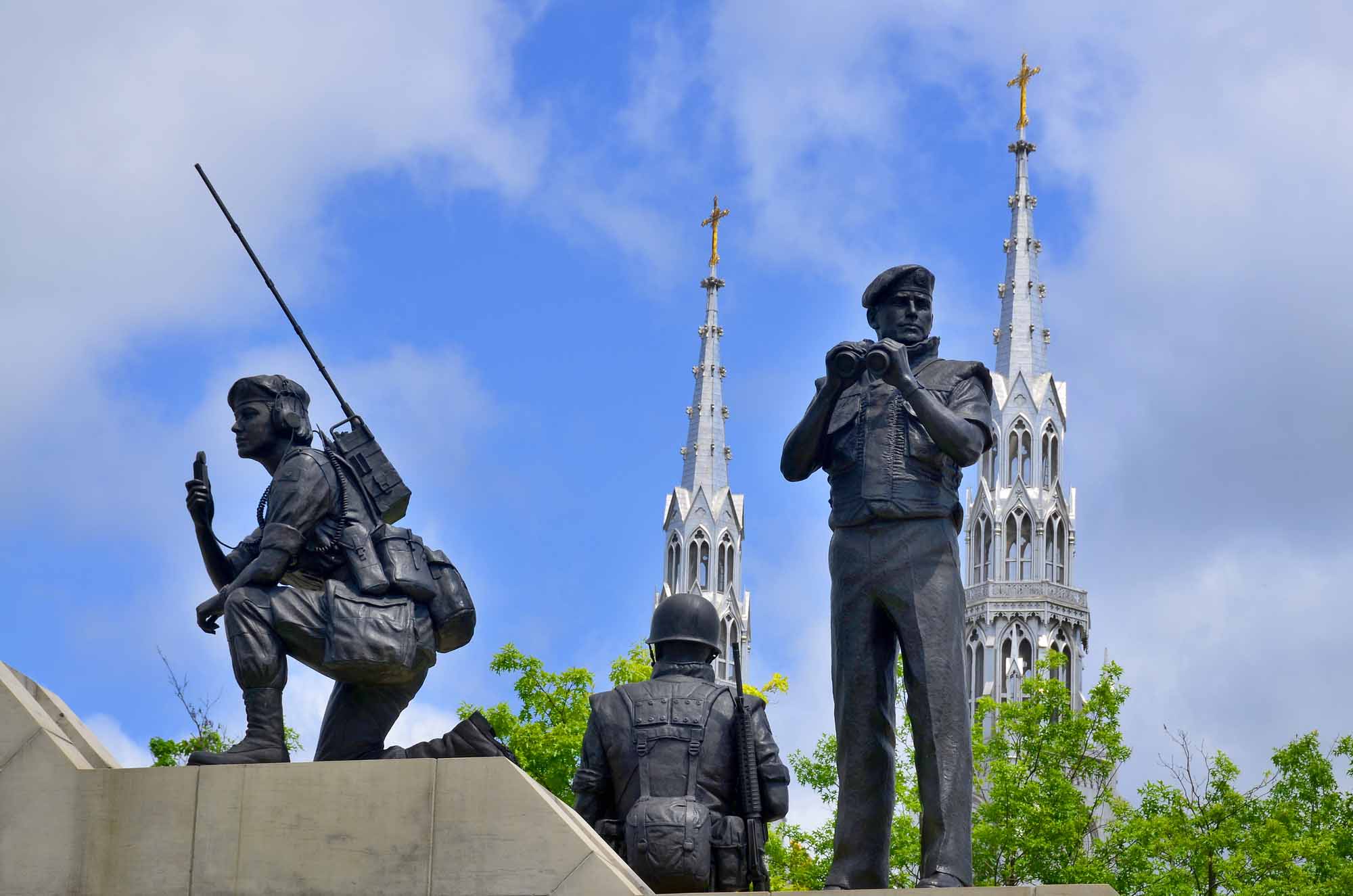
-
Timelines
Peacekeeping
Peacekeeping is the usual term applied to United Nations military operations.
"https://d3d0lqu00lnqvz.cloudfront.net/media/media/b52c2243-2c08-4941-9163-e8feea5c4cd3.jpg" // resources/views/front/categories/view.blade.php
https://d3d0lqu00lnqvz.cloudfront.net/media/media/b52c2243-2c08-4941-9163-e8feea5c4cd3.jpg
-
Article
Peach
The peach (Prunus persica) is the most widely grown stone fruit. It is native to China and was introduced to Europe 2,000 years ago. Peaches are now grown in temperate zones, worldwide. They were an important crop in Ontario by the 1880s and in British Columbia by the 1890s. Peach trees are 3–5 m tall with long, narrow, pointed leaves; single, pink flowers; and fruits (5–8 cm in diameter) with light fuzz. Peaches without fuzz are called nectarines. When ripe, varieties grown for the fresh market (in Canada, 80 per cent) have sweet, juicy flesh; those for processing (20 per cent) have firm, almost rubbery flesh adapted to mechanical handling.
"https://d3d0lqu00lnqvz.cloudfront.net/media/media/fb8c1081-f2fa-4a00-848f-89df93bd69cd.jpg" // resources/views/front/categories/view.blade.php
https://d3d0lqu00lnqvz.cloudfront.net/media/media/fb8c1081-f2fa-4a00-848f-89df93bd69cd.jpg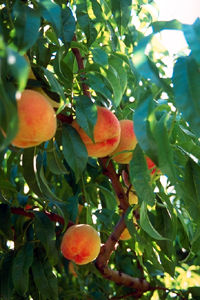
-
Article
Pear
The pear (genus Pyrus) is a common name for over 20 species of fruit-bearing and ornamental trees of the rose family. The genus is indigenous to Europe and Asia. The European pear (P. communis), which produces buttery, juicy and aromatic fruit, is the most widely grown.
"https://d3d0lqu00lnqvz.cloudfront.net/media/media/29c4a5d6-f618-422d-97c3-1365275f42e2.jpg" // resources/views/front/categories/view.blade.php
https://d3d0lqu00lnqvz.cloudfront.net/media/media/29c4a5d6-f618-422d-97c3-1365275f42e2.jpg
-
Article
Peasant Farm Policy
From 1889 to 1897, the Canadian government’s Peasant Farm Policy set limits on Indigenous agriculture on the Prairies. The policy included rules about the types of tools First Nations farmers could use on reserve lands. It also restricted how much they grew and what they could sell. The Peasant Farm Policy was built on the belief that Indigenous farmers had to gradually evolve into modern farmers. It also reduced these farmers’ ability to compete with settlers on the open market. The policy ultimately impeded the growth and development of First Nations farms. As a result, First Nations were prevented from realizing their agricultural potential.
"https://d3d0lqu00lnqvz.cloudfront.net/media/media/62c520ef-e4ce-43bd-9fca-e2256625e40a.jpg" // resources/views/front/categories/view.blade.php
https://d3d0lqu00lnqvz.cloudfront.net/media/media/62c520ef-e4ce-43bd-9fca-e2256625e40a.jpg
-
Article
Peat
Peat, living and partially decomposed organic matter, consists principally of decayed brown mosses, Sphagnum plants, sedges and other semiaquatic plant remains. Peat is formed slowly in water-logged areas by the decay of vegetation, mostly under anaerobic (oxygen-deficient) conditions, and contains up to 95 per cent water by weight. Canada's extensive peatlands developed since the last glaciation, about 10,000 years ago. The high water content has always been the main obstacle to its extensive exploitation as an energy source; however, dried peat has been one of the traditional fuels in places where the peat is of high quality and easily accessible (e.g., Ireland). Other uses of peat include water filtration, absorbent materials and horticultural applications, including the cultivation of vegetables on peatlands in southern Québec.
"https://d3d0lqu00lnqvz.cloudfront.net/moss/bog.jpg" // resources/views/front/categories/view.blade.php
https://d3d0lqu00lnqvz.cloudfront.net/moss/bog.jpg
-
Article
Peavey
The peavey is a lever for handling logs It was designed in 1858 and named after its inventor Joseph Peavey, who was a Maine blacksmith. The peavey, which is a refinement of the earlier cant hook, greatly facilitated the down
"https://d3d0lqu00lnqvz.cloudfront.net/media/media/91e82797-6312-499b-be87-03fb9ea226aa.jpg" // resources/views/front/categories/view.blade.php
https://d3d0lqu00lnqvz.cloudfront.net/media/media/91e82797-6312-499b-be87-03fb9ea226aa.jpg
-
Article
Pediatrics
Pediatrics is that branch of MEDICINE concerned with the child, its development, care and diseases.
"https://thecanadianencyclopedia.ca/images/tce_placeholder.jpg?v=e9dca980c9bdb3aa11e832e7ea94f5d9" // resources/views/front/categories/view.blade.php
https://thecanadianencyclopedia.ca/images/tce_placeholder.jpg?v=e9dca980c9bdb3aa11e832e7ea94f5d9
-
Article
Pedlar
Pedlar is a derogatory term used in the days of the Fur Trade by Hudson's Bay Company men to describe any trader from Québec, and later any trader from the North West Company, who "peddled" his goods to the Indigenous peoples by taking them to their encampments.
"https://thecanadianencyclopedia.ca/images/tce_placeholder.jpg?v=e9dca980c9bdb3aa11e832e7ea94f5d9" // resources/views/front/categories/view.blade.php
https://thecanadianencyclopedia.ca/images/tce_placeholder.jpg?v=e9dca980c9bdb3aa11e832e7ea94f5d9
-
Macleans
PEI Bomber Sought
Marlene Stanton was unaccustomed to finding urgent stories in the daily mail, so she let the letters languish on her desk.This article was originally published in Maclean's Magazine on September 23, 1996
"https://thecanadianencyclopedia.ca/images/tce_placeholder.jpg?v=e9dca980c9bdb3aa11e832e7ea94f5d9" // resources/views/front/categories/view.blade.php
https://thecanadianencyclopedia.ca/images/tce_placeholder.jpg?v=e9dca980c9bdb3aa11e832e7ea94f5d9
-
Macleans
PEI Bombing Suspect Arrested
Divorced and living by himself in a drab Charlottetown apartment complex for the past 10 years, Roger Bell did not go out of his way to meet people. "He didn't say as much as hello," said John Acorn, Bell's next-door neighbor.This article was originally published in Maclean's Magazine on December 30, 1996
"https://thecanadianencyclopedia.ca/images/tce_placeholder.jpg?v=e9dca980c9bdb3aa11e832e7ea94f5d9" // resources/views/front/categories/view.blade.php
https://thecanadianencyclopedia.ca/images/tce_placeholder.jpg?v=e9dca980c9bdb3aa11e832e7ea94f5d9