
Browse "Things"
-
Article
Luge and Skeleton Bobsledding
Tobogganing developed independently in eastern Canada among native tribes who used their transportation sleighs for occasional fun. It was refined by groups such as the Montreal Tobogganing Club, the first such club in Canada, formed in 1881.
"https://d3d0lqu00lnqvz.cloudfront.net/media/media/a60d0cf9-b2c8-4223-a154-72ed9c6ef620.jpg" // resources/views/front/categories/view.blade.php
https://d3d0lqu00lnqvz.cloudfront.net/media/media/a60d0cf9-b2c8-4223-a154-72ed9c6ef620.jpg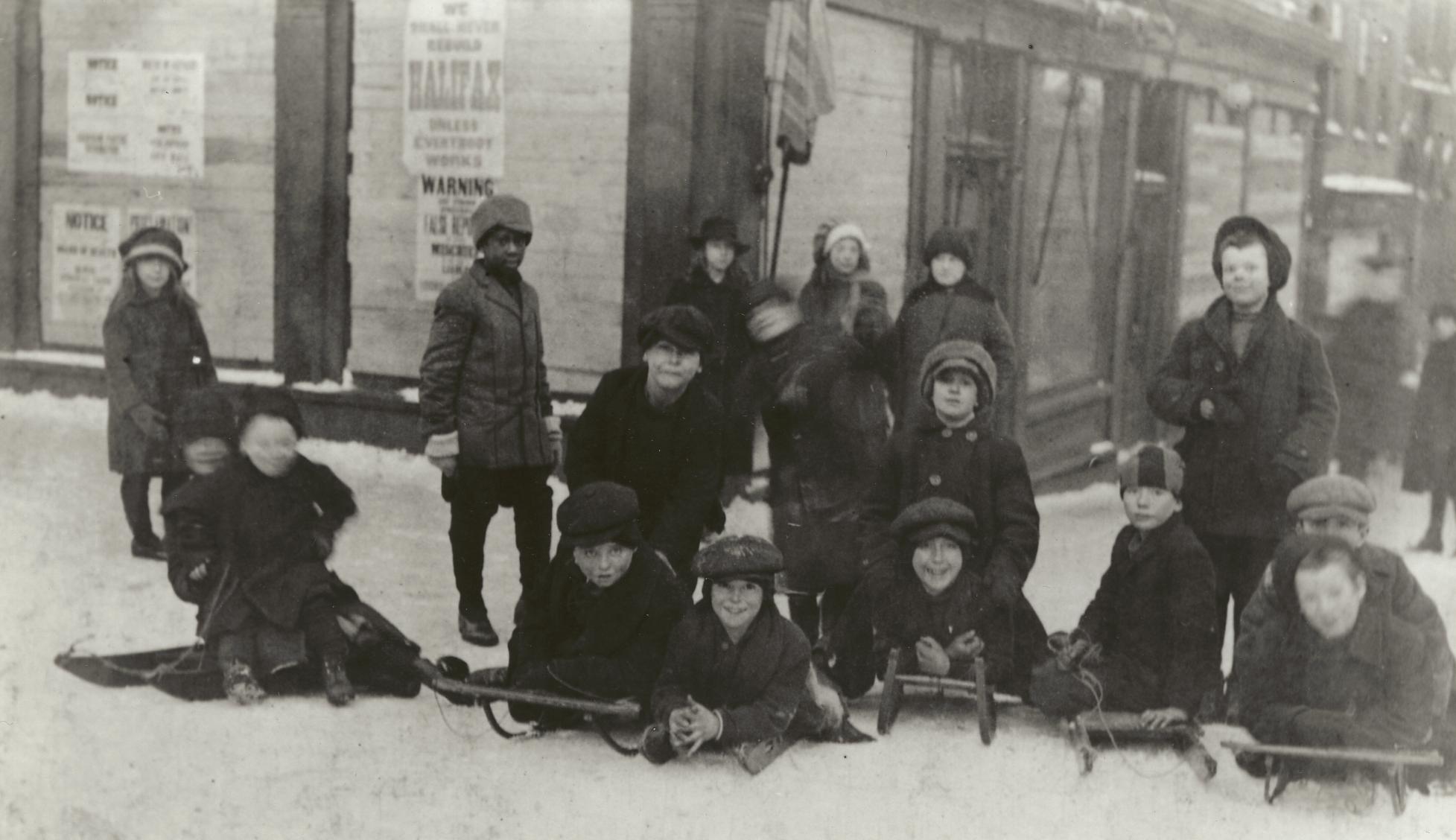
-
Article
Lumber and Wood Industries
Canada’s lumber and wood industries convert logs into various products, from lumber to wood chips. Softwood, derived from coniferous trees, supplies most of the manufacturers in these industries and is cut primarily in British Columbia. The remainder of the industry is supplied by hardwood (from deciduous trees, e.g., birch, maple, oak) found mainly in southern Ontario and Quebec and the Maritimes. Though technically not hardwood, Alberta produces large volumes of aspen and poplar. According to Natural Resources Canada, the forest sector contributed $33.4 billion to Canada’s nominal gross domestic product and employed 212,660 people in 2022. (See also Pulp and Paper Industry; Forest Harvesting; Timber Trade History; Forestry.)
"https://d3d0lqu00lnqvz.cloudfront.net/media/media/c1513b07-b36d-4c5c-8ff0-1b063bb48745.jpg" // resources/views/front/categories/view.blade.php
https://d3d0lqu00lnqvz.cloudfront.net/media/media/c1513b07-b36d-4c5c-8ff0-1b063bb48745.jpg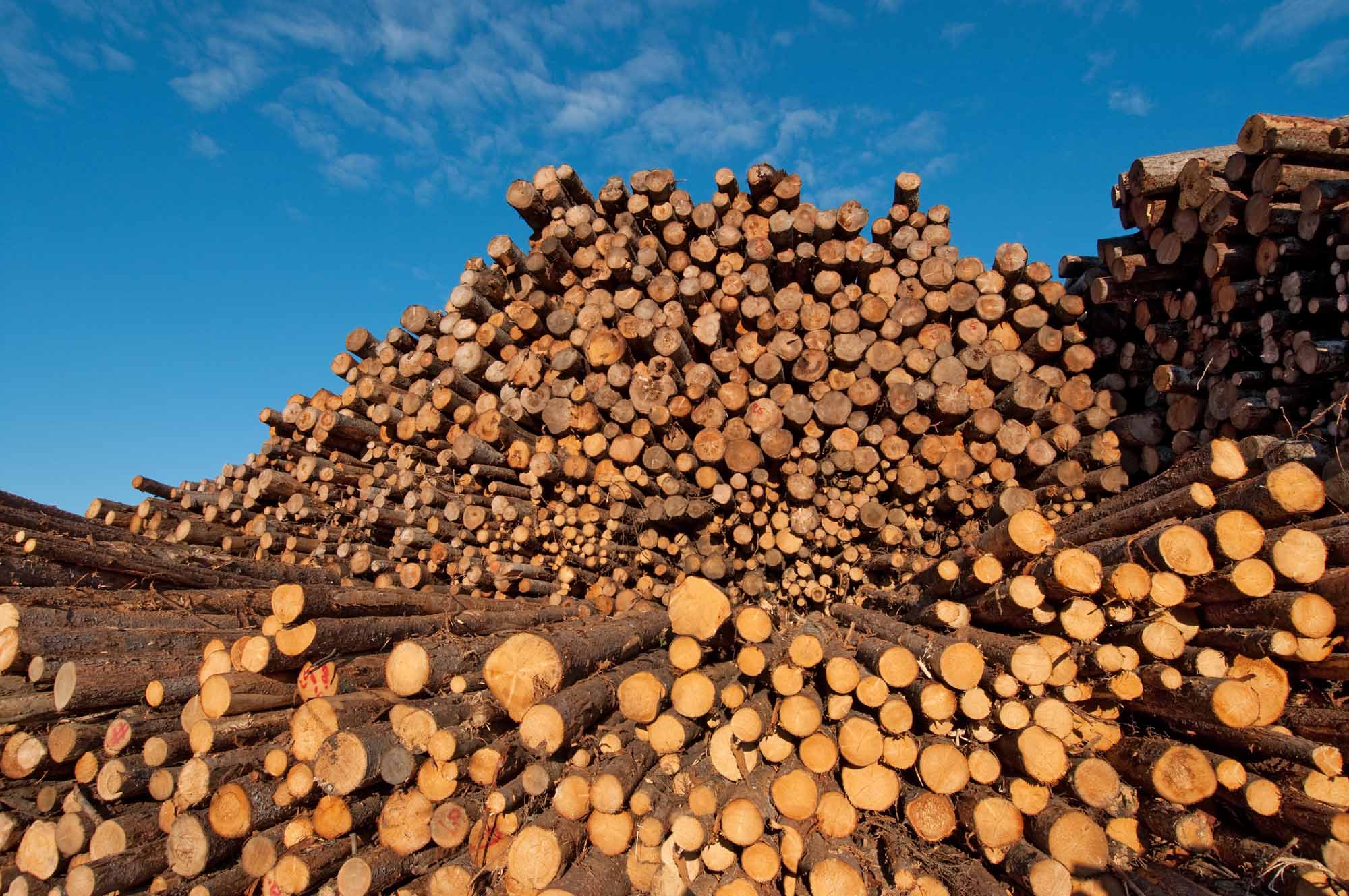
-
"https://thecanadianencyclopedia.ca/images/tce_placeholder.jpg?v=e9dca980c9bdb3aa11e832e7ea94f5d9" // resources/views/front/categories/view.blade.php
https://thecanadianencyclopedia.ca/images/tce_placeholder.jpg?v=e9dca980c9bdb3aa11e832e7ea94f5d9
-
Article
Lupine
Lupine (Latin lupus, "wolf," from the belief that it robs the soil) is the common name for several annual or perennial herbaceous plant species in the pea family (Leguminosae or Fabaceae; see legume) genus Lupinus. Lupines are characterized by palmately compound leaves (i.e., leaflets that radiate from a central point) and showy flower spikes. These traits make lupines admirable ornamentals (e.g., "Russell Hybrid" lupines).
"https://d3d0lqu00lnqvz.cloudfront.net/media/media/bcc8ac7a-55fd-420d-99e4-9d9b9be43912.jpg" // resources/views/front/categories/view.blade.php
https://d3d0lqu00lnqvz.cloudfront.net/media/media/bcc8ac7a-55fd-420d-99e4-9d9b9be43912.jpg
-
Article
Music of the Lutherans
In 1980, Canada's fifth-largest Christian denomination, numbering approximately 716,000 persons, of whom 302,736 were members of congregations.
"https://thecanadianencyclopedia.ca/images/tce_placeholder.jpg?v=e9dca980c9bdb3aa11e832e7ea94f5d9" // resources/views/front/categories/view.blade.php
https://thecanadianencyclopedia.ca/images/tce_placeholder.jpg?v=e9dca980c9bdb3aa11e832e7ea94f5d9
-
Article
Lye Organ Company
Lye Organ Company. Edward Lye (b Somerset, England, 1828 or 1829, d Toronto, 9 Nov 1919) became a cabinetmaker in England, and this training appears to have led naturally to the construction of organs.
"https://thecanadianencyclopedia.ca/images/tce_placeholder.jpg?v=e9dca980c9bdb3aa11e832e7ea94f5d9" // resources/views/front/categories/view.blade.php
https://thecanadianencyclopedia.ca/images/tce_placeholder.jpg?v=e9dca980c9bdb3aa11e832e7ea94f5d9
-
Article
Canada Lynx
The lynx is a medium-sized, carnivorous mammal of family Felidae. Canada lynx (Lynx canadensis) is distinguished from the North American bobcat by its tufted ears, large feet, long legs and lack of a white patch below the tail tip. The buff grey, indistinctly spotted fur is long behind the jaws, on the sides of the body and back of the hind legs. Males are larger than females and size ranges widely (5–13 kg).
"https://d3d0lqu00lnqvz.cloudfront.net/media/media/afc695e4-39e9-44d1-976b-3b6bbe48ca04.jpg" // resources/views/front/categories/view.blade.php
https://d3d0lqu00lnqvz.cloudfront.net/media/media/afc695e4-39e9-44d1-976b-3b6bbe48ca04.jpg
-
Article
M113 Armoured Personnel Carrier
The American-designed M113 armoured personnel carrier (APC) became the most widely used tracked APC in the world. FMC Corporation introduced the M113 in 1960; eventually, more than 40 nations operated it. The M113 went through three major upgrades and many variants were produced.
"https://d3d0lqu00lnqvz.cloudfront.net/M113/M113-Germany-Fallex-1984.jpg" // resources/views/front/categories/view.blade.php
https://d3d0lqu00lnqvz.cloudfront.net/M113/M113-Germany-Fallex-1984.jpg
-
Article
Machinery and Equipment Industry
Machinery and Equipment Industry includes establishments that produce pumps and compressors, rolling-mill and metalworking equipment, forestry equipment, mining equipment, farm machinery, construction equipment and service industries equipment.
"https://thecanadianencyclopedia.ca/images/tce_placeholder.jpg?v=e9dca980c9bdb3aa11e832e7ea94f5d9" // resources/views/front/categories/view.blade.php
https://thecanadianencyclopedia.ca/images/tce_placeholder.jpg?v=e9dca980c9bdb3aa11e832e7ea94f5d9
-
"https://thecanadianencyclopedia.ca/images/tce_placeholder.jpg?v=e9dca980c9bdb3aa11e832e7ea94f5d9" // resources/views/front/categories/view.blade.php
https://thecanadianencyclopedia.ca/images/tce_placeholder.jpg?v=e9dca980c9bdb3aa11e832e7ea94f5d9
-
Article
Mackenzie-Grease Trail
The Mackenzie-Grease Trail represents the final 350 km link which Alexander Mackenzie followed in the first recorded crossing of continental North America in 1793.
"https://thecanadianencyclopedia.ca/images/tce_placeholder.jpg?v=e9dca980c9bdb3aa11e832e7ea94f5d9" // resources/views/front/categories/view.blade.php
https://thecanadianencyclopedia.ca/images/tce_placeholder.jpg?v=e9dca980c9bdb3aa11e832e7ea94f5d9
-
Article
Mackenzie Highway
Eighty km northwest of Enterprise, a ferry connects with the highway to Yellowknife, and connecting roads to the east serve Fort Resolution and Fort Smith. The section from Enterprise to Hay River is now a separate highway. First built as an all-weather road, some of its length has been paved.
"https://d3d0lqu00lnqvz.cloudfront.net/media/media/2862aeaf-cace-4b85-aac6-6d4f4ad9c96e.jpg" // resources/views/front/categories/view.blade.php
https://d3d0lqu00lnqvz.cloudfront.net/media/media/2862aeaf-cace-4b85-aac6-6d4f4ad9c96e.jpg
-
Article
Mackenzie King and the War Effort
Prime Minister William Lyon Mackenzie King guided the country through six painful years of conflict, oversaw a massive war effort and made surprisingly few errors in a period of tremendous turmoil, change and anguish.
"https://d3d0lqu00lnqvz.cloudfront.net/media/media/86b5dad6-77f9-493c-8453-1af445eda20b.jpg" // resources/views/front/categories/view.blade.php
https://d3d0lqu00lnqvz.cloudfront.net/media/media/86b5dad6-77f9-493c-8453-1af445eda20b.jpg
-
Article
Mackenzie-Papineau Battalion
The Mackenzie-Papineau Battalion was a unit in the Second Spanish Republican Army during the Spanish Civil War (1936–39). The battalion was largely composed of Canadian volunteers and was known formally as the 60th Battalion of the XVth International Brigade. Formed in July 1937, it fought in several key campaigns until the Second Spanish Republic disbanded the International Brigades in September 1938. Although the battalion had many Canadian volunteers, it also included large numbers of American, British, Cuban, Finnish, and Spanish volunteers. To add further confusion, Canadian volunteers who served in other units are often referred to as having been members of the Mackenzie-Papineau Battalion (“Mac-Paps”).
"https://d3d0lqu00lnqvz.cloudfront.net/Mac-Pap/Soldiers_Mac-Paps.jpg" // resources/views/front/categories/view.blade.php
https://d3d0lqu00lnqvz.cloudfront.net/Mac-Pap/Soldiers_Mac-Paps.jpg
-
Article
Mackenzie Valley Pipeline Proposals
In 1970, the Canadian government introduced guidelines for the development of a pipeline corridor south from the Mackenzie River delta to Alberta and the United States. Energy companies have since proposed three separate projects to transport natural gas by pipeline along this route — the Arctic Gas Pipeline, the Foothills Pipeline and the Mackenzie Gas Project — with an oil pipeline likely to follow in the first two cases. However, due to high costs, engineering challenges, environmental concerns, Indigenous land claims and changing markets, none of these pipelines has been built.
"https://d3d0lqu00lnqvz.cloudfront.net/media/media/89404904-e385-4477-8df9-b2e0c5543b73.jpg" // resources/views/front/categories/view.blade.php
https://d3d0lqu00lnqvz.cloudfront.net/media/media/89404904-e385-4477-8df9-b2e0c5543b73.jpg