Browse "Things"
-
Article
Halibut Treaty
The Halibut Treaty of 1923 (formally the Convention for the Preservation of Halibut Fishery of the Northern Pacific Ocean) was an agreement between Canada and the United States on fishing rights in the Pacific Ocean. It was the first environmental treaty aimed at conserving an ocean fish stock. It was also the first treaty independently negotiated and signed by the Canadian government; one of several landmark events that transitioned Canada into an autonomous sovereign state. It also indicated a shift in Canada’s economic focus from Britain to the US during the 1920s, when the US passed Britain as Canada’s largest trading partner. The treaty created the International Pacific Halibut Commission, which continues in its role today.
"https://d3d0lqu00lnqvz.cloudfront.net/media/new_article_images/HalibutTreaty/Pacific_halibut_range_2.png" // resources/views/front/categories/view.blade.php
https://d3d0lqu00lnqvz.cloudfront.net/media/new_article_images/HalibutTreaty/Pacific_halibut_range_2.png
-
Article
Halifax and Titanic
The Royal Mail Ship Titanic sank on 15 April 1912, taking the lives of more than 1,500 passengers and crew. Many victims went down with the ship, but the bodies of others remained on the surface, kept afloat by their life jackets. Pressure from relatives, newspapers and the general public led the Titanic’s owners, the White Star Line, to charter four vessels to recover the victims’ bodies. In total, these ships recovered the bodies of 328 passengers and crew. The recovery effort was based in Halifax, Nova Scotia, where 150 of the victims were buried.
"https://d3d0lqu00lnqvz.cloudfront.net/Titanic/Macaky-Bennett-Lifeboat.jpg" // resources/views/front/categories/view.blade.php
https://d3d0lqu00lnqvz.cloudfront.net/Titanic/Macaky-Bennett-Lifeboat.jpg
-
Article
Halifax Citadel
The general introduction of rifled artillery (with greater range and accuracy than earlier guns) shortly after completion of the Citadel rendered the costly installation obsolescent. It was partially rearmed in the 1860s and 1870s, and continued in use as a barracks into the 20th century.
"https://d3d0lqu00lnqvz.cloudfront.net/media/media/2a4ab68a-776a-430a-9155-c6d6ae17697b.jpg" // resources/views/front/categories/view.blade.php
https://d3d0lqu00lnqvz.cloudfront.net/media/media/2a4ab68a-776a-430a-9155-c6d6ae17697b.jpg
-
Article
Halifax-class Frigates
The Halifax class of helicopter-carrying frigates (FFH) are multi-purpose warships of the Royal Canadian Navy (RCN). There are 12 ships in the class. They were conceived in the 1970s as a replacement of the St Laurent and related classes of destroyer escorts, to provide antisubmarine warfare (ASW) protection for the fleet. The Halifax class entered service in the early 1990s, just after the end of the Cold War, and proved instead to be highly versatile general-purpose warships. Due to a major class-wide modernization project completed in the 2010s, they remain the backbone of the RCN surface fleet. The Halifax class will be replaced in the 2030s by the Canadian Surface Combatant (CSC) ships announced in 2019.
"https://d3d0lqu00lnqvz.cloudfront.net/Navy/HMCSVancouver.jpg" // resources/views/front/categories/view.blade.php
https://d3d0lqu00lnqvz.cloudfront.net/Navy/HMCSVancouver.jpg
-
Article
Halifax Donair
The Halifax donair is a fast-food wrap-like dish popularized in Canada. A regional variant of the Turkish doner kebab, donair is believed to have originated in Halifax, Nova Scotia. It’s believed that Peter Gamoulakos, a Greek Canadian immigrant, invented it. Donair is made of ground beef with spices, which is served in a pita with a sweet sauce. In 2015, Halifax named the donair as the city’s official food. It has become an iconic symbol of Haligonian cuisine and has been adapted to local tastes in other parts of Canada.
"https://d3d0lqu00lnqvz.cloudfront.net/Donair/Single-Use/Donair.jpg" // resources/views/front/categories/view.blade.php
https://d3d0lqu00lnqvz.cloudfront.net/Donair/Single-Use/Donair.jpg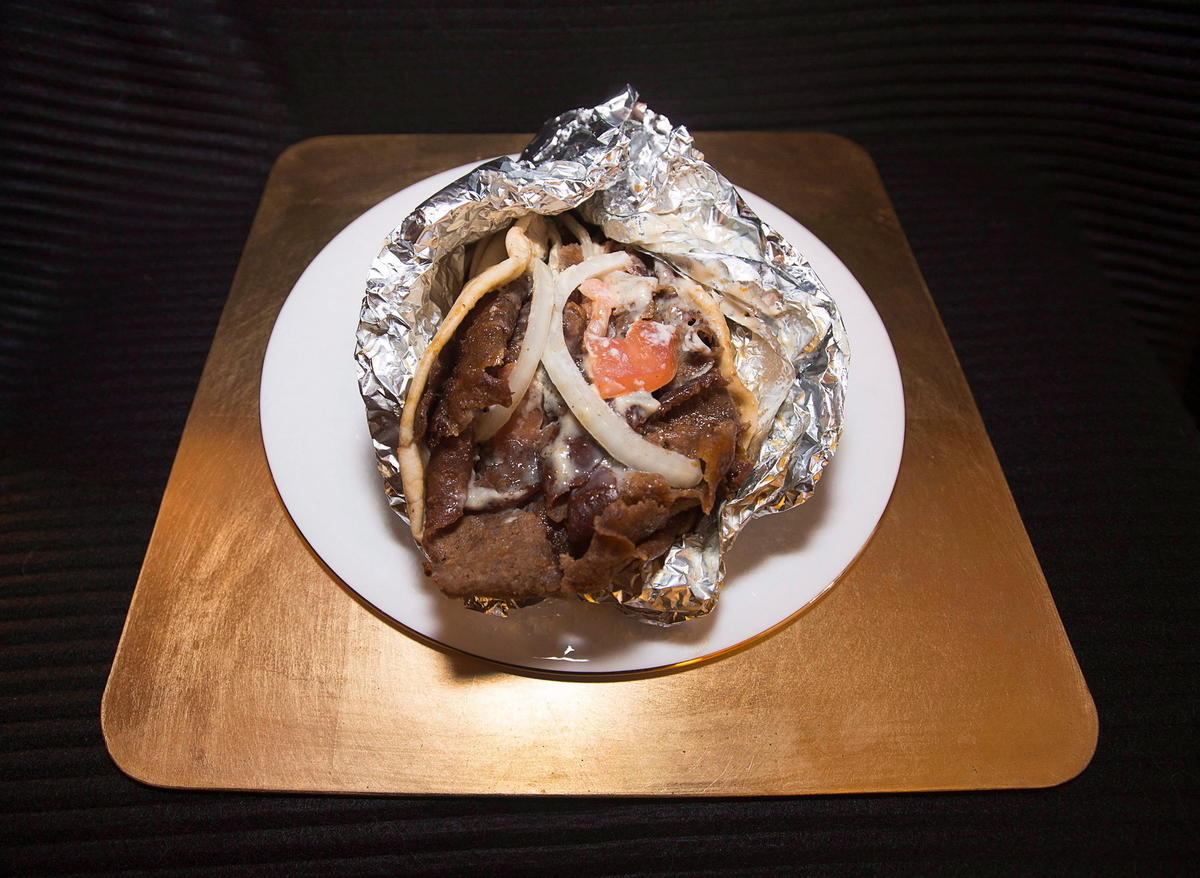
-
Article
Halifax Explosion
Halifax was devastated on 6 December 1917 when two ships collided in the city's harbour, one of them a munitions ship loaded with explosives bound for the battlefields of the First World War. What followed was one of the largest human-made explosions prior to the detonation of the first atomic bombs in 1945. The north end of Halifax was wiped out by the blast and subsequent tsunami. Nearly 2,000 people died, another 9,000 were maimed or blinded, and more than 25,000 were left without adequate shelter. This is the full-length entry about the Halifax Explosion. For a plain-language summary, please see Halifax Explosion (Plain-Language Summary).
"https://d3d0lqu00lnqvz.cloudfront.net/media/media/7d331967-7fdb-493d-a6b8-f509bee35749.jpg" // resources/views/front/categories/view.blade.php
https://d3d0lqu00lnqvz.cloudfront.net/media/media/7d331967-7fdb-493d-a6b8-f509bee35749.jpg
-
Article
Halifax Explosion (Plain-Language Summary)
The Halifax Explosion happened on 6 December 1917. Two ships ran into each other. One of the ships was carrying munitions (war supplies), including explosives. The munitions were being sent to Europe to use in the First World War. The explosion destroyed the north end of Halifax. About 2,000 people died and 9,000 were wounded. About 25,000 lost their homes. The Halifax explosion was the biggest human-made explosion until August 1945. That was when the United States dropped two atomic bombs on Japan. (This article is a plain-language summary of the Halifax Explosion. If you are interested in reading about this topic in more depth, please see the full-length entry, Halifax Explosion.)
"https://d3d0lqu00lnqvz.cloudfront.net/media/media/b0f5c9f5-5d2a-4e1e-b0d9-89b100a31916.jpg" // resources/views/front/categories/view.blade.php
https://d3d0lqu00lnqvz.cloudfront.net/media/media/b0f5c9f5-5d2a-4e1e-b0d9-89b100a31916.jpg
-
Macleans
Halifax on Eve of G-7 Summit
Go at daybreak, when the morning fog still cools the air.This article was originally published in Maclean's Magazine on June 19, 1995
"https://thecanadianencyclopedia.ca/images/tce_placeholder.jpg?v=e9dca980c9bdb3aa11e832e7ea94f5d9" // resources/views/front/categories/view.blade.php
https://thecanadianencyclopedia.ca/images/tce_placeholder.jpg?v=e9dca980c9bdb3aa11e832e7ea94f5d9
-
Article
Halifax Relief Commission
Halifax Relief Commission began 6 Dec 1917 as an emergency committee to provide immediate relief after the HALIFAX EXPLOSION. In Apr 1918, a 3-man commission was incorporated by provincial statute to administer a $30-million fund for medical care, social welfare, compensation and reconstruction.
"https://thecanadianencyclopedia.ca/images/tce_placeholder.jpg?v=e9dca980c9bdb3aa11e832e7ea94f5d9" // resources/views/front/categories/view.blade.php
https://thecanadianencyclopedia.ca/images/tce_placeholder.jpg?v=e9dca980c9bdb3aa11e832e7ea94f5d9
-
Macleans
Halifax Summit
It is a source of pride to Prime Minister Jean Chrétien that more than 30 years after he first entered politics, time has not altered his fondness for blunt talk - even in the most exclusive gatherings.This article was originally published in Maclean's Magazine on June 26, 1995
"https://thecanadianencyclopedia.ca/images/tce_placeholder.jpg?v=e9dca980c9bdb3aa11e832e7ea94f5d9" // resources/views/front/categories/view.blade.php
https://thecanadianencyclopedia.ca/images/tce_placeholder.jpg?v=e9dca980c9bdb3aa11e832e7ea94f5d9
-
Article
“Hallelujah”
“Hallelujah” is arguably poet and singer-songwriter Leonard Cohen’s best-known song. Considered by many to be one of the greatest songs of all time, it was ranked No. 11 on CBC Music’s list of the 100 Best Canadian Songs Ever. “Hallelujah” failed to garner much attention when it was initially released in 1985, but became increasingly popular after various artists — most notably Jeff Buckley, k.d. lang and Rufus Wainwright— performed covers of it. Since its release, “Hallelujah” has been covered by over 300 artists and has been used in numerous movies and television shows. It was inducted into the Canadian Songwriters Hall of Fame in 2006.
"https://d3d0lqu00lnqvz.cloudfront.net/media/media/0f4e9e7f-f4f7-4565-adde-2190b1f1cf06.jpg" // resources/views/front/categories/view.blade.php
https://d3d0lqu00lnqvz.cloudfront.net/media/media/0f4e9e7f-f4f7-4565-adde-2190b1f1cf06.jpg
-
Article
Halloween in Canada
Halloween is observed annually on the night of 31 October. It originated primarily as a Celtic celebration marking the division of the light and dark halves of the year. (It is exactly halfway between the September equinox and winter solstice.) It was believed that the spiritual world became visible to humans at this time, and the souls of the dead — who loved to play tricks on mortals — could mingle among the living. Halloween customs include wearing disguises to ward off ghosts and offering food to appease malevolent spirits. These practices were brought to Canada in the mid-to-late 1800s by Irish and Scottish immigrants. The first public report in North America of a jack-o’-lantern carved from a pumpkin was in Kingston, Ontario, in 1886. The first record of dressing in disguise on Halloween was in Vancouver in 1898. And the first recorded use of the term trick-or-treat was in Lethbridge, Alberta, in 1927. Halloween became increasingly popular with adults beginning in the 1990s. By 2023, it was estimated to be a $1.8-billion industry in Canada. It is the second most commercially successful holiday behind Christmas.
"https://d3d0lqu00lnqvz.cloudfront.net/media/media/bce29e08-9b54-4670-baae-580c191ab5e7.jpg" // resources/views/front/categories/view.blade.php
https://d3d0lqu00lnqvz.cloudfront.net/media/media/bce29e08-9b54-4670-baae-580c191ab5e7.jpg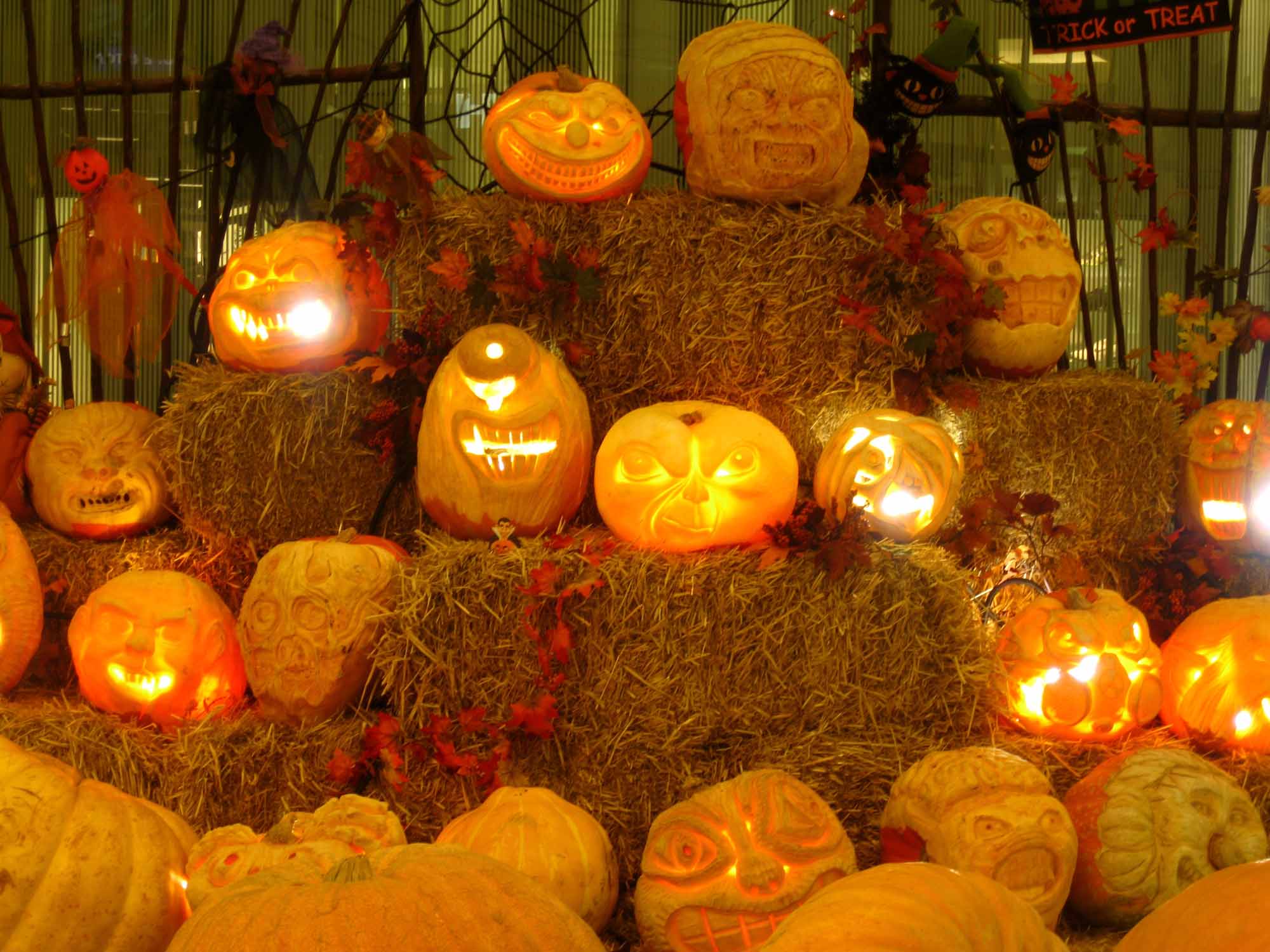
-
Article
E. coli Infection in Canada
Every year, approximately 470 Canadians are infected with E. coli bacteria, which can cause severe illness and, in a small minority of cases, death. Though the illness has been called “hamburger disease,” based on its association with ground beef patties containing infection-causing E. coli, it can be transmitted through a variety of other foods, untreated water and contact with the fecal matter of infected people and animals. Several deadly, high-profile E. coli outbreaks have occurred in Canada since the 1980s. They have resulted in greater public awareness, as well as changes in regulations and health practices.
"https://d3d0lqu00lnqvz.cloudfront.net/media/media/f311e0cb-bb9e-4188-8bab-dcd894b2b124.jpg" // resources/views/front/categories/view.blade.php
https://d3d0lqu00lnqvz.cloudfront.net/media/media/f311e0cb-bb9e-4188-8bab-dcd894b2b124.jpg
-
Article
Hamilton Tiger-Cats
The Hamilton Tiger-Cats are a professional team in the Canadian Football League (CFL). The franchise dates back to the formation of the Hamilton Football Club (the Tigers) in November 1869. The Tigers and another Hamilton football team, the Wildcats, amalgamated as the Tiger-Cats for the 1950 season and played in the Inter-provincial Rugby Football Union (IRFU). The IRFU became the Eastern Conference of the CFL in 1960. Since the early 20th century, the Tigers and Tiger-Cats have been associated with a tough, physical brand of football that reflects the blue-collar roots of Hamilton as an industrial city. The team’s iconic cheer, “Oskie Wee Wee, Oskie Waa Waa, Holy Mackinaw, Tigers… Eat ’em Raw!” is well known throughout Canada and dates back to the early 20th century. The Tiger-Cats have won the Grey Cup 13 times, including five times as the Tigers.
"https://d3d0lqu00lnqvz.cloudfront.net/media/new_article_images/HamiltonTigerCats/43156061381_4ee5c904af_w.jpg" // resources/views/front/categories/view.blade.php
https://d3d0lqu00lnqvz.cloudfront.net/media/new_article_images/HamiltonTigerCats/43156061381_4ee5c904af_w.jpg
-
Article
Tr'ondëk Hwëch'in (Han)
Han territory traditionally straddled the Yukon-Alaska boundary, extending along the Yukon River from about 20 km south of Dawson northward to about 50 km south of Circle, Alaska.
"https://d3d0lqu00lnqvz.cloudfront.net/media/media/7d2699bc-260f-4b3e-b27a-f0d430e23030.jpg" // resources/views/front/categories/view.blade.php
https://d3d0lqu00lnqvz.cloudfront.net/media/media/7d2699bc-260f-4b3e-b27a-f0d430e23030.jpg