
Browse "Things"
-
Article
Animals in Winter
Winter is the season that begins on 21 December (the winter solstice) and ends on 21 March (the spring Equinox). In Canada, cold and snow are associated with this season. The sun is closest to Earth in January, but it is the sun's radiation striking the land at an oblique angle that makes this season generally cold. The further north, the more oblique this angle becomes, and the colder it gets. Land takes time to cool down in fall and early winter, so the depth of winter does not set in until January, and as Canadians know, winter is by no means over on March 21.
"https://d3d0lqu00lnqvz.cloudfront.net/media/media/40d682a1-b4f6-4cae-b36e-d0ccecd5065c.jpg" // resources/views/front/categories/view.blade.php
https://d3d0lqu00lnqvz.cloudfront.net/media/media/40d682a1-b4f6-4cae-b36e-d0ccecd5065c.jpg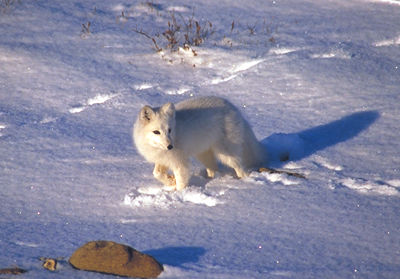
-
Article
Animals Only Found in Canada
Endemic species are species that can be found only in one area of Earth. Canada is home to multiple animals found nowhere else. Given their highly restricted range and often specialized life history, these animals are commonly at risk. While there are many endemic subspecies in Canada (e.g., Peary caribou and wood bison), this list details nine species that can only be found in Canada.
"https://d3d0lqu00lnqvz.cloudfront.net/animalsonlyincanada/salt-marsh-copper.jpg" // resources/views/front/categories/view.blade.php
https://d3d0lqu00lnqvz.cloudfront.net/animalsonlyincanada/salt-marsh-copper.jpg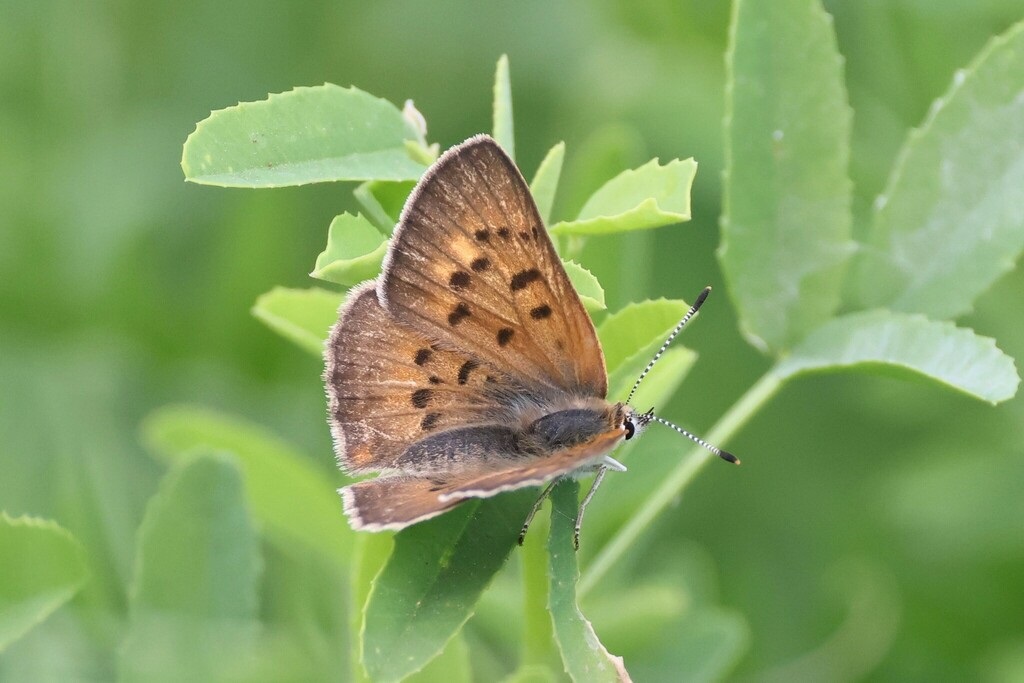
-
Article
Animals that Served in the First World War
During the First World War, military personnel from all combatant countries used millions of animals for work and as pets. This includes Canadians who served overseas as members of the Canadian Expeditionary Force (CEF) and the Canadian Siberian Expeditionary Force (CSEF), as well as Canadian service personnel based in Canada. Horses, mules, dogs and birds were the most common animals employed, although there were several others, including reindeer and glow-worms.
"https://d3d0lqu00lnqvz.cloudfront.net/AnimalsWar/PackHorse.jpg" // resources/views/front/categories/view.blade.php
https://d3d0lqu00lnqvz.cloudfront.net/AnimalsWar/PackHorse.jpg
-
Article
Anishinaabemowin: Ojibwe Language
Anishinaabemowin (also called Ojibwemowin, the Ojibwe/Ojibwa language, or Chippewa) is an Indigenous language, generally spanning from Manitoba to Québec, with a strong concentration around the Great Lakes. Elders share that the term Anishinaabemowin acknowledges the creation story of the Ojibwe people: “Anishinaabe” means “the spirit that is lowered down from above,” “-mo” refers to expression through speech and “-win” refers to the life energy within, used to do so. Linguists also explain that “-win” is a nominalizer that turns the verb Anishinaabemo (“he/she is speaking the Anishinaabe language”) into a noun. According to the 2021 Census, 25,440 people are listed as speaking Ojibwe languages.
"https://d3d0lqu00lnqvz.cloudfront.net/media/media/d0da04e0-005e-4fc3-8181-0330f3d2f790.jpg" // resources/views/front/categories/view.blade.php
https://d3d0lqu00lnqvz.cloudfront.net/media/media/d0da04e0-005e-4fc3-8181-0330f3d2f790.jpg
-
Article
Ankylosaurus
Ankylosaurus is a genus of large, armoured dinosaur. It was one of the last non-avian dinosaurs, having lived at the same time as Tyrannosaurus rex, Triceratops and Edmontosaurus annectens at the very end of the Age of Dinosaurs, between 68 and 66 million years ago. Ankylosaurus lived in the northwestern interior of North America, from southcentral Alberta and southern Saskatchewan in the north to Montana, South Dakota and Wyoming in the south. It was the largest representative of a group of herbivorous, armoured dinosaurs called “ankylosaurs," including relatives like Borealopelta, Edmontonia and Euoplocephalus. No complete skeleton of Ankylosaurus has ever been found, but two skulls, ribs, vertebrae, limb bones, armour and one tail club have been discovered.
"https://d3d0lqu00lnqvz.cloudfront.net/ankylosaurus/adult-anky.jpg" // resources/views/front/categories/view.blade.php
https://d3d0lqu00lnqvz.cloudfront.net/ankylosaurus/adult-anky.jpg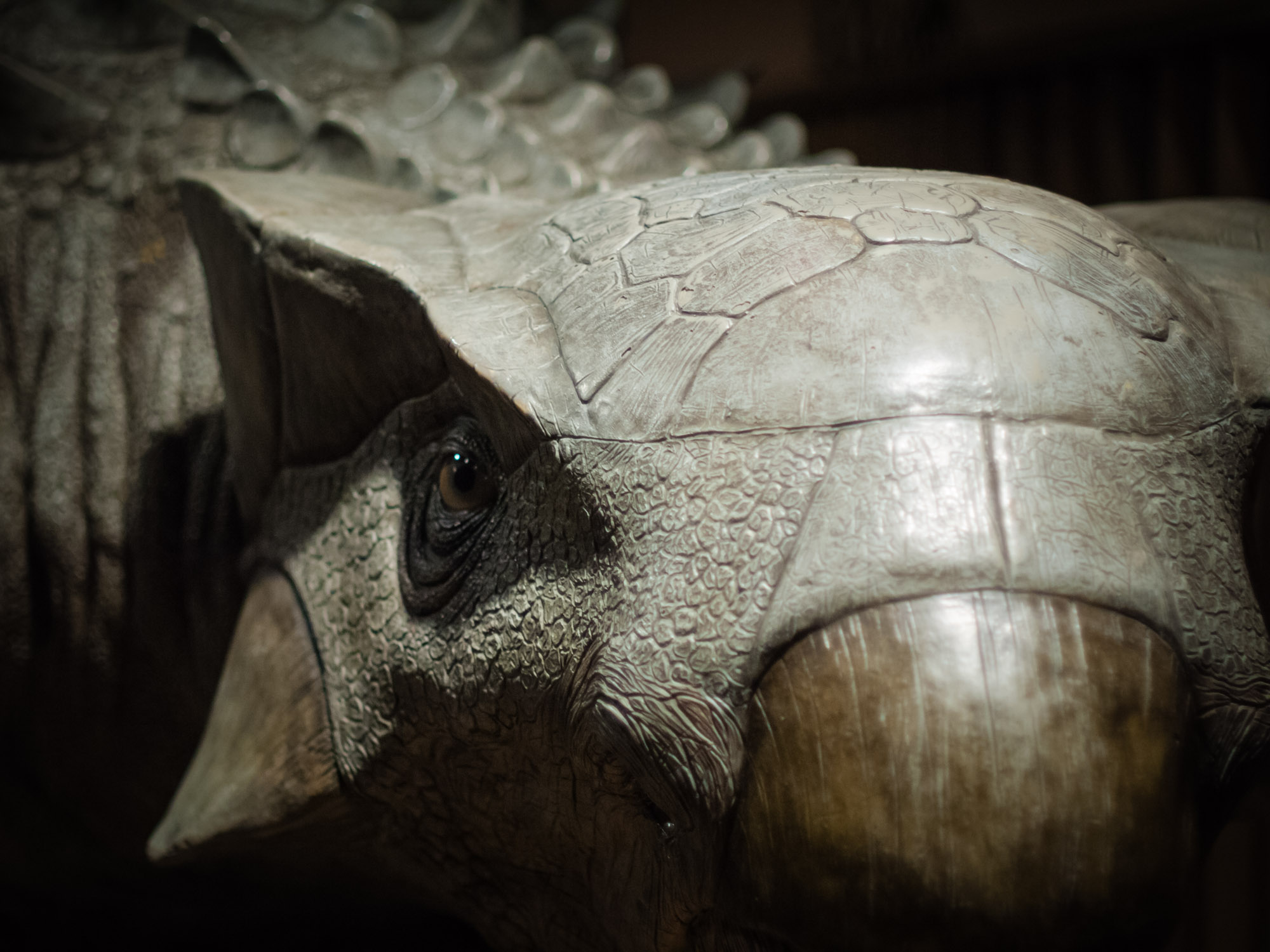
-
Article
Anna Wyman Dance Theatre
Anna Wyman Dance Theatre was considered one of Canada's principal modern-dance companies from the mid-1970s until its closure in 1990, helping to define the emerging modern-dance form in Canada.
"https://d3d0lqu00lnqvz.cloudfront.net/media/media/6262e5d1-433c-4c19-80b9-7a926c97d48e.jpg" // resources/views/front/categories/view.blade.php
https://d3d0lqu00lnqvz.cloudfront.net/media/media/6262e5d1-433c-4c19-80b9-7a926c97d48e.jpg
-
Article
Anne of Green Gables
Lucy Maud Montgomery’s first novel, Anne of Green Gables (1908), became an instant bestseller and has remained in print for more than a century, making the character of Anne Shirley a mythic icon of Canadian culture. The book has sold an estimated 50 million copies worldwide, been translated into at least 36 languages, as well as braille, and been adapted more than two dozen times in various mediums. A musical version first produced by the Charlottetown Festival in 1965 is the longest running annual musical theatre production in the world, while the award-winning 1985 CBC miniseries starring Megan Follows is the most-watched television program in Canadian history. Thousands of tourists visit Prince Edward Island each year to see the “sacred sites” related to the book, and the sale of Anne-related commodities such as souvenirs and dolls has come to constitute a cottage industry.
"https://d3d0lqu00lnqvz.cloudfront.net/media/media/3a0688c7-9c5d-46e9-97ac-c132fabdf134.jpg" // resources/views/front/categories/view.blade.php
https://d3d0lqu00lnqvz.cloudfront.net/media/media/3a0688c7-9c5d-46e9-97ac-c132fabdf134.jpg
-
Article
Anne of Green Gables, The Musical™
Anne of Green Gables, The Musical™. Musical play, the mainstay of the Charlottetown Festival. Anne of Green Gables was based on Lucy Maud Montgomery's 1908 novel, which tells the adventures of a high-spirited, adolescent Prince Edward Island girl.
"https://d3d0lqu00lnqvz.cloudfront.net/media/media/1365489b-9354-4c82-827e-7db53e3b9515.jpg" // resources/views/front/categories/view.blade.php
https://d3d0lqu00lnqvz.cloudfront.net/media/media/1365489b-9354-4c82-827e-7db53e3b9515.jpg
-
Article
Annelida
Annelids are mostly vermiform (worm-shaped), with an anterior (frontal) mouth preceded only by the prostomium, bearing sensory organs; the anus is posterior. Most have bristles (chaetae or setae), usually arranged in 4 groups on each segment.
"https://d3d0lqu00lnqvz.cloudfront.net/media/media/20bc6dfb-ca6b-4940-a009-b7f9d763dac1.jpg" // resources/views/front/categories/view.blade.php
https://d3d0lqu00lnqvz.cloudfront.net/media/media/20bc6dfb-ca6b-4940-a009-b7f9d763dac1.jpg
-
Article
Annexation Association
Annexation Association, founded 1849 to promote Canada-US political union. In October and December it published 2 versions of the "Annexation Manifesto.
"https://thecanadianencyclopedia.ca/images/tce_placeholder.jpg?v=e9dca980c9bdb3aa11e832e7ea94f5d9" // resources/views/front/categories/view.blade.php
https://thecanadianencyclopedia.ca/images/tce_placeholder.jpg?v=e9dca980c9bdb3aa11e832e7ea94f5d9
-
Article
Anorexia Nervosa
Anorexia nervosa, misnamed "anorexia" ("loss of appetite"), is a disease that has been on medical records since 1689.
"https://thecanadianencyclopedia.ca/images/tce_placeholder.jpg?v=e9dca980c9bdb3aa11e832e7ea94f5d9" // resources/views/front/categories/view.blade.php
https://thecanadianencyclopedia.ca/images/tce_placeholder.jpg?v=e9dca980c9bdb3aa11e832e7ea94f5d9
-
Article
Anson Northup
Anson Northup, the first of many steamers to navigate the Red River from Minnesota to the Red River Colony. Shortly after its arrival in Fort Garry in June 1859, the Anson Northup was purchased by the Hudson's Bay Company and entrepreneur J.C. Burbank, who renamed it the Pioneer.
"https://thecanadianencyclopedia.ca/images/tce_placeholder.jpg?v=e9dca980c9bdb3aa11e832e7ea94f5d9" // resources/views/front/categories/view.blade.php
https://thecanadianencyclopedia.ca/images/tce_placeholder.jpg?v=e9dca980c9bdb3aa11e832e7ea94f5d9
-
Article
Ant
Ant, common name for small, mostly ground-dwelling social insects of family Formicidae, order Hymenoptera.
"https://thecanadianencyclopedia.ca/images/tce_placeholder.jpg?v=e9dca980c9bdb3aa11e832e7ea94f5d9" // resources/views/front/categories/view.blade.php
https://thecanadianencyclopedia.ca/images/tce_placeholder.jpg?v=e9dca980c9bdb3aa11e832e7ea94f5d9
-
Article
Anthropology in Canada
Anthropology is the comparative study of past and contemporary cultures, focusing on the ways of life and customs of people around the world. Subdisciplines have developed within anthropology, owing to the amount of information collected and the wide variety of methods and techniques used in research. The main branches are physical anthropology, archaeology, linguistic anthropology, ethnology (which is also called social or cultural anthropology) and applied anthropology. In Canada, early anthropologists included missionaries, explorers and traders who documented the lives of the Indigenous people they encountered. Later, the Geological Survey of Canada played a significant role in the development of Canadian anthropology.
"https://d3d0lqu00lnqvz.cloudfront.net/media/media/b26f0658-9c91-4722-b371-4bbe28799d26.jpg" // resources/views/front/categories/view.blade.php
https://d3d0lqu00lnqvz.cloudfront.net/media/media/b26f0658-9c91-4722-b371-4bbe28799d26.jpg
-
Article
Anti-Chinese Immigration Policies in Canada
Beginning in the late 1800s, Canada enacted policies intended to restrict Chinese immigration. The first was the “Chinese Head Tax” of 1885, which placed an entry tax on new Chinese immigrants. The 1923 Chinese Immigration Act stopped almost all new Chinese immigrants from coming to Canada until Parliament repealed it in 1947. Despite the repeal, Canada still limited family reunification for Chinese Canadians until 1967. As a result of these anti-Chinese policies, the Chinese community experienced many hardships.
"https://d3d0lqu00lnqvz.cloudfront.net/media/media/b3b64f7c-d696-44cc-b49f-297f4db5be4a.jpg" // resources/views/front/categories/view.blade.php
https://d3d0lqu00lnqvz.cloudfront.net/media/media/b3b64f7c-d696-44cc-b49f-297f4db5be4a.jpg