
Browse "Things"
-
Article
Groundhog Day in Canada
Groundhog Day is celebrated in Canada and the United States every year on 2 February. Legend has it that watching a groundhog emerge from its burrow can determine the weather forecast for the coming weeks. Accordingly, if it is a sunny day and the groundhog sees its shadow, it goes back to sleep for six more weeks of winter. If the weather is cloudy and the groundhog does not see its shadow, it stays outside, meaning that the worst of winter is over and spring will soon arrive. Many communities in Canada keep up this tradition today, attracting the attention of tourists and media alike.
"https://d3d0lqu00lnqvz.cloudfront.net/media/media/5ff0e2de-fcda-40e4-9cbe-b84c86365415.jpg" // resources/views/front/categories/view.blade.php
https://d3d0lqu00lnqvz.cloudfront.net/media/media/5ff0e2de-fcda-40e4-9cbe-b84c86365415.jpg
-
Article
Groundsel
Groundsel, or ragwort, common names for plants of genus Senecio, family Compositae or Asteraceae.
"https://d3d0lqu00lnqvz.cloudfront.net/media/media/9a776da6-54b7-4271-b584-7af19ab25d8b.jpg" // resources/views/front/categories/view.blade.php
https://d3d0lqu00lnqvz.cloudfront.net/media/media/9a776da6-54b7-4271-b584-7af19ab25d8b.jpg
-
Article
Groundwater
Groundwater interacts with lakes and rivers as part of the hydrologic cycle. The cycle begins with the formation of clouds through evaporation from the ocean, lakes, rivers, plants and soil.
"https://d3d0lqu00lnqvz.cloudfront.net/media/media/1aa8fafc-a0a0-48c9-86a8-6e588b13ecfe.jpg" // resources/views/front/categories/view.blade.php
https://d3d0lqu00lnqvz.cloudfront.net/media/media/1aa8fafc-a0a0-48c9-86a8-6e588b13ecfe.jpg
-
Article
Group of Seven
The Group of Seven, also known as the Algonquin School, was a school of landscape painters. It was founded in 1920 as an organization of self-proclaimed modern artists and disbanded in 1933. The group presented the dense, northern boreal forest of the Canadian Shield as a transcendent, spiritual force. Their depictions of Canada’s rugged wind-swept forest panoramas were eventually equated with a romanticized notion of Canadian strength and independence. Their works were noted for their bright colours, tactile paint handling, and simple yet dynamic forms. In addition to Tom Thomson, David Milne and Emily Carr, the Group of Seven were the most important Canadian artists of the early 20th century. Their influence is seen in artists as diverse as abstract painter Jack Bush, the Painters Eleven, and Scottish painter Peter Doig.
"https://d3d0lqu00lnqvz.cloudfront.net/media/media/8b176fb1-c3cb-418c-a75f-a4c425f928d0.jpg" // resources/views/front/categories/view.blade.php
https://d3d0lqu00lnqvz.cloudfront.net/media/media/8b176fb1-c3cb-418c-a75f-a4c425f928d0.jpg
-
Article
Grouse in Canada
The grouse (Tetraonidae) is a small subfamily (18 species) of chickenlike birds with circumpolar distribution above latitude 26° north. It includes ptarmigans as well as those birds commonly called grouse. Members of the largest species can weigh up to 6,360 g; the smallest, 340 g. The sharp-tailed grouse is the provincial bird of Saskatchewan.
"https://d3d0lqu00lnqvz.cloudfront.net/media/media/99149971-fea4-445a-8bfe-58335a68e67f.jpg" // resources/views/front/categories/view.blade.php
https://d3d0lqu00lnqvz.cloudfront.net/media/media/99149971-fea4-445a-8bfe-58335a68e67f.jpg
-
Article
GRT of Canada Ltd
GRT of Canada, Ltd. Record company, active 1969-79. It was established in London, Ont, as a subsidiary of General Recorded Tape of California.
"https://thecanadianencyclopedia.ca/images/tce_placeholder.jpg?v=e9dca980c9bdb3aa11e832e7ea94f5d9" // resources/views/front/categories/view.blade.php
https://thecanadianencyclopedia.ca/images/tce_placeholder.jpg?v=e9dca980c9bdb3aa11e832e7ea94f5d9
-
Macleans
GST Harmonized in Atlantic
Frank McKenna had a big smile on his face, and a new spin on a familiar sales pitch. In a national newspaper advertisement that appeared late last week, the New Brunswick premier told readers across the country that "the best place in Canada to do business keeps getting better and better.This article was originally published in Maclean's Magazine on May 6, 1996
"https://thecanadianencyclopedia.ca/images/tce_placeholder.jpg?v=e9dca980c9bdb3aa11e832e7ea94f5d9" // resources/views/front/categories/view.blade.php
https://thecanadianencyclopedia.ca/images/tce_placeholder.jpg?v=e9dca980c9bdb3aa11e832e7ea94f5d9
-
Article
Guarantee Act
Guarantee Act, 1849, conceived by Francis HINCKS and carried in the Legislative Assembly of the Province of Canada, established the principle of government assistance to railways. Under the terms of the Act, any railway more than 75 mi (120 km) long was eligible for a government guarantee on the interest of half its bonds as soon as half the line had been completed.
"https://d3d0lqu00lnqvz.cloudfront.net/media/media/e75f49df-4ccf-4613-bcbb-01819f3f0479.jpg" // resources/views/front/categories/view.blade.php
https://d3d0lqu00lnqvz.cloudfront.net/media/media/e75f49df-4ccf-4613-bcbb-01819f3f0479.jpg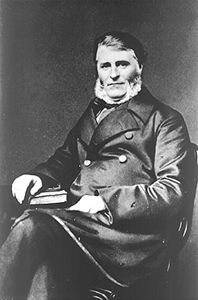
-
Article
Guelph in the First World War
Guelph, Ontario, was typical of small Canadian cities during the First World War. Of its population of about 16,000, more than a third, 5,610, volunteered for military service; 3,328 were accepted. Today, 216 of their names are engraved on the city’s cenotaph. While Guelphites served overseas, the war had a profound and lasting effect on their hometown — an experience that provides an insight into wartime Canada.
"https://d3d0lqu00lnqvz.cloudfront.net/media/media/e38f8065-b481-40c7-9d21-690d7e0a84dc.jpg" // resources/views/front/categories/view.blade.php
https://d3d0lqu00lnqvz.cloudfront.net/media/media/e38f8065-b481-40c7-9d21-690d7e0a84dc.jpg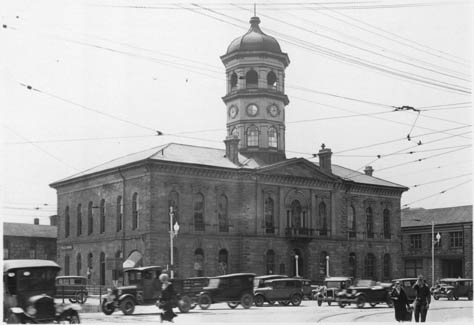
-
"https://thecanadianencyclopedia.ca/images/tce_placeholder.jpg?v=e9dca980c9bdb3aa11e832e7ea94f5d9" // resources/views/front/categories/view.blade.php
https://thecanadianencyclopedia.ca/images/tce_placeholder.jpg?v=e9dca980c9bdb3aa11e832e7ea94f5d9
-
Article
Guerin Case
The Guerin case (R. v. Guerin) resulted in a pivotal decision by the Supreme Court of Canada in 1984 about Indigenous rights. It centred on the fiduciary (guardian or trustee) responsibility of the Crown to consult openly and honestly with Indigenous peoples before making arrangements for the use of their land. (See also Duty to Consult.) For the first time, it established that the Crown has a legal responsibility to First Nations and not simply a moral one. It also recognized Aboriginal title to their land to be a sui generis (Latin for “unique”) right.
"https://d3d0lqu00lnqvz.cloudfront.net/787b0637-ecea-46b2-bdd4-801e175a39b3.jpg" // resources/views/front/categories/view.blade.php
https://d3d0lqu00lnqvz.cloudfront.net/787b0637-ecea-46b2-bdd4-801e175a39b3.jpg
-
Macleans
Guess Guilty of Obstruction
This article was originally published in Maclean’s magazine on July 1, 1998. Partner content is not updated.
"https://thecanadianencyclopedia.ca/images/tce_placeholder.jpg?v=e9dca980c9bdb3aa11e832e7ea94f5d9" // resources/views/front/categories/view.blade.php
https://thecanadianencyclopedia.ca/images/tce_placeholder.jpg?v=e9dca980c9bdb3aa11e832e7ea94f5d9
-
Article
Guilbault-Thérien Inc
Guilbault-Thérien Inc (Providence Organ Inc/Orgue Providence Inc 1946-79). Organ manufacturing company founded in St-Hyacinthe, Que in 1946 by Maurice Guilbault (1903-69) who had worked for the Casavant firm.
"https://thecanadianencyclopedia.ca/images/tce_placeholder.jpg?v=e9dca980c9bdb3aa11e832e7ea94f5d9" // resources/views/front/categories/view.blade.php
https://thecanadianencyclopedia.ca/images/tce_placeholder.jpg?v=e9dca980c9bdb3aa11e832e7ea94f5d9
-
Article
Gulf
A gulf is a body of water partly surrounded by land and connected to an ocean or sea. This connection sometimes takes the form of a narrow passage called a strait. The nomenclature of water inlets can be inconsistent between sources. Sometimes, the terms gulf, bay and sea are used interchangeably. For example, the Arabian Sea and Hudson Bay can both be classified as gulfs. However, in most cases a gulf is deeper and larger than a bay and is also more enclosed from the ocean or sea to which it is connected. Because gulfs are partially surrounded by land, their waters are typically calmer than those of oceans. This makes them suitable for activities such as transportation, fishing and leisure.
"https://d3d0lqu00lnqvz.cloudfront.net/media/new_article_images/Gulf/GulfofStLawrence.jpg" // resources/views/front/categories/view.blade.php
https://d3d0lqu00lnqvz.cloudfront.net/media/new_article_images/Gulf/GulfofStLawrence.jpg
-
Article
Gulf Canada Resources Limited
Gulf Canada Resources Limited was incorporated in 1906 as the British American Oil Company Limited. In 1969 Gulf Oil Corp of the US bought BA, which became Gulf Oil Canada Limited. The name, Gulf Canada Ltd, was adopted in 1978 and in July 1987 the company became Gulf Canada Resources Limited.
"https://thecanadianencyclopedia.ca/images/tce_placeholder.jpg?v=e9dca980c9bdb3aa11e832e7ea94f5d9" // resources/views/front/categories/view.blade.php
https://thecanadianencyclopedia.ca/images/tce_placeholder.jpg?v=e9dca980c9bdb3aa11e832e7ea94f5d9