
Browse "Things"
-
Article
Frank Slide Interpretive Centre
The Frank Slide Interpretive Centre is located on the site of the FRANK SLIDE, in the municipality of CROWSNEST PASS, Alta. On 29 April 1903 part of Turtle Mountain broke away and slid through part of the mining community of Frank. There is still considerable controversy over the cause of the slide.
"https://thecanadianencyclopedia.ca/images/tce_placeholder.jpg?v=e9dca980c9bdb3aa11e832e7ea94f5d9" // resources/views/front/categories/view.blade.php
https://thecanadianencyclopedia.ca/images/tce_placeholder.jpg?v=e9dca980c9bdb3aa11e832e7ea94f5d9
-
Article
Franklin Legge Organ Co.
Franklin Legge Organ Co. Prominent organ builder in the first half of the 20th century.
"https://thecanadianencyclopedia.ca/images/tce_placeholder.jpg?v=e9dca980c9bdb3aa11e832e7ea94f5d9" // resources/views/front/categories/view.blade.php
https://thecanadianencyclopedia.ca/images/tce_placeholder.jpg?v=e9dca980c9bdb3aa11e832e7ea94f5d9
-
Article
Franklin Search
The disappearance in 1845 of Sir John Franklin and his crew in the Canadian Arctic set off the greatest rescue operation in the history of exploration. More than 30 expeditions over two decades would search by land and sea for clues as to his fate, in the process charting vast areas of the Canadian Arctic and mapping the complete route of the Northwest Passage. The search for clues continued into the 20th and 21st centuries. On 9 September 2014, it was announced that one of the expedition ships, later identified as the HMS Erebus, had been found off King William Island. On 12 September 2016, a team from the Arctic Research Foundation announced that they had located the Terror in Nunavut's Terror Bay, north of where the Erebus was found.
"https://d3d0lqu00lnqvz.cloudfront.net/media/media/61cafc88-db89-4bf1-a339-8d82f7bc6007.jpg" // resources/views/front/categories/view.blade.php
https://d3d0lqu00lnqvz.cloudfront.net/media/media/61cafc88-db89-4bf1-a339-8d82f7bc6007.jpg
-
Article
Fraser Canyon War
The Fraser Canyon War (a.k.a. the “Fraser River War” and the “miners’ war”) was a war waged by mainly white American gold miners against the Nlaka’pamux Indigenous people of the Fraser Canyon in the summer of 1858. The war began when the miners, arriving as part of the Fraser River Gold Rush in June 1858, perceived scattered Nlaka’pamux attacks in defense of their territories as a coordinated effort to drive them by force from their claims. Driven by a hunger for gold and a sense of entitlement to Indigenous peoples’ territories and resources, American miners formed military companies and carried out violent attacks on Nlaka’pamux communities. The war ended on 21 August 1858, when the Nlaka’pamux and miners called a truce. Under threat of further violence, the Nlaka’pamux agreed to grant miners access to their territories and resources, bringing the immediate conflict to a close. The conflict bears resemblance to the Chilcotin War of 1864, another Indigenous-newcomer conflict in the colonial history of British Columbia.
"https://d3d0lqu00lnqvz.cloudfront.net/media/new_article_images/FraserCanyonWar/Noon-on-the-Fraser-1-_edited.jpg" // resources/views/front/categories/view.blade.php
https://d3d0lqu00lnqvz.cloudfront.net/media/new_article_images/FraserCanyonWar/Noon-on-the-Fraser-1-_edited.jpg
-
Article
Fraser Institute
The Fraser Institute is a nonprofit group established in 1974 under federal charter with offices in Vancouver (headquarters) and Toronto. The institute, which has been noted for its conservative views, operates as a research and educational organization that supports free enterprise.
"https://thecanadianencyclopedia.ca/images/tce_placeholder.jpg?v=e9dca980c9bdb3aa11e832e7ea94f5d9" // resources/views/front/categories/view.blade.php
https://thecanadianencyclopedia.ca/images/tce_placeholder.jpg?v=e9dca980c9bdb3aa11e832e7ea94f5d9
-
Article
Fraser River Canyon
The Fraser River Canyon was formed during the Miocene period (22.9-5.33 million years ago) when the river cut down into the uplifting southern part of the Interior Plateau of British Columbia. The canyon characteristics of this
"https://d3d0lqu00lnqvz.cloudfront.net/media/media/49e5b82d-d0a2-4ca6-aa37-99ecf1243a3d.jpg" // resources/views/front/categories/view.blade.php
https://d3d0lqu00lnqvz.cloudfront.net/media/media/49e5b82d-d0a2-4ca6-aa37-99ecf1243a3d.jpg
-
Article
Fraser River Fishermen's Strikes
On 8 July 1900, fishermen for 47 salmon canneries that lined the lower Fraser River from New Westminster to the river mouth struck for a season-long, 25-cent, minimum price instead of prices which dropped as catches increased.
"https://thecanadianencyclopedia.ca/images/tce_placeholder.jpg?v=e9dca980c9bdb3aa11e832e7ea94f5d9" // resources/views/front/categories/view.blade.php
https://thecanadianencyclopedia.ca/images/tce_placeholder.jpg?v=e9dca980c9bdb3aa11e832e7ea94f5d9
-
Article
Fraser River Gold Rush
In 1858, around 30,000 gold seekers flooded the banks of the Fraser River from Hope to just north of Lillooet in British Columbia’s first significant gold rush. Although it dissipated by the mid-1860s, the Fraser River Gold Rush had a significant impact on the area’s Indigenous peoples and resulted in the Fraser Canyon War. Fears that the massive influx of American miners would lead the United States to annex the non-sovereign British territory known as New Caledonia also resulted in the founding of British Columbia as a colony on 2 August 1858 (see The Fraser River Gold Rush and the Founding of British Columbia). By the mid-1860s, the Fraser Rush collapsed, and British Columbia sank into a recession.
"https://d3d0lqu00lnqvz.cloudfront.net/media/new_article_images/FraserCanyonWar/Fraser Canyon near Chapmans Bar, Daniel Marshall(1).jpg" // resources/views/front/categories/view.blade.php
https://d3d0lqu00lnqvz.cloudfront.net/media/new_article_images/FraserCanyonWar/Fraser Canyon near Chapmans Bar, Daniel Marshall(1).jpg.jpg)
-
Article
Fraser River Lowland
The Fraser River Lowland is a triangular area in southwestern British Columbia. The eastern apex of the triangle is at Hope, about 160 km inland from the Strait of Georgia. From here, the lowland broadens to the west to a width of about 50 km. The international boundary between British Columbia and Washington State crosses the southwestern part of the lowland. The Coast Mountains form the northern boundary of the delta-lowland. The Fraser River Lowland is the largest area of level land with suitable agricultural soils in coastal British Columbia.
"https://d3d0lqu00lnqvz.cloudfront.net/media/new_article_images/FraserRiverLowland/FraserRiverLowlandMap.png" // resources/views/front/categories/view.blade.php
https://d3d0lqu00lnqvz.cloudfront.net/media/new_article_images/FraserRiverLowland/FraserRiverLowlandMap.png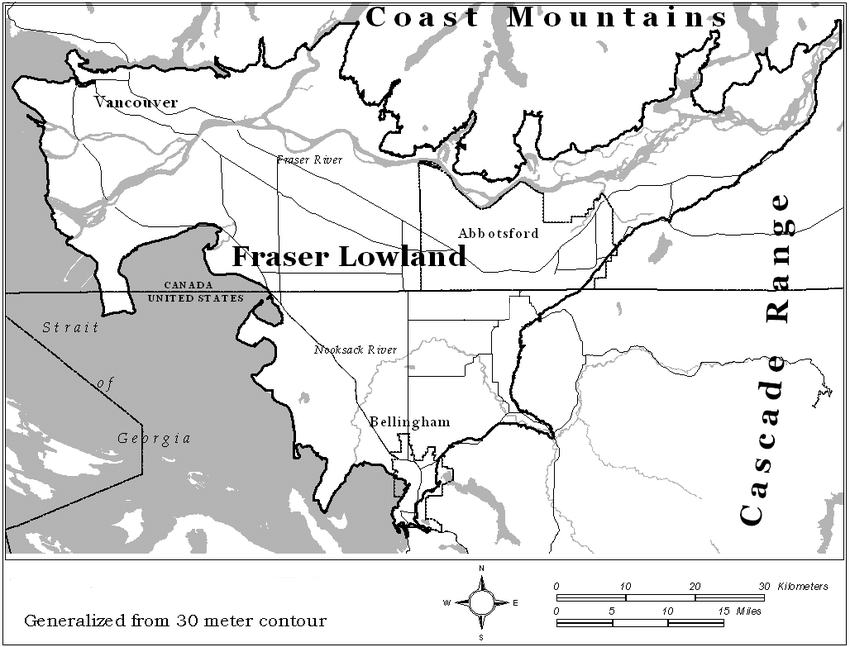
-
Article
Fraser River Railway Strikes
The Wobbly poet and martyr Joe Hill visited the camp at Yale and wrote several songs, including "Where the Fraser River Flows," still a labour standard.
"https://d3d0lqu00lnqvz.cloudfront.net/media/media/85c764cc-4b3c-42f9-9953-5f1f2c40cbde.jpg" // resources/views/front/categories/view.blade.php
https://d3d0lqu00lnqvz.cloudfront.net/media/media/85c764cc-4b3c-42f9-9953-5f1f2c40cbde.jpg
-
"https://thecanadianencyclopedia.ca/images/tce_placeholder.jpg?v=e9dca980c9bdb3aa11e832e7ea94f5d9" // resources/views/front/categories/view.blade.php
https://thecanadianencyclopedia.ca/images/tce_placeholder.jpg?v=e9dca980c9bdb3aa11e832e7ea94f5d9
-
Article
Frederick Harris Music Co. Limited
The Frederick Harris Music Co, Limited. Publishing firm founded in London ca 1900, established in Canada in 1910, and controlled 1944-91 by the University of Toronto, then by the Royal Conservatory of Music. Frederick Harris (ca 1866-1945) founded his catalogue on copyrights purchased from C.J.
"https://thecanadianencyclopedia.ca/images/tce_placeholder.jpg?v=e9dca980c9bdb3aa11e832e7ea94f5d9" // resources/views/front/categories/view.blade.php
https://thecanadianencyclopedia.ca/images/tce_placeholder.jpg?v=e9dca980c9bdb3aa11e832e7ea94f5d9
-
Article
F. Kenneth Hare
Frederick Kenneth Hare, CC, FRSC, environmental scientist, professor, administrator (born 5 February 1919 in Wylye, England; died 3 September 2002 in Oakville, ON). F. Kenneth Hare has been widely recognized for his research contributions in climatology and biogeography. During his career, he participated in several committees and commissions concerned with environmental issues, such as climate change, nuclear reactors and nuclear waste and acid rain (see Nuclear Energy).
"https://d3d0lqu00lnqvz.cloudfront.net/TCE_placeholder.png" // resources/views/front/categories/view.blade.php
https://d3d0lqu00lnqvz.cloudfront.net/TCE_placeholder.png
-
Article
Free Trade
Free trade is the exchange of goods and services between nations without protective tariffs. Canada has 15 free trade agreements with over 50 countries. These agreements give Canadian businesses access to approximately 1.5 billion consumers around the world. (See also International Trade.) These agreements include the Canada-United States-Mexico Agreement (CUSMA), which came into effect on 1 July 2020.
"https://d3d0lqu00lnqvz.cloudfront.net/media/media/133a2d02-51cc-4318-b7c7-5aeb80b30cf3.png" // resources/views/front/categories/view.blade.php
https://d3d0lqu00lnqvz.cloudfront.net/media/media/133a2d02-51cc-4318-b7c7-5aeb80b30cf3.png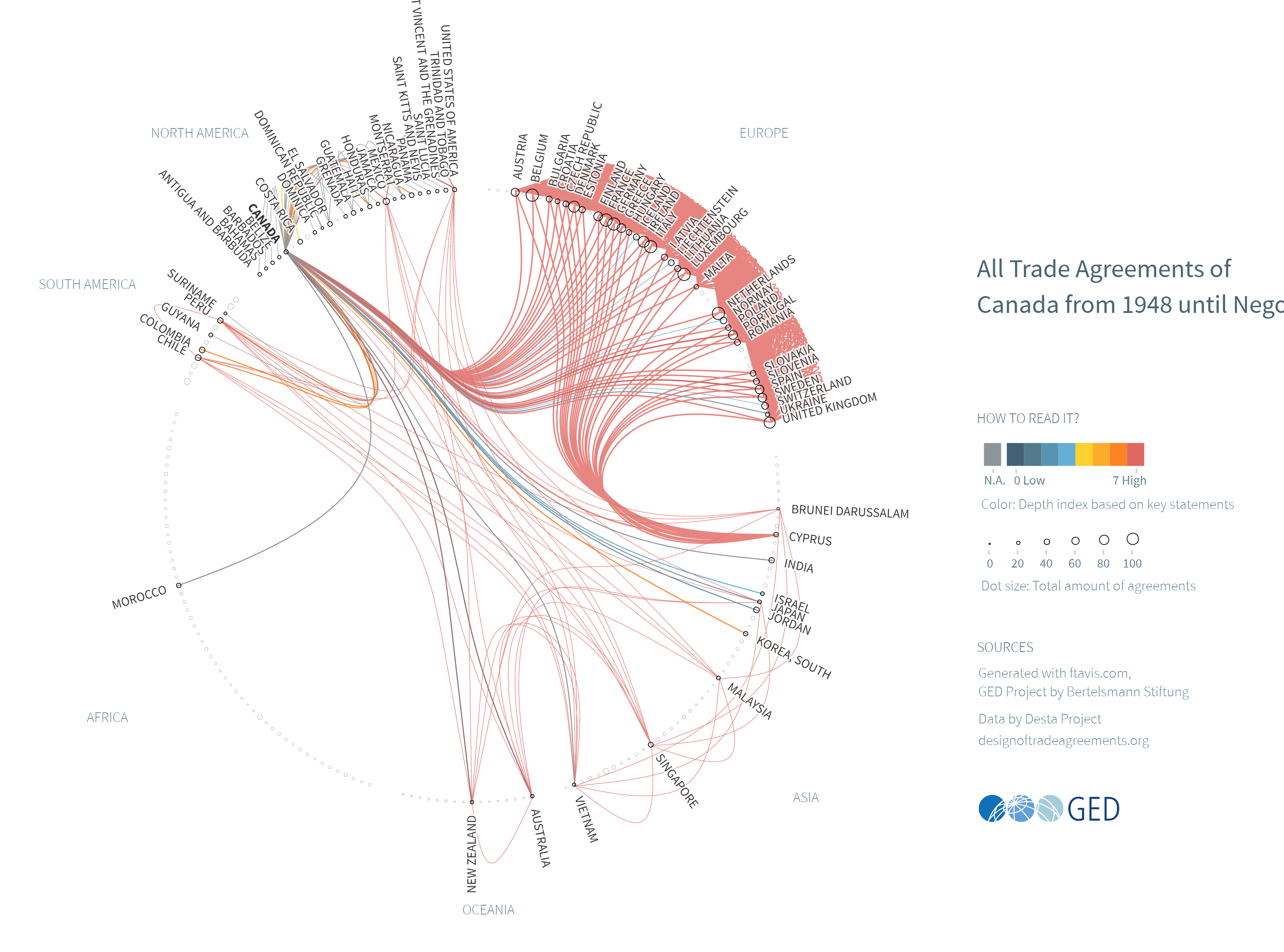
-
Article
Freedom of Information
During the 1960s and 1970s citizens, as users of government services, began to feel entitled to certain rights arising out of their relationship with government.
"https://thecanadianencyclopedia.ca/images/tce_placeholder.jpg?v=e9dca980c9bdb3aa11e832e7ea94f5d9" // resources/views/front/categories/view.blade.php
https://thecanadianencyclopedia.ca/images/tce_placeholder.jpg?v=e9dca980c9bdb3aa11e832e7ea94f5d9