
Browse "Science & Technology"
-
Article
Calèche
Calèche, French word used in Canada for a light, 2-wheeled carriage drawn by a single horse, with a folding hood and seats for 2 passengers with another for the driver on the splashboard.
"https://thecanadianencyclopedia.ca/images/tce_placeholder.jpg?v=e9dca980c9bdb3aa11e832e7ea94f5d9" // resources/views/front/categories/view.blade.php
https://thecanadianencyclopedia.ca/images/tce_placeholder.jpg?v=e9dca980c9bdb3aa11e832e7ea94f5d9
-
Article
Calendar
In Canada the Gregorian calendar is in use under the terms of the 1750 British Act for Regulating the Commencement of the Year, and for Correcting the Calendar Now in Use, which switched the official English calendar from the Julian to the Gregorian form in 1752.
"https://thecanadianencyclopedia.ca/images/tce_placeholder.jpg?v=e9dca980c9bdb3aa11e832e7ea94f5d9" // resources/views/front/categories/view.blade.php
https://thecanadianencyclopedia.ca/images/tce_placeholder.jpg?v=e9dca980c9bdb3aa11e832e7ea94f5d9
-
Article
Canada Agriculture and Food Museum
The Canada Agriculture and Food Museum officially opened in 1983 and is located on the Central Experimental Farm site in Ottawa, Ontario. The Canada Agriculture and Food Museum seeks to fulfil its role as a national museum by connecting Canadians and international visitors to the historical and ongoing importance of agricultural science and technology in everyday life (see Agriculture in Canada). It accomplishes this mandate through the creation of engaging interpretive activities and products centred on an accessible demonstration farm.
"https://d3d0lqu00lnqvz.cloudfront.net/TCE_placeholder.png" // resources/views/front/categories/view.blade.php
https://d3d0lqu00lnqvz.cloudfront.net/TCE_placeholder.png
-
Article
Canada and the Development of the Polio Vaccine
During the first half of the 20th century, poliomyelitis, a.k.a. polio or “The Crippler,” hit Canada harder than anywhere else. Successive polio epidemics peaked in a national crisis in 1953. By that time, however, scientists at Connaught Medical Research Laboratories of the University of Toronto had made key discoveries that enabled American medical researcher and virologist Jonas Salk to prepare the first polio vaccine. Connaught Labs also solved the problem of producing the vaccine on a large scale. Canada went on to play an important role in the development of the oral polio vaccine and international efforts to eradicate the disease.Click here for definitions of key terms used in this article.
"https://d3d0lqu00lnqvz.cloudfront.net/media/new_article_images/PolioVaccine/Acc1260.jpg" // resources/views/front/categories/view.blade.php
https://d3d0lqu00lnqvz.cloudfront.net/media/new_article_images/PolioVaccine/Acc1260.jpg
-
Article
Canada and the Manhattan Project
Canada helped develop the world’s first nuclear reactors and nuclear arms. During the Second World War, Canada participated in British research to create an atomic weapon. In 1943, the British nuclear weapons program merged with its American equivalent, the Manhattan Project. Canada’s main contribution was the Montreal Laboratory, which later became the Chalk River Laboratory. (See Nuclear Research Establishments). This Allied war effort produced the atomic bombs dropped on the Japanese cities of Hiroshima and Nagasaki in 1945. It also led to the development of Canada’s nuclear energy industry. Click here for definitions of key terms used in this article.
"https://d3d0lqu00lnqvz.cloudfront.net/media/new_article_images/CanadaandtheManhattanProject/Chalk_River1947.jpg" // resources/views/front/categories/view.blade.php
https://d3d0lqu00lnqvz.cloudfront.net/media/new_article_images/CanadaandtheManhattanProject/Chalk_River1947.jpg
-
Article
Canada Aviation and Space Museum
The Canada Aviation and Space Museum has the most extensive aviation collection in Canada. Located in Ottawa, the museum focuses on the history of Canadian aviation in an international context. Its collection includes more than 130 aircraft and artifacts.
"https://d3d0lqu00lnqvz.cloudfront.net/media/media/8e9fd784-494b-45e6-8b61-9ddb0f1d563d.jpg" // resources/views/front/categories/view.blade.php
https://d3d0lqu00lnqvz.cloudfront.net/media/media/8e9fd784-494b-45e6-8b61-9ddb0f1d563d.jpg
-
Collection
Canada During COVID-19
Countries, communities, and individuals around the world are grappling with the COVID-19 pandemic. How will historians remember this time in history? Canada During COVID-19: A Living Archive is meant to capture the experiences of everyday Canadians as they live through this challenging time.
"https://d3d0lqu00lnqvz.cloudfront.net/user_canada_during_covid_submissions_imported/101037588_640061359916207_6879182772136426658_n_17903881852466121.jpg" // resources/views/front/categories/view.blade.php
https://d3d0lqu00lnqvz.cloudfront.net/user_canada_during_covid_submissions_imported/101037588_640061359916207_6879182772136426658_n_17903881852466121.jpg
-
Macleans
Canada Is in the Vanguard of Stem Cell Research
PETER SAUER FELT his life slipping away. In 1994, doctors diagnosed Sauer, then 59, with Parkinson's disease, a cruel brain disorder that progressively robs sufferers of the ability to move or function normally.This article was originally published in Maclean's Magazine on May 30, 2005
"https://thecanadianencyclopedia.ca/images/tce_placeholder.jpg?v=e9dca980c9bdb3aa11e832e7ea94f5d9" // resources/views/front/categories/view.blade.php
https://thecanadianencyclopedia.ca/images/tce_placeholder.jpg?v=e9dca980c9bdb3aa11e832e7ea94f5d9
-
Article
Canada’s First Medical X-ray
On Christmas Day 1895, a young man was shot in the leg during an altercation in Montreal. His surgeon was unable to locate the bullet by exploring its entry site. When the wound began to cause trouble, the surgeon wondered if a remarkable new discovery, X-ray imaging, might be able to locate the projectile. He turned to physicist John Cox for assistance, leading to the performance of Canada’s first medical X-ray examination on 7 February 1896. This event marked the introduction and subsequent dissemination of a new tool to diagnose and treat patients in Canada.
"https://d3d0lqu00lnqvz.cloudfront.net/xrayincanada/johncoxrobertharris.jpg" // resources/views/front/categories/view.blade.php
https://d3d0lqu00lnqvz.cloudfront.net/xrayincanada/johncoxrobertharris.jpg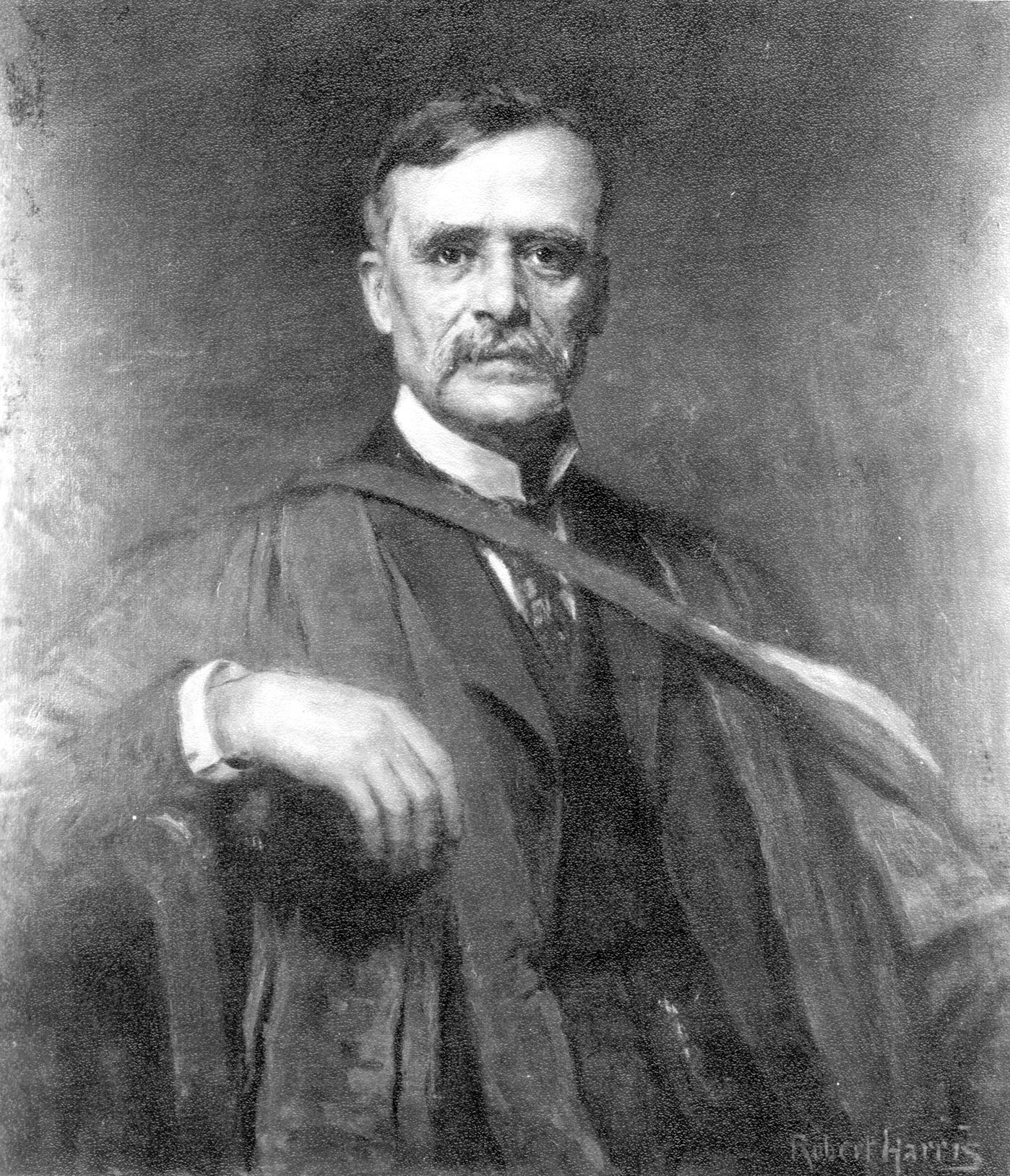
-
Article
Canada Science and Technology Museum
The Canada Science and Technology Museum collects and preserves objects and data relating to scientific and technological history and development in Canada. It also carries out research, and sponsors exhibits and public programs. The museum is located in Ottawa, Ontario.
"https://d3d0lqu00lnqvz.cloudfront.net/media/media/41267475-f800-4d8b-ade7-bb1e35d493ba.jpg" // resources/views/front/categories/view.blade.php
https://d3d0lqu00lnqvz.cloudfront.net/media/media/41267475-f800-4d8b-ade7-bb1e35d493ba.jpg
-
Article
Canadair Challenger
Canadair Challenger, corporate executive aircraft developed and built in Canada. Exhaustive testing resulted in an advanced wing design, broad body and quiet, efficient engines. It carries up to 19 passengers at a normal cruise speed of 819 km/h.
"https://thecanadianencyclopedia.ca/images/tce_placeholder.jpg?v=e9dca980c9bdb3aa11e832e7ea94f5d9" // resources/views/front/categories/view.blade.php
https://thecanadianencyclopedia.ca/images/tce_placeholder.jpg?v=e9dca980c9bdb3aa11e832e7ea94f5d9
-
Article
Canadair CL-215
Canadair CL-215, unique amphibious aircraft designed to fight forest fires with water bombing and chemical fire retardants. It can scoop up a load of over 5000 litres of water in 10 seconds while skimming over a body of water, and jettison it over a fire in less than 1 second.
"https://thecanadianencyclopedia.ca/images/tce_placeholder.jpg?v=e9dca980c9bdb3aa11e832e7ea94f5d9" // resources/views/front/categories/view.blade.php
https://thecanadianencyclopedia.ca/images/tce_placeholder.jpg?v=e9dca980c9bdb3aa11e832e7ea94f5d9
-
Article
Canadair Ltd
Canadair Ltd, aerospace manufacturers. The company had its origins in the aircraft division of Canadian Vickers Ltd, formed in 1923. It was purchased by Canadians in 1927 and during WWII produced the Canso, a long-range flying boat used for maritime patrol.
"https://thecanadianencyclopedia.ca/images/tce_placeholder.jpg?v=e9dca980c9bdb3aa11e832e7ea94f5d9" // resources/views/front/categories/view.blade.php
https://thecanadianencyclopedia.ca/images/tce_placeholder.jpg?v=e9dca980c9bdb3aa11e832e7ea94f5d9
-
Article
Canadarm2
Canadarm2 is a remote-controlled Canadian robotic arm used on the International Space Station (ISS). Canadarm2 was designed as a successor to the robotic Canadarm, which was the mechanical arm used during NASA’s Space Shuttle Program from 1981 to 2011. The design of Canadarm2 is a foundation for creating new generations of robotic arms, including the future Canadarm3. Canadarm2 has reinforced Canada’s global leadership in space robotic systems. (See also Robotics in Canada.)
"https://d3d0lqu00lnqvz.cloudfront.net/canadarm2/canadarm2abovetheclouds.jpg" // resources/views/front/categories/view.blade.php
https://d3d0lqu00lnqvz.cloudfront.net/canadarm2/canadarm2abovetheclouds.jpg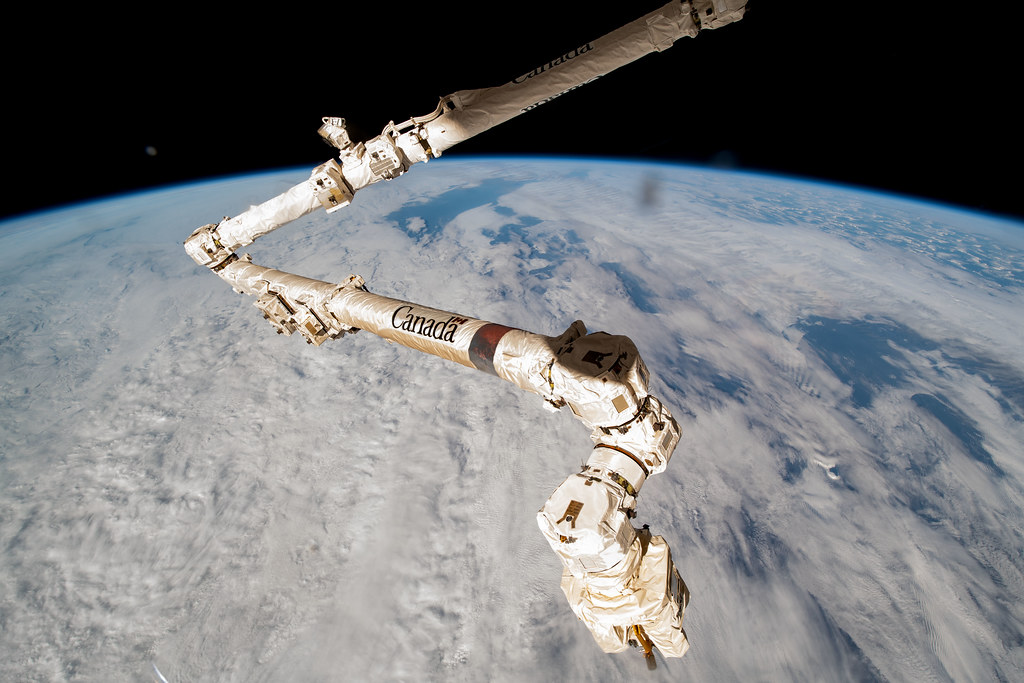
-
Macleans
Canadarm2's Broken Wrist
This article was originally published in Maclean’s magazine on May 27, 2002. Partner content is not updated. It was a bad day at the aerospace office. Around 9 a.m. on March 5, NASA called Richard Rembala, a lead engineer for CANADARM2. There was a problem.
"https://thecanadianencyclopedia.ca/images/tce_placeholder.jpg?v=e9dca980c9bdb3aa11e832e7ea94f5d9" // resources/views/front/categories/view.blade.php
https://thecanadianencyclopedia.ca/images/tce_placeholder.jpg?v=e9dca980c9bdb3aa11e832e7ea94f5d9