
Browse "Politics & Law"
-
Macleans
Ottawa Endorses Québec Partition
Gary Shapiro describes the idea as a "poison pill," a kind of desperate last resort to avert a looming national tragedy. Anthony Housefather considers it a "safety blanket to guarantee that we are all going to remain Canadian.This article was originally published in Maclean's Magazine on February 12, 1996
"https://thecanadianencyclopedia.ca/images/tce_placeholder.jpg?v=e9dca980c9bdb3aa11e832e7ea94f5d9" // resources/views/front/categories/view.blade.php
https://thecanadianencyclopedia.ca/images/tce_placeholder.jpg?v=e9dca980c9bdb3aa11e832e7ea94f5d9
-
Macleans
Ottawa Rethinking Foreign Aid
By her own admission, Susan Whelan was not the logical choice to be Canada's top social worker to the world. A small-business lawyer and daughter of former agriculture minister Eugene Whelan, the MP for Essex, near Windsor, Ont.This article was originally published in Maclean's Magazine on October 28, 2002
"https://thecanadianencyclopedia.ca/images/tce_placeholder.jpg?v=e9dca980c9bdb3aa11e832e7ea94f5d9" // resources/views/front/categories/view.blade.php
https://thecanadianencyclopedia.ca/images/tce_placeholder.jpg?v=e9dca980c9bdb3aa11e832e7ea94f5d9
-
Macleans
Ottawa Slow to Take Steps to Control BSE
RECENT DISCLOSURES OF MORE mad cows in our midst raise the nagging question of why Canada is not doing far more to screen the nation's cattle herds for the dreaded bovine spongiform encephalopathy, better known as mad cow disease.This article was originally published in Maclean's Magazine on February 14, 2005
"https://thecanadianencyclopedia.ca/images/tce_placeholder.jpg?v=e9dca980c9bdb3aa11e832e7ea94f5d9" // resources/views/front/categories/view.blade.php
https://thecanadianencyclopedia.ca/images/tce_placeholder.jpg?v=e9dca980c9bdb3aa11e832e7ea94f5d9
-
Macleans
Ottawa takes on reproductive technology
The new federal law on reproductive technology tabled last week was a long time coming. A royal commission studied the subject exhaustively from 1989 to 1993.This article was originally published in Maclean's Magazine on May 20, 2002
"https://thecanadianencyclopedia.ca/images/tce_placeholder.jpg?v=e9dca980c9bdb3aa11e832e7ea94f5d9" // resources/views/front/categories/view.blade.php
https://thecanadianencyclopedia.ca/images/tce_placeholder.jpg?v=e9dca980c9bdb3aa11e832e7ea94f5d9
-
Article
Ottawa Treaty
The Convention on the Prohibition of the Use, Stockpiling, Production and Transfer of Anti-Personnel Mines and on their Destruction — better known as the Ottawa Treaty or the Mine Ban Treaty — resulted from Canada’s leadership and its cooperation with the International Campaign To Ban Landmines (ICBL). In 1992, six non-governmental organizations launched an awareness campaign with the goal of banning landmines worldwide. In October 1996, at the first Ottawa Conference, Canadian minister of Foreign Affairs Lloyd Axworthy launched the Ottawa Process, which led to the ratification of the Mine Ban Treaty, signed by 122 countries at the Second Ottawa Conference in December 1997. The Ottawa Process was an innovative, unprecedented initiative that required a strategic partnership among countries, non-governmental organizations, international groups and the United Nations.
"https://d3d0lqu00lnqvz.cloudfront.net/media/media/52770ea6-6253-484f-b6a8-cca4a888898f.jpg" // resources/views/front/categories/view.blade.php
https://d3d0lqu00lnqvz.cloudfront.net/media/media/52770ea6-6253-484f-b6a8-cca4a888898f.jpg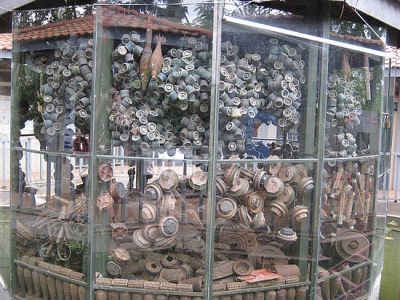
-
Macleans
Ottawa's Ambitious Agenda to Expand Power
IT WASN'T QUITE what Paul MARTIN had promised. Instead of an uplifting exercise in televised democracy, his summit with the premiers lapsed into behind-closed-doors horse trading.This article was originally published in Maclean's Magazine on September 27, 2004
"https://thecanadianencyclopedia.ca/images/tce_placeholder.jpg?v=e9dca980c9bdb3aa11e832e7ea94f5d9" // resources/views/front/categories/view.blade.php
https://thecanadianencyclopedia.ca/images/tce_placeholder.jpg?v=e9dca980c9bdb3aa11e832e7ea94f5d9
-
Macleans
Ottawa's Pension Reform Plans
Barely five feet tall, firmly "over 65," Lillian Morgenthau can throw a political punch that would bring most politicians to their knees.This article was originally published in Maclean's Magazine on September 29, 1997
"https://thecanadianencyclopedia.ca/images/tce_placeholder.jpg?v=e9dca980c9bdb3aa11e832e7ea94f5d9" // resources/views/front/categories/view.blade.php
https://thecanadianencyclopedia.ca/images/tce_placeholder.jpg?v=e9dca980c9bdb3aa11e832e7ea94f5d9
-
Macleans
Ottawa's Referendum Strategy
On a day when Premier Jacques Parizeau and more than 1,000 of his closest sovereigntist friends were meeting for an occasion they deemed "historic," the man most of them consider Quebec's constitutional devil incarnate was less than 25 km away, doing his best to ignore them.This article was originally published in Maclean's Magazine on September 18, 1995
"https://thecanadianencyclopedia.ca/images/tce_placeholder.jpg?v=e9dca980c9bdb3aa11e832e7ea94f5d9" // resources/views/front/categories/view.blade.php
https://thecanadianencyclopedia.ca/images/tce_placeholder.jpg?v=e9dca980c9bdb3aa11e832e7ea94f5d9
-
Article
Padlock Act
The Padlock Act (Act Respecting Communistic Propaganda) was a 1937 Quebec statute empowering the attorney general to close, for one year, any building used for propagating "communism or bolshevism" (undefined).
"https://d3d0lqu00lnqvz.cloudfront.net/media/media/22180159-911b-4d85-94c5-fc2a39cd939d.jpg" // resources/views/front/categories/view.blade.php
https://d3d0lqu00lnqvz.cloudfront.net/media/media/22180159-911b-4d85-94c5-fc2a39cd939d.jpg
-
Article
Pamajewon Case
The Pamajewon case (1996) (also known as R. v. Pamajewon) was the first case in which First Nations in Canada argued an inherent right to self-government before the Supreme Court. Spearheaded by two Anishinaabe First Nations, Eagle Lake and Shawanaga, the claimants argued that the Indigenous right to self-government included a right to control gambling practices on reserves. The Supreme Court ruled that these First Nations did not have rights to high-stakes gaming under self-government.
"https://thecanadianencyclopedia.ca/images/tce_placeholder.jpg?v=e9dca980c9bdb3aa11e832e7ea94f5d9" // resources/views/front/categories/view.blade.php
https://thecanadianencyclopedia.ca/images/tce_placeholder.jpg?v=e9dca980c9bdb3aa11e832e7ea94f5d9
-
Article
Pan-Indianism
Pan-Indianism is a movement of Aboriginal resistance to domination and assimilation and is characterized primarily by political and religious expression and solidarity. Key historical figures include Pontiac and Handsome Lake.
"https://d3d0lqu00lnqvz.cloudfront.net/media/media/174cee51-4aca-4a67-ac60-f72697d35862.jpg" // resources/views/front/categories/view.blade.php
https://d3d0lqu00lnqvz.cloudfront.net/media/media/174cee51-4aca-4a67-ac60-f72697d35862.jpg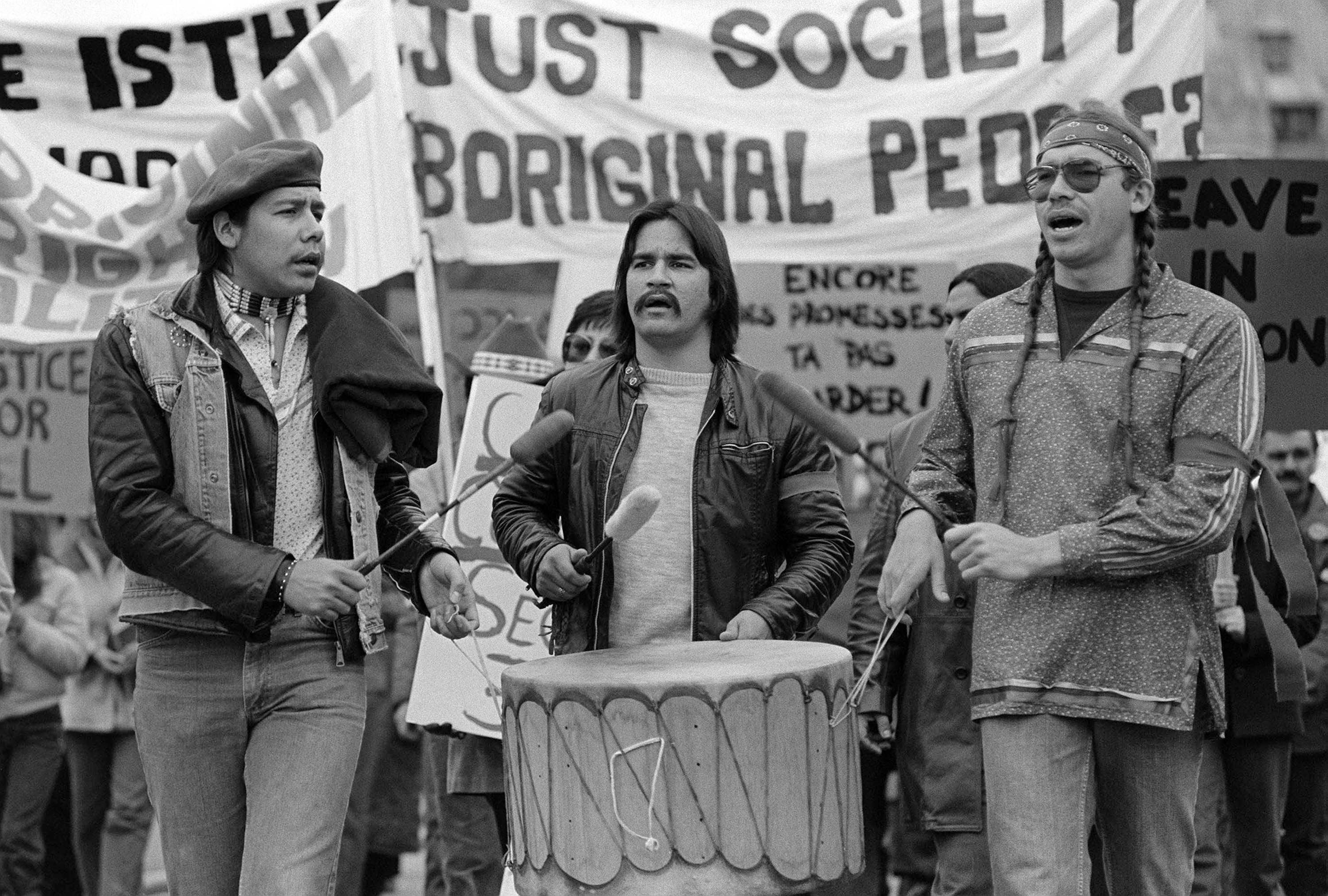
-
Macleans
Parents of Victims Speak
This article was originally published in Maclean’s magazine on October 16, 1995. Partner content is not updated.
"https://thecanadianencyclopedia.ca/images/tce_placeholder.jpg?v=e9dca980c9bdb3aa11e832e7ea94f5d9" // resources/views/front/categories/view.blade.php
https://thecanadianencyclopedia.ca/images/tce_placeholder.jpg?v=e9dca980c9bdb3aa11e832e7ea94f5d9
-
Article
Parliament
The term Parliament refers to the Crown, the House of Commons and the Senate. Together, these institutions create Canadian laws. Parliament has two branches: the executive (the Crown, prime minister and cabinet) and the legislative (the House of Commons and the Senate). This system is a blend of parliamentary democracy and constitutional monarchy. It is based on the Westminster tradition in Britain. Each of the Crown, Senate and Commons must agree with (assent to) a law before it is enacted. The government of the day derives its authority from the people who elected it. It is therefore a representative government, even though it acts in the name of the Crown — a largely symbolic institution. In formal terms, Parliament includes all three bodies. But in common usage, the legislative branch is often equated with Parliament.
"https://d3d0lqu00lnqvz.cloudfront.net/media/media/11551bec-a5f6-4e78-b101-265ddf7610cb.jpg" // resources/views/front/categories/view.blade.php
https://d3d0lqu00lnqvz.cloudfront.net/media/media/11551bec-a5f6-4e78-b101-265ddf7610cb.jpg
-
Article
Parliament Hill Attack
On 22 October 2014, Parliament and the National War Memorial in Ottawa were the targets of an unprecedented attack by a lone gunman. The shooter killed Corporal Nathan Cirillo, a ceremonial guard at the War Memorial, and then charged into Parliament, where he was shot to death inside. The attack raised questions about parliamentary security and sparked a national debate over the nature of terrorism.
"https://d3d0lqu00lnqvz.cloudfront.net/media/media/731e3daa-fce9-4322-8a2a-499deb109b52.jpg" // resources/views/front/categories/view.blade.php
https://d3d0lqu00lnqvz.cloudfront.net/media/media/731e3daa-fce9-4322-8a2a-499deb109b52.jpg
-
Macleans
Parliament Legislates End to Strike
While the two sides in the rail strike remained at loggerheads last week, the government moved quickly to end the dispute.This article was originally published in Maclean's Magazine on April 3, 1995
"https://d3d0lqu00lnqvz.cloudfront.net/media/media/629e4435-3bac-43fb-8d0d-e7676d4693a9.jpg" // resources/views/front/categories/view.blade.php
https://d3d0lqu00lnqvz.cloudfront.net/media/media/629e4435-3bac-43fb-8d0d-e7676d4693a9.jpg