
Browse "Types of Law"
-
Article
Quebec Conference, 1864
From 10–27 October 1864, politicians from the five British North American colonies gathered in Quebec City to continue discussing their unification into a single country. These discussions began at the Charlottetown Conference the previous month. The most important issues decided in Quebec City were the structure of Parliament and the distribution of powers between the federal and provincial governments. The broad decisions from the Charlottetown and Quebec conferences were made into 72 resolutions, known as the Quebec Resolutions. These formed the basis of Confederation and of Canada’s Constitution.
"https://d3d0lqu00lnqvz.cloudfront.net/media/media/1e88decf-02d6-4b89-b522-383f360ecac4.jpg" // resources/views/front/categories/view.blade.php
https://d3d0lqu00lnqvz.cloudfront.net/media/media/1e88decf-02d6-4b89-b522-383f360ecac4.jpg
-
Article
Quebec Conference, 1864 (Plain-Language Summary)
From 10–27 October 1864, leaders from the five British North American colonies met in Quebec City. They continued to talk about merging into a single country. These talks had begun at the Charlottetown Conference the month before. At Quebec City, the Fathers of Confederation chose how the new Parliament would be structured. They also worked out the division of powers between the federal and provincial governments. The decisions that were made in Charlottetown and Quebec formed 72 resolutions. They were known as the Quebec Resolutions. They formed the basis of Confederation and of Canada’s Constitution. This article is a plain-language summary of the Quebec Conference, 1864. If you would like to read about this topic in more depth, please see our full-length entry: Quebec Conference, 1864.
"https://d3d0lqu00lnqvz.cloudfront.net/media/media/9c333485-1e08-4272-be36-0eae7a34dcf5.jpg" // resources/views/front/categories/view.blade.php
https://d3d0lqu00lnqvz.cloudfront.net/media/media/9c333485-1e08-4272-be36-0eae7a34dcf5.jpg
-
Article
Redistribution of Federal Electoral Districts
Redistribution describes both the allocation of seats in the House of Commons to the provinces and the procedure for drawing specific constituency boundaries within the provinces. This occurs every 10 years.
"https://d3d0lqu00lnqvz.cloudfront.net/media/media/74eb7792-52e6-4706-a558-e4b5ce7f4e9d.png" // resources/views/front/categories/view.blade.php
https://d3d0lqu00lnqvz.cloudfront.net/media/media/74eb7792-52e6-4706-a558-e4b5ce7f4e9d.png
-
Article
Rep by Pop (Plain-Language Summary)
Representation by population (or “rep by pop”) is a political system. It is when seats in a legislature are assigned based on population. This upholds a basic idea of democracy that all votes should be counted equally. Rep by pop was a deeply divisive issue in the Province of Canada (1841–67). It became an important factor in Confederation. This article is a plain-language summary of Rep by Pop. If you would like to read about this topic in more depth, please see our full-length entry: Rep by Pop.
"https://d3d0lqu00lnqvz.cloudfront.net/media/media/bf6a8447-8306-4749-bb63-2f6129eb20a6.jpg" // resources/views/front/categories/view.blade.php
https://d3d0lqu00lnqvz.cloudfront.net/media/media/bf6a8447-8306-4749-bb63-2f6129eb20a6.jpg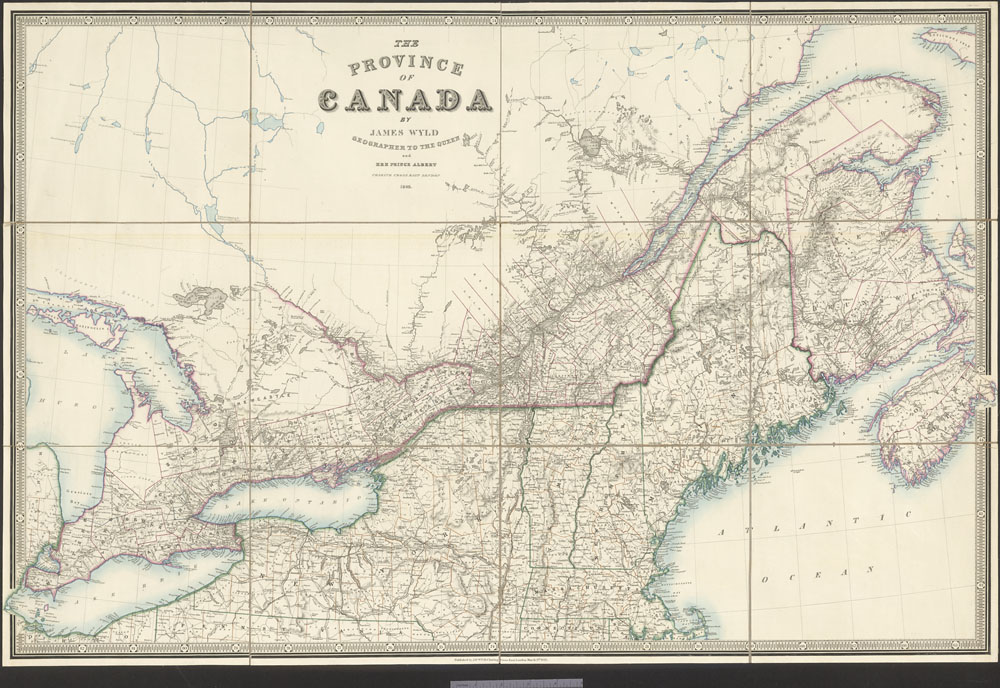
-
Article
Royal Commission Inquiry into Civil Rights
The Royal Commission Inquiry into Civil Rights was an investigation into the status of civil rights in Ontario. It was commissioned by the Government of Ontario in 1964. It was completed in 1971. Chaired by judge James Chalmers McRuer, it was also known as the McRuer Commission of 1971. Its final report totalled 2,281 pages and included 976 suggested legal reforms. The inquiry was highly influential. It prioritized ideas of fairness, accessibility and equity within the justice system. It also led to reforms in other branches of government to protect those principles. It was an important precursor to the Charter of Rights and Freedoms.
"https://d3d0lqu00lnqvz.cloudfront.net/Photograph_of_James_C._McRuer_16953287526.jpg" // resources/views/front/categories/view.blade.php
https://d3d0lqu00lnqvz.cloudfront.net/Photograph_of_James_C._McRuer_16953287526.jpg
-
Article
Section 98 Criminal Code
Section 98 was an offence in the CRIMINAL CODE of Canada from 1919 to 1936. The section was drafted in 1919 in response to the general labour unrest in the country, which culminated in the WINNIPEG GENERAL STRIKE.
"https://thecanadianencyclopedia.ca/images/tce_placeholder.jpg?v=e9dca980c9bdb3aa11e832e7ea94f5d9" // resources/views/front/categories/view.blade.php
https://thecanadianencyclopedia.ca/images/tce_placeholder.jpg?v=e9dca980c9bdb3aa11e832e7ea94f5d9
-
Article
Sentencing Hate Crimes
For many offences, the Criminal Code prescribes only maximum sentences, giving judges wide latitude to determine fit penalties. Judges consider a broad array of aggravating and mitigating factors in sentencing. One aggravating factor is the motivation of racial or group hatred for an offence.
"https://thecanadianencyclopedia.ca/images/tce_placeholder.jpg?v=e9dca980c9bdb3aa11e832e7ea94f5d9" // resources/views/front/categories/view.blade.php
https://thecanadianencyclopedia.ca/images/tce_placeholder.jpg?v=e9dca980c9bdb3aa11e832e7ea94f5d9
-
Article
Sexual Abuse of Children
Sexual abuse of children has been defined in Ontario as abuse that includes "any sexual intercourse, sexual molestation, exhibitionism or sexual exploitation involving a child that could be a violation of the Criminal Code or render the child in need of protection under the Child Welfare Act.
"https://thecanadianencyclopedia.ca/images/tce_placeholder.jpg?v=e9dca980c9bdb3aa11e832e7ea94f5d9" // resources/views/front/categories/view.blade.php
https://thecanadianencyclopedia.ca/images/tce_placeholder.jpg?v=e9dca980c9bdb3aa11e832e7ea94f5d9
-
Article
Sexual Assault
Until it was amended in 1982 the Criminal Code contained the offence of rape. The offence required proof that a man had sexual intercourse with a woman other than his wife without the woman's consent. It was punishable by up to life imprisonment.
"https://thecanadianencyclopedia.ca/images/tce_placeholder.jpg?v=e9dca980c9bdb3aa11e832e7ea94f5d9" // resources/views/front/categories/view.blade.php
https://thecanadianencyclopedia.ca/images/tce_placeholder.jpg?v=e9dca980c9bdb3aa11e832e7ea94f5d9
-
Macleans
Sexual Harassment on Police Force
This article was originally published in Maclean’s magazine on April 10, 1995. Partner content is not updated. For Alice Clark, joining the RCMP in 1980 was the fulfilment of a teenage dream. Two years later, the Hamilton native was posted to the 60-member detachment at Red Deer, Alta., where, at first, the men she worked with were welcoming and helpful. Then, she was transferred to city traffic duty.
"https://thecanadianencyclopedia.ca/images/tce_placeholder.jpg?v=e9dca980c9bdb3aa11e832e7ea94f5d9" // resources/views/front/categories/view.blade.php
https://thecanadianencyclopedia.ca/images/tce_placeholder.jpg?v=e9dca980c9bdb3aa11e832e7ea94f5d9
-
Macleans
Sikh Editor Murdered
The sheer cowardice of the act was chilling. Someone, it appears, waited in the dusk that comes early this time of year for Tara Singh Hayer, the editor of North Americas largest Punjabi-language newspaper, to return to his home in Surrey, B.C., at the end of the workday on Nov. 18.This article was originally published in Maclean's Magazine on November 30, 1998
"https://thecanadianencyclopedia.ca/images/tce_placeholder.jpg?v=e9dca980c9bdb3aa11e832e7ea94f5d9" // resources/views/front/categories/view.blade.php
https://thecanadianencyclopedia.ca/images/tce_placeholder.jpg?v=e9dca980c9bdb3aa11e832e7ea94f5d9
-
Article
Stare Decisis
Stare decisis [Latin, "let the decision stand"] refers to the doctrine of precedent, according to which the rules formulated by judges in earlier decisions are to be similarly applied in later cases.
"https://thecanadianencyclopedia.ca/images/tce_placeholder.jpg?v=e9dca980c9bdb3aa11e832e7ea94f5d9" // resources/views/front/categories/view.blade.php
https://thecanadianencyclopedia.ca/images/tce_placeholder.jpg?v=e9dca980c9bdb3aa11e832e7ea94f5d9
-
Article
Succession (Wills)
When a person dies, that person's property or its value is transferred to the persons entitled to it after payment of any outstanding debts and liabilities; this process is described as succession.
"https://thecanadianencyclopedia.ca/images/tce_placeholder.jpg?v=e9dca980c9bdb3aa11e832e7ea94f5d9" // resources/views/front/categories/view.blade.php
https://thecanadianencyclopedia.ca/images/tce_placeholder.jpg?v=e9dca980c9bdb3aa11e832e7ea94f5d9
-
Editorial
Editorial: The Death of the Meech Lake Accord
The following article is an editorial written by The Canadian Encyclopedia staff. Editorials are not usually updated. On a Sunday evening, 3 June 1990, Prime Minister Brian Mulroney and the ten provincial premiers marked the third anniversary of the Meech Lake Accord at a dinner in the architectural splendour of the Canadian Museum of Civilization (now the Canadian Museum of History) in Hull, Quebec.
"https://d3d0lqu00lnqvz.cloudfront.net/media/media/73c1f655-bfcc-4aa6-9251-c0d5c550fde4.jpg" // resources/views/front/categories/view.blade.php
https://d3d0lqu00lnqvz.cloudfront.net/media/media/73c1f655-bfcc-4aa6-9251-c0d5c550fde4.jpg
-
Article
Torts in Canada
Tort law is a cornerstone of the Canadian legal system. It provides compensation for people who have been injured; or whose property has been damaged by the wrongdoing of others. Tort law is a vast area of private law. It has evolved to keep up with technology and social issues. It has been used by a growing number of victims of crime to help them seek justice against perpetrators. It has also been at the centre of high-profile Canadian cases involving the abuse of children; and the liability of governments for failing to protect citizens from contagious diseases and from defective medical devices.
"https://d3d0lqu00lnqvz.cloudfront.net/media/media/4231e4df-07e3-4dfa-8092-0442d9ac0bf6.jpg" // resources/views/front/categories/view.blade.php
https://d3d0lqu00lnqvz.cloudfront.net/media/media/4231e4df-07e3-4dfa-8092-0442d9ac0bf6.jpg